
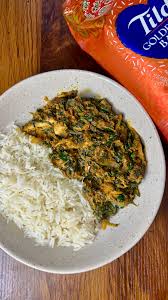
A hearty Nigerian melon seed soup made with rich red palm oil, ground egusi, blended peppers, tender assorted meats, smoked fish, and fresh leafy greens. Served alongside fluffy white rice, this traditional Yoruba-inspired dish is packed with bold, savory flavors and comforting textures.
Prep Time: 20 minutes | Cook Time: 50 minutes | Total Time: 1 hour 10 minutes | Servings: 5 | Difficulty: Moderate
1. Introduction
If you love rich, flavorful African dishes, this Traditional Nigerian Efo Elegusi Soup with White Rice is a wonderful recipe to explore.
Efo Elegusi is a beloved Nigerian soup that combines finely ground melon seeds with red palm oil, aromatic peppers, savory seasonings, meats, and leafy vegetables.
The ground egusi creates a thick, nutty base, while the blended pepper mixture adds color, sweetness, and a pleasant spicy kick.
Traditional ingredients such as iru (fermented locust beans), ground crayfish, and smoked fish contribute a distinctive savory depth.
Fresh spinach, ugu leaves, or kale complete the dish with vibrant color and tender texture.
Although Egusi Soup is frequently enjoyed with Nigerian swallows such as pounded yam, eba, or amala, it also tastes delicious served over fluffy white rice.
This homemade version brings together the comforting flavors of Nigerian cooking in a satisfying family meal.
2. Origin and Cultural Significance
Egusi Soup is an important dish in Nigerian cuisine and is also enjoyed in different forms throughout West Africa.
The name egusi refers to edible melon seeds that are dried, shelled, and ground for cooking.
These seeds develop a rich, nutty flavor and help thicken soups and stews.
Efo Elegusi is particularly associated with Yoruba cooking in southwestern Nigeria.
In Yoruba, efo refers to leafy vegetables, reflecting the importance of greens in the dish.
Traditional recipes vary between households and regions, with some versions featuring beef, goat meat, tripe, smoked fish, stockfish, or different combinations of vegetables.
Red palm oil, iru, peppers, and ground crayfish are commonly used to build the soup’s distinctive flavor.
Efo Elegusi is frequently prepared for family meals, gatherings, and celebrations.
Its popularity reflects the rich culinary traditions of Nigerian home cooking, where carefully seasoned ingredients are combined into hearty, satisfying dishes.
3. Ingredients
A. For the Egusi Soup Base
- 2 cups ground egusi (melon seeds)
- ½–¾ cup red palm oil
- 2 large red bell peppers (tatashe), deseeded
- 2 medium Roma tomatoes
- 1–2 Scotch bonnet peppers (ata rodo)
- 1½ large red onions, divided
- 2 cups rich halal meat or turkey stock
- ¼–½ cup warm water, for mixing the egusi paste
B. For the Meats and Seafood
- 1 lb (450 g) precooked assorted halal meats, such as beef, goat meat, tripe, or smoked turkey
- 1 cup smoked catfish or stockfish, cleaned, deboned, and flaked
- ¼ cup ground crayfish
C. For the Vegetables and Seasonings
- 2 cups chopped spinach, ugu (fluted pumpkin leaves), or kale
- 1 tablespoon iru (fermented locust beans)
- 2 bouillon cubes, preferably halal-suitable
- Salt, to taste
D. For the White Rice
- 2 cups long-grain white rice, such as basmati or parboiled rice
- Up to 4 cups water, adjusting to the rice variety
- ½ teaspoon salt
Ingredient Notes
Egusi: Ground melon seeds provide the soup’s signature nutty flavor and thick texture.
Palm Oil: Gives the soup its distinctive reddish-orange color and traditional richness.
Scotch Bonnet: Adds heat and a fruity pepper flavor. Reduce the quantity for a milder soup.
Iru: Fermented locust beans contribute a strong savory aroma and depth.
Ground Crayfish: Enhances the seafood flavor. It contains shellfish allergens.
Leafy Greens: Ugu is traditionally used in many Nigerian soups, but spinach is a convenient substitute.
4. Optional Additions
Extra Spicy Efo Elegusi
Add another Scotch bonnet pepper to the blended pepper mixture.
Chicken Egusi Soup
Replace the assorted meats with precooked halal chicken pieces.
Fish-Only Egusi Soup
Use smoked catfish and cooked fresh fish instead of beef or goat meat.
Extra Vegetable Egusi
Increase the leafy greens to 3 cups for a more vegetable-forward soup.
Thicker Egusi Soup
Reduce the stock slightly or allow the soup to simmer uncovered for a few extra minutes.
Milder Egusi Soup
Use one small Scotch bonnet pepper with the seeds removed, or omit it entirely.
5. Tips for Success
1. Use finely ground egusi. The seeds should have a relatively fine texture so they combine evenly with the soup.
2. Reduce the pepper mixture first. Cooking away excess water produces a richer, more concentrated flavor.
3. Don’t overheat the palm oil. Warm it gently without allowing it to smoke or bleach.
4. Prepare a thick egusi paste. Mixing ground egusi with a little water helps produce the traditional chunky, curd-like texture.
5. Let the egusi fry briefly. Avoid stirring immediately after adding the paste so the small mounds can hold their shape.
6. Use well-seasoned stock. Meat or turkey stock contributes important flavor to the finished soup.
7. Add cooked meats near the end. This allows them to absorb the soup’s flavor without becoming excessively soft.
8. Add the greens last. Cooking them briefly helps maintain their color and texture.
6. Instructions
Part 1: Prepare the Pepper Mixture
Step 1: Wash the vegetables.
Wash the red bell peppers, tomatoes, Scotch bonnet peppers, and onions.
Remove the stems and seeds from the bell peppers.
Step 2: Blend the pepper base.
Place the red bell peppers, Roma tomatoes, Scotch bonnet peppers, and one whole onion into a blender.
Add a small splash of water.
Blend until relatively smooth.
Step 3: Reduce the pepper mixture.
Transfer the blended mixture to a saucepan.
Cook over medium heat for approximately 10–15 minutes, stirring occasionally.
Continue until excess moisture evaporates and the mixture becomes thicker.
Set aside.
Part 2: Prepare the Egusi Paste
Step 4: Combine egusi with water.
Place 2 cups ground egusi into a medium mixing bowl.
Gradually add approximately ¼–½ cup warm water.
Step 5: Mix into a paste.
Stir until the mixture forms a thick, scoopable paste.
Avoid adding too much water.
The paste should hold its shape when spooned.
Part 3: Fry the Egusi
Step 6: Heat the palm oil.
Pour ½–¾ cup red palm oil into a large, heavy-bottomed pot.
Heat over medium-low heat for approximately 2–3 minutes.
Do not allow the oil to smoke.
Step 7: Add the onions.
Add the remaining ½ onion, finely chopped.
Sauté for approximately 2 minutes until softened.
Step 8: Add the iru.
Stir in the fermented locust beans.
Cook briefly until fragrant.
Step 9: Add the egusi paste.
Using a spoon, drop small portions of the egusi paste into the warm palm oil.
Arrange them in separate mounds.
Step 10: Fry without stirring.
Allow the egusi to fry undisturbed for approximately 3–5 minutes.
This helps the paste develop the characteristic chunky texture.
Step 11: Break up the egusi.
Gently stir the mixture, breaking larger mounds into smaller pieces.
Continue frying for approximately 5 minutes until slightly golden and nutty.
Part 4: Build the Soup
Step 12: Add the pepper mixture.
Pour the reduced pepper puree into the pot containing the fried egusi.
Stir gently until combined.
Step 13: Add the stock.
Pour in 2 cups of meat or turkey stock.
Stir carefully to distribute the ingredients.
Step 14: Add the seasonings.
Stir in the ground crayfish and bouillon cubes.
Add a little salt if needed.
Remember that the stock, crayfish, and bouillon may already contain salt.
Step 15: Simmer the soup.
Cover the pot and reduce the heat to medium-low.
Simmer for approximately 15 minutes, stirring occasionally to prevent sticking.
The soup should gradually thicken, and small amounts of palm oil may become visible on the surface.
Part 5: Add the Meats, Fish, and Vegetables
Step 16: Add the cooked meats.
Transfer the precooked beef, goat meat, tripe, or smoked turkey into the soup.
Stir gently.
Step 17: Add the smoked fish.
Add the cleaned, deboned smoked catfish or stockfish.
Mix carefully to avoid breaking the fish into very small pieces.
Step 18: Simmer again.
Continue cooking for approximately 5–8 minutes, until the meats and fish are thoroughly heated and coated with the sauce.
Step 19: Add the leafy greens.
Stir in the chopped spinach, ugu leaves, or kale.
Step 20: Finish cooking.
Simmer for approximately 3–5 minutes, until the greens are tender.
If using tougher kale, allow additional cooking time.
Taste and adjust the seasoning.
For a slightly looser consistency suitable for rice, add approximately ¼ cup additional stock.
Part 6: Prepare the White Rice
Step 21: Rinse the rice.
Place the rice in a bowl and rinse under cool water several times.
Drain thoroughly.
Step 22: Heat the water.
In a medium saucepan, bring the water and salt to a boil.
Use the water ratio recommended for your rice variety. Basmati often needs less water than parboiled rice.
Step 23: Add the rice.
Stir the rinsed rice into the boiling water.
Reduce the heat to low and cover with a tight-fitting lid.
Step 24: Cook until tender.
Simmer for approximately 15–20 minutes, or according to the package instructions.
Once cooked, remove from the heat and let the rice rest, covered, for 5 minutes.
Fluff gently with a fork.
Part 7: Assemble and Serve
Step 25: Plate the rice.
Spoon a generous portion of fluffy white rice onto each serving plate.
Step 26: Add the Efo Elegusi.
Ladle the warm Egusi Soup beside or over the rice.
Include pieces of meat, smoked fish, leafy greens, and the rich egusi sauce in each serving.
Step 27: Serve immediately.
Enjoy while the rice is warm and the soup is rich and flavorful.
7. Description
Traditional Efo Elegusi has a thick, hearty texture and a distinctive golden-orange color from the egusi and red palm oil.
The ground melon seeds provide a slightly grainy, nutty consistency, with small curds distributed throughout the soup.
The pepper mixture adds a rich reddish color, gentle sweetness, and spicy warmth.
Iru and ground crayfish create a distinctive savory depth, while smoked fish adds a bold, smoky flavor.
Tender leafy greens provide freshness and contrast to the rich sauce.
| Component | Flavor and Texture |
|---|---|
| Ground egusi | Nutty, thick, slightly chunky |
| Red palm oil | Rich, savory, earthy |
| Pepper mixture | Aromatic, mildly sweet, spicy |
| Iru | Deep, fermented, savory |
| Ground crayfish | Concentrated seafood flavor |
| Assorted meats | Tender, hearty |
| Leafy greens | Fresh, tender |
| White rice | Soft, fluffy, mild |
The combination creates a deeply satisfying meal with rich flavors and contrasting textures.
8. Nutritional Information
The following values are approximate estimates per serving, assuming the recipe makes five portions with rice.
| Nutrient | Estimated Amount |
|---|---|
| Calories | 850–1,150 kcal |
| Protein | 35–50 g |
| Carbohydrates | 80–100 g |
| Total Fat | 40–65 g |
| Saturated Fat | Varies with palm oil and meats |
| Dietary Fiber | 5–9 g |
| Sodium | Varies with stock and bouillon |
Actual nutritional values vary considerably depending on the type of egusi, amount of palm oil, meats, stock, and rice portion.
Nutritional Highlights
Egusi Seeds: Provide plant protein and fats.
Leafy Greens: Contribute fiber, vitamins, and minerals.
Meat and Fish: Supply protein and essential nutrients.
Red Palm Oil: Contains carotenoids and contributes significant fat and calories.
White Rice: Provides carbohydrates for energy.
9. Recipe Details
| Detail | Information |
|---|---|
| Recipe Name | Traditional Efo Elegusi with White Rice |
| Cuisine | Nigerian / Yoruba |
| Course | Main Course |
| Preparation Time | 20 minutes |
| Cooking Time | Approximately 50 minutes |
| Total Time | 1 hour 10 minutes |
| Servings | 5 |
| Difficulty | Moderate |
| Main Ingredients | Egusi, Palm Oil, Meats, Peppers, Greens |
| Cooking Method | Frying, Simmering, Boiling |
| Flavor Profile | Nutty, Savory, Spicy, Rich |
| Best Served | Hot |
Timing assumes the meats, smoked fish, and stock have been prepared in advance. Cooking the rice alongside the soup helps reduce the overall preparation time.
10. Conclusion
Traditional Nigerian Efo Elegusi Soup with White Rice is a flavorful and satisfying dish that showcases the richness of West African cooking.
The combination of ground melon seeds, red palm oil, aromatic peppers, fermented locust beans, meats, fish, and leafy greens creates a wonderfully layered soup.
Although the preparation involves several stages, each one contributes to the finished dish’s flavor and texture.
Serving Efo Elegusi with fluffy white rice provides a delicious contrast to the rich, nutty soup.
Whether prepared for a family dinner, a gathering, or an introduction to Nigerian cuisine, this homemade recipe is a wonderful way to enjoy traditional West African flavors.
11. Serving and Storage Recommendations
Best Ways to Serve
Serve Efo Elegusi hot alongside freshly cooked white rice.
It can also be enjoyed with traditional Nigerian accompaniments such as:
- Pounded yam
- Eba
- Amala
- Semolina swallow
- Fufu
Refrigerating Leftovers
Allow the soup to cool briefly, then transfer it into shallow, airtight containers.
Refrigerate within two hours of cooking at 40°F (4°C) or below.
Consume within 3–4 days.
Store the rice separately. Cool cooked rice quickly, ideally within one hour, refrigerate promptly, and use within 24 hours as a conservative food-safety practice.
Reheating
Transfer the soup to a saucepan over medium-low heat.
Add a splash of water or stock if it has become too thick.
Stir occasionally until thoroughly heated to 165°F (74°C).
Reheat refrigerated rice only once, until steaming hot throughout.
Freezing
Efo Elegusi freezes well when stored correctly.
Allow it to cool, portion into freezer-safe containers, and freeze for up to 2–3 months for best quality.
Thaw overnight in the refrigerator before reheating.
Make-Ahead Tips
Prepare the meat stock and cook the assorted meats a day ahead.
Blend and reduce the pepper mixture in advance.
Clean and debone the smoked fish before cooking.
These preparations make assembling the soup much easier.
12. Embracing Healthful Indulgence
Efo Elegusi is a hearty dish that combines plant-based ingredients with protein-rich meats and seafood.
Ground melon seeds provide protein and fats, while leafy greens add fiber and micronutrients.
The addition of assorted meats and smoked fish makes the soup particularly filling.
However, traditional Egusi Soup can also be relatively high in calories because of the melon seeds, palm oil, and meat.
For a lighter variation, consider:
- Using ¼–⅓ cup palm oil instead of the full amount, accepting a lighter flavor and texture.
- Increasing the leafy greens.
- Choosing leaner cuts of meat.
- Reducing the amount of added bouillon.
- Serving moderate portions of rice.
- Using more fish and less fatty meat.
These adjustments can make the dish lighter while retaining much of its familiar flavor.
The beauty of Efo Elegusi lies in its rich ingredients, aromatic seasonings, and satisfying texture.
With its thick, nutty melon seed base, flavorful peppers, tender meats, smoky fish, and vibrant leafy greens, Traditional Nigerian Efo Elegusi served with white rice is a comforting and delicious celebration of West African home cooking.
#EfoElegusi #NigerianEgusiSoup #NigerianFood #WestAfricanCuisine #TraditionalAfricanRecipes