
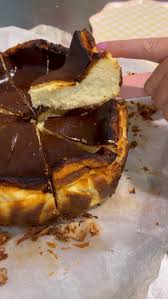
A luxurious, crustless cheesecake with a deeply caramelized golden-brown top, rustic ruffled edges, and an irresistibly smooth, custard-like center. This famous Spanish dessert combines rich cream cheese, heavy cream, and vanilla for a beautifully simple homemade treat.
Prep Time: 20 minutes | Bake Time: 50–60 minutes | Chilling Time: 4 hours | Servings: 12
1. Introduction
If you love creamy cheesecake with a rich, silky center and a beautifully caramelized exterior, this Basque Burnt Cheesecake is a dessert worth making.
Also known as San Sebastián Cheesecake, this Spanish specialty is famous for its distinctive dark top, rustic appearance, and incredibly creamy texture.
Unlike traditional cheesecakes, it doesn’t require a biscuit crust or a water bath. Instead, the batter is baked at a relatively high temperature, creating deep caramelization on the outside while preserving a soft center.
Made with full-fat cream cheese, eggs, sugar, heavy cream, and a little flour, this dessert delivers rich flavor without complicated preparation.
It’s perfect for celebrations, family gatherings, or an elegant homemade dessert.
2. Origin and Cultural Significance
Basque Burnt Cheesecake originated in San Sebastián, in northern Spain.
The dessert is widely credited to Santiago Rivera of La Viña, where it became a signature creation around 1990. San Sebastián Travel+1
Traditional Basque cheesecake differs from classic New York-style cheesecake because it has no biscuit crust and deliberately develops a deeply browned surface.
Its rustic, cracked appearance is an essential part of its character rather than a baking mistake.
The dessert has since gained international popularity, inspiring variations with chocolate, pistachio, matcha, and other flavors.
Despite these modern adaptations, the original style remains celebrated for its simplicity and rich cream-cheese flavor.
3. Ingredients
For the Cheesecake Batter
- 900 g (32 oz) full-fat cream cheese, softened
- 300 g (1½ cups) granulated sugar
- 6 large eggs, at room temperature
- 475 ml (2 cups) heavy whipping cream
- 40 g (⅓ cup) all-purpose flour, sifted
- 1–2 teaspoons alcohol-free vanilla flavoring
- ½ teaspoon fine salt, or up to 1 teaspoon kosher salt
For Preparing the Pan
- A small amount of butter or neutral oil for greasing
- 2 large sheets of oven-safe parchment paper
Optional Serving Additions
- Fresh strawberries or raspberries
- A light dusting of powdered sugar
- Fresh berry compote
- Chocolate sauce
Ingredient note: Full-fat, block-style cream cheese is recommended. Whipped or low-fat cream cheese may change the cheesecake’s structure.
4. Optional Additions
Chocolate Basque Cheesecake: Incorporate melted dark chocolate into the batter for a richer chocolate version.
Lemon Cheesecake: Add 1 teaspoon finely grated lemon zest for a refreshing citrus aroma.
Coffee Cheesecake: Dissolve 1 teaspoon instant espresso powder in a small amount of cream before adding it to the batter.
Pistachio Variation: Add a small quantity of smooth pistachio paste, adjusting the sugar if necessary.
Vanilla Bean Cheesecake: Replace the vanilla flavoring with the seeds of one vanilla bean.
Berry-Topped Cheesecake: Serve with fresh strawberries, raspberries, or a lightly sweetened berry sauce.
5. Tips for Success
Use room-temperature cream cheese. Softened cheese blends more easily and reduces lumps. Don’t leave perishable ingredients at room temperature for longer than necessary.
Mix gently after adding the eggs. Excessive mixing can incorporate too much air, causing unnecessary puffing and cracking.
Line the pan generously. The overlapping parchment sheets should extend at least 2 inches above the rim.
Check your parchment’s temperature rating. Use parchment approved for 410°F (210°C) or higher, and keep overhanging paper away from oven heating elements.
Use a sufficiently deep pan. A 9-inch springform pan with sides at least 3 inches high is preferable for this quantity of batter.
Don’t judge doneness by color alone. The surface should become dark brown, but the center should still wobble gently when the pan is moved.
Cool gradually. The cheesecake will sink as it cools, which is normal.
Chill before slicing. Refrigeration gives the center a firmer, creamier texture and helps produce neat slices.
6. Instructions
Step 1: Preheat the Oven
Preheat your oven to 410°F (210°C).
Position the oven rack in the middle.
Lightly grease a 9-inch (23 cm) springform pan.
Step 2: Prepare the Parchment Paper
Crumple two large sheets of parchment paper, then gently smooth them out.
Press them into the pan, overlapping to cover the bottom and sides.
Leave at least 2 inches overhanging the rim.
The natural folds create the cheesecake’s signature rustic edges.
Step 3: Beat the Cream Cheese
Place the softened cream cheese in a large mixing bowl.
Beat with an electric mixer on medium-low speed until smooth.
Scrape down the sides of the bowl.
Step 4: Add the Sugar
Add the granulated sugar.
Beat for approximately 2–3 minutes until the mixture becomes creamy, glossy, and free of lumps.
Step 5: Incorporate the Eggs
Add the eggs one at a time.
Mix on low speed after each addition until just incorporated.
Avoid excessive whipping.
Step 6: Add the Heavy Cream
Gradually pour in the heavy whipping cream while mixing on low speed.
Continue until the batter becomes smooth and uniform.
Step 7: Add Vanilla and Salt
Stir in the alcohol-free vanilla flavoring and salt.
Mix gently until evenly distributed.
Step 8: Incorporate the Flour
Sift the flour directly over the batter.
Fold gently using a spatula, or mix briefly on low speed.
Stop once no dry flour remains.
Step 9: Fill the Pan
Pour the batter into the prepared springform pan.
Smooth the surface lightly.
Tap the pan gently on the counter once or twice to release large trapped air bubbles.
Step 10: Bake the Cheesecake
Place the pan on a baking sheet and transfer it to the preheated oven.
Bake for approximately 50–60 minutes.
The top should become deeply caramelized and dark golden brown, with some darker patches.
The edges should look set, while the center still has a noticeable but controlled wobble.
Baking times vary by oven and pan depth. For a firmer, more thoroughly cooked egg custard, the center should reach 160°F (71°C); this will produce a less fluid center than some traditional versions.
Step 11: Cool at Room Temperature
Remove the cheesecake from the oven.
Leave it in the pan on a wire rack.
Allow it to cool for approximately 1–2 hours, refrigerating promptly rather than leaving it out longer.
The cheesecake will gradually sink in the center as it cools.
This is expected.
Step 12: Refrigerate
Once cooled, place the cheesecake in the refrigerator.
Chill for at least 4 hours, preferably overnight.
This allows the creamy center to set more firmly.
Step 13: Remove from the Pan
Carefully release the springform ring.
Gently peel the parchment paper away from the sides.
Transfer the cheesecake to a serving plate.
Step 14: Slice and Serve
Use a sharp knife to cut the cheesecake into 12 slices.
Wipe the blade between cuts for clean portions.
Serve chilled for a firm, creamy texture, or allow a slice to stand briefly at room temperature for a softer consistency.
7. Description
Basque Burnt Cheesecake is known for its dramatic appearance and luxurious texture.
Its deeply browned top develops rich caramelized flavors, providing a slight bittersweet contrast to the sweet, creamy interior.
The center is dense yet silky, resembling a smooth baked custard.
Unlike cheesecakes with biscuit crusts, this dessert is creamy from top to bottom.
| Component | Flavor and Texture |
|---|---|
| Caramelized top | Deeply toasted, rich, slightly bittersweet |
| Cheesecake center | Silky, smooth, custard-like |
| Cream cheese | Tangy, rich, creamy |
| Heavy cream | Velvety, luxurious |
| Vanilla | Sweet, aromatic |
| Ruffled edges | Rustic, deeply browned |
The contrast between the dark exterior and pale, creamy center makes this cheesecake especially distinctive.
8. Nutritional Information
Approximate nutritional values per slice, assuming 12 servings:
| Nutrient | Estimated Amount |
|---|---|
| Calories | 500–600 kcal |
| Protein | 9–11 g |
| Carbohydrates | 32–38 g |
| Total Fat | 38–46 g |
| Saturated Fat | 23–28 g |
| Sugar | 28–33 g |
| Sodium | Varies by cream cheese and salt |
Actual nutritional values depend on ingredient brands, portion size, and optional toppings.
9. Recipe Details
| Detail | Information |
|---|---|
| Recipe Name | Basque Burnt Cheesecake |
| Alternative Name | San Sebastián Cheesecake |
| Cuisine | Spanish / Basque |
| Course | Dessert |
| Preparation Time | 20 minutes |
| Baking Time | 50–60 minutes |
| Cooling Time | 1–2 hours |
| Chilling Time | At least 4 hours |
| Total Time | Approximately 6–7 hours |
| Servings | 12 |
| Difficulty | Easy to Moderate |
| Pan Size | 9-inch springform |
| Oven Temperature | 410°F (210°C) |
| Best Served | Chilled or slightly tempered |
10. Conclusion
Basque Burnt Cheesecake is a beautiful example of how simple ingredients can create an extraordinary dessert.
With its dark caramelized surface, creamy interior, and rustic parchment-lined edges, it offers a distinctive alternative to traditional cheesecake.
The preparation requires no biscuit crust or water bath, making it relatively straightforward for home bakers.
The most important steps are mixing the batter smoothly, baking until the surface becomes deeply browned, and allowing sufficient time for cooling and chilling.
Whether served plain or accompanied by fresh berries, this cheesecake makes an elegant and satisfying homemade dessert.
11. Serving and Storage Recommendations
Best Ways to Serve
Basque Burnt Cheesecake tastes wonderful on its own.
It also pairs beautifully with fresh strawberries, raspberries, coffee, unsweetened tea, or a small drizzle of chocolate sauce.
Refrigerating Leftovers
Store the cheesecake covered in the refrigerator at 40°F (4°C) or below.
Consume within 3–4 days for best quality and food safety.
Avoid leaving the cheesecake at room temperature for more than two hours.
Freezing
Wrap individual chilled slices tightly in food-safe wrap and place them in an airtight freezer container.
Freeze for up to two months for best quality.
Thaw overnight in the refrigerator before serving.
Make-Ahead Tips
This cheesecake is ideal for preparing a day before serving.
Overnight chilling helps the center set and makes slicing easier.
Remove it from the refrigerator shortly before serving if you prefer a softer texture.
12. Embracing Healthful Indulgence
Basque Burnt Cheesecake is a rich dessert made primarily from cream cheese, heavy cream, eggs, and sugar.
The dairy ingredients provide calcium and some protein, while the eggs contribute additional nutrients.
However, the dessert also contains significant amounts of saturated fat and added sugar.
For more moderate portions, consider slicing the cheesecake into 12–14 pieces and serving it with fresh fruit.
You can also skip additional sweet sauces, allowing the caramelized top and creamy filling to provide the main flavors.
Because the balance of cream cheese, cream, eggs, and sugar is important to the cheesecake’s structure, substantial ingredient changes may affect the final texture.
With its beautifully caramelized top, rustic ruffled edges, and rich, silky center, this Basque Burnt Cheesecake is an unforgettable homemade dessert that captures the charm of San Sebastián’s famous cheesecake.
#BasqueBurntCheesecake #SanSebastianCheesecake #CreamyCheesecake #SpanishDesserts #HomemadeCheesecake