
1. Introduction
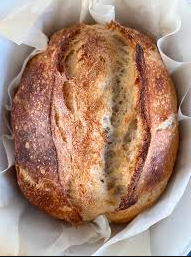
Classic Crusty Sourdough Boule is a traditional artisan bread characterized by its round shape, golden-brown crust, and soft, airy interior. It is prepared using bread flour, water, active sourdough starter, and salt, without requiring commercial baker’s yeast.
The bread develops its distinctive flavor through natural fermentation, which gives it a slightly tangy taste and a chewy texture. Its crust becomes beautifully crisp during baking, while the interior develops an open crumb with irregular air pockets.
Baked in a Dutch oven, this sourdough boule is an excellent choice for breakfast, sandwiches, family meals, and serving alongside soups and other dishes.
2. Origin
Sourdough bread has ancient origins, dating back thousands of years to early civilizations that discovered natural fermentation as a method of making bread rise.
Historical evidence of early leavened bread-making has been found in ancient Egypt, where naturally occurring wild yeasts and bacteria were used to ferment dough.
Over centuries, sourdough baking spread throughout Europe and other regions, becoming an important part of traditional bread-making practices.
The French word boule means “ball,” referring to the characteristic round shape of this artisan loaf.
Today, sourdough boule is particularly popular in artisan bakeries because of its traditional preparation, natural fermentation, distinctive flavor, and attractive crust.
3. Cultural Significance
Sourdough bread represents an important tradition in international baking culture, particularly in European artisan bread-making.
Before commercial yeast became widely available, natural sourdough fermentation was one of the primary methods used to produce risen bread.
Today, sourdough baking is appreciated for its traditional techniques, natural fermentation process, and distinctive flavor.
It is commonly enjoyed during:
- Family breakfasts and everyday meals.
- Weekend homemade baking.
- Family gatherings and special occasions.
- Artisan bakery and restaurant meals.
- Traditional bread-making activities.
- Picnics and homemade sandwich preparations.
The process of maintaining a sourdough starter and preparing bread through natural fermentation also reflects the preservation of traditional culinary knowledge.
4. Ingredients and Quantities
The following ingredients produce one medium-sized artisan sourdough boule.
| Ingredient | Quantity |
|---|---|
| Unbleached bread flour | 500 g |
| Lukewarm filtered water | 350 g |
| Active sourdough starter | 100 g |
| Fine sea salt | 10 g |
| Rice flour for dusting (optional) | As needed |
| Parchment paper | 1 sheet |
Preparation time: Approximately 45 minutes of active preparation.
Bulk fermentation: Approximately 3–5 hours, depending on temperature and starter activity.
Cold fermentation: 12–16 hours.
Baking time: 40–45 minutes.
Oven temperature: 250°C initially, then 230°C.
Yield: One medium-sized round loaf.
5. Optional Additions
The basic sourdough boule recipe can be customized with additional ingredients to create different flavors and textures.
- Sunflower seeds: Add a pleasant crunchy texture and nutty flavor.
- Pumpkin seeds: Introduce additional texture and nutritional variety.
- Walnuts: Provide a rich, slightly sweet flavor.
- Dried cranberries: Add natural sweetness and a fruity taste.
- Fresh rosemary: Introduces a distinctive herbal aroma.
- Roasted garlic: Creates a rich and savory flavor.
- Olives: Add a Mediterranean-inspired taste.
- Flaxseeds: Increase the fiber content and provide additional texture.
- Sesame seeds: Create a nutty flavor and attractive crust.
- Whole-wheat flour: Adds a deeper flavor and increases the fiber content.
These additions can be incorporated during the stretch-and-fold stages to distribute them evenly throughout the dough.
6. Tips for Success
- Use an active, recently fed sourdough starter that is bubbly and at its peak.
- Choose good-quality bread flour with sufficient protein to develop a strong gluten structure.
- Measure all ingredients accurately using a kitchen scale.
- Allow the dough to rest after mixing to improve gluten development.
- Perform stretch-and-fold movements carefully to strengthen the dough.
- Monitor fermentation according to the dough’s appearance and volume rather than relying exclusively on time.
- Avoid excessive flour when shaping the boule.
- Create sufficient surface tension during shaping to help the loaf maintain its round structure.
- Use rice flour to prevent the dough from sticking to the proofing basket.
- Preheat the Dutch oven thoroughly before baking.
- Score the dough confidently using a sharp blade to control expansion during baking.
- Allow the bread to cool completely before slicing to prevent a gummy interior.
7. Instructions
Step 1: Mix the ingredients
In a large mixing bowl, combine the active sourdough starter with the lukewarm water.
Whisk until the starter becomes evenly distributed and the mixture looks milky.
Add the bread flour and salt. Mix by hand or with a spatula until all the ingredients are incorporated and no dry flour remains.
The dough will look rough and slightly sticky.
Step 2: Allow the dough to rest
Cover the bowl with a damp kitchen towel or plastic wrap.
Allow the dough to rest for approximately 30–45 minutes.
This resting period helps hydrate the flour and supports gluten development.
Step 3: Perform stretch and folds
Over the next two hours, perform four sets of stretch and folds, spacing each set approximately 30 minutes apart.
To perform this technique:
- Wet your hand slightly.
- Grab one edge of the dough.
- Pull it gently upward.
- Fold it over the center.
- Rotate the bowl a quarter turn.
- Repeat the movement on all four sides.
This process strengthens the dough and improves its ability to retain gas during fermentation.
Step 4: Bulk fermentation
Cover the bowl and allow the dough to ferment at room temperature.
Depending on the activity of the starter and the temperature of the kitchen, this stage generally takes approximately 3–5 hours.
The dough should increase in volume by approximately 50–75%, become puffy, and develop small bubbles along its sides and bottom.
Step 5: Shape the boule
Transfer the dough onto a lightly floured work surface.
Gently stretch the edges into a rough square and fold the sides inward toward the center, creating an envelope shape.
Roll the dough gently and use your hands to create a tight, round shape.
Drag the dough slightly toward yourself across the counter to develop surface tension and form a smooth exterior.
Step 6: Prepare for cold fermentation
Dust a banneton proofing basket or a bowl lined with a clean kitchen towel using rice flour.
Place the shaped dough inside with the seam facing upward.
Cover the dough and refrigerate for approximately 12–16 hours.
This cold fermentation period helps develop the characteristic sourdough flavor and improves the crust’s appearance.
Step 7: Preheat the Dutch oven
Place an empty Dutch oven with its lid inside the oven.
Preheat to 250°C (480°F) for approximately 30–45 minutes to ensure the cooking vessel becomes thoroughly hot.
Step 8: Score the dough
Remove the cold dough directly from the refrigerator.
Carefully turn it onto a piece of parchment paper with the seam facing downward.
Using a sharp razor blade or bread lame, make one confident, sweeping cut across the top at approximately a 30–45-degree angle.
The cut should be approximately ½ inch deep.
This scoring technique helps create the characteristic raised crust, often called an ear.
Step 9: Bake the bread
Carefully transfer the dough, together with the parchment paper, into the preheated Dutch oven.
Cover with the lid and reduce the oven temperature to 230°C (450°F).
Bake covered for approximately 20 minutes.
Remove the lid and continue baking for another 20–25 minutes until the crust becomes deep golden brown and develops a crisp appearance.
Step 10: Cool the bread
Remove the bread from the Dutch oven and transfer it to a wire cooling rack.
Allow it to cool completely for at least 1–2 hours before slicing.
This resting period allows the interior crumb to finish setting and develop its proper texture.
8. Description
Classic Crusty Sourdough Boule is an artisan bread distinguished by its round shape, deeply golden crust, and naturally fermented interior.
Its preparation relies on a living sourdough starter containing naturally occurring wild yeasts and lactic acid bacteria. These microorganisms ferment the dough, producing carbon dioxide and organic acids that contribute to its rise and distinctive flavor.
The long fermentation process creates a characteristic slightly tangy taste, while the Dutch oven helps produce a crisp, blistered crust.
The interior features an airy crumb with irregular holes, a chewy texture, and a delicate aroma.
Its attractive appearance, particularly the raised crust ear created through scoring, makes it a recognizable example of traditional artisan bread-making.
9. Nutritional Information
The following nutritional values are approximate estimates based on the complete recipe, assuming the loaf is divided into 10 equal slices.
| Nutritional Component | Estimated Amount per Slice |
|---|---|
| Calories | 195–210 kcal |
| Protein | 7–8 g |
| Carbohydrates | 39–42 g |
| Fat | 0.5–1.5 g |
| Fiber | 1–2 g |
| Sugar | Less than 1 g |
Nutritional highlights:
- Bread flour provides carbohydrates for energy.
- Sourdough fermentation produces organic acids that contribute to the bread’s distinctive flavor.
- The fermentation process can reduce some naturally occurring phytates in the flour.
- Sourdough contains small amounts of B vitamins and minerals.
- The bread is naturally low in fat because the basic recipe does not require butter or oil.
Nutritional values vary according to the flour used, fermentation conditions, and slice size.
10. Conclusion
Classic Crusty Sourdough Boule is a traditional artisan bread that combines natural fermentation, simple ingredients, and carefully controlled baking techniques.
Its golden, crispy crust, airy interior, and distinctive tangy flavor make it a popular choice among homemade bread enthusiasts.
Although sourdough preparation requires patience and attention to fermentation, the process produces a flavorful loaf with an attractive appearance and satisfying texture.
It is an excellent recipe for anyone interested in exploring traditional bread-making techniques and preparing artisan-quality bread at home.
11. Recommendation
Classic Crusty Sourdough Boule is highly recommended for people who enjoy artisan bread and naturally fermented baked products.
For the best results:
- Maintain a healthy and active sourdough starter.
- Use high-quality unbleached bread flour.
- Allow sufficient time for bulk fermentation.
- Perform the stretch-and-fold stages carefully.
- Refrigerate the shaped dough overnight for improved flavor development.
- Use a thoroughly preheated Dutch oven.
- Score the dough with a sharp blade.
- Allow the loaf to cool completely before slicing.
It pairs particularly well with:
- Butter and homemade jam.
- Olive oil and balsamic vinegar.
- Cheese and fresh tomatoes.
- Avocado and eggs.
- Vegetable soups.
- Roasted chicken and grilled vegetables.
It can also be used to prepare sandwiches, bruschetta, and toasted bread.
12. Embracing Healthful Indulgence
Classic Crusty Sourdough Boule can be incorporated into a balanced and varied diet when enjoyed in appropriate portions.
Its simple ingredient list, natural fermentation process, and absence of added butter or sugar make it a versatile bread option.
For a more nutritious variation, consider:
- Replacing part of the white bread flour with whole-wheat flour.
- Incorporating seeds such as flaxseeds or sunflower seeds.
- Adding oats for additional texture and fiber.
- Serving the bread with protein-rich foods such as eggs or cheese.
- Pairing it with fresh vegetables and healthy fat sources.
- Choosing moderate portions according to individual nutritional needs.
Sourdough fermentation may improve mineral bioavailability by reducing some phytates, although the extent depends on the flour and fermentation conditions.
It is important to remember that sourdough bread still contains carbohydrates and gluten when prepared with conventional wheat flour.
The essence of healthful indulgence is appreciating traditional artisan baking, choosing quality ingredients, and enjoying homemade bread as part of a balanced and varied diet.