
1. Introduction
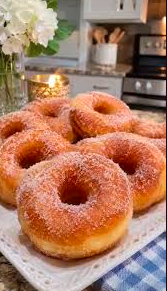
Fluffy Homemade Sugar Donuts are delicious, soft, and golden-brown pastries coated with a generous layer of granulated sugar. They are prepared using a yeast-based dough made from flour, warm milk, eggs, butter, sugar, and vanilla extract.
The dough is allowed to rise before being shaped into traditional ring-shaped donuts and fried until golden and fluffy.
Their slightly crispy exterior, soft and airy interior, and sweet sugary coating make them a popular treat for breakfast, afternoon snacks, and special occasions.
2. Origin
Donuts have a long history influenced by European baking traditions. Early versions of fried dough were prepared in several European countries, particularly the Netherlands, where a pastry known as olykoeks (oil cakes) was traditionally made by frying sweet dough in oil.
Dutch settlers introduced these fried pastries to North America, where the recipe gradually evolved into the modern donut.
The familiar ring-shaped donut became popular in the United States during the 19th century. Over time, different varieties developed, including glazed donuts, filled donuts, cinnamon-sugar donuts, and traditional yeast-raised sugar donuts.
Today, donuts are enjoyed worldwide and remain a popular bakery and homemade dessert.
3. Cultural Significance
Donuts hold an important place in international baking and breakfast traditions, particularly in North America and Europe.
They are commonly associated with bakeries, coffee shops, family breakfasts, and homemade sweet treats.
Fluffy Sugar Donuts are particularly popular during:
- Family breakfasts and weekend brunches.
- Birthday celebrations and special occasions.
- Afternoon tea and coffee gatherings.
- School and family celebrations.
- Holiday gatherings and festive events.
- Homemade baking activities.
Their simple ingredients, attractive appearance, and sweet flavor make them a popular treat to share with family and friends.
4. Ingredients and Quantities
The following ingredients produce approximately 12–15 medium-sized donuts.
| Ingredient | Quantity |
|---|---|
| All-purpose flour | 500 g (approximately 4 cups) |
| Warm whole milk | 200 ml |
| Active dry yeast | 10 g |
| Granulated sugar for dough | 60 g |
| Unsalted butter, softened | 60 g |
| Large eggs | 2 |
| Vanilla extract | 1 teaspoon |
| Salt | 1 pinch |
| Vegetable or sunflower oil | As needed for frying |
| Granulated sugar for coating | Approximately ½ cup |
Preparation time: Approximately 25 minutes.
First rising time: 1–1½ hours.
Second rising time: 30–45 minutes.
Cooking time: Approximately 15–20 minutes per batch.
Yield: 12–15 medium donuts.
5. Optional Additions
The basic sugar donut recipe can be customized with additional ingredients to create different flavors and textures.
- Ground cinnamon: Adds a warm and aromatic flavor to the sugar coating.
- Nutmeg: Introduces a delicate traditional bakery aroma.
- Lemon zest: Provides a refreshing citrus flavor.
- Orange zest: Adds a pleasant fruity fragrance.
- Almond extract: Creates a subtle nutty aroma.
- Powdered sugar: Can replace granulated sugar for a softer coating.
- Chocolate glaze: Provides a rich chocolate topping.
- Vanilla glaze: Creates a smooth and sweet finishing layer.
- Chopped nuts: Add a crunchy texture.
- Custard or fruit jam: Can be used as a filling for a different donut variation.
6. Tips for Success
- Use warm milk rather than hot milk to activate the yeast properly.
- Check that the yeast is fresh and active before preparing the dough.
- Use room-temperature eggs and softened butter for easier mixing.
- Add the butter gradually while kneading to develop a smooth dough.
- Knead sufficiently to create an elastic and soft texture.
- Allow the dough to rise until doubled in size.
- Roll the dough evenly to ensure uniform donut thickness.
- Avoid adding excessive flour during shaping because it can make the donuts dense.
- Allow the shaped donuts to rise properly before frying.
- Maintain the frying oil at approximately 175°C (350°F).
- Fry in small batches to maintain a consistent oil temperature.
- Coat the donuts with sugar while they are still warm so it adheres properly.
- Allow excess oil to drain before applying the sugar coating.
7. Instructions
Step 1: Activate the yeast
Pour the warm milk into a small bowl.
Add the active dry yeast and one teaspoon of the granulated sugar.
Stir gently and allow the mixture to rest for approximately 5–10 minutes until a foamy layer forms on the surface.
Step 2: Prepare the dough
In a large mixing bowl, combine the all-purpose flour, remaining sugar, and salt.
Add the eggs, vanilla extract, and activated yeast mixture.
Mix until a rough dough begins to form.
Step 3: Add the butter and knead
Gradually incorporate the softened butter into the dough.
Knead for approximately 8–10 minutes until the dough becomes smooth, elastic, and slightly tacky.
The dough should remain soft without becoming excessively sticky.
Step 4: First rising
Place the dough in a lightly greased bowl.
Cover with a clean kitchen towel or plastic wrap and allow it to rise in a warm place for approximately 1–1½ hours, or until doubled in size.
Step 5: Shape the donuts
Transfer the risen dough onto a lightly floured work surface.
Gently press it down to release excess air.
Roll the dough into a sheet approximately 1.5 cm thick.
Use a round cutter approximately 7–8 cm wide to cut out circles.
Make a smaller hole in the center of each circle using a small cutter or suitable kitchen utensil.
Step 6: Second rising
Arrange the shaped donuts on individual pieces of parchment paper or a lightly floured baking tray.
Cover loosely and allow them to rise for approximately 30–45 minutes until visibly puffy.
Step 7: Fry the donuts
With appropriate adult supervision, carefully heat approximately 5 cm of neutral cooking oil in a heavy, deep-sided pot to 175°C (350°F).
Using a suitable utensil, carefully lower a few donuts into the hot oil at a time.
Fry for approximately 1–2 minutes on each side until golden brown and fully cooked.
Avoid overcrowding the pot.
Step 8: Drain the donuts
Remove the donuts carefully using a slotted utensil.
Place them on a wire rack or paper towels to drain excess oil briefly.
Step 9: Coat with sugar
While the donuts are still warm, place them in a bowl containing granulated sugar.
Turn gently until all sides are evenly coated.
For additional flavor, mix the sugar with a little ground cinnamon.
Step 10: Serve
Arrange the finished donuts on a serving plate.
Serve fresh while the exterior is lightly crisp and the interior remains soft and fluffy.
8. Description
Fluffy Homemade Sugar Donuts are traditional yeast-raised pastries characterized by their round shape, central opening, golden-brown exterior, and soft interior.
The dough is prepared through yeast fermentation, which allows it to expand and develop an airy structure before frying.
The addition of butter, eggs, and milk creates a rich dough with a tender texture and delicate flavor.
During frying, the exterior develops a beautiful golden color while the inside remains light and fluffy.
The final coating of granulated sugar adds sweetness and a slightly crunchy texture, creating a delicious contrast with the soft interior.
These donuts are best enjoyed freshly prepared, when their texture and flavor are at their finest.
9. Nutritional Information
The following nutritional values are approximate estimates based on the complete recipe, assuming 15 medium-sized donuts. Actual values depend on donut size and the amount of oil absorbed during frying.
| Nutritional Component | Estimated Amount per Donut |
|---|---|
| Calories | 220–260 kcal |
| Protein | 5–6 g |
| Carbohydrates | 32–36 g |
| Fat | 8–11 g |
| Fiber | 1–2 g |
| Sugar | 8–11 g |
Nutritional highlights:
- Eggs provide protein and essential nutrients.
- Milk contributes calcium and protein.
- Flour supplies carbohydrates for energy.
- Butter contributes fat and a rich flavor.
- Yeast contributes small amounts of B vitamins.
- The sugar coating provides additional sweetness.
The frying process and added sugar contribute significantly to the donuts’ overall calorie content.
10. Conclusion
Fluffy Homemade Sugar Donuts are a delicious traditional sweet treat that combines a soft, airy interior with a golden exterior and a generous sugary coating.
Their preparation involves simple ingredients and basic baking techniques, making them suitable for homemade breakfast treats, family gatherings, and special occasions.
The yeast-based dough creates the characteristic fluffy texture, while the final sugar coating adds sweetness and enhances their appearance.
Whether enjoyed plain or customized with cinnamon, chocolate, or vanilla glaze, these donuts offer a satisfying homemade bakery experience.
11. Recommendation
Fluffy Homemade Sugar Donuts are highly recommended for people who enjoy traditional fried pastries with a soft texture and sweet flavor.
For the best results:
- Use fresh active yeast.
- Choose whole milk for a richer dough.
- Knead until the dough becomes smooth and elastic.
- Allow sufficient time for both rising stages.
- Maintain a consistent frying temperature.
- Avoid frying too many donuts at once.
- Coat the donuts while they are still warm.
- Serve shortly after preparation for the best texture.
They pair particularly well with:
- Coffee or cappuccino.
- Hot chocolate.
- Fresh milk.
- Black or green tea.
- Fresh strawberries.
- Homemade fruit jam.
They can also be served with chocolate sauce, vanilla custard, or caramel dip.
12. Embracing Healthful Indulgence
Homemade Sugar Donuts can be enjoyed as part of a balanced and varied diet when consumed in appropriate portions.
Preparing donuts at home provides greater control over the ingredients, sugar quantities, and cooking methods.
For a lighter variation, consider:
- Reducing the amount of sugar in the dough.
- Using a moderate amount of sugar for coating.
- Baking the donuts instead of frying them, while recognizing that the texture will be different.
- Using smaller donut portions.
- Pairing them with fresh fruit.
- Choosing moderate amounts of butter.
- Serving them alongside milk or plain yogurt.
These modifications can help adjust the nutritional profile while preserving the characteristic flavor and softness of homemade donuts.
The essence of healthful indulgence is enjoying freshly prepared homemade treats, appreciating their flavor and texture, and maintaining balance and moderation in everyday eating.