
1. Introduction
Classic Southern Baked Macaroni and Cheese is a rich, creamy, and comforting dish featuring tender elbow macaroni coated in a smooth homemade cheese sauce and baked until the surface develops a beautiful golden-brown crust.
This traditional comfort food combines several varieties of cheese, including sharp cheddar, Colby Jack, and mozzarella, to create a delicious balance of flavor, creaminess, and melted cheese texture.
The preparation involves making a butter-and-flour roux, incorporating milk and cream, and gradually melting the shredded cheese into the sauce before combining it with cooked pasta.
The final baking process produces a bubbly, golden cheese topping while keeping the macaroni underneath soft and creamy.
It is an excellent choice for family dinners, holiday celebrations, potlucks, and special gatherings.
2. Origin
Macaroni and cheese has historical roots in European pasta and cheese preparations, particularly Italian and British culinary traditions.
Early versions combined cooked pasta with cheese and butter, while baked variations gradually became popular in different European households.
The dish became particularly established in the United States during the eighteenth and nineteenth centuries.
Southern American cuisine developed its own distinctive versions, often featuring generous quantities of cheese, milk, butter, eggs, and carefully selected seasonings.
Southern baked macaroni and cheese became especially popular as a comfort food and celebration dish, frequently appearing at family gatherings, Sunday dinners, Thanksgiving celebrations, and other special occasions.
Over time, different preparations emerged, including stovetop macaroni and cheese, baked versions with creamy sauces, and traditional Southern recipes featuring rich, golden cheese crusts.
3. Cultural Significance
Southern Baked Macaroni and Cheese holds an important place in American comfort food traditions, particularly within African American and Southern family cooking.
It is frequently associated with hospitality, family gatherings, home cooking, and holiday celebrations.
The dish is commonly served during:
- Thanksgiving celebrations.
- Christmas dinners.
- Family reunions.
- Sunday dinners.
- Birthday celebrations.
- Community gatherings.
- Barbecues and potluck events.
Its popularity comes from its familiar ingredients, rich flavor, and ability to serve several people.
In Southern culinary traditions, baked macaroni and cheese is often considered a special side dish that complements roasted meats, fried chicken, barbecue, and vegetables.
Its golden cheese crust and creamy interior make it both visually appealing and satisfying.
4. Ingredients and Quantities
The following recipe produces approximately 8–10 servings.
Main Ingredients
| Ingredient | Quantity |
|---|---|
| Elbow macaroni | 1 lb (450 g) |
| Unsalted butter | 4 tablespoons (55 g) |
| All-purpose flour | ¼ cup (30 g) |
| Whole milk | 2 cups (480 ml) |
| Heavy cream | 1 cup (240 ml) |
| Sharp cheddar cheese, shredded | 2 cups |
| Colby Jack or Monterey Jack cheese | 1 cup |
| Mozzarella cheese, shredded | 1 cup |
| Salt | 1 teaspoon |
| Black pepper | ½ teaspoon |
| Garlic powder | ½ teaspoon |
| Onion powder | ½ teaspoon |
| Paprika or ground mustard | A pinch |
Optional Additions
- ½ teaspoon smoked paprika for a deeper flavor.
- ½ teaspoon mustard powder for additional sharpness.
- ¼ teaspoon cayenne pepper for mild heat.
- ½ cup Parmesan cheese for extra savory flavor.
- ½ cup cream cheese for additional creaminess.
- ½ cup breadcrumbs for a crunchy topping.
- 2 tablespoons chopped fresh parsley for decoration.
- A small amount of hot sauce for additional flavor.
Preparation time: 15 minutes.
Cooking time: 25–30 minutes.
Additional resting time: 10 minutes.
Yield: 8–10 servings.
5. Optional Additions
Classic baked macaroni and cheese can be customized with different ingredients to create additional flavors and textures.
Cheese variations:
- Gouda for a rich, slightly smoky flavor.
- Gruyère for a nutty and sophisticated taste.
- Parmesan for additional savory depth.
- Monterey Jack for a smooth melting texture.
- Cream cheese for extra creaminess.
Protein additions:
- Cooked chicken pieces.
- Turkey bacon.
- Shredded turkey.
- Cooked ground beef.
Vegetable additions:
- Broccoli florets.
- Diced bell peppers.
- Sautéed onions.
- Mushrooms.
- Spinach.
Topping variations:
- Buttered breadcrumbs.
- Crushed crackers.
- Additional shredded cheddar.
- Parmesan cheese.
- Fresh parsley.
- Smoked paprika.
These additions allow the recipe to be adapted to different preferences while preserving its characteristic creamy cheese flavor.
6. Tips for Success
- Use freshly shredded cheese rather than pre-shredded cheese for a smoother sauce.
- Cook the macaroni slightly less than the package instructions because it will continue cooking in the oven.
- Prepare the roux carefully to avoid flour lumps.
- Warm the milk and cream slightly before adding them to the roux.
- Add the cheese gradually to achieve a smooth and creamy consistency.
- Keep the heat low when melting the cheese to prevent the sauce from becoming grainy.
- Use a combination of cheeses for better flavor and melting properties.
- Avoid adding too much flour because it can make the sauce excessively thick.
- Distribute the cheese evenly between the layers.
- Reserve enough shredded cheese for the top to create a beautiful golden crust.
- Avoid overbaking because excessive heat can dry out the macaroni.
- Use the broiler briefly at the end for a deeper golden-brown surface.
- Allow the dish to rest before serving so the sauce can settle.
- Choose a suitable baking dish to ensure even heat distribution.
7. Instructions
Step 1: Prepare the oven and baking dish
Preheat the oven to 350°F (175°C).
Lightly grease a 9 × 13-inch rectangular baking dish with butter or cooking spray.
Set the dish aside.
Step 2: Cook the macaroni
Bring a large pot of salted water to a boil.
Add the elbow macaroni and cook for approximately 1–2 minutes less than the package instructions.
The pasta should remain slightly firm because it will continue cooking during baking.
Drain thoroughly and set aside.
Step 3: Prepare the roux
In a large saucepan or Dutch oven, melt the unsalted butter over medium heat.
Add the all-purpose flour and whisk continuously for approximately 1 minute.
Continue stirring until the mixture becomes smooth, bubbly, and slightly thickened.
Avoid allowing the roux to become dark brown.
Step 4: Prepare the creamy sauce
Gradually pour the warm whole milk into the roux while whisking continuously.
Add the heavy cream and continue whisking until everything is fully incorporated.
Allow the sauce to simmer gently for approximately 3–5 minutes.
Continue stirring until it thickens enough to coat the back of a spoon.
Step 5: Add the seasonings
Add the salt, black pepper, garlic powder, onion powder, and paprika or ground mustard.
Stir thoroughly until the seasonings are evenly distributed.
Taste the sauce and adjust the seasoning if necessary.
Step 6: Melt the cheese
Reduce the heat to low.
Gradually add approximately 2½ cups of the shredded cheese mixture, stirring continuously.
Continue mixing until the cheese melts completely and the sauce becomes smooth, thick, and creamy.
Avoid boiling the sauce after adding the cheese.
Step 7: Combine the macaroni and cheese sauce
Add the drained macaroni directly into the prepared cheese sauce.
Using a large spoon or spatula, gently fold the pasta until every piece is evenly coated.
Ensure that the macaroni is completely covered with the creamy mixture.
Step 8: Assemble the baking dish
Transfer half of the macaroni mixture into the prepared baking dish.
Spread it evenly across the bottom.
Sprinkle approximately ½ cup of the reserved shredded cheese over the first layer.
Add the remaining macaroni mixture and distribute it evenly.
Finish by covering the entire surface with the remaining shredded cheese.
Step 9: Bake the macaroni and cheese
Place the baking dish in the preheated oven.
Bake uncovered for approximately 25–30 minutes.
The dish is ready when the cheese is completely melted, the edges are bubbling, and the surface begins developing a golden-brown appearance.
Step 10: Create the golden crust
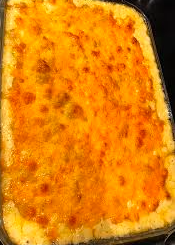
For a deeper golden-brown crust similar to the photograph, switch the oven to the broiler setting.
Broil for approximately 1–2 minutes, watching continuously to prevent burning.
Remove the dish once the cheese develops the desired golden color.
Step 11: Rest and serve
Remove the baking dish from the oven.
Allow the macaroni and cheese to rest for approximately 10 minutes.
This helps the sauce settle and makes serving easier.
Scoop generous portions onto serving plates and enjoy while warm.
8. Description
Classic Southern Baked Macaroni and Cheese is a rich oven-baked pasta dish characterized by its creamy interior and beautifully browned cheese topping.
The elbow macaroni is coated in a homemade cheese sauce prepared from butter, flour, whole milk, heavy cream, and a combination of flavorful cheeses.
The sharp cheddar provides a distinctive cheese flavor, while Colby Jack contributes smoothness and mozzarella helps create a soft, stretchy texture.
During baking, the cheese melts completely and develops a bubbly golden crust across the surface.
The finished dish features a creamy, tender interior with a slightly firm and caramelized cheese topping.
Its combination of savory flavors, smooth texture, and attractive appearance makes it a popular comfort food and an excellent addition to family meals.
9. Nutritional Information
The following values are approximate estimates per serving, assuming the recipe produces 10 servings.
| Nutritional Component | Estimated Amount |
|---|---|
| Calories | 450–520 kcal |
| Protein | 18–22 g |
| Carbohydrates | 38–45 g |
| Fat | 25–32 g |
| Fiber | 1–2 g |
| Sugar | 4–6 g |
| Sodium | 450–650 mg |
Nutritional highlights:
- Cheese provides protein and calcium.
- Milk contributes calcium and additional protein.
- Macaroni provides carbohydrates for energy.
- Butter and cream contribute fat and richness.
- Different cheese varieties provide additional minerals and nutrients.
The nutritional composition varies according to the cheese varieties, dairy products, portion sizes, and additional ingredients used.
10. Conclusion
Classic Southern Baked Macaroni and Cheese is a delicious and satisfying comfort food that combines tender pasta with a rich homemade cheese sauce.
Its preparation involves simple cooking techniques, including boiling pasta, preparing a roux, melting cheese, assembling the layers, and baking until golden.
The combination of cheddar, Colby Jack, and mozzarella creates a flavorful and creamy dish with an attractive golden-brown crust.
Its versatility makes it suitable for family dinners, holiday celebrations, gatherings, and everyday meals.
With carefully selected ingredients and proper baking techniques, this recipe produces a creamy interior and a beautifully browned cheese topping.
11. Recommendation
Classic Southern Baked Macaroni and Cheese is highly recommended for anyone looking for a homemade pasta dish with a rich cheese flavor and an appealing baked finish.
For the best results:
- Select high-quality cheese varieties.
- Shred the cheese immediately before preparation.
- Cook the macaroni until slightly firm.
- Prepare a smooth and lump-free roux.
- Avoid overheating the cheese sauce.
- Distribute the cheese evenly throughout the dish.
- Reserve enough cheese for the topping.
- Bake until the surface becomes golden and bubbly.
- Allow the dish to rest before serving.
Recommended pairings:
- Southern fried chicken.
- Barbecue chicken.
- Roasted turkey.
- Grilled beef.
- Baked turkey wings.
- Steamed broccoli.
- Green beans.
- Fresh garden salad.
- Roasted vegetables.
- Cornbread.
For an attractive presentation, serve the macaroni in a rectangular ceramic or glass baking dish, highlighting its golden cheese crust.
12. Embracing Healthful Indulgence
Classic Baked Macaroni and Cheese can be enjoyed as part of a balanced and varied diet.
Its ingredients provide carbohydrates, protein, calcium, and other nutrients. However, the combination of butter, heavy cream, and several cheeses also makes it relatively rich in calories, saturated fat, and sodium.
For a lighter variation, consider:
- Using reduced-fat milk.
- Replacing some heavy cream with additional milk.
- Reducing the amount of butter.
- Using moderate quantities of cheese.
- Incorporating broccoli, spinach, or other vegetables.
- Adding whole-wheat macaroni for additional fiber.
- Choosing lower-sodium cheese varieties.
- Serving moderate portions.
- Pairing the dish with fresh vegetables or a garden salad.
These modifications can improve the nutritional balance while preserving the creamy texture and satisfying cheese flavor.
The principle of healthful indulgence is to appreciate flavorful homemade dishes while maintaining variety, moderation, and balance in everyday eating.