
1. Introduction
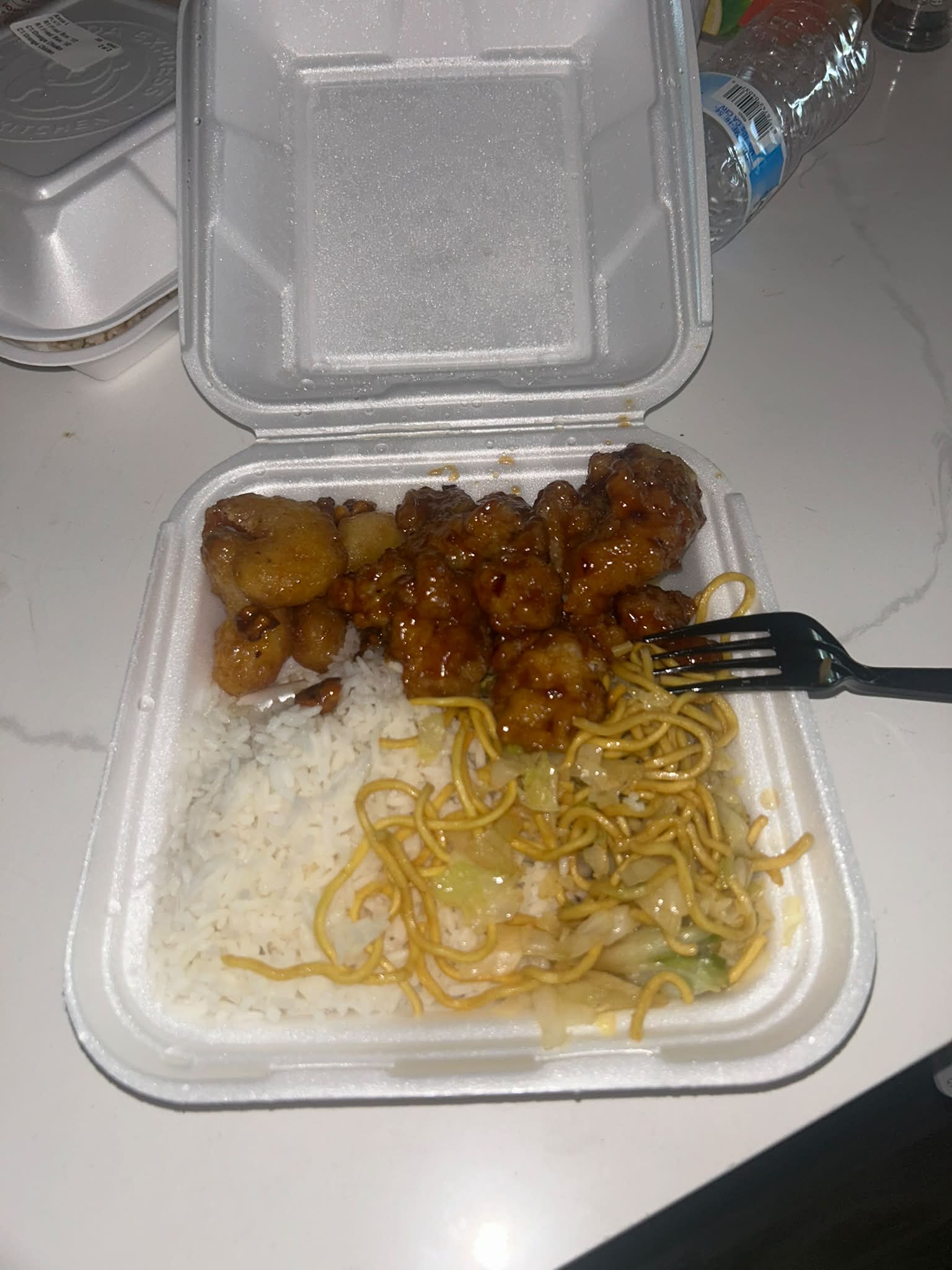
Panda Express-Style Orange Chicken and Chow Mein is a delicious homemade combination featuring crispy chicken coated in a sweet, tangy orange glaze and savory stir-fried noodles with fresh vegetables.
The golden chicken delivers a satisfying crunch beneath its glossy orange sauce, while the chow mein combines tender noodles, cabbage, onions, and celery in a flavorful soy-based seasoning.
Perfect for family dinners or homemade takeout nights, this copycat recipe brings two popular American-Chinese restaurant favorites to your kitchen.
2. Origin and Cultural Significance
Orange chicken and chow mein are popular dishes in American-Chinese cuisine.
Chow mein originated from Chinese noodle-cooking traditions and has developed numerous regional variations.
American-style orange chicken features battered, fried chicken pieces coated in a sweet citrus sauce.
Panda Express helped popularize this preparation through its signature Original Orange Chicken. The restaurant also features chow mein and Honey Walnut Shrimp among its familiar menu offerings. pandaexpress.com
This homemade recipe is inspired by those restaurant flavors but is not an official Panda Express recipe.
3. Ingredients
Servings: 4
For the Crispy Orange Chicken
- 1 lb (450 g) boneless, skinless chicken thighs, cut into 1-inch cubes
- 1 large egg, beaten
- ½ cup cornstarch
- ¼ cup all-purpose flour
- Salt and black pepper, to taste
- Vegetable or canola oil, for deep-frying
For the Orange Sauce
- ½ cup fresh orange juice
- ¼ cup chicken broth or water
- ⅓ cup granulated sugar
- 2 tablespoons soy sauce
- 2 tablespoons rice vinegar
- 1 tablespoon sesame oil
- 1 garlic clove, minced
- ½ teaspoon freshly grated ginger
- ¼ teaspoon red pepper flakes (optional)
- 1 tablespoon cornstarch
- 2 tablespoons water, for the cornstarch slurry
For the Chow Mein
- 10–12 oz (280–340 g) yakisoba noodles or thin stir-fry egg noodles
- 2 cups green cabbage, shredded
- 1 cup yellow onion, thinly sliced
- 2 celery stalks, sliced diagonally
- 2 tablespoons vegetable oil
For the Chow Mein Sauce
- 2 tablespoons soy sauce
- 1 tablespoon oyster sauce
- 1 teaspoon brown sugar
- ½ teaspoon sesame oil
4. Optional Additions
Customize your homemade takeout meal with these extras:
- White rice: Serve alongside the orange chicken for a classic combination.
- Honey Walnut Shrimp: Add as a separate entrée to create a larger restaurant-style platter.
- Green onions: Sprinkle over the chicken or noodles before serving.
- Sesame seeds: Add a light garnish to the orange chicken.
- Broccoli: Stir-fry with the chow mein vegetables.
- Bell peppers: Add sliced red or yellow peppers for extra color.
- Chili flakes: Increase the heat of the orange sauce.
- Orange zest: Add ½ teaspoon to intensify the citrus flavor.
5. Tips for Success
- Use chicken thighs: Their higher fat content helps keep the chicken juicy after frying.
- Dry the chicken: Patting the pieces dry before coating helps the batter adhere.
- Maintain the frying temperature: Keep the oil around 350°F (175°C).
- Fry in batches: Overcrowding causes the oil temperature to drop and can produce soggy chicken.
- Use fresh orange juice: It gives the sauce a brighter flavor.
- Prepare the cornstarch slurry separately: This helps prevent lumps in the glaze.
- Drain the noodles well: Excess water dilutes the chow mein sauce.
- Cook over high heat: Quick stir-frying helps the vegetables retain some crunch.
- Toss the chicken at the end: Coating the fried pieces immediately before serving helps preserve their crisp exterior.
Chicken should reach a minimum internal temperature of 165°F (74°C), measured with a food thermometer. FoodSafety.gov
6. Step-by-Step Instructions
Part One: Prepare the Orange Chicken
Step 1: Prepare the Chicken
Cut the boneless chicken thighs into evenly sized, bite-sized pieces.
Place the chicken in a mixing bowl.
Add the beaten egg and toss until every piece is coated.
In a separate shallow bowl, combine the cornstarch, all-purpose flour, salt, and black pepper.
Dredge the egg-coated chicken pieces through the dry mixture.
Press lightly to ensure the coating adheres.
Step 2: Heat the Frying Oil
Pour approximately 2–3 inches of vegetable oil into a deep, heavy-bottomed pot.
Heat the oil to 350°F (175°C).
Place a wire rack over a baking sheet to hold the fried chicken.
Step 3: Fry the Chicken
Carefully lower a small batch of coated chicken into the hot oil.
Fry for approximately 5–6 minutes, turning occasionally, until golden brown and crispy.
The exact cooking time depends on the size of the pieces.
Ensure the chicken reaches an internal temperature of 165°F (74°C).
Transfer the fried chicken to the wire rack.
Repeat with the remaining chicken.
Step 4: Prepare the Orange Sauce
In a medium saucepan, heat a small splash of oil over medium heat.
Add the minced garlic and grated ginger.
Sauté for approximately 30 seconds until fragrant.
Pour in:
- Fresh orange juice
- Chicken broth
- Granulated sugar
- Soy sauce
- Rice vinegar
- Sesame oil
- Red pepper flakes, if using
Stir until combined.
Bring the mixture to a gentle simmer.
Step 5: Thicken the Sauce
In a small bowl, whisk together 1 tablespoon cornstarch and 2 tablespoons water.
Slowly pour the slurry into the simmering orange sauce.
Whisk continuously until the sauce thickens and becomes glossy.
Simmer briefly until the cornstarch is fully cooked and the sauce reaches a consistency that coats the back of a spoon.
Remove from the heat.
Step 6: Coat the Crispy Chicken
Transfer the fried chicken into a large mixing bowl.
Pour the warm orange sauce over the chicken.
Gently toss until every piece is evenly coated.
The finished chicken should have a glossy orange glaze while retaining some crispness beneath the sauce.
Set aside while finishing the chow mein.
Part Two: Prepare the Chow Mein
Step 7: Prepare the Noodles
Cook or refresh the yakisoba noodles according to the package instructions.
Drain thoroughly.
If the noodles are stuck together, gently separate them with tongs.
Set aside.
Step 8: Prepare the Chow Mein Sauce
In a small bowl, combine:
- Soy sauce
- Oyster sauce
- Brown sugar
- Sesame oil
Stir until the brown sugar dissolves.
Set aside.
Step 9: Stir-Fry the Vegetables
Heat 2 tablespoons vegetable oil in a large wok or skillet over high heat.
Add the sliced onions, celery, and shredded cabbage.
Stir-fry for approximately 2–3 minutes.
The vegetables should soften slightly while maintaining some crunch.
Step 10: Add the Noodles
Add the prepared noodles directly to the wok.
Use tongs to combine them with the vegetables.
Stir-fry for approximately 1 minute.
Step 11: Add the Chow Mein Sauce
Pour the prepared sauce evenly over the noodles.
Toss continuously for another 2 minutes.
The noodles should become evenly coated and heated through.
Remove from the heat.
Step 12: Assemble and Serve
Divide the chow mein between four serving plates.
Add a generous portion of orange chicken beside the noodles.
For a larger restaurant-style platter, serve with steamed white rice and prepared Honey Walnut Shrimp.
Garnish with sliced green onions or sesame seeds if desired.
Serve immediately while the chicken is crispy and the noodles are hot.
7. Description
This homemade Orange Chicken and Chow Mein combination delivers the comforting flavors of American-Chinese takeout.
The orange chicken features bite-sized pieces of tender chicken surrounded by a golden, crispy coating.
A glossy sauce made with fresh orange juice, soy sauce, sugar, ginger, and garlic adds sweetness, acidity, and a subtle savory depth.
The chow mein provides a flavorful contrast, combining tender stir-fried noodles with lightly crisp cabbage, onion, and celery.
Together, the two dishes create a satisfying balance of crispy, saucy, tender, and savory textures.
8. Nutritional Information
The following nutritional values are approximate estimates per serving, assuming the orange chicken and chow mein are divided into four portions.
| Nutrient | Estimated Amount |
|---|---|
| Calories | 650–850 kcal |
| Protein | 25–35 g |
| Carbohydrates | 75–100 g |
| Total Fat | 25–40 g |
| Fiber | 3–5 g |
| Sugar | 18–25 g |
| Sodium | 900–1,500 mg |
Actual values depend on noodle type, frying oil absorption, sauce quantities, and portion sizes. White rice and Honey Walnut Shrimp are not included in these estimates.
9. Recipe Details
| Details | Information |
|---|---|
| Preparation Time | 20 minutes |
| Cooking Time | 25–30 minutes |
| Total Time | 45–50 minutes |
| Servings | 4 |
| Difficulty | Intermediate |
| Cuisine | American-Chinese Inspired |
| Course | Main Course / Dinner |
| Cooking Methods | Deep-Frying and Stir-Frying |
10. Conclusion
Homemade Orange Chicken and Chow Mein is a delicious way to recreate the flavors of a popular Chinese-American takeout meal.
The combination of crispy, sweet-and-tangy chicken and savory vegetable noodles makes this recipe satisfying and suitable for family dinners.
Preparing both dishes at home also allows you to customize the sweetness, spice level, and ingredients.
Whether you’re cooking for a special occasion or simply craving restaurant-style comfort food, this homemade version is a flavorful choice.
11. Recommendation
For the best results, serve the orange chicken immediately after tossing it in the sauce.
Serving Suggestions
- Pair with steamed jasmine rice.
- Add prepared Honey Walnut Shrimp for a larger meal.
- Serve with stir-fried broccoli.
- Garnish with sliced green onions.
- Add extra orange sauce for dipping.
- Include a side of sautéed vegetables.
Storage Instructions
Refrigerator: Store leftover orange chicken and chow mein separately in airtight containers for up to 3–4 days.
Freezer: Freeze cooked chicken without sauce for up to 2 months. Store the sauce separately.
Reheating: Reheat the chicken thoroughly in the oven or air fryer to help restore some crispness. Warm the sauce separately and toss before serving.
Chow Mein: Reheat in a skillet with a small splash of water until hot.
For optimal texture, avoid combining the fried chicken with the orange sauce until shortly before serving.
12. Embracing Healthful Indulgence
Orange Chicken and Chow Mein are flavorful comfort foods that can be enjoyed occasionally as part of a varied diet.
Chicken provides protein, while noodles supply carbohydrates for energy. The cabbage, onion, and celery add vegetables and some dietary fiber.
For a lighter homemade variation, consider:
- Reducing the amount of sugar in the orange sauce.
- Using less oil when preparing the chow mein.
- Increasing the quantity of vegetables.
- Serving smaller portions of fried chicken.
- Choosing lower-sodium soy sauce.
- Pairing the meal with steamed vegetables instead of additional fried dishes.
These adjustments help balance the meal while maintaining its characteristic flavors.
With its crispy orange-glazed chicken and savory stir-fried noodles, this homemade Panda Express-inspired meal is a delicious way to bring your favorite takeout flavors to the dinner table.