
1. Introduction
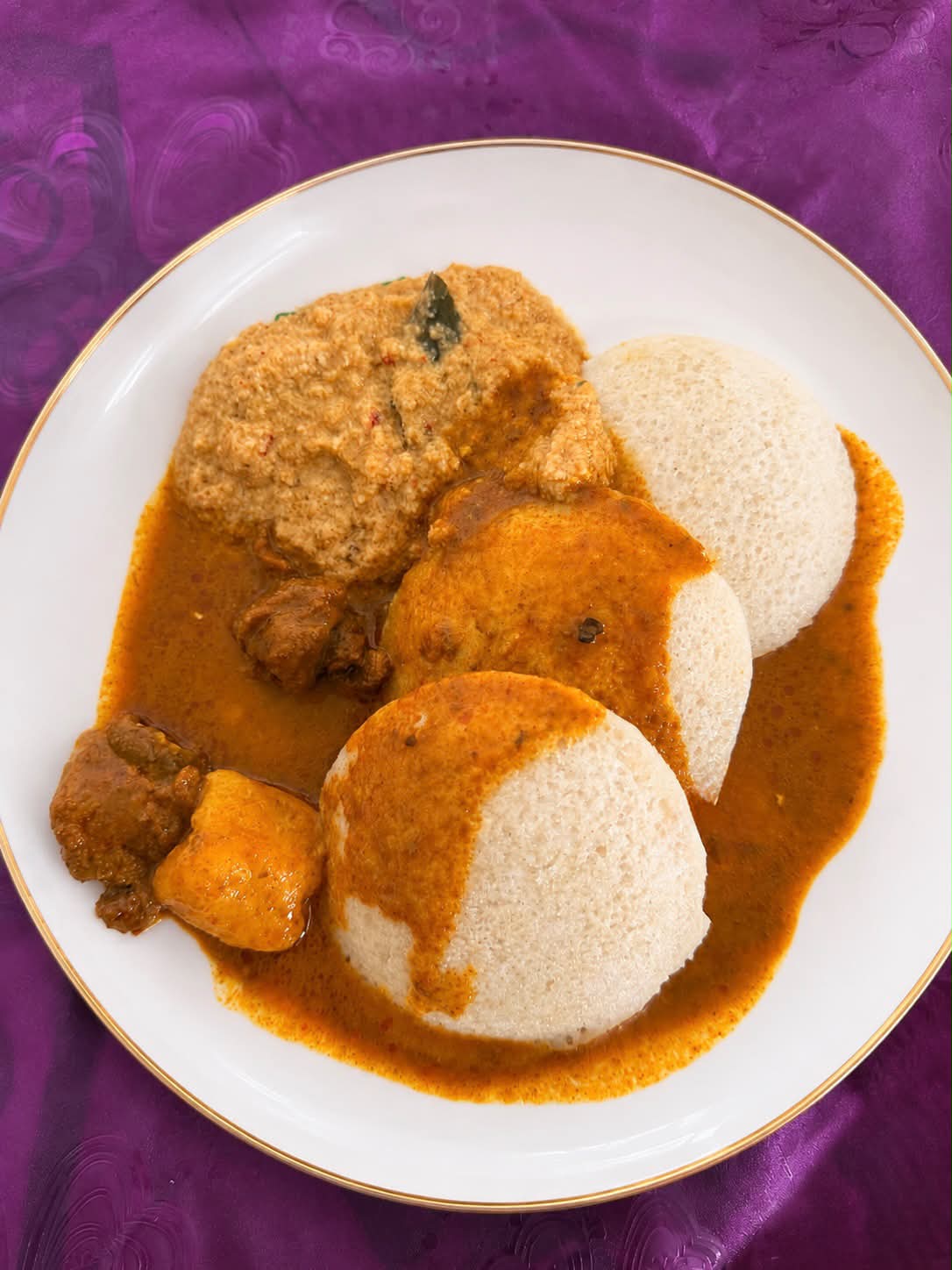
Soft South Indian Idli with Chicken Kuzhambu and Coconut Thogayal is a comforting, flavorful meal that brings together three beloved elements of South Indian cooking: fluffy steamed rice cakes, aromatic chicken curry, and thick, spicy coconut chutney.
This satisfying combination is especially popular in Tamil Nadu and other parts of South India, where idlis are enjoyed not only with traditional vegetarian accompaniments but also with rich, slow-cooked meat gravies.
The idlis are made from a naturally fermented batter of parboiled rice and urad dal. After steaming, they develop a soft, airy texture that makes them perfect for absorbing flavorful sauces.
Chicken Kuzhambu, also known as Kozhi Kuzhambu, provides the savory centerpiece of the meal.
Prepared with bone-in chicken, onions, tomatoes, curry leaves, ginger-garlic paste, and fragrant spices, the gravy develops a deep, warming flavor.
Fresh coconut paste adds body and richness, helping create a smooth sauce that coats the chicken and soaks beautifully into the idlis.
The third component, Coconut Thogayal, adds a concentrated burst of flavor.
Unlike thinner coconut chutneys, thogayal is traditionally prepared as a dense paste using grated coconut, roasted chana dal, dried red chilies, curry leaves, and tamarind.
Its spicy, tangy, and nutty character provides a wonderful contrast to the soft idlis and rich chicken gravy.
When served together, these three preparations create a satisfying balance of textures and flavors.
The soft idlis absorb the spicy curry, while the thick coconut thogayal adds freshness, heat, and a pleasant nutty finish.
Although preparing fermented idli batter requires advance planning, the actual cooking process is straightforward.
This meal is ideal for weekend breakfasts, family brunches, traditional South Indian lunches, and comforting homemade dinners.
2. Origin and Cultural Significance
Idli is one of the most recognizable foods in South Indian cuisine.
These soft, steamed rice cakes are particularly associated with Tamil Nadu, Karnataka, Andhra Pradesh, Telangana, and Kerala.
Their precise historical origins are debated, but idli has been part of South Indian food traditions for centuries.
Modern idli is commonly prepared using fermented rice and urad dal batter.
Fermentation contributes a mild tanginess and helps create the characteristic airy texture.
Because idlis are steamed rather than fried, they are often enjoyed as a relatively light breakfast food.
They are commonly served with coconut chutney, sambar, and various spice powders.
However, South Indian food traditions also include numerous non-vegetarian accompaniments.
In many Tamil households and local eateries, idlis are served with chicken gravy, mutton kuzhambu, or other richly spiced meat preparations.
These combinations are especially associated with hearty weekend breakfasts and family meals.
Kuzhambu refers broadly to a category of flavorful South Indian gravies.
Different versions may contain vegetables, lentils, tamarind, coconut, fish, chicken, or mutton.
Kozhi Kuzhambu is a chicken-based variation prepared with aromatic spices, onions, tomatoes, and regional seasoning combinations.
Curry leaves, coriander powder, turmeric, chili powder, and fennel are commonly used to develop its distinctive flavor.
Coconut Thogayal is another traditional South Indian accompaniment.
It is generally thicker than standard coconut chutney and is often prepared with roasted ingredients and a small quantity of water.
The combination of soft idlis, spicy chicken gravy, and thick coconut thogayal reflects the diversity of South Indian home cooking.
It also highlights the importance of shared meals, traditional preparation techniques, and flavorful accompaniments in regional food culture.
3. Ingredients
This recipe contains three separate preparations: traditional steamed idlis, chicken kuzhambu, and coconut thogayal.
A. For the Traditional Soft Idlis
| Ingredient | Amount |
|---|---|
| Idli rice or parboiled rice | 3 cups |
| Whole skinned urad dal (black gram) | 1 cup |
| Fenugreek seeds (methi) | ½ teaspoon |
| Salt | 1 teaspoon |
| Water | As needed for soaking and grinding |
| Oil or ghee | For greasing |
Yield: Approximately 20 idlis, depending on mold size.
B. For the South Indian Chicken Kuzhambu
| Ingredient | Amount |
|---|---|
| Bone-in chicken, cut into small pieces | 500 g |
| Medium onions, finely chopped | 2 |
| Medium tomatoes, chopped | 2 |
| Ginger-garlic paste | 1 tablespoon |
| Curry leaves | 1–2 sprigs |
| Turmeric powder | ½ teaspoon |
| Red chili powder | 1½ teaspoons |
| Coriander powder | 2 teaspoons |
| Garam masala or fennel powder | 1 teaspoon |
| Oil or ghee | 2 tablespoons |
| Fresh grated coconut paste | 3 tablespoons |
| Water | 1½ cups |
| Salt | To taste |
| Fresh cilantro | For garnishing |
Yield: Approximately 4 servings.
C. For the Thick Coconut Thogayal
| Ingredient | Amount |
|---|---|
| Fresh grated coconut | 1 cup |
| Roasted chana dal (daria) | 2 tablespoons |
| Dried red chilies | 2–3 |
| Curry leaves | 1 sprig |
| Tamarind | 1 small marble-sized piece |
| Oil | 1 teaspoon |
| Water | 1–2 tablespoons |
| Salt | To taste |
Equipment
- Large mixing bowls
- Wet grinder or high-powered blender
- Idli steamer and molds
- Heavy-bottomed pot or pressure cooker
- Small frying pan
- Blender or food processor
- Spatula and ladle
- Measuring cups and spoons
4. Optional Additions
This traditional meal can be customized with ingredients that complement its South Indian flavors.
Fresh Ginger: Add a little freshly grated ginger to the chicken gravy for extra warmth.
Fennel Seeds: Add a small amount while sautéing the onions for a fragrant Tamil-style variation.
Cinnamon: Include a small cinnamon stick in the chicken gravy for additional aromatic depth.
Cloves: Add one or two cloves to the hot oil before sautéing the onions.
Black Pepper: Sprinkle freshly ground black pepper into the chicken gravy for a sharper heat.
Green Chilies: Add sliced green chilies for additional spice.
Fresh Mint: Add a small handful to the chicken gravy for a refreshing herbal note.
Extra Coconut: Increase the coconut paste slightly for a richer, thicker gravy.
Roasted Garlic: Add a small roasted garlic clove to the coconut thogayal for additional flavor.
Sesame Oil: Use a small amount in the thogayal for a distinctive nutty aroma.
Extra Curry Leaves: Add more curry leaves to enhance the fragrance of the chicken gravy.
Mutton Variation: Replace chicken with mutton for a richer meat gravy, adjusting the cooking time and liquid quantity until the meat is tender and safely cooked.
For the classic combination, the original ingredients provide a satisfying balance of spice, tanginess, and richness.
5. Tips for Success
The most important step in preparing soft idlis is achieving a properly fermented batter.
Use idli rice or parboiled rice rather than ordinary cooked rice.
Wash the rice and urad dal separately to remove excess surface starch and impurities.
Soak both ingredients for at least four to five hours before grinding.
Grind the urad dal until smooth, light, and fluffy.
The rice should be ground to a fine but slightly grainy consistency.
Avoid adding too much water while grinding because an overly thin batter may produce flat idlis.
Mix the rice and urad dal batters thoroughly before fermentation.
Use a large container because the batter can expand considerably.
Fermentation is affected by temperature. Warm conditions generally encourage faster fermentation, while cooler kitchens may require additional time.
The batter should become airy, visibly expanded, and pleasantly tangy.
Steam the idlis over properly heated water and avoid opening the lid repeatedly.
Allow them to rest briefly after steaming before removing them from the molds.
For the chicken kuzhambu, sauté the onions until lightly golden to build a flavorful base.
Cook the tomatoes until softened before adding the chicken.
Use bone-in chicken for a richer gravy.
Allow the chicken to simmer until fully cooked and tender.
For food safety, chicken should reach an internal temperature of 165°F (74°C).
Add the coconut paste near the end of cooking to create a rich, cohesive sauce.
For the coconut thogayal, use only a small quantity of water.
The finished chutney should be thick and concentrated rather than thin and pourable.
Serve the idlis warm with hot chicken gravy so the rice cakes can absorb the sauce.
6. Step-by-Step Instructions
Part A: Preparing the Traditional Soft Idlis
Step 1: Measure the Rice
Measure 3 cups idli rice or parboiled rice.
Place it in a large bowl.
Step 2: Wash the Rice
Rinse the rice several times with clean water.
Drain away the cloudy water.
Step 3: Measure the Urad Dal
Place 1 cup whole skinned urad dal in a separate bowl.
Step 4: Wash the Urad Dal
Rinse thoroughly until the water becomes relatively clear.
Step 5: Add the Fenugreek Seeds
Add ½ teaspoon fenugreek seeds to the urad dal.
Step 6: Soak the Rice
Cover the rice with plenty of fresh water.
Allow it to soak for approximately 4–5 hours.
Step 7: Soak the Urad Dal
Cover the urad dal and fenugreek seeds with fresh water.
Soak for approximately 4–5 hours.
Step 8: Drain the Urad Dal
After soaking, drain the urad dal.
Reserve a little cold water for grinding.
Step 9: Grind the Urad Dal
Transfer the soaked urad dal and fenugreek seeds to a wet grinder or blender.
Step 10: Add Water Gradually
Add small splashes of cold water while grinding.
Avoid adding too much at once.
Step 11: Develop a Fluffy Texture
Continue grinding until the urad dal becomes smooth, airy, and fluffy.
Step 12: Transfer the Urad Dal Batter
Pour the ground urad dal into a large fermentation container.
Step 13: Drain the Rice
Drain the soaked rice thoroughly.
Step 14: Grind the Rice
Transfer the rice to the grinder.
Add water gradually as needed.
Step 15: Check the Rice Texture
Grind until the rice resembles fine, slightly grainy wet semolina.
Step 16: Combine the Batters
Add the ground rice to the urad dal batter.
Step 17: Mix Thoroughly
Mix the two batters until evenly combined.
Use clean hands or a sturdy spoon.
Step 18: Prepare for Fermentation
Cover the container loosely, allowing room for expansion.
Step 19: Ferment the Batter
Leave in a suitable warm place for approximately 8–12 hours.
The time may vary depending on the temperature.
Step 20: Check the Fermentation
The batter should appear airy and noticeably expanded.
It should have a pleasantly fermented aroma.
Step 21: Add the Salt
Add approximately 1 teaspoon salt.
Fold gently into the fermented batter.
Step 22: Prepare the Steamer
Add water to the idli steamer.
Bring it to a steady boil.
Step 23: Grease the Idli Molds
Lightly grease the molds with oil or ghee.
Step 24: Fill the Molds
Spoon the fermented batter into each mold.
Avoid overfilling.
Step 25: Steam the Idlis
Place the filled molds in the steamer.
Cover and steam for approximately 10–12 minutes.
Step 26: Check for Doneness
Insert a toothpick into the center of an idli.
It should come out without wet batter.
Step 27: Rest the Idlis
Remove the molds from the steamer.
Allow them to stand for approximately 2 minutes.
Step 28: Remove from the Molds
Use a lightly moistened spoon to gently release the idlis.
Keep them warm until serving.
Part B: Preparing the South Indian Chicken Kuzhambu
Step 29: Prepare the Chicken
Place 500 g bone-in chicken pieces in a clean bowl.
Keep the chicken refrigerated until cooking.
Step 30: Prepare the Onions
Peel and finely chop 2 medium onions.
Step 31: Prepare the Tomatoes
Wash and chop 2 medium tomatoes.
Step 32: Prepare the Curry Leaves
Rinse 1–2 sprigs curry leaves.
Pat them dry.
Step 33: Measure the Spices
Measure the turmeric powder, chili powder, coriander powder, and garam masala or fennel powder.
Step 34: Prepare the Coconut Paste
Blend fresh grated coconut with a little water until smooth.
Measure approximately 3 tablespoons.
Step 35: Heat the Cooking Pot
Place a heavy-bottomed pot over medium heat.
Step 36: Add the Oil
Pour in 2 tablespoons oil or ghee.
Allow it to heat.
Step 37: Add the Curry Leaves
Carefully add the curry leaves.
Allow them to sizzle briefly.
Step 38: Add the Onions
Add the finely chopped onions.
Step 39: Sauté the Onions
Cook until translucent and lightly golden.
Stir frequently.
Step 40: Add the Ginger-Garlic Paste
Stir in 1 tablespoon ginger-garlic paste.
Step 41: Cook Until Fragrant
Sauté for approximately 1 minute until the raw aroma diminishes.
Step 42: Add the Tomatoes
Add the chopped tomatoes.
Step 43: Soften the Tomatoes
Cook until the tomatoes become soft and begin breaking down.
Step 44: Add the Turmeric
Sprinkle in ½ teaspoon turmeric powder.
Step 45: Add the Chili Powder
Add 1½ teaspoons red chili powder.
Step 46: Add the Coriander Powder
Stir in 2 teaspoons coriander powder.
Step 47: Add the Salt
Season with salt to taste.
Step 48: Combine the Masala
Stir until the spices are evenly mixed with the onion and tomato base.
Step 49: Add the Chicken
Place the chicken pieces into the pot.
Step 50: Sauté the Chicken
Cook for approximately 4–5 minutes, stirring occasionally.
The exterior should begin turning opaque.
Step 51: Add the Water
Pour in 1½ cups water.
Step 52: Combine the Gravy
Stir gently to distribute the spices throughout the liquid.
Step 53: Cover the Pot
Place the lid on the pot.
Step 54: Simmer the Chicken
Cook until the chicken becomes tender and reaches an internal temperature of at least 165°F (74°C).
This may take approximately 20–30 minutes on the stovetop, depending on the size of the pieces.
Step 55: Check the Gravy
Remove the lid carefully.
Stir and check the consistency.
Step 56: Add the Coconut Paste
Stir in 3 tablespoons fresh coconut paste.
Step 57: Add the Final Spice
Add 1 teaspoon garam masala or fennel powder.
Step 58: Simmer the Gravy
Allow the gravy to simmer uncovered over low heat for approximately 5 minutes.
Step 59: Adjust the Consistency
If the gravy is too thick, add a small amount of hot water.
If it is too thin, simmer a little longer.
Step 60: Garnish
Sprinkle freshly chopped cilantro over the chicken gravy.
Keep warm until serving.
Part C: Preparing the Thick Coconut Thogayal
Step 61: Measure the Coconut
Place 1 cup freshly grated coconut in a bowl.
Step 62: Measure the Roasted Chana Dal
Measure 2 tablespoons roasted chana dal.
Step 63: Prepare the Chilies
Take 2–3 dried red chilies.
Adjust the quantity according to your spice preference.
Step 64: Prepare the Tamarind
Measure a small marble-sized piece of tamarind.
Remove any seeds or hard fibers.
Step 65: Heat a Small Pan
Place a small frying pan over medium-low heat.
Step 66: Add the Oil
Add 1 teaspoon oil.
Step 67: Toast the Chilies
Add the dried red chilies.
Stir briefly until fragrant.
Step 68: Add the Curry Leaves
Add 1 sprig curry leaves.
Toast for approximately 1 minute, taking care not to burn them.
Step 69: Transfer to a Blender
Place the toasted chilies and curry leaves in a blender.
Step 70: Add the Coconut
Add the grated coconut.
Step 71: Add the Chana Dal
Add 2 tablespoons roasted chana dal.
Step 72: Add the Tamarind
Place the tamarind into the blender.
Step 73: Add the Salt
Season with salt to taste.
Step 74: Add a Little Water
Pour in approximately 1 tablespoon water.
Step 75: Grind the Thogayal
Blend into a thick, coarse-to-smooth paste.
Step 76: Adjust the Texture
If necessary, add another tablespoon of water.
Avoid making the thogayal runny.
Step 77: Transfer to a Serving Bowl
Spoon the thick coconut thogayal into a small serving dish.
Part D: Assembling the Meal
Step 78: Arrange the Idlis
Place 3–5 warm idlis on each serving plate, depending on appetite.
Step 79: Add the Chicken Gravy
Ladle hot chicken kuzhambu over the idlis.
Step 80: Allow the Idlis to Absorb the Gravy
Let the idlis sit briefly so they absorb some of the flavorful sauce.
Step 81: Add the Chicken Pieces
Arrange tender chicken pieces alongside or over the idlis.
Step 82: Serve the Thogayal
Place a generous spoonful of coconut thogayal on the side.
Step 83: Garnish
Finish with a little fresh cilantro if desired.
Step 84: Serve Immediately
Enjoy the warm, fluffy idlis with rich chicken gravy and thick coconut thogayal.
7. Description
Soft South Indian Idli with Chicken Kuzhambu and Coconut Thogayal is a hearty meal featuring three distinct textures and flavor profiles.
The idlis are light, fluffy, and mildly tangy from natural fermentation.
Their soft, porous texture makes them ideal for absorbing savory gravy.
The chicken kuzhambu is rich, aromatic, and moderately spicy.
Onions, tomatoes, ginger-garlic paste, curry leaves, turmeric, chili powder, and coriander powder create a flavorful sauce.
Bone-in chicken contributes additional savory depth, while coconut paste gives the gravy a smooth, slightly thick consistency.
The coconut thogayal is dense, nutty, spicy, and tangy.
Roasted chana dal adds body, dried chilies provide heat, and tamarind contributes acidity.
When served together, the dish offers a satisfying contrast between soft steamed rice cakes, tender chicken, rich gravy, and concentrated coconut chutney.
8. Nutritional Information
Approximate values per serving, assuming 4 servings of chicken gravy, one-quarter of the coconut thogayal, and 4 medium idlis per person:
| Nutrient | Estimated Amount |
|---|---|
| Calories | 700–900 kcal |
| Protein | 30–40 g |
| Carbohydrates | 75–95 g |
| Total Fat | 28–40 g |
| Saturated Fat | 9–15 g |
| Fiber | 6–9 g |
| Sugar | 5–9 g |
| Sodium | 650–1,000 mg |
These values are estimates. Actual nutrition depends on the size of the idlis, amount of chicken consumed, bone content, oil, coconut, and portion size. The idli recipe makes approximately 20 pieces, so not all idlis may be used in four servings.
9. Recipe Details
| Category | Details |
|---|---|
| Recipe Name | Soft Idli with Chicken Kuzhambu and Coconut Thogayal |
| Cuisine | South Indian / Tamil-Inspired |
| Idli Preparation Time | Approximately 20 Minutes Active |
| Rice and Dal Soaking | 4–5 Hours |
| Batter Fermentation | 8–12 Hours |
| Idli Steaming Time | 10–12 Minutes |
| Chicken Gravy Preparation | 15 Minutes |
| Chicken Gravy Cooking | Approximately 30–40 Minutes |
| Coconut Thogayal Preparation | 5 Minutes |
| Coconut Thogayal Cooking | 5 Minutes |
| Total Elapsed Time | Approximately 13–18 Hours, Including Soaking and Fermentation |
| Idli Yield | Approximately 20 |
| Chicken Gravy Servings | 4 |
| Difficulty | Intermediate |
| Main Ingredients | Rice, Urad Dal, Chicken, Coconut, Spices |
| Cooking Methods | Fermentation, Steaming, Simmering, Grinding |
| Course | Breakfast, Brunch, Main Meal |
| Flavor Profile | Savory, Spicy, Tangy, Aromatic |
| Best For | Weekend Breakfasts, Family Meals, Traditional-Style Brunches |
10. Conclusion
Soft South Indian Idli with Chicken Kuzhambu and Coconut Thogayal is a comforting meal that celebrates the richness and variety of South Indian cooking.
The naturally fermented idli batter produces soft, airy rice cakes that pair beautifully with flavorful gravies.
The chicken kuzhambu combines tender chicken, aromatic spices, tomatoes, curry leaves, and coconut paste to create a satisfying sauce.
The thick coconut thogayal adds a concentrated mixture of nutty, spicy, and tangy flavors.
Together, these three preparations create a balanced combination of textures and tastes.
Although the idli batter requires advance soaking and fermentation, the remaining components can be prepared while the idlis are steaming.
This meal is especially suitable for leisurely weekend breakfasts, family gatherings, and hearty homemade lunches.
11. Serving and Storage Recommendations
Serving Suggestions: Serve 3–5 warm idlis with a generous portion of chicken kuzhambu and a spoonful of coconut thogayal.
Traditional-Style Presentation: Ladle the hot gravy directly over the idlis so they absorb the sauce.
Additional Accompaniments: Serve with extra coconut chutney, onion slices, or a small portion of vegetable poriyal.
Idli Storage: Refrigerate cooked idlis in an airtight container for approximately 2–3 days.
Chicken Gravy Storage: Refrigerate cooked chicken gravy promptly and consume within approximately 3–4 days.
Thogayal Storage: Because it contains fresh coconut, refrigerate immediately and preferably consume within 1–2 days.
Reheating Idlis: Steam briefly until thoroughly hot to help restore their soft texture.
Reheating Chicken Gravy: Reheat until it reaches 165°F (74°C).
Freezing: Cooked idlis and chicken gravy can be frozen separately in airtight containers for approximately 2–3 months for best quality.
Make-Ahead: Prepare the idli batter the previous day and refrigerate it after fermentation if not steaming immediately. Chicken gravy can also be prepared ahead and reheated before serving.
Food Safety: Keep raw chicken separate from ready-to-eat ingredients and refrigerate perishable foods promptly.
12. Embracing Healthful Indulgence
Soft South Indian Idli with Chicken Kuzhambu and Coconut Thogayal combines fermented grains and legumes, protein-rich chicken, vegetables, and aromatic spices.
Idlis are steamed rather than fried, which means they require relatively little added fat during cooking.
The combination of rice and urad dal contributes carbohydrates, some protein, and small amounts of dietary fiber.
Fermentation helps develop the idlis’ distinctive texture and flavor.
Chicken provides protein, vitamin B12, and minerals such as selenium and phosphorus.
Onions and tomatoes contribute plant compounds and additional nutrients.
Turmeric, coriander, ginger, garlic, and curry leaves add aromatic flavor without requiring sweet sauces.
Fresh coconut provides fat and contributes to the richness of the gravy and thogayal.
However, coconut also contains saturated fat, so portion size is worth considering.
For a lighter meal, serve fewer idlis with a moderate amount of chicken gravy and a smaller spoonful of thogayal.
Skinless chicken can be used to reduce some of the fat content.
Adding a vegetable side dish can increase dietary fiber and variety.
With its fluffy fermented idlis, aromatic chicken kuzhambu, and thick coconut thogayal, this South Indian-inspired meal offers a delicious combination of comfort, tradition, and bold homemade flavor.