
1. Introduction
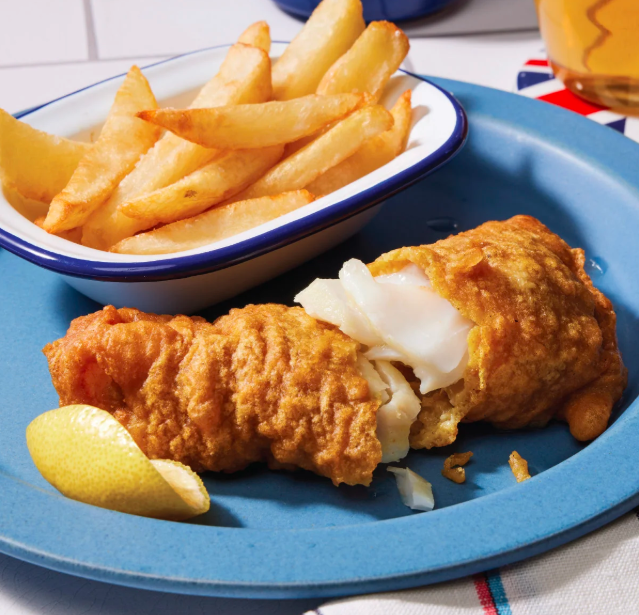
Classic British Fish and Chips is one of the most beloved comfort foods, featuring tender, flaky white fish coated in a beautifully golden, crispy batter, served alongside thick-cut homemade potato chips.
This traditional dish combines the delicate flavor of cod or haddock with a crunchy exterior and soft, fluffy potato centers. The fish is coated in a light, airy batter made with flour, baking powder, paprika, and chilled sparkling water, creating a deliciously crisp texture.
Finished with fresh lemon wedges, sea salt, and malt vinegar, this homemade version delivers a satisfying restaurant-style experience. It is perfect for family dinners, weekend lunches, and casual gatherings.
2. Origin
Fish and Chips originated in Britain during the 19th century, when fried fish and potato chips gradually became a popular combination among working-class communities.
Fried fish traditions were influenced partly by Jewish immigrants from Portugal and Spain, while fried potatoes became increasingly popular across Europe.
By the 1860s, fish and chips were being sold together in British shops, eventually becoming one of the country’s most recognizable traditional meals.
Over time, the dish developed into a national favorite, with specialized fish-and-chip shops serving freshly fried fish, thick-cut potatoes, and traditional accompaniments.
3. Cultural Significance
Fish and Chips holds a special place in British food culture and is widely considered one of the country’s most iconic traditional meals.
For generations, fish-and-chip shops have served as important neighborhood establishments, providing affordable and satisfying meals for families and communities.
The dish is traditionally enjoyed on Fridays, during seaside holidays, and as a popular takeaway meal.
Its cultural importance extends beyond its ingredients, representing British culinary heritage, comfort food traditions, and the simple pleasure of sharing a freshly prepared meal.
Today, Fish and Chips remains popular throughout the United Kingdom and internationally.
4. Ingredients and Quantities
For the Twice-Cooked Chips:
| Ingredient | Quantity |
|---|---|
| Large Russet or Maris Piper potatoes | 4–5 |
| Vegetable or canola oil | As needed |
| Sea salt | To taste |
For the Crispy Fish Batter:
| Ingredient | Quantity |
|---|---|
| Firm white fish fillets (cod, haddock, or barramundi) | 4 large |
| All-purpose flour | 1½ cups |
| Additional flour for dusting | ½ cup |
| Baking powder | 1 tsp |
| Salt | 1 tsp |
| Paprika | ½ tsp |
| Ice-cold sparkling water | 1 cup |
For Serving:
- Fresh lemon wedges.
- Malt vinegar.
- Tartar sauce.
- Fresh parsley, chopped (optional).
- Additional sea salt.
Note: Chilled sparkling water replaces beer to create an alcohol-free, light, and crispy batter.
5. Optional Additions
Enhance your Fish and Chips with these delicious accompaniments:
- Garlic powder: ½ tsp for additional savory flavor.
- Smoked paprika: ½ tsp for a subtle smoky taste.
- Cayenne pepper: ¼ tsp for a gentle spicy kick.
- Lemon zest: ½ tsp for a refreshing citrus aroma.
- Fresh parsley: 1 tbsp, chopped, for garnish.
- Dijon mustard: 1 tsp for a slightly tangy flavor in the batter.
- Tartar sauce: For a creamy and tangy dipping option.
- Mushy peas: A traditional British side dish.
- Coleslaw: For a refreshing and crunchy accompaniment.
- Sweet potato fries: An alternative to traditional potato chips.
6. Tips for Success
- Choose firm white fish: Cod, haddock, and barramundi are excellent choices because they maintain their texture during cooking.
- Dry the fish thoroughly: Removing excess moisture helps the batter adhere properly.
- Use cold sparkling water: The carbonation helps create a lighter batter with a delicate, crispy texture.
- Avoid overmixing: Mix until just combined to prevent developing too much gluten.
- Rest the potatoes after the first cooking stage: This helps remove surface moisture before the final frying.
- Maintain consistent cooking temperatures: Proper temperature control helps produce golden, evenly cooked fish and chips.
- Cook in small batches: Overcrowding can lower the oil temperature and affect crispiness.
- Drain on a wire rack: This allows excess oil to drain while keeping the batter crisp.
- Season immediately: Sprinkle sea salt over the chips while they are still hot.
- Serve immediately: Fish and chips taste best when freshly prepared.
7. Instructions
Step 1: Prepare the Potatoes
Peel the potatoes and cut them into thick, evenly sized batons.
Place them in a large bowl of cold water and soak for approximately 15 minutes to remove excess starch.
Drain thoroughly and pat completely dry using a clean kitchen towel.
Step 2: First-Cook the Chips
Heat vegetable or canola oil in a suitable deep fryer or heavy-bottomed pot.
For this cooking method, the oil should reach approximately 300°F (150°C).
Cook the potato batons in small batches for approximately 3–4 minutes until softened but not browned.
Remove carefully using a slotted spoon and allow them to drain on a wire rack.
Step 3: Prepare the Batter
In a large mixing bowl, combine the all-purpose flour, baking powder, salt, and paprika.
Gradually pour in the ice-cold sparkling water while whisking gently.
Continue mixing until the batter becomes smooth and reaches a consistency similar to thick pancake batter.
Avoid overmixing to maintain a light texture.
Step 4: Prepare the Fish
Pat the fish fillets completely dry using paper towels.
Place the additional flour on a separate plate.
Lightly coat each fish fillet in flour, shaking off any excess.
Dip the floured fish into the prepared batter, ensuring that every side is evenly covered.
Step 5: Cook the Fish
Carefully lower the battered fish into the hot oil, using suitable cooking equipment and adult supervision when handling hot oil.
Cook for approximately 4–5 minutes, depending on the thickness of the fillets.
Turn carefully if necessary until the batter becomes beautifully golden and crispy and the fish reaches an internal temperature of 145°F (63°C).
Remove and place on a wire rack to drain.
Step 6: Finish the Chips
Increase the oil temperature to approximately 375°F (190°C).
Return the partially cooked potato chips to the oil in small batches.
Cook for another 2–3 minutes until golden brown and crispy.
Remove carefully and season immediately with sea salt.
Step 7: Garnish and Serve
Arrange the crispy fish fillets and golden chips on serving plates.
Add fresh lemon wedges, tartar sauce, and a small amount of malt vinegar.
Garnish with freshly chopped parsley if desired.
Serve immediately while everything is hot and crispy.
8. Description
Classic British Fish and Chips features beautifully golden fish fillets covered in a thick, crunchy batter that contrasts perfectly with the tender, flaky white fish inside.
The homemade potato chips are thick-cut, golden, and crispy on the outside while remaining soft and fluffy in the center.
Fresh lemon wedges add a refreshing citrus flavor, while malt vinegar provides a distinctive tangy finish.
Served with creamy tartar sauce and a sprinkle of sea salt, this traditional combination delivers a delicious balance of textures and flavors.
Its simple yet attractive presentation makes it a timeless comfort food favorite.
9. Nutritional Information
APPROXIMATE VALUES PER SERVING · 1/4 OF THE RECIPE
| Nutrient | Amount |
|---|---|
| Calories | 600–750 kcal |
| Protein | 35–45 g |
| Carbohydrates | 65–85 g |
| Total Fat | 20–30 g |
| Dietary Fiber | 5–7 g |
| Sugars | 2–4 g |
Nutritional Benefits:
- White fish: Provides high-quality protein and important nutrients, including vitamin B12 and selenium.
- Potatoes: Supply carbohydrates, potassium, and vitamin C.
- Lemon: Provides vitamin C and refreshing flavor.
- Paprika: Contains naturally occurring antioxidants.
- Sparkling water batter: Provides a light alternative to beer-based batter without adding alcohol.
Nutritional values are estimates and depend on fish type, oil absorption, potato portions, and serving accompaniments.
10. Conclusion
Classic British Fish and Chips is a timeless dish that celebrates the simplicity and appeal of traditional comfort food.
The combination of tender white fish, crispy golden batter, and fluffy homemade chips creates a satisfying meal that has remained popular for generations.
With its delicious texture, straightforward preparation, and familiar flavors, this recipe brings the traditional British fish-and-chip experience into the home kitchen.
11. Recommendation
This recipe is highly recommended for family lunches, weekend dinners, seaside-inspired meals, and casual gatherings.
For the best dining experience:
- Serve with homemade tartar sauce.
- Add fresh lemon wedges for brightness.
- Pair with traditional mushy peas.
- Serve with creamy coleslaw.
- Add malt vinegar for an authentic British touch.
- Include a fresh green salad for additional freshness.
For an especially attractive presentation, arrange the fish and chips on a large serving plate with lemon wedges and a small bowl of dipping sauce.
12. Embracing Healthful Indulgence
Classic Fish and Chips can be enjoyed as part of a balanced and varied eating pattern.
White fish provides high-quality protein, while potatoes contribute potassium, carbohydrates, and dietary fiber. Fresh lemon and vegetable accompaniments add freshness and nutritional variety.
For a lighter variation, consider preparing the fish in an air fryer or oven, using a moderate amount of oil, and serving it with roasted potato wedges instead of deep-fried chips.
You can also add a generous portion of green vegetables or a fresh salad to create a more balanced plate.
The goal is to preserve the delicious qualities of this traditional dish while making thoughtful ingredient and cooking choices.
Ultimately, Classic British Fish and Chips is more than a traditional meal; it is a celebration of British culinary heritage, simple ingredients, and the timeless pleasure of crispy, freshly prepared homemade food.