
1. Introduction
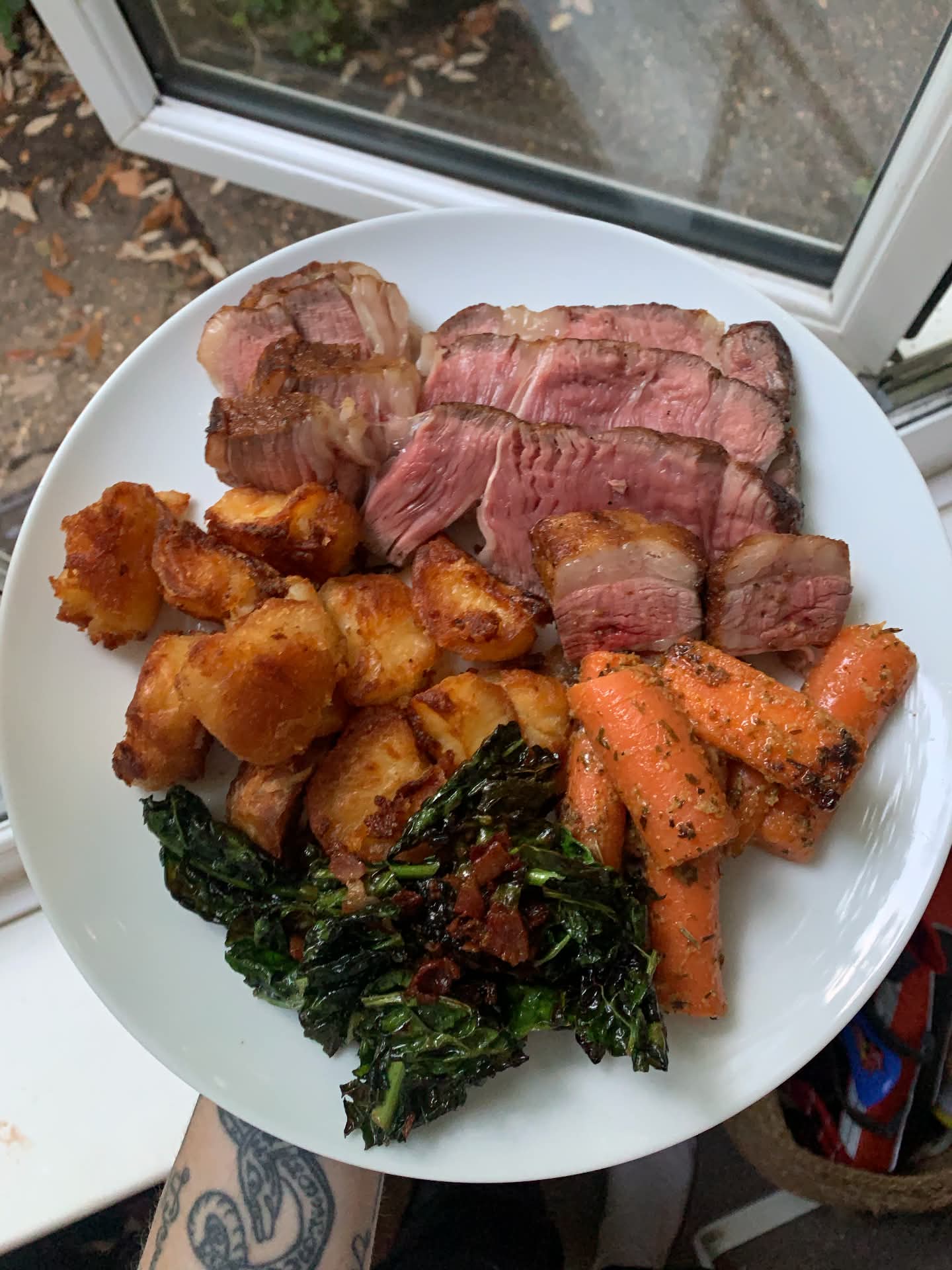
A traditional roast beef dinner is one of the most satisfying meals to prepare at home, combining tender, juicy beef with golden, crispy potatoes, sweet roasted carrots, and flavorful sautéed greens.
This recipe brings together four delicious components to create a complete, restaurant-style dinner.
At the center of the plate is a beautifully roasted beef joint, seasoned simply with olive oil, coarse sea salt, and freshly cracked black pepper.
The beef is seared to develop a rich, golden-brown crust before being roasted until the center reaches a warm pink, medium-rare finish.
After roasting, the beef rests before being carved into thick, juicy slices.
The crispy roast potatoes are another highlight of the meal.
Floury potatoes are parboiled until their edges soften, then gently shaken to create a rough, fluffy exterior. When roasted in hot fat or vegetable oil, these uneven surfaces become exceptionally golden and crunchy.
The herb-roasted carrots provide a naturally sweet contrast to the savory beef and potatoes.
Coated in olive oil, melted butter, thyme or rosemary, salt, and pepper, the carrots roast until tender with lightly caramelized edges.
The final component is sautéed cavolo nero, also known as Tuscan kale.
Its deep green leaves are cooked with garlic and a savory, crispy topping. The original recipe uses bacon, but this version uses halal beef or turkey bacon, preserving the smoky, salty flavor without pork.
Together, these elements create a beautifully balanced meal with contrasting textures, colors, and flavors.
This roast beef dinner is ideal for Sunday lunch, family gatherings, holiday meals, or any occasion when you want to prepare something comforting and impressive.
2. Origin and Cultural Significance
The roast beef dinner is strongly associated with British and European culinary traditions.
Although roasted meat has been prepared in many cultures for centuries, the combination of roast beef, potatoes, vegetables, and greens is especially familiar in traditional British Sunday meals.
The British Sunday Roast
The Sunday roast became an important part of British family dining.
It traditionally features roasted meat served with potatoes, vegetables, and often gravy.
Roast beef is one of the best-known versions of this meal.
Roast Beef Traditions
Roasting larger cuts of beef allows the exterior to develop a flavorful crust while the center remains tender.
Different levels of doneness are preferred depending on personal taste.
Medium-rare beef is particularly valued for its pink interior and juicy texture.
The Tradition of Roast Potatoes
Crispy roast potatoes are a classic accompaniment to British roast dinners.
Parboiling potatoes before roasting is a popular technique because it creates fluffy surfaces that become crisp in hot fat.
Herb-Roasted Vegetables
Roasting carrots with butter, oil, and herbs is a familiar preparation in European home cooking.
The heat concentrates the carrots’ natural sweetness.
Cavolo Nero
Cavolo nero, sometimes called Tuscan kale or black kale, is closely associated with Italian cooking.
Its long, dark leaves have a slightly earthy flavor and become tender when sautéed.
A Modern Combination
Combining British-style roast beef and potatoes with herb-roasted carrots and Tuscan kale creates a meal inspired by several European traditions.
The result is both rustic and elegant.
3. Ingredients
Serves 2–4
A. Medium-Rare Roast Beef
| Ingredient | Quantity |
|---|---|
| Sirloin joint, ribeye roast, or thick-cut striploin | 1½–2 lb (700–900 g) |
| Olive oil | 1 tablespoon |
| Coarse sea salt | 1½ teaspoons |
| Freshly cracked black pepper | 1 teaspoon |
Choose a beef cut with a good fat cap for flavor and browning.
B. Crispy Roast Potatoes
| Ingredient | Quantity |
|---|---|
| Floury potatoes, peeled and cut into large chunks | 2 lb (900 g) |
| Beef dripping, goose fat, or vegetable oil | 3–4 tablespoons |
| Sea salt | 1 teaspoon |
Suitable potatoes include Maris Piper, King Edward, and Russet.
For a halal-friendly option, use vegetable oil or halal-sourced beef dripping.
C. Herb-Roasted Carrots
| Ingredient | Quantity |
|---|---|
| Thick carrots | 1 lb (450 g) |
| Olive oil | 1 tablespoon |
| Unsalted butter, melted | 1 tablespoon |
| Dried thyme or rosemary | 1 teaspoon |
| Salt | To taste |
| Black pepper | To taste |
D. Sautéed Tuscan Kale
| Ingredient | Quantity |
|---|---|
| Cavolo nero / Tuscan kale | 7 oz (200 g) |
| Halal beef or turkey bacon, diced | 3–4 strips |
| Garlic, minced | 1 clove |
| Water or halal chicken stock | Approximately 2 tablespoons |
| Black pepper | To taste |
E. Equipment
- Ovenproof skillet
- Large roasting tray
- Baking sheet
- Large saucepan
- Colander
- Large frying pan with lid
- Kitchen tongs
- Sharp carving knife
- Cutting board
- Vegetable peeler
- Meat thermometer
- Measuring spoons
- Aluminum foil
- Serving platter
4. Optional Additions
The original combination of roast beef, potatoes, carrots, and greens is flavorful on its own.
However, several additions can enhance the meal.
Fresh Rosemary: Add rosemary sprigs to the beef roasting pan.
Fresh Thyme: Sprinkle over the potatoes or carrots.
Roasted Garlic: Add whole garlic cloves to the potato tray.
Black Pepper: Finish the beef with freshly cracked pepper.
Lemon Juice: Add a small squeeze to the sautéed kale.
Dijon Mustard: Serve a small amount alongside the roast beef.
Horseradish Sauce: Offer as a traditional roast beef accompaniment.
Beef Gravy: Prepare a simple gravy using the beef roasting juices and halal beef stock.
Roasted Parsnips: Roast alongside the carrots.
Green Beans: Add as another vegetable side.
Caramelized Onions: Serve with the sliced beef.
Fresh Parsley: Sprinkle over the potatoes before serving.
Smoked Paprika: Add a small pinch to the kale.
Extra Butter: Add a little to the potatoes after roasting, if desired.
Halal Beef Bacon: Use instead of turkey bacon for a richer, beefier flavor.
These additions are optional and are not required for the original preparation.
5. Tips for Success
Choose the Right Beef Cut
Sirloin, ribeye, and striploin are suitable choices for roasting.
A good fat cap contributes flavor and helps the exterior brown.
Use a Meat Thermometer
Cooking time alone cannot reliably determine the doneness of beef.
The thickness and shape of the roast significantly affect the cooking time.
Understand Medium-Rare Temperature
A final internal temperature around 130–135°F (54–57°C) produces a typical medium-rare finish.
Because the temperature may continue rising during resting, consider removing the beef a few degrees before your target.
For food safety, official guidance for whole beef roasts commonly recommends 145°F (63°C) followed by at least a three-minute rest. Medium-rare temperatures below this recommendation carry additional food-safety risk.
Sear the Fat Cap
Starting with the fat side against the hot skillet helps render fat and develop a flavorful crust.
Rest the Beef
Resting for 15–20 minutes helps the juices redistribute.
Slice Against the Grain
Cutting across the muscle fibers makes the beef easier to chew.
Choose Floury Potatoes
Floury varieties develop fluffy interiors and crisp exteriors.
Parboil Before Roasting
Parboiling softens the outer layer and helps create a crunchy surface.
Rough Up the Potatoes
Shaking the drained potatoes creates irregular edges that crisp during roasting.
Preheat the Roasting Fat
Hot fat encourages immediate browning when the potatoes are added.
Handle Hot Fat Carefully
Add the potatoes slowly and avoid splashing.
Avoid Overcrowding
Spread potatoes and carrots in single layers.
Roast Carrots Until Tender
The carrots should be soft enough to pierce with a fork but still hold their shape.
Remove Kale’s Tough Stems
The woody stems can remain chewy after cooking.
Avoid Burning the Garlic
Add garlic after the bacon has browned and cook briefly.
Coordinate the Cooking Times
The beef, potatoes, carrots, and greens should finish close together so the meal can be served warm.
6. Step-by-Step Instructions
Part A: Preparing the Ingredients
Step 1: Gather all ingredients and cooking equipment.
Step 2: Measure 1½–2 lb beef.
Step 3: Prepare 1 tablespoon olive oil for the beef.
Step 4: Measure 1½ teaspoons coarse sea salt.
Step 5: Measure 1 teaspoon black pepper.
Step 6: Prepare 2 lb floury potatoes.
Step 7: Measure 3–4 tablespoons roasting fat or vegetable oil.
Step 8: Prepare 1 teaspoon sea salt for the potatoes.
Step 9: Prepare 1 lb carrots.
Step 10: Measure the olive oil, butter, and herbs for the carrots.
Step 11: Prepare 7 oz cavolo nero.
Step 12: Prepare 3–4 strips halal beef or turkey bacon.
Step 13: Peel one garlic clove.
Step 14: Prepare water or halal chicken stock for the greens.
Part B: Preparing the Oven
Step 15: Preheat the oven to 400°F (200°C), or approximately 180°C for a fan oven.
Step 16: Position the oven racks to accommodate the beef and vegetables.
Step 17: Allow the oven to reach the correct temperature.
Part C: Preparing the Beef
Step 18: Remove the beef from its packaging.
Step 19: Place it on a clean cutting board.
Step 20: Pat the exterior dry with paper towels.
Step 21: Examine the fat cap.
Step 22: Use a sharp knife to score the fat lightly.
Step 23: Avoid cutting deeply into the meat.
Step 24: Drizzle the olive oil over the beef.
Step 25: Rub the oil over the surface.
Step 26: Sprinkle with coarse sea salt.
Step 27: Add freshly cracked black pepper.
Step 28: Rub the seasonings evenly over the meat.
Part D: Searing the Beef
Step 29: Place an ovenproof skillet over medium-high heat.
Step 30: Allow the skillet to become hot.
Step 31: Carefully place the beef fat-side down.
Step 32: Sear for approximately 3–4 minutes.
Step 33: Allow the fat to begin rendering.
Step 34: Look for a golden-brown crust.
Step 35: Turn the beef if necessary to brown other exposed surfaces.
Step 36: Avoid burning the seasoning.
Part E: Roasting the Beef
Step 37: Transfer the ovenproof skillet to the preheated oven.
Step 38: Roast at 400°F (200°C).
Step 39: Begin checking the internal temperature before the estimated cooking time is complete.
Step 40: Insert a meat thermometer into the thickest part of the roast.
Step 41: Avoid touching fat pockets or the skillet.
Step 42: Continue roasting until the desired internal temperature is reached.
Step 43: For the supplied medium-rare target, the estimated cooking time is 25–35 minutes, but the actual time may vary substantially.
Step 44: Account for carryover cooking during resting.
Step 45: Remove the beef from the oven when it reaches the selected doneness.
Part F: Resting the Beef
Step 46: Transfer the beef to a clean carving board.
Step 47: Tent loosely with aluminum foil.
Step 48: Avoid wrapping the beef tightly.
Step 49: Allow it to rest for at least 15–20 minutes.
Step 50: Reserve any pan juices for serving if desired.
Part G: Preparing the Potatoes
Step 51: Wash the potatoes thoroughly.
Step 52: Peel the potatoes.
Step 53: Place them on a cutting board.
Step 54: Cut into large, evenly sized chunks.
Step 55: Transfer the pieces to a large saucepan.
Step 56: Cover with cold water.
Step 57: Add salt to the water.
Part H: Parboiling the Potatoes
Step 58: Place the saucepan over high heat.
Step 59: Bring the water to a boil.
Step 60: Reduce to a steady simmer.
Step 61: Cook for approximately 8–10 minutes.
Step 62: Check that the outer edges are beginning to soften.
Step 63: Avoid cooking the potatoes until they fall apart.
Step 64: Remove the saucepan from the heat.
Part I: Draining and Roughing Up the Potatoes
Step 65: Carefully pour the potatoes into a colander.
Step 66: Allow the water to drain completely.
Step 67: Leave the potatoes briefly so excess steam can escape.
Step 68: Gently shake the colander.
Step 69: Allow the outer surfaces to become slightly rough and fluffy.
Step 70: Avoid breaking the chunks apart.
Part J: Heating the Roasting Fat
Step 71: Select a large roasting tray.
Step 72: Add 3–4 tablespoons beef dripping, goose fat, or vegetable oil.
Step 73: Place the tray in the preheated oven.
Step 74: Heat for approximately five minutes.
Step 75: The fat should be very hot and shimmering, but it should not be allowed to smoke excessively.
Part K: Adding the Potatoes
Step 76: Carefully remove the hot roasting tray from the oven.
Step 77: Place it on a heat-resistant surface.
Step 78: Slowly add the drained potatoes.
Step 79: Avoid splashing the hot fat.
Step 80: Use kitchen tongs or a spoon to turn the potatoes.
Step 81: Coat the pieces evenly in the hot fat.
Step 82: Sprinkle with 1 teaspoon sea salt.
Step 83: Spread the potatoes into a single layer.
Part L: Roasting the Potatoes
Step 84: Return the roasting tray to the oven.
Step 85: Roast at 400°F (200°C).
Step 86: Allow the potatoes to develop golden edges.
Step 87: Continue roasting for approximately 20–25 minutes.
Step 88: Carefully turn the potatoes.
Step 89: Return the tray to the oven.
Step 90: Continue roasting for another 20 minutes or until crisp.
Step 91: The estimated total roasting time is 40–45 minutes.
Step 92: Check for deeply golden, crunchy surfaces.
Step 93: Remove from the oven when ready.
Part M: Preparing the Carrots
Step 94: Wash the carrots thoroughly.
Step 95: Peel the carrots.
Step 96: Trim the ends.
Step 97: Cut into approximately 2-inch batons.
Step 98: Keep the pieces similar in thickness.
Step 99: Transfer to a mixing bowl.
Part N: Preparing the Herb Coating
Step 100: Add 1 tablespoon olive oil to the carrots.
Step 101: Melt 1 tablespoon butter.
Step 102: Pour the melted butter over the carrots.
Step 103: Add 1 teaspoon dried thyme or rosemary.
Step 104: Sprinkle with salt.
Step 105: Add black pepper.
Step 106: Toss until evenly coated.
Part O: Arranging the Carrots
Step 107: Select a baking sheet.
Step 108: Transfer the seasoned carrots onto the sheet.
Step 109: Spread into a single layer.
Step 110: Separate crowded pieces.
Step 111: Ensure the carrots are evenly distributed.
Part P: Roasting the Carrots
Step 112: Place the carrot tray in the oven during the final 25–30 minutes of potato roasting.
Step 113: Roast at 400°F (200°C).
Step 114: Allow the carrots to soften.
Step 115: Check for lightly caramelized edges.
Step 116: Turn the carrots if needed.
Step 117: Continue roasting until tender.
Step 118: Remove from the oven.
Step 119: Keep warm until serving.
Part Q: Preparing the Tuscan Kale
Step 120: Place the cavolo nero on a cutting board.
Step 121: Remove the tough central stems.
Step 122: Discard the woody portions.
Step 123: Roughly chop the leaves.
Step 124: Wash the leaves thoroughly.
Step 125: Drain well.
Step 126: Set aside.
Part R: Preparing the Bacon and Garlic
Step 127: Place the halal beef or turkey bacon on a cutting board.
Step 128: Dice into small pieces.
Step 129: Peel the garlic clove.
Step 130: Mince finely.
Step 131: Measure approximately 2 tablespoons water or chicken stock.
Part S: Crisping the Bacon
Step 132: Place a large skillet over medium heat.
Step 133: Add the diced halal bacon.
Step 134: Spread it evenly.
Step 135: Cook for approximately 4–5 minutes.
Step 136: Stir occasionally.
Step 137: Allow the pieces to brown and become crisp.
Step 138: If using very lean turkey bacon, add a small amount of oil if necessary to prevent sticking.
Part T: Adding the Garlic
Step 139: Add the minced garlic to the skillet.
Step 140: Stir into the bacon.
Step 141: Cook for approximately 30 seconds.
Step 142: Avoid burning the garlic.
Part U: Adding the Kale
Step 143: Add the chopped cavolo nero.
Step 144: Toss gently with the bacon and garlic.
Step 145: Allow the leaves to begin wilting.
Step 146: Add approximately 2 tablespoons water or chicken stock.
Step 147: Stir to distribute the liquid.
Part V: Cooking the Greens
Step 148: Cover the skillet with a lid.
Step 149: Reduce the heat if necessary.
Step 150: Cook for approximately 3–4 minutes.
Step 151: Allow the leaves to soften.
Step 152: Remove the lid.
Step 153: Stir gently.
Step 154: Check that the greens are tender-crisp.
Step 155: Continue cooking briefly if needed.
Step 156: Season with black pepper.
Step 157: Taste before adding extra salt because the bacon may already be salty.
Part W: Preparing to Carve the Beef
Step 158: Remove the foil from the rested beef.
Step 159: Transfer the roast to a stable cutting board if necessary.
Step 160: Identify the direction of the muscle fibers.
Step 161: Prepare a sharp carving knife.
Part X: Slicing the Beef
Step 162: Begin slicing across the grain.
Step 163: Cut into thick, even slices.
Step 164: Continue through the roast.
Step 165: Arrange the slices on a warm serving platter.
Step 166: Spoon over a little reserved meat juice if desired.
Part Y: Preparing the Plates
Step 167: Select two to four serving plates.
Step 168: Divide the roast potatoes among the plates.
Step 169: Arrange the herb-roasted carrots beside the potatoes.
Step 170: Add a portion of sautéed Tuscan kale.
Step 171: Distribute the crispy halal bacon over the greens.
Part Z: Adding the Roast Beef
Step 172: Place slices of roast beef on each plate.
Step 173: Arrange them neatly beside the vegetables.
Step 174: Keep the browned exterior and pink center visible.
Step 175: Add a little of the resting juice if desired.
Part AA: Final Presentation
Step 176: Check that the potatoes remain crisp.
Step 177: Arrange the carrots so their golden edges are visible.
Step 178: Keep the sautéed greens neatly grouped.
Step 179: Add freshly cracked black pepper if desired.
Step 180: Serve immediately while the meal is warm.
7. Description
This roast beef dinner offers a beautiful combination of colors, textures, and flavors.
Medium-Rare Roast Beef
The beef has a deeply browned exterior and a tender, pink center.
Its surface is seasoned with coarse sea salt and freshly cracked black pepper.
The fat cap contributes richness and flavor.
When properly rested and sliced, the meat is juicy and tender.
Crispy Roast Potatoes
The potatoes are deeply golden brown with irregular, crunchy edges.
Their interiors remain soft and fluffy.
The contrast between crisp exterior and tender center makes them a classic roast dinner accompaniment.
Herb-Roasted Carrots
The carrots are tender with lightly caramelized edges.
Olive oil and butter create a rich coating.
Thyme or rosemary adds a fragrant herbal note.
The carrots’ natural sweetness balances the savory beef.
Sautéed Tuscan Kale
The cavolo nero has a deep green color and tender-crisp texture.
Garlic adds savory flavor.
Crispy halal beef or turkey bacon contributes a salty, smoky contrast.
Overall Flavor
The finished meal is savory, aromatic, rich, and comforting.
The beef provides a hearty centerpiece, the potatoes offer crunch, the carrots add sweetness, and the greens contribute freshness and depth.
8. Nutritional Information
Approximate nutritional values per serving, assuming the recipe makes four servings and uses vegetable oil and halal turkey bacon:
| Nutrient | Estimated Amount |
|---|---|
| Calories | 650–900 kcal |
| Protein | 40–55 g |
| Carbohydrates | 45–60 g |
| Total Fat | 30–50 g |
| Saturated Fat | Variable |
| Fiber | 7–11 g |
| Sugar | 6–10 g |
| Sodium | Variable |
| Iron | Present |
| Zinc | Present |
| Potassium | Present |
| Vitamin A | High |
| Vitamin K | High |
| Vitamin B12 | Present |
These estimates vary considerably depending on the beef cut, fat content, cooking fat, bacon type, and portion size. Serving the recipe to two people rather than four will substantially increase the nutritional values per serving.
9. Recipe Details
| Category | Details |
|---|---|
| Recipe Name | Medium-Rare Roast Beef Dinner |
| Cuisine | British-Inspired / European |
| Course | Main Dish |
| Servings | 2–4 |
| Difficulty | Intermediate |
| Preparation Time | Approximately 20–30 Minutes |
| Beef Searing Time | Approximately 3–4 Minutes |
| Beef Roasting Time | Approximately 25–35 Minutes, Size Dependent |
| Beef Resting Time | 15–20 Minutes |
| Potato Parboiling Time | 8–10 Minutes |
| Potato Roasting Time | 40–45 Minutes |
| Carrot Roasting Time | 25–30 Minutes |
| Greens Cooking Time | Approximately 8–10 Minutes |
| Total Time | Approximately 1¼–1¾ Hours with Coordinated Cooking |
| Oven Temperature | 400°F (200°C / 180°C Fan) |
| Main Protein | Beef |
| Main Side | Crispy Roast Potatoes |
| Vegetables | Carrots and Tuscan Kale |
| Medium-Rare Target | Approximately 130–135°F (54–57°C) Final Temperature |
| Food-Safety Recommendation | 145°F (63°C) with a 3-Minute Rest for Whole Beef Roasts |
| Texture | Tender, Crispy, Caramelized |
| Flavor Profile | Savory, Herbal, Rich |
| Best Served | Warm |
| Potential Allergens | Milk; Other Allergens Depend on Selected Ingredients |
10. Conclusion
This roast beef dinner combines several classic components to create a satisfying, beautifully presented meal.
The beef is seasoned with olive oil, salt, and pepper, then seared and roasted to the desired doneness.
Resting the roast before carving helps preserve its juiciness.
The potatoes are parboiled, roughened, and roasted in hot fat until deeply golden and crisp.
The carrots are coated in olive oil, melted butter, and herbs before roasting until tender and lightly caramelized.
The cavolo nero is sautéed with garlic and crispy halal beef or turkey bacon, adding a savory vegetable component to the plate.
Together, the four elements provide a delicious balance of rich meat, crunchy potatoes, sweet carrots, and flavorful greens.
This recipe is particularly suitable for family gatherings, weekend dinners, and special occasions.
With careful timing and attention to each component, it is possible to prepare a complete roast dinner that looks impressive and tastes comforting.
11. Serving and Storage Recommendations
Serve Warm: Roast beef and vegetables are best served shortly after cooking.
Carve After Resting: Allow the beef to rest before slicing.
Warm Plates: Warm serving plates help keep the food at a pleasant temperature.
Beef Gravy: Serve with a small amount of gravy if desired.
Horseradish Sauce: Offer as an optional accompaniment.
Mustard: Dijon or whole-grain mustard pairs well with roast beef.
Extra Herbs: Garnish with fresh rosemary or thyme.
Roast Potatoes: Serve immediately to preserve their crispness.
Carrots: Spoon any remaining herb butter over the carrots.
Greens: Serve the kale while still tender and warm.
Refrigeration: Store cooked beef and vegetables in airtight containers in the refrigerator.
Storage Duration: Consume refrigerated leftovers within approximately 3–4 days.
Freezing Beef: Freeze cooked beef in airtight packaging for approximately 2–3 months for best quality.
Freezing Potatoes: Roasted potatoes may be frozen, although their texture can change.
Reheating Beef: Reheat leftovers thoroughly to 165°F (74°C) for food safety, recognizing that this will cook medium-rare beef further.
Reheating Potatoes: Use an oven or air fryer to restore crispness.
Reheating Vegetables: Warm gently in a skillet or oven.
Food Safety: Refrigerate leftovers within two hours of cooking.
12. Embracing Healthful Indulgence
This roast beef dinner combines protein-rich meat, starchy potatoes, colorful vegetables, and leafy greens.
It can form part of a varied and balanced eating pattern.
Beef
Beef provides high-quality protein, iron, zinc, and vitamin B12.
These nutrients support normal body functions, including muscle maintenance and red blood cell production.
Potatoes
Potatoes provide carbohydrates, potassium, and some dietary fiber.
They are an important source of energy.
Carrots
Carrots are rich in beta-carotene, which the body can convert into vitamin A.
They also provide fiber and natural sweetness.
Tuscan Kale
Cavolo nero provides vitamins A, C, and K, along with fiber and other plant nutrients.
Its dark green leaves add nutritional variety to the meal.
Olive Oil
Olive oil provides predominantly unsaturated fats.
It enhances flavor and helps vegetables roast evenly.
Butter
Butter adds richness to the carrots.
Using a moderate amount allows its flavor to complement the vegetables.
Rosemary and Thyme
These herbs add fragrance and flavor without requiring large amounts of additional salt.
Garlic
Garlic contributes savory depth to the greens.
Halal Beef or Turkey Bacon
Halal bacon adds smoky and savory flavor.
Turkey bacon may contain less fat than some beef bacon varieties, depending on the product.
Both can contain significant sodium, so moderate portions are useful.
Portion Awareness
The recipe serves two to four people.
The amount of beef, potatoes, and vegetables per plate can be adjusted according to individual appetite and dietary needs.
Balanced Meal Composition
Combining beef with potatoes, carrots, and kale provides a mixture of protein, carbohydrates, fats, fiber, vitamins, and minerals.
Homemade Preparation
Preparing the meal at home allows control over ingredient quality, seasoning, cooking fats, and serving sizes.
Enjoying a Traditional Roast
A roast beef dinner can be enjoyed as an occasional comforting meal or as part of a varied weekly menu.
With tender sliced beef, crunchy roast potatoes, sweet herb-roasted carrots, and savory sautéed greens, this recipe delivers a satisfying combination of classic flavors and textures.
It is a complete, hearty dinner that brings the warmth and tradition of home cooking to the table.