
1. Introduction
German Chocolate Cake is a rich, indulgent dessert featuring three layers of soft, moist chocolate cake filled and generously covered with a thick, gooey coconut-pecan frosting.
This classic American cake is loved for its distinctive combination of delicate chocolate flavor, buttery caramel-like custard, sweet shredded coconut, and crunchy toasted pecans.
Unlike many chocolate layer cakes that use traditional chocolate buttercream or ganache, German Chocolate Cake is especially famous for its cooked coconut-pecan frosting.
The frosting is prepared by gently cooking evaporated milk, sugar, butter, and egg yolks until the mixture thickens into a rich, golden custard. Vanilla extract, shredded coconut, and chopped pecans are then stirred into the warm mixture.
Once cooled, the frosting becomes thick, glossy, and spreadable, making it ideal for filling and decorating the cake.
The chocolate cake itself is made with sweet baking chocolate, butter, sugar, eggs, buttermilk, flour, and vanilla.
A distinctive feature of this recipe is the separation of the eggs. The yolks are incorporated into the chocolate batter, while the whites are whipped separately and gently folded in.
This technique creates a tender, airy crumb while preserving the cake’s rich, buttery texture.
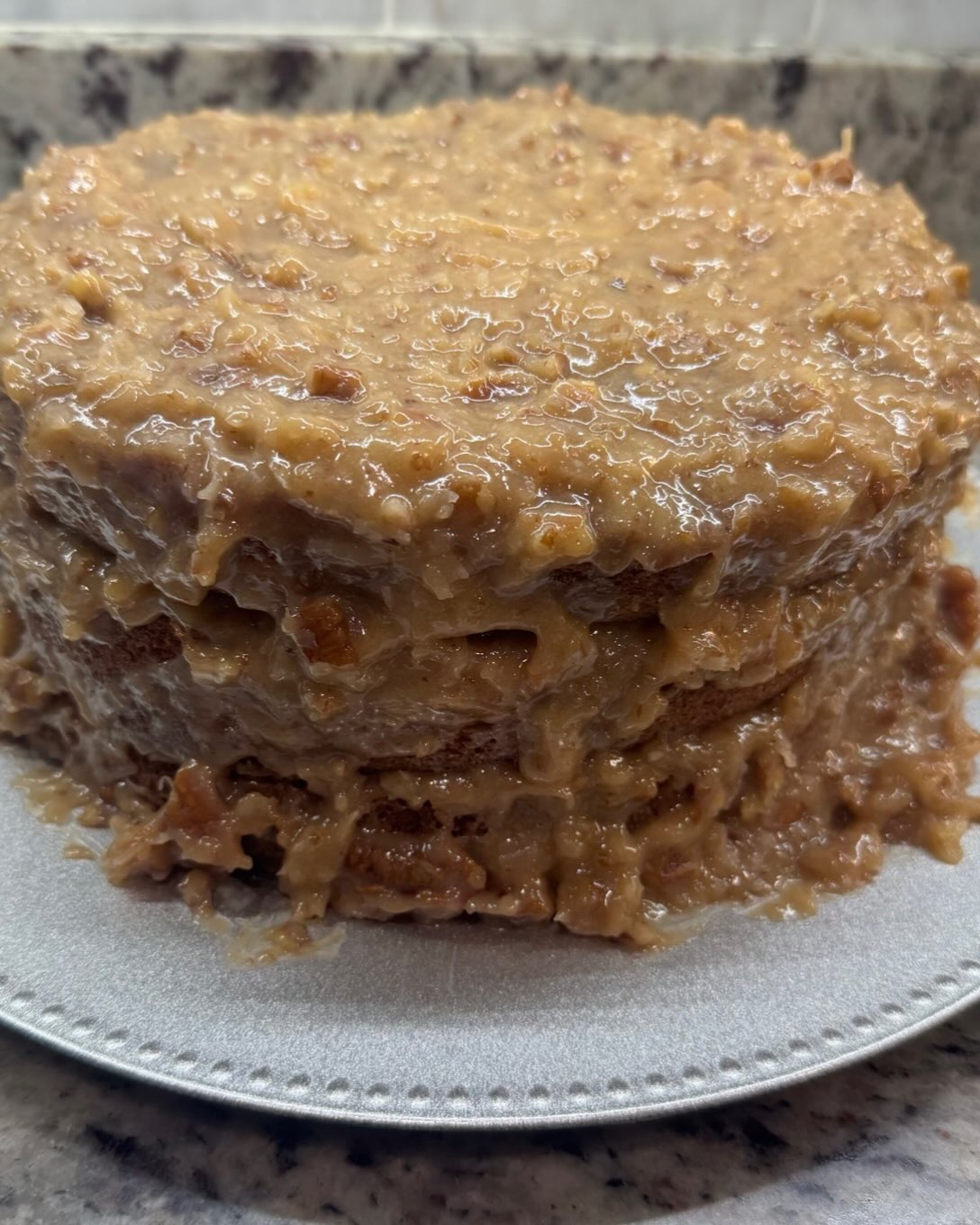
The three cake layers are stacked with generous portions of coconut-pecan frosting between them. Additional frosting is spread across the top and allowed to fall naturally over the edges, creating a rustic homemade appearance.
The finished cake has a beautiful contrast between its dark chocolate layers and golden-brown frosting.
German Chocolate Cake is perfect for birthdays, family celebrations, holidays, dinner parties, and special occasions.
Although the recipe involves several stages, the preparation is straightforward when each component is made separately.
The result is an impressive homemade dessert that combines soft chocolate cake, creamy coconut filling, and crunchy pecans in every slice.
2. Origin and Cultural Significance
Despite its name, German Chocolate Cake is an American dessert rather than a traditional cake from Germany.
Its history is connected to a type of sweet baking chocolate developed in the United States.
The Origin of German’s Sweet Chocolate
In 1852, an American chocolate maker named Samuel German developed a sweetened baking chocolate for the Baker’s Chocolate Company.
The product became known as German’s Sweet Chocolate.
The name referred to its creator, not to the country of Germany.
The Development of German Chocolate Cake
The cake became widely known during the 1950s.
A recipe for German’s Chocolate Cake was published in a Dallas newspaper in 1957 and became popular across the United States.
Over time, the apostrophe was commonly dropped, and the dessert became known as German Chocolate Cake.
The Coconut-Pecan Frosting Tradition
The cooked coconut-pecan frosting is the cake’s most recognizable feature.
Its combination of evaporated milk, egg yolks, butter, sugar, coconut, and pecans creates a rich texture unlike conventional buttercream.
A Southern American Connection
Pecans are widely used in Southern American baking.
Their buttery, nutty flavor complements sweet desserts such as pies, pralines, and layered cakes.
A Celebration Cake
German Chocolate Cake became a popular choice for birthdays, family gatherings, and holidays.
Its layered appearance and generous frosting make it especially suitable for celebrations.
Modern Variations
Today, German Chocolate Cake is prepared in several forms, including cupcakes, sheet cakes, bundt cakes, and traditional layer cakes.
The three-layer version remains one of its most recognizable presentations.
3. Ingredients
This recipe makes one three-layer cake using three 8-inch or 9-inch round cake pans.
A. German Chocolate Cake Layers
| Ingredient | Quantity |
|---|---|
| German’s Sweet Chocolate or similar sweet baking chocolate, chopped | 4 oz (113 g) |
| Boiling water | ½ cup (120 ml) |
| All-purpose flour | 2 cups (approximately 250 g) |
| Baking soda | 1 teaspoon |
| Salt | ½ teaspoon |
| Unsalted butter, softened | 1 cup (226 g) |
| Granulated sugar | 2 cups (400 g) |
| Large eggs, separated | 4 |
| Vanilla extract | 1 teaspoon |
| Buttermilk, room temperature | 1 cup (240 ml) |
Flour alternative: Use 2½ cups sifted cake flour instead of the all-purpose flour, as specified in the supplied recipe.
B. Coconut-Pecan Frosting
| Ingredient | Quantity |
|---|---|
| Evaporated milk | 1 can (12 oz / approximately 354 ml) |
| Granulated sugar | 1½ cups (300 g) |
| Unsalted butter | ¾ cup (170 g) |
| Large egg yolks, lightly beaten | 4 |
| Vanilla extract | 1½ teaspoons |
| Sweetened shredded coconut | 2 cups (approximately 7 oz / 200 g) |
| Pecans, chopped | 1½ cups |
The pecans may be lightly toasted before being added to the frosting for additional flavor.
C. Equipment
- Three 8-inch or 9-inch round cake pans
- Parchment paper
- Large mixing bowls
- Medium mixing bowls
- Small heatproof bowl
- Medium saucepan
- Electric hand mixer or stand mixer
- Rubber spatula
- Whisk
- Measuring cups and spoons
- Kitchen scale
- Wire cooling racks
- Offset spatula
- Cake serving plate or cake stand
- Toothpick or cake tester
- Oven
4. Optional Additions
The traditional recipe is flavorful without extra ingredients, but several optional additions can enhance the finished cake.
Toasted Pecans: Lightly toast the chopped pecans before adding them to the frosting to intensify their nutty flavor.
Extra Coconut: Sprinkle a little additional shredded coconut over the top.
Chocolate Shavings: Decorate the finished cake with finely shaved chocolate.
Chocolate Ganache: Add a thin drizzle of ganache for a richer chocolate presentation.
Vanilla Bean: Replace vanilla extract with vanilla bean seeds for a more pronounced vanilla aroma.
Espresso Powder: Add a small amount to the chocolate batter to deepen the chocolate flavor.
Chopped Dark Chocolate: Sprinkle a little over the frosting for contrast.
Caramel Drizzle: Add a small amount of caramel sauce over the finished cake.
Extra Pecans: Arrange whole pecan halves around the top edge.
Sea Salt: Add a very small pinch of flaky sea salt to the finished frosting to balance its sweetness.
Chocolate Buttercream: Apply a thin coating to the sides if a more structured, fully covered cake is preferred.
Toasted Coconut Flakes: Add a small amount to the top for decoration.
These additions are optional and are not part of the original recipe.
5. Tips for Success
Use the Correct Chocolate
German’s Sweet Chocolate is sweeter than many dark baking chocolates.
Substituting unsweetened chocolate without adjusting the recipe will noticeably change the flavor.
Bring Ingredients to Room Temperature
Softened butter, room-temperature eggs, and room-temperature buttermilk help the batter combine smoothly.
Melt the Chocolate Completely
Stir the chocolate and boiling water until smooth.
Allow it to cool before adding it to the butter mixture.
Cream the Butter and Sugar Thoroughly
Beating the butter and sugar until pale and fluffy helps create a lighter cake texture.
Separate the Eggs Carefully
Avoid getting egg yolk into the egg whites, as fat can interfere with whipping.
Use a Clean Bowl for Egg Whites
The mixing bowl and beaters should be clean and free from grease.
Whip Egg Whites to Stiff Peaks
Properly whipped egg whites help give the cake its delicate structure.
Fold Gently
Use a spatula to incorporate the egg whites without deflating them excessively.
Avoid Overmixing
Once the flour is added, mix only until combined.
Prepare the Cake Pans Properly
Greasing the pans and lining the bottoms with parchment paper helps prevent sticking.
Divide Batter Evenly
Equal amounts of batter help the layers bake at similar rates.
Avoid Overbaking
Begin checking near the lower end of the suggested baking time.
Cool the Cake Completely
Warm cake layers can cause the coconut-pecan frosting to soften and slide.
Stir the Frosting Constantly
The custard base contains egg yolks and can scorch or form lumps if left unattended.
Cook Until Thickened
The frosting should become noticeably thicker and lightly golden before the coconut and pecans are added.
Cool the Frosting Before Assembly
The frosting thickens further as it cools.
Use Generous Filling
The coconut-pecan frosting is the defining feature of German Chocolate Cake.
Allow a Rustic Finish
A slightly uneven frosting texture and natural drips over the sides create the traditional homemade appearance.
6. Step-by-Step Instructions
Part A: Preparing the Ingredients
Step 1: Gather all cake and frosting ingredients.
Step 2: Measure 4 oz sweet baking chocolate.
Step 3: Chop the chocolate into small pieces.
Step 4: Measure ½ cup water.
Step 5: Prepare 2 cups all-purpose flour.
Step 6: Measure 1 teaspoon baking soda.
Step 7: Measure ½ teaspoon salt.
Step 8: Prepare 1 cup softened unsalted butter.
Step 9: Measure 2 cups granulated sugar.
Step 10: Prepare four large eggs.
Step 11: Measure 1 teaspoon vanilla extract.
Step 12: Measure 1 cup buttermilk.
Step 13: Allow the eggs and buttermilk to reach room temperature.
Part B: Preparing the Oven and Cake Pans
Step 14: Preheat the oven to 350°F (175°C).
Step 15: Position an oven rack near the center.
Step 16: Prepare three 8-inch or 9-inch round cake pans.
Step 17: Grease the inside of each pan.
Step 18: Cut three parchment paper circles to fit the bottoms.
Step 19: Place one parchment circle in each pan.
Step 20: Lightly grease the parchment paper.
Step 21: Set the prepared pans aside.
Part C: Melting the Chocolate
Step 22: Place the chopped chocolate in a heatproof bowl.
Step 23: Bring ½ cup water to a boil.
Step 24: Carefully pour the boiling water over the chocolate.
Step 25: Allow the chocolate to soften briefly.
Step 26: Stir gently.
Step 27: Continue stirring until the mixture is smooth.
Step 28: Check that no solid chocolate pieces remain.
Step 29: Set aside to cool.
Part D: Preparing the Dry Ingredients
Step 30: Place the flour in a medium mixing bowl.
Step 31: Add the baking soda.
Step 32: Add the salt.
Step 33: Whisk until evenly combined.
Step 34: Break apart any visible lumps.
Step 35: Set the dry mixture aside.
Part E: Separating the Eggs
Step 36: Prepare two clean bowls.
Step 37: Crack the first egg.
Step 38: Separate the yolk from the white.
Step 39: Place the yolk in one bowl.
Step 40: Place the white in the other bowl.
Step 41: Repeat with the remaining three eggs.
Step 42: Check that no yolk has entered the egg whites.
Step 43: Set both bowls aside.
Part F: Creaming the Butter and Sugar
Step 44: Place the softened butter in a large mixing bowl.
Step 45: Add the granulated sugar.
Step 46: Begin beating with an electric mixer.
Step 47: Increase to medium-high speed.
Step 48: Continue beating for approximately three minutes.
Step 49: Scrape down the sides of the bowl.
Step 50: Check that the mixture is pale and fluffy.
Part G: Adding the Egg Yolks
Step 51: Add the first egg yolk to the butter mixture.
Step 52: Beat until incorporated.
Step 53: Add the second yolk.
Step 54: Beat again.
Step 55: Add the third yolk.
Step 56: Continue mixing.
Step 57: Add the fourth yolk.
Step 58: Beat until the mixture is smooth.
Step 59: Scrape down the bowl.
Part H: Adding the Chocolate and Vanilla
Step 60: Check that the melted chocolate has cooled.
Step 61: Pour the chocolate mixture into the butter mixture.
Step 62: Begin mixing on low speed.
Step 63: Continue until evenly incorporated.
Step 64: Add 1 teaspoon vanilla extract.
Step 65: Mix until smooth.
Step 66: Scrape the sides and bottom of the bowl.
Part I: Combining the Flour and Buttermilk
Step 67: Add approximately one-third of the flour mixture.
Step 68: Mix on low speed until mostly incorporated.
Step 69: Add approximately half the buttermilk.
Step 70: Mix gently.
Step 71: Add another third of the flour mixture.
Step 72: Continue mixing on low speed.
Step 73: Add the remaining buttermilk.
Step 74: Mix until incorporated.
Step 75: Add the remaining flour mixture.
Step 76: Mix just until the batter is smooth.
Step 77: Avoid overmixing.
Part J: Whipping the Egg Whites
Step 78: Place the reserved egg whites in a clean mixing bowl.
Step 79: Attach clean beaters to the electric mixer.
Step 80: Begin whipping the egg whites.
Step 81: Increase to high speed.
Step 82: Continue until the mixture becomes foamy.
Step 83: Keep beating as the egg whites thicken.
Step 84: Watch for firm peaks to form.
Step 85: Stop when stiff peaks hold their shape.
Step 86: Avoid overbeating until dry or grainy.
Part K: Folding the Egg Whites into the Batter
Step 87: Add a small portion of whipped egg whites to the chocolate batter.
Step 88: Fold gently with a rubber spatula.
Step 89: Add another portion of egg whites.
Step 90: Lift the batter from the bottom of the bowl.
Step 91: Fold it over the egg whites.
Step 92: Rotate the bowl as you work.
Step 93: Add the remaining egg whites.
Step 94: Continue folding gently.
Step 95: Stop when no large white streaks remain.
Step 96: Avoid stirring vigorously.
Part L: Dividing the Batter
Step 97: Place the prepared cake pans on a work surface.
Step 98: Divide the chocolate batter into three equal portions.
Step 99: Transfer one portion to each pan.
Step 100: Spread the batter evenly.
Step 101: Smooth the tops gently.
Step 102: Check that the pans contain similar amounts.
Part M: Baking the Cake Layers
Step 103: Place the cake pans in the preheated oven.
Step 104: Bake at 350°F (175°C).
Step 105: Allow the cakes to rise.
Step 106: Avoid opening the oven during the early baking period.
Step 107: Begin checking after approximately 25 minutes.
Step 108: Insert a toothpick into the center of one cake.
Step 109: Check whether it comes out clean or with a few moist crumbs.
Step 110: Continue baking if necessary.
Step 111: Expect approximately 25–30 minutes for 9-inch pans.
Step 112: Expect approximately 30–35 minutes for 8-inch pans.
Step 113: Remove the cakes when fully baked.
Part N: Cooling the Cake Layers
Step 114: Place the pans on wire cooling racks.
Step 115: Allow the cakes to cool for approximately 10–15 minutes.
Step 116: Carefully loosen the edges if necessary.
Step 117: Turn the first cake out onto a wire rack.
Step 118: Remove the parchment paper.
Step 119: Repeat with the remaining cakes.
Step 120: Allow all three layers to cool completely.
Part O: Preparing the Frosting Ingredients
Step 121: Measure one 12 oz can evaporated milk.
Step 122: Measure 1½ cups granulated sugar.
Step 123: Prepare ¾ cup unsalted butter.
Step 124: Separate four additional large egg yolks.
Step 125: Lightly beat the egg yolks.
Step 126: Measure 1½ teaspoons vanilla extract.
Step 127: Measure 2 cups sweetened shredded coconut.
Step 128: Measure 1½ cups chopped pecans.
Part P: Optional Pecan Toasting
Step 129: Place the chopped pecans in a dry skillet.
Step 130: Set the heat to medium-low.
Step 131: Stir frequently.
Step 132: Toast briefly until fragrant.
Step 133: Remove from the heat.
Step 134: Transfer to a plate to cool.
Part Q: Combining the Frosting Base
Step 135: Select a medium saucepan.
Step 136: Pour in the evaporated milk.
Step 137: Add the granulated sugar.
Step 138: Add the butter.
Step 139: Add the lightly beaten egg yolks.
Step 140: Whisk thoroughly before heating.
Step 141: Check that the yolks are evenly distributed.
Part R: Cooking the Coconut-Pecan Custard
Step 142: Place the saucepan over medium heat.
Step 143: Begin stirring immediately.
Step 144: Continue stirring as the butter melts.
Step 145: Scrape the bottom of the saucepan.
Step 146: Stir around the edges.
Step 147: Allow the mixture to heat gradually.
Step 148: Watch for the first signs of thickening.
Step 149: Continue cooking while stirring constantly.
Step 150: Cook for approximately 10–12 minutes, or until noticeably thickened.
Step 151: Look for a pudding-like consistency.
Step 152: Check that the mixture has turned lightly golden.
Step 153: Ensure the egg-based custard is thoroughly cooked without scorching.
Step 154: Remove the saucepan from the heat.
Part S: Adding Vanilla, Coconut, and Pecans
Step 155: Add 1½ teaspoons vanilla extract.
Step 156: Stir until incorporated.
Step 157: Add the sweetened shredded coconut.
Step 158: Mix thoroughly.
Step 159: Add the chopped pecans.
Step 160: Stir until evenly distributed.
Step 161: Check that the frosting has a consistent texture.
Part T: Cooling the Frosting
Step 162: Transfer the frosting to a heatproof bowl if desired.
Step 163: Allow it to cool.
Step 164: Stir occasionally to release heat evenly.
Step 165: Watch the frosting become thicker as it cools.
Step 166: Continue until it reaches a spreadable consistency.
Step 167: Do not leave the egg-and-dairy frosting at room temperature for more than two hours.
Step 168: Refrigerate if additional cooling time is needed.
Part U: Preparing the Cake for Assembly
Step 169: Check that all cake layers are completely cool.
Step 170: Select a cake stand or serving plate.
Step 171: Place a small amount of frosting in the center to help anchor the cake.
Step 172: Position the first cake layer on the plate.
Step 173: Make sure it sits level.
Part V: Frosting the First Layer
Step 174: Spoon a generous portion of coconut-pecan frosting onto the first layer.
Step 175: Use an offset spatula to spread it.
Step 176: Work from the center toward the edges.
Step 177: Create an even layer of frosting.
Step 178: Allow a small amount to reach the edges.
Part W: Adding the Second Cake Layer
Step 179: Carefully lift the second cake layer.
Step 180: Position it over the first frosted layer.
Step 181: Align the edges.
Step 182: Press down very gently to stabilize.
Step 183: Add another generous portion of frosting.
Step 184: Spread evenly over the second layer.
Part X: Adding the Third Cake Layer
Step 185: Lift the final cake layer.
Step 186: Place it on top.
Step 187: Align the layers.
Step 188: Check that the cake is stable.
Step 189: Spoon the remaining frosting onto the top.
Part Y: Creating the Rustic Frosted Finish
Step 190: Spread the frosting across the top surface.
Step 191: Work gently toward the outer edges.
Step 192: Allow some frosting to spill naturally over the sides.
Step 193: Use the spatula to guide the frosting down the sides where desired.
Step 194: Keep the coconut and pecan pieces visible.
Step 195: Avoid smoothing the frosting completely flat.
Step 196: Create a rustic, textured appearance.
Step 197: Check that the layers remain aligned.
Part Z: Finishing the Cake
Step 198: Remove excess frosting from the serving plate if desired.
Step 199: Add optional whole pecans or coconut for decoration.
Step 200: Allow the assembled cake to settle briefly.
Step 201: Refrigerate if the frosting needs additional time to firm up.
Step 202: Prepare a sharp cake knife.
Part AA: Slicing and Serving
Step 203: Cut the cake into even wedges.
Step 204: Use a gentle sawing motion to avoid compressing the layers.
Step 205: Transfer each slice to a dessert plate.
Step 206: Keep the three chocolate layers visible.
Step 207: Serve and enjoy.
7. Description
German Chocolate Cake is a visually striking dessert featuring three dark chocolate cake layers separated by thick, golden coconut-pecan frosting.
Appearance
The cake has a tall, layered structure with a rustic homemade finish.
The chocolate layers are deep brown and evenly stacked.
The frosting is golden caramel-brown with visible coconut strands and chopped pecans.
Cake Texture
The chocolate cake is soft, tender, and moist.
The whipped egg whites contribute a delicate crumb.
Buttermilk adds moisture and a subtle tang.
Frosting Texture
The coconut-pecan frosting is thick, creamy, and slightly sticky.
The shredded coconut creates a pleasantly chewy texture.
The pecans add a gentle crunch.
Flavor
The cake has a sweet, mellow chocolate flavor.
The frosting adds buttery caramel-like richness, vanilla, coconut, and toasted nut notes.
Aroma
The finished dessert has a warm aroma of chocolate, vanilla, butter, coconut, and pecans.
Overall Experience
Every slice offers alternating layers of soft chocolate cake and rich coconut-pecan frosting.
The contrast between moist cake, creamy custard, chewy coconut, and crunchy pecans makes this dessert especially satisfying.
8. Nutritional Information
Approximate nutritional values per slice, assuming the cake is divided into 16 servings:
| Nutrient | Estimated Amount |
|---|---|
| Calories | 650–800 kcal |
| Protein | 7–10 g |
| Carbohydrates | 75–95 g |
| Total Fat | 35–45 g |
| Saturated Fat | 18–25 g |
| Sugar | 55–75 g |
| Fiber | 2–4 g |
| Sodium | Variable |
| Calcium | Present |
| Iron | Present |
| Potassium | Present |
These are estimates, not laboratory-calculated values. Actual nutrition depends on ingredient brands, cake size, frosting distribution, and portion size. A fully frosted cake divided into 12 slices will have larger nutritional values per serving.
9. Recipe Details
| Category | Details |
|---|---|
| Recipe Name | German Chocolate Cake |
| Cuisine | American |
| Course | Dessert |
| Cake Type | Three-Layer Chocolate Cake |
| Frosting | Coconut-Pecan Custard Frosting |
| Preparation Time | Approximately 35–45 Minutes |
| Cake Baking Time | 25–35 Minutes |
| Cake Cooling Time | Approximately 1–2 Hours |
| Frosting Cooking Time | 10–12 Minutes |
| Frosting Cooling Time | Approximately 45–90 Minutes |
| Assembly Time | Approximately 15–20 Minutes |
| Total Time | Approximately 3–4 Hours, Including Cooling |
| Oven Temperature | 350°F (175°C) |
| Cake Pans | Three 8-Inch or 9-Inch Round Pans |
| Yield | One Three-Layer Cake |
| Servings | Approximately 12–16 |
| Difficulty | Intermediate |
| Main Flavor | Sweet Chocolate, Coconut, Pecans |
| Texture | Moist, Creamy, Chewy, Nutty |
| Best For | Birthdays, Holidays, Celebrations |
| Storage | Refrigerated |
| Potential Allergens | Wheat, Milk, Eggs, Tree Nuts |
10. Conclusion
German Chocolate Cake is a classic American dessert that combines moist chocolate cake with rich coconut-pecan frosting.
The cake layers are made with sweet baking chocolate, butter, sugar, eggs, buttermilk, and vanilla.
Separating the eggs and folding whipped egg whites into the batter creates a tender, delicate crumb.
The frosting is prepared by cooking evaporated milk, sugar, butter, and egg yolks until thickened.
Vanilla, shredded coconut, and chopped pecans are then added to create the cake’s signature filling.
Once the cake layers and frosting have cooled, the dessert is assembled into a tall three-layer cake.
Generous portions of frosting are spread between the layers and across the top, creating a rustic appearance.
The finished cake offers a delicious combination of chocolate, buttery custard, coconut, and pecans.
It is especially suitable for birthdays, holidays, family celebrations, and special gatherings.
Although the preparation involves several stages, the result is a beautiful homemade dessert with impressive flavor and texture.
11. Serving and Storage Recommendations
Serve Slightly Cool: Allow refrigerated cake to sit briefly before serving so the frosting softens slightly.
Use a Sharp Knife: A sharp knife helps create clean slices through the coconut and pecan frosting.
Wipe Between Cuts: Clean the knife after each slice for a neater presentation.
Coffee: Serve with espresso, cappuccino, or black coffee.
Tea: Pair with black tea or lightly flavored herbal tea.
Milk: Serve with a glass of cold milk.
Fresh Berries: Add strawberries or raspberries for a refreshing contrast.
Vanilla Ice Cream: Serve a small scoop alongside a slice for a richer dessert.
Refrigeration: Store the cake in an airtight cake container in the refrigerator.
Storage Duration: For best quality, enjoy within approximately 3–4 days.
Freezing: Freeze individual slices tightly wrapped in freezer-safe packaging for approximately 2–3 months for best quality.
Thawing: Thaw frozen slices overnight in the refrigerator.
Make Ahead: The cake layers can be baked in advance, cooled completely, and wrapped before assembly.
Frosting Preparation: The coconut-pecan frosting can be made ahead and refrigerated. Allow it to soften enough to spread before assembling.
Food Safety: Because the frosting contains cooked eggs and dairy, refrigerate the assembled cake promptly and avoid leaving it at room temperature for more than two hours.
12. Embracing Healthful Indulgence
German Chocolate Cake is a rich dessert made with chocolate, butter, sugar, eggs, flour, coconut, and pecans.
It is best enjoyed as an occasional treat within a varied eating pattern.
Chocolate
Sweet baking chocolate provides the cake’s characteristic chocolate flavor.
Chocolate also contains cocoa-derived compounds, although this dessert is primarily a source of energy, sugar, and fat.
Eggs
Eggs contribute protein and nutrients such as choline and vitamin B12.
They also help create structure in the cake and thickness in the frosting.
Buttermilk
Buttermilk adds moisture and tenderness.
It provides some calcium and protein.
Pecans
Pecans contain unsaturated fats, fiber, and minerals.
Their nutty flavor also contributes richness to the frosting.
Coconut
Shredded coconut adds texture and flavor.
Sweetened coconut contributes additional sugar.
Butter
Butter provides richness and a tender cake texture.
It also contributes saturated fat.
Evaporated Milk
Evaporated milk gives the frosting a creamy consistency.
It contains protein and calcium.
Portion Awareness
German Chocolate Cake is energy-dense because of its butter, sugar, coconut, nuts, and frosting.
Smaller slices can provide a satisfying dessert portion.
Balancing Sweetness
The cake’s sweet chocolate flavor is complemented by the nutty pecans and coconut.
Serving it with unsweetened coffee or tea can provide a pleasant contrast.
Homemade Preparation
Making the cake at home allows control over ingredient quality, portion size, and decoration.
Enjoying Special Occasions
Rich desserts can be part of celebrations and family traditions.
German Chocolate Cake is particularly suitable for sharing because its tall, layered structure creates an attractive centerpiece.
With its moist chocolate layers, thick coconut-pecan frosting, and rich combination of flavors, this homemade German Chocolate Cake is a memorable dessert for anyone who enjoys chocolate, coconut, and nuts.