
1. Introduction
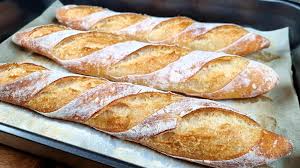
Classic French Baguettes are one of the most recognizable breads in the world, loved for their long, slender shape, beautifully golden crust, and light, airy interior.
Made with just four simple ingredients—flour, water, yeast, and salt—these homemade baguettes deliver the traditional flavor and texture associated with French bakeries.
The secret to a great baguette lies in proper dough hydration, gentle folding, sufficient fermentation, careful shaping, and baking with steam.
During baking, steam helps keep the dough surface flexible during its initial expansion, allowing the baguettes to develop a crisp, beautifully browned crust.
This recipe produces four homemade baguettes, perfect for sandwiches, breakfast, soups, or serving alongside a family meal.
2. Origin and Cultural Significance
The baguette is a celebrated symbol of French culinary heritage.
Although long loaves existed earlier, the modern baguette became particularly associated with French baking during the nineteenth and twentieth centuries.
Its name comes from the French word baguette, meaning a small rod or stick.
Traditional French baguettes are made using a simple dough of wheat flour, water, yeast or sourdough starter, and salt.
The baguette holds an important place in everyday French life, where fresh bread is commonly purchased from neighborhood bakeries.
In 2022, UNESCO recognized the artisanal know-how and culture of baguette bread as part of humanity’s intangible cultural heritage.
3. Ingredients
Yield: 4 baguettes
| Ingredient | Quantity |
|---|---|
| Bread flour | 450 g (approximately 3¾ cups) |
| Water | 355 ml (1½ cups), divided |
| Active dry yeast | 1½ teaspoons |
| Salt | 2 teaspoons |
| Extra flour | For dusting |
Water preparation: Use 60 ml (¼ cup) warm water at 100–110°F (38–43°C) to activate the yeast, and 295 ml (1¼ cups) cold water for mixing the dough.
4. Optional Additions
Traditional baguettes require no additional ingredients, but a few variations can be explored.
Whole-Wheat Flour: Replace a small portion of bread flour with whole-wheat flour for a nuttier flavor.
Sesame Seeds: Sprinkle sesame seeds over the surface before baking.
Poppy Seeds: Add poppy seeds for extra texture.
Fresh Herbs: Incorporate a small amount of finely chopped rosemary or thyme for an aromatic variation.
Roasted Garlic: Add roasted garlic for a savory bread.
These variations change the classic baguette but can provide interesting homemade alternatives.
5. Tips for Success
- Measure ingredients accurately: A kitchen scale provides the most reliable results.
- Use bread flour: Its higher protein content helps develop a strong gluten structure.
- Check the yeast: The yeast mixture should become foamy after approximately 10 minutes.
- Expect sticky dough: This is a relatively high-hydration dough, so avoid adding excessive flour.
- Fold gently: Folding strengthens the dough without requiring aggressive kneading.
- Allow proper fermentation: The dough should become visibly expanded and airy.
- Shape carefully: Avoid pressing out all the gas during shaping.
- Use steam: Steam encourages oven spring and crust development.
- Score before baking: Shallow diagonal cuts help control expansion.
- Cool before slicing: Allowing the bread to cool helps the interior crumb set.
6. Instructions
Prepare the Yeast
Pour 60 ml warm water into a small bowl. Add the active dry yeast and stir gently. Let the mixture rest for approximately 10 minutes until foamy.
Mix the Dough
In a large mixing bowl, combine the bread flour and salt.
Make a well in the center and add the activated yeast mixture.
Gradually pour in the remaining 295 ml cold water while stirring.
Continue mixing until a shaggy, slightly sticky dough forms and no dry flour remains.
Rest and Fold
Cover the bowl with plastic wrap or a clean kitchen towel and let the dough rest for 30 minutes at room temperature.
Transfer it to a lightly floured surface and gently flatten it into an approximately 8 × 10-inch rectangle.
Fold the sides toward the center, then fold the ends inward, similar to folding a letter.
First Rise
Place the dough seam-side down in a lightly oiled bowl.
Cover and allow it to rise in a warm place for approximately 60–90 minutes, until doubled in size.
Divide and Shape
Transfer the risen dough to a lightly floured counter.
Divide it into four equal portions.
Gently shape each portion into a narrow log approximately 14 inches (35 cm) long, tapering the ends slightly.
Try to preserve some of the air inside the dough.
Final Proof
Place the shaped baguettes on a parchment-lined baking sheet or a generously floured baker’s couche.
If using a couche, create folds between the loaves to support their shape.
Cover loosely and allow the baguettes to rise for approximately 45–60 minutes, until puffy.
Preheat the Oven
Preheat the oven to 450°F (230°C).
Place an empty, oven-safe metal pan on the bottom rack to prepare for steam generation. Avoid glass or ceramic pans for this purpose.
Score the Baguettes
Lightly dust the tops with flour.
Using a sharp bread lame or razor blade held at approximately a 45-degree angle, make three or four shallow diagonal slashes along each baguette.
Bake with Steam
Place the baguettes on the middle rack.
Carefully pour approximately 1 cup of boiling water into the preheated metal pan on the lower rack, keeping your face and hands away from the escaping steam.
Close the oven door immediately.
Bake for approximately 25–35 minutes, until the baguettes are deeply golden brown and crisp.
Cool and Serve
Remove the baguettes from the oven and transfer them to a wire cooling rack.
Allow them to cool for at least 20 minutes before slicing.
Serve fresh with butter, cheese, soup, or your favorite sandwich fillings.
7. Description
Classic French Baguettes have an elegant, elongated shape with a beautifully browned crust.
The exterior is thin, crisp, and slightly crackly, while the inside is soft, chewy, and airy.
A properly prepared baguette develops an irregular crumb with small and medium air pockets.
The flavor is pleasantly wheaty, with subtle fermented notes from the yeast.
The aroma of freshly baked bread fills the kitchen as the baguettes develop their golden crust.
8. Nutritional Information
Approximate nutritional values per baguette, assuming four equal loaves:
| Nutrient | Estimated Amount |
|---|---|
| Calories | 400–430 kcal |
| Protein | 12–15 g |
| Carbohydrates | 82–88 g |
| Total Fat | 1–2 g |
| Dietary Fiber | 2–4 g |
| Sugar | Less than 2 g |
| Sodium | Approximately 900–1,200 mg |
Values are estimates and depend on the flour and salt used. A smaller serving, such as one-quarter of a baguette, contains approximately one-quarter of these amounts.
9. Recipe Details
| Category | Details |
|---|---|
| Recipe Name | Classic French Baguettes |
| Cuisine | French |
| Course | Bread, Side Dish |
| Preparation Time | Approximately 20 Minutes Active |
| Resting and Rising Time | Approximately 2½–3 Hours |
| Baking Time | 25–35 Minutes |
| Total Time | Approximately 3½–4 Hours, Including Cooling |
| Yield | 4 Baguettes |
| Difficulty | Medium |
| Main Ingredient | Bread Flour |
| Leavening Agent | Active Dry Yeast |
| Cooking Method | Oven Baking |
| Oven Temperature | 450°F (230°C) |
| Texture | Crispy Crust, Soft and Airy Interior |
| Flavor | Mild, Wheaty, Slightly Fermented |
| Best Served | Fresh |
10. Conclusion
Classic French Baguettes demonstrate how four simple ingredients can produce delicious bakery-style bread.
The combination of proper hydration, yeast fermentation, gentle folding, careful shaping, and steam baking creates a crisp exterior and a light interior.
Although baguette preparation requires patience, the process is straightforward with a little practice.
Freshly baked baguettes are versatile and can be enjoyed at breakfast, lunch, or dinner.
11. Serving and Storage Recommendations
Serve Fresh: Baguettes are best enjoyed on the day they are baked.
Breakfast: Serve with butter, honey, or jam.
Sandwiches: Fill with cheese, vegetables, eggs, or halal meats.
Soup: Pair with vegetable soup or French onion soup prepared with halal-compatible ingredients.
Garlic Bread: Slice and toast with garlic butter.
Cheese Board: Serve with a selection of cheeses and fresh fruit.
Room-Temperature Storage: Keep in a bread bag or wrapped in a clean towel for approximately 1–2 days, although the crust will gradually soften.
Freezing: Freeze completely cooled baguettes in freezer-safe bags for up to 2–3 months for best quality.
Reheating: Warm in a preheated oven at approximately 350°F (175°C) for 5–10 minutes to refresh the crust. Frozen loaves may require longer.
Avoid Refrigeration: Refrigerating bread generally accelerates staling.
12. Embracing Healthful Indulgence
Classic French Baguettes provide carbohydrates that supply energy, along with some protein from wheat flour.
Because the traditional recipe contains no added sugar or fat, the bread is relatively simple in composition.
However, white bread flour contains less fiber than whole-grain flour.
Pairing baguettes with vegetables, protein-rich foods, and healthy fats can create a more balanced meal.
Portion size also matters, particularly when baguettes are served with rich spreads or fillings.
Homemade baguettes offer the additional advantage of allowing control over ingredient quality and salt content.
With their golden, crackling crust and soft, airy crumb, Classic French Baguettes are a rewarding homemade bread that brings the familiar taste and texture of a French bakery into your kitchen.