
Preparation Time: 10 minutes
Cooking Time: 10–15 minutes
Total Time: Approximately 20–25 minutes
Yield: 1 large serving or 2 smaller servings
Difficulty: Easy
Cuisine: East Asian-inspired
1. Introduction
High-Protein Egg Drop Noodle Soup is a comforting and nourishing dish that combines delicate egg ribbons, tender noodles, and a savory broth infused with ginger, soy sauce, and sesame oil.
Inspired by traditional Chinese egg drop soup and Japanese egg-based noodle soups, this recipe offers a satisfying combination of textures and flavors. The beaten eggs are slowly incorporated into the hot broth, creating delicate, silky ribbons that give the soup its distinctive appearance.
The addition of noodles transforms the traditional light soup into a more substantial meal. Using protein-rich bone broth and eggs further enhances its nutritional value, making it a convenient option for lunch or dinner.
Its simple preparation, accessible ingredients, and adaptable flavor profile make it suitable for everyday cooking.
2. Origin of Egg Drop Noodle Soup
Egg drop soup has strong roots in Chinese culinary traditions. It is commonly associated with Chinese home cooking and restaurant cuisine, where beaten eggs are poured into hot seasoned broth to create delicate strands or ribbons.
In Chinese cuisine, this preparation is often known as Dan Hua Tang (蛋花汤), meaning egg flower soup. The name refers to the flower-like patterns formed when eggs are introduced into the simmering liquid.
A related preparation exists in Japanese cuisine under the name Kakitama-jiru, a traditional egg-drop soup commonly made with dashi-based broth and beaten eggs.
The addition of noodles creates a more substantial variation, combining the simplicity of egg drop soup with the satisfying qualities of noodle dishes.
This particular recipe brings together several East Asian-inspired ingredients, including soy sauce, fresh ginger, sesame oil, noodles, and scallions.
3. Cultural Significance
Egg drop soup represents several important characteristics of East Asian food traditions.
Traditional Home Cooking
Egg-based soups are appreciated for their simplicity and their ability to transform a small number of everyday ingredients into a comforting meal.
Resourceful Cooking
Eggs, broth, and noodles are relatively accessible ingredients. Their combination demonstrates how simple pantry staples can produce a flavorful and satisfying dish.
Culinary Techniques
The technique of slowly pouring beaten eggs into moving hot broth creates delicate ribbons. This method demonstrates the importance of temperature control and gentle movement in soup preparation.
Adaptability Across Cultures
Chinese egg flower soup and Japanese kakitama-jiru demonstrate how similar cooking techniques can appear in different culinary traditions, with variations in broth, seasoning, and accompanying ingredients.
4. Ingredients and Quantities
A. Broth Base
| Ingredient | Quantity |
|---|---|
| Chicken or vegetable bone broth | 2 cups |
| Soy sauce or tamari | 1 tablespoon |
| Fresh ginger, grated | 1 teaspoon |
| White pepper | A pinch |
| Salt | To taste |
The broth provides the foundation of the soup. Bone broth is particularly useful when a higher-protein preparation is desired.
B. Protein and Noodles
| Ingredient | Quantity |
|---|---|
| Large eggs | 2–3 |
| Udon, ramen, or other noodles | 1 serving |
Eggs provide protein and create the characteristic silky ribbons.
Noodles add substance and transform the broth into a complete meal.
C. Seasonings and Thickener
| Ingredient | Quantity |
|---|---|
| Toasted sesame oil | ½ teaspoon |
| Cornstarch or potato starch | 1 tablespoon |
| Cold water | 1 tablespoon |
The cornstarch mixture helps slightly thicken the broth and gives it a glossy consistency.
D. Garnish
| Ingredient | Quantity |
|---|---|
| Green onions or scallions, sliced | 1–2 |
| Fresh cilantro (optional) | 1 tablespoon |
| Sesame seeds (optional) | 1 teaspoon |
Fresh scallions contribute color, freshness, and a mild onion flavor.
5. Optional Additions
The recipe can be customized with additional ingredients to improve its flavor, texture, and nutritional variety.
| Optional ingredient | Suggested quantity | Purpose |
|---|---|---|
| Shredded chicken breast | ½ cup | Adds protein |
| Shiitake mushrooms | ½ cup | Provides earthy flavor |
| Baby spinach | 1 cup | Adds vegetables |
| Carrots, thinly sliced | ¼ cup | Adds sweetness and color |
| Miso paste | 1 teaspoon | Adds savory depth |
| Chili oil | ½ teaspoon | Introduces mild heat |
| Tofu, cubed | ½ cup | Provides additional plant protein |
| Nori seaweed | 1 small sheet | Adds an umami flavor |
| Sweet corn | ¼ cup | Adds sweetness and texture |
These additions can be selected according to personal preference without changing the fundamental preparation technique.
6. Tips for Success
- Choose quality broth: Bone broth can increase the protein content and provide a richer flavor.
- Beat the eggs thoroughly: A consistent egg mixture produces more uniform ribbons.
- Control the temperature: Keep the broth at a gentle simmer rather than a vigorous boil when adding the eggs.
- Prepare the starch slurry correctly: Mix cornstarch with cold water before incorporating it into the hot broth to prevent lumps.
- Pour the eggs slowly: Gradually drizzle the beaten eggs into the moving broth to create delicate strands.
- Avoid excessive stirring: Allow the egg ribbons to set for approximately 15–20 seconds before gently moving the mixture.
- Cook noodles separately: This helps prevent excess starch from changing the consistency of the broth.
- Add sesame oil at the end: Incorporating sesame oil after cooking helps preserve its distinctive aroma.
- Adjust seasoning carefully: Soy sauce already contains sodium, so additional salt should be added gradually.
- Serve immediately: The soup is best enjoyed freshly prepared while the egg ribbons remain tender and the noodles retain their texture.
7. Instructions and Preparation Method
Step 1: Prepare the Noodles
- Bring a saucepan of water to a boil.
- Add the noodles and cook according to the package instructions.
- Cook until they reach the desired tenderness, preferably al dente.
- Drain the noodles thoroughly.
- Transfer them into a serving bowl and set aside.
If using pre-cooked udon, it can be warmed directly in the broth.
Step 2: Prepare the Broth
- Pour 2 cups of chicken or vegetable bone broth into a small saucepan.
- Place the saucepan over medium heat.
- Add 1 tablespoon of soy sauce.
- Incorporate 1 teaspoon of freshly grated ginger.
- Add a pinch of white pepper.
- Stir gently and bring the mixture to a gentle simmer.
Allow the broth to simmer briefly so the ginger and seasonings release their flavors.
Step 3: Thicken the Broth
- Combine 1 tablespoon of cornstarch with 1 tablespoon of cold water in a small bowl.
- Stir until the mixture becomes completely smooth.
- Slowly pour the slurry into the simmering broth.
- Stir continuously for approximately 30–60 seconds.
- Allow the broth to develop a slightly thicker and glossier consistency.
Avoid adding the cornstarch directly into the hot broth without first mixing it with cold water.
Step 4: Prepare the Egg Mixture
- Crack 2–3 large eggs into a small mixing bowl.
- Beat them gently with a fork or whisk until the yolks and whites are combined.
- Avoid creating excessive foam.
- Set the egg mixture aside.
Step 5: Create the Egg Ribbons
- Reduce the heat to low so the broth is barely bubbling.
- Use chopsticks or a spoon to create a gentle circular movement in the broth.
- Slowly drizzle the beaten eggs into the moving liquid.
- Continue pouring in a thin, steady stream.
- Allow the eggs to cook undisturbed for approximately 15–20 seconds.
- Gently stir once to separate the ribbons without breaking them excessively.
- Allow the eggs to finish cooking in the hot broth.
The result should be delicate, soft egg ribbons distributed throughout the soup.
Step 6: Finish the Soup
- Remove the saucepan from the heat.
- Add ½ teaspoon of toasted sesame oil.
- Stir gently to distribute the flavor.
- Taste the broth and adjust the seasoning if necessary.
Step 7: Assemble and Serve
- Place the previously cooked noodles into a serving bowl.
- Carefully pour the hot egg-drop broth over the noodles.
- Arrange the egg ribbons evenly throughout the bowl.
- Garnish with thinly sliced green onions.
- Add sesame seeds or fresh cilantro if desired.
- Serve immediately while hot.
8. Description
High-Protein Egg Drop Noodle Soup is a warm, comforting dish characterized by its delicate egg ribbons, tender noodles, and flavorful broth.
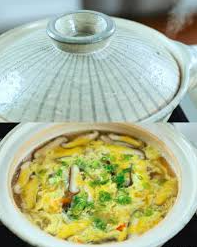
The soup features a lightly thickened, golden broth in which soft strands of cooked egg create an attractive flower-like appearance.
The ginger and soy sauce provide a savory foundation, while toasted sesame oil introduces a subtle nutty aroma.
The noodles absorb some of the broth, creating a satisfying combination of textures. Fresh scallions provide a refreshing contrast and contribute a vibrant green garnish.
As illustrated in the presentation, serving the soup in a traditional ceramic bowl with a covered serving pot creates an inviting and visually appealing dining experience.
The overall result is a simple yet flavorful meal that combines traditional egg-drop techniques with the convenience of a modern noodle soup.
9. Nutritional Information
The following values are approximate and depend on the type of broth, noodles, and number of eggs used.
Estimated nutrition per generous serving:
| Nutritional component | Approximate quantity |
|---|---|
| Calories | 400–600 kcal |
| Protein | 23–40 g |
| Carbohydrates | 40–65 g |
| Total fat | 12–22 g |
| Saturated fat | 3–6 g |
| Dietary fiber | 2–5 g |
| Sodium | 700–1,500 mg |
Main nutritional contributions:
- Eggs: Provide complete protein and essential nutrients.
- Bone broth: Can contribute additional protein, depending on its formulation.
- Noodles: Supply carbohydrates that provide energy.
- Ginger: Contributes aromatic compounds and distinctive flavor.
- Green onions: Provide small amounts of vitamins and minerals.
- Mushrooms and spinach, if added: Increase the variety of vegetables and dietary fiber.
The higher end of the protein range is more likely when using protein-rich bone broth, three eggs, or high-protein noodles. Ordinary broth may provide considerably less protein.
10. Embracing Healthful Indulgence
High-Protein Egg Drop Noodle Soup can be incorporated into a balanced eating pattern through simple ingredient choices.
Prioritize Quality Ingredients
- Choose a good-quality, lower-sodium bone broth.
- Use fresh eggs.
- Select noodles that provide a suitable balance of carbohydrates and protein.
- Incorporate fresh vegetables such as spinach, mushrooms, and carrots.
Improve Nutritional Variety
Adding vegetables introduces additional vitamins, minerals, and dietary fiber.
Shredded chicken or tofu can also increase the protein content while providing different textures.
Manage Sodium Levels
Soy sauce and commercial broths can contain considerable amounts of sodium. Choosing reduced-sodium alternatives allows better control over the final seasoning.
Preserve Flavor Without Excessive Additions
Fresh ginger, scallions, sesame oil, and herbs provide distinctive flavors without requiring large quantities of additional seasoning.
The objective is to maintain the soup’s characteristic savory taste while creating a balanced and satisfying meal.
11. Conclusion
High-Protein Egg Drop Noodle Soup is a practical and flavorful dish inspired by traditional East Asian soup preparations.
Its combination of eggs, noodles, and savory broth creates a satisfying meal that can be prepared with relatively little effort.
The delicate egg ribbons provide its distinctive appearance, while ginger, soy sauce, and sesame oil contribute depth and aroma.
The recipe also offers considerable flexibility, allowing additional vegetables, chicken, tofu, and different types of noodles to be incorporated according to individual preferences.
Overall, it represents an excellent example of how simple ingredients and traditional cooking techniques can produce a nourishing and visually appealing meal.
12. Recommendation
This recipe is recommended for:
- Quick homemade lunches and dinners.
- Individuals who enjoy Asian-inspired soups.
- People looking for convenient protein-containing meals.
- Families seeking adaptable noodle recipes.
- Anyone interested in preparing comforting meals with accessible ingredients.
Recommended version: Use chicken bone broth, three large eggs, udon noodles, fresh ginger, baby spinach, and sliced scallions.
This combination provides a rich broth, tender noodles, delicate egg ribbons, and additional vegetable variety.
For the best result, prepare the noodles separately, add the eggs gradually, and serve the soup immediately after cooking.
13. Final Presentation
The finished soup should feature:
- A warm, golden-colored broth.
- Clearly visible, delicate egg ribbons.
- Tender noodles distributed throughout the bowl.
- Freshly sliced green onions.
- A light, glossy consistency.
- An aromatic finish from toasted sesame oil.
Serve in a ceramic soup bowl, accompanied by a small covered serving pot if desired.
The presentation should emphasize the contrast between the golden egg ribbons, the noodles, and the fresh green garnish.