
Preparation Time: 10 minutes
Chilling Time: 30 minutes (optional)
Baking Time: 9–11 minutes
Total Time: Approximately 20–50 minutes
Yield: 20–24 cookies
Difficulty: Easy
Cuisine: American-Inspired Baking
1. Introduction
Soft and Chewy Chocolate Chipless Cookies are a delicious variation of traditional chocolate chip cookies, prepared without chocolate chips while preserving the familiar buttery flavor, caramelized sweetness, and soft texture.
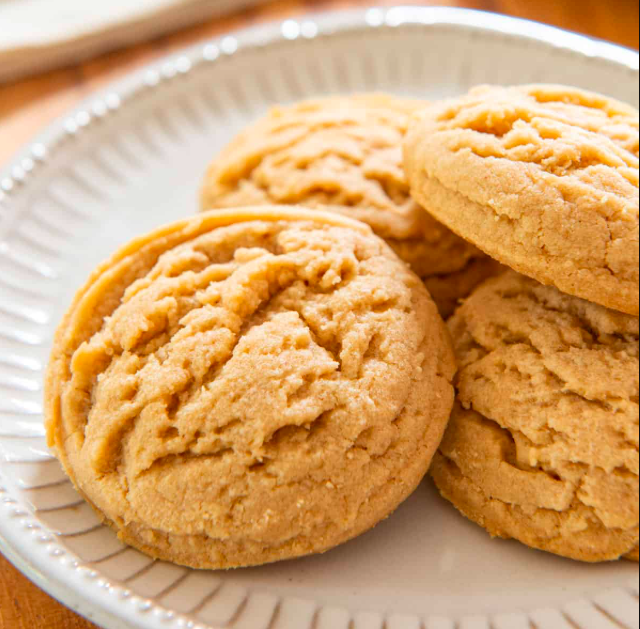
These cookies are characterized by their golden-brown edges, tender centers, and slightly crinkled surfaces. Their distinctive flavor comes from the combination of brown sugar, granulated sugar, butter, and vanilla extract.
Unlike conventional chocolate chip cookies, this recipe focuses on the richness of the cookie dough itself. Brown sugar contributes moisture and a caramel-like flavor, while cornstarch helps produce a soft and delicate interior.
The result is a simple yet satisfying baked treat that highlights the importance of ingredient balance and proper baking techniques.
These cookies are suitable for afternoon snacks, breakfast treats, dessert platters, and informal family gatherings.
2. Origin of Chocolate Chipless Cookies
Chocolate chipless cookies are a modern variation of the traditional American chocolate chip cookie.
The original chocolate chip cookie was developed in the United States during the 1930s and is widely associated with Ruth Wakefield, who created the famous Toll House cookie recipe.
The traditional version combines butter, sugar, flour, eggs, and chocolate pieces. Over time, numerous variations emerged, including recipes featuring nuts, caramel, oatmeal, and different types of chocolate.
Chocolate chipless cookies follow the same basic baking principles but intentionally omit chocolate chips.
This variation allows the buttery, caramelized, and vanilla flavors of the dough to become the primary focus.
Although chocolate chipless cookies do not have a single documented inventor or historical origin, they represent contemporary creativity in American home baking and modern bakery culture.
3. Cultural Significance
Cookies have an important place in American baking traditions and are widely enjoyed across different cultures.
American Baking Traditions
Chocolate chip cookies are among the most recognizable American baked goods. Their popularity has inspired numerous variations, including chocolate chipless cookies.
Family Baking Activities
Cookies are frequently prepared at home as part of family baking activities. Their straightforward preparation makes them suitable for beginners and experienced bakers alike.
Bakery Culture
Modern bakeries frequently experiment with cookie textures, flavors, and presentations. Soft-centered cookies with golden edges have become particularly popular.
Sharing and Hospitality
Cookies are commonly served during social gatherings, celebrations, holidays, and coffee breaks. Their individual portions make them convenient for sharing.
Modern Culinary Creativity
Removing chocolate chips demonstrates how a familiar recipe can be transformed through changes in ingredients and preparation while maintaining its original identity.
4. Ingredients and Quantities
Yield: Approximately 20–24 cookies
A. Butter and Wet Ingredients
| Ingredient | Quantity |
|---|---|
| Unsalted butter, softened | 11 tablespoons (approximately 158 g) |
| Light or dark brown sugar | ¾ cup |
| Granulated sugar | ¼ cup |
| Large egg | 1 |
| Pure vanilla extract | 2 teaspoons |
B. Dry Ingredients
| Ingredient | Quantity |
|---|---|
| All-purpose flour | 2 cups |
| Cornstarch | 1 teaspoon |
| Baking soda | 1 teaspoon |
| Fine sea salt or kosher salt | ½ teaspoon |
C. Optional Finishing Ingredients
| Ingredient | Quantity |
|---|---|
| Flaky sea salt | A small pinch |
| Ground cinnamon | ¼ teaspoon |
| Additional vanilla extract | A few drops |
| Brown sugar for sprinkling | 1 tablespoon |
5. Optional Additions
Although the traditional recipe does not contain chocolate, several ingredients can be incorporated to introduce additional flavors and textures.
| Optional Addition | Suggested Quantity | Purpose |
|---|---|---|
| Chopped walnuts | ½ cup | Adds crunch and nuttiness |
| Chopped pecans | ½ cup | Provides a buttery flavor |
| White chocolate chunks | ½ cup | Adds sweetness |
| Butterscotch chips | ½ cup | Enhances caramel notes |
| Toasted coconut | ¼ cup | Adds texture and aroma |
| Ground cinnamon | ½ teaspoon | Introduces warm spice |
| Espresso powder | ¼ teaspoon | Adds depth of flavor |
| Flaky sea salt | A small pinch | Balances sweetness |
| Chopped hazelnuts | ¼ cup | Adds a toasted nutty flavor |
These additions are optional. For the classic chocolate chipless version, the original ingredient list should remain unchanged.
6. Tips for Success
- Use softened butter: Butter should be soft enough to mix easily but should not be melted. This helps create the appropriate cookie structure.
- Measure ingredients accurately: Too much flour can make cookies dry and dense. Measuring flour by weight provides more consistent results.
- Choose brown sugar: Brown sugar contributes moisture, chewiness, and a distinctive caramel flavor.
- Cream the butter and sugars properly: Beat them together for approximately 2–3 minutes until the mixture becomes creamy and evenly combined.
- Use room-temperature eggs: They incorporate more easily into the butter mixture.
- Avoid overmixing: Once the flour is incorporated, stop mixing. Excessive mixing can produce tougher cookies.
- Do not skip the cornstarch: A small quantity helps produce a softer and more delicate texture.
- Chill the dough when necessary: Refrigerating the dough for approximately 30 minutes helps control spreading and creates thicker cookies.
- Leave sufficient space: Place dough portions approximately 2–3 inches apart because the cookies will spread during baking.
- Avoid overbaking: Remove the cookies when their edges are set and lightly golden while the centers still appear slightly soft.
- Allow the cookies to rest: Leave them on the baking sheet for 5–10 minutes after baking so they can finish setting.
- Store correctly: Keep completely cooled cookies in an airtight container to preserve their softness.
7. Instructions and Preparation Method
Step 1: Prepare the Oven and Baking Sheet
- Preheat the oven to 350°F (175°C).
- Prepare a large baking sheet.
- Line it with parchment paper.
- Set aside while preparing the cookie dough.
Step 2: Cream the Butter and Sugars
- Place the softened unsalted butter in a large mixing bowl.
- Add the brown sugar and granulated sugar.
- Using an electric mixer, beat the ingredients together for approximately 2–3 minutes.
- Continue until the mixture becomes creamy, smooth, and evenly combined.
- Scrape down the sides of the bowl when necessary.
This step helps distribute the butter and sugars evenly, contributing to the cookies’ final texture.
Step 3: Incorporate the Wet Ingredients
- Add one large egg to the butter and sugar mixture.
- Beat until fully incorporated.
- Add the vanilla extract.
- Mix again until the ingredients form a smooth and uniform mixture.
- Scrape down the sides of the bowl to ensure everything is incorporated.
Step 4: Combine the Dry Ingredients
- In a separate bowl, combine the all-purpose flour, cornstarch, baking soda, and salt.
- Whisk thoroughly to distribute the ingredients evenly.
- Gradually add the dry mixture to the wet ingredients.
- Mix using an electric mixer on low speed or a spatula.
- Continue until no visible streaks of dry flour remain.
Avoid excessive mixing to maintain a tender cookie texture.
Step 5: Portion the Cookie Dough
- Use a cookie scoop or tablespoon to portion the dough.
- Form individual balls approximately 1½–2 tablespoons in size.
- Arrange them on the prepared baking sheet.
- Leave approximately 2–3 inches between each portion.
- Gently shape the dough balls if necessary.
For thicker cookies, refrigerate the prepared dough balls for approximately 30 minutes before baking.
Step 6: Bake the Cookies
- Place the baking sheet in the preheated oven.
- Bake at 350°F (175°C) for approximately 9–11 minutes.
- Monitor the cookies carefully during the final minutes.
- Look for lightly golden edges and slightly soft centers.
- Remove the baking sheet from the oven once the edges are set.
The centers may appear slightly underbaked when removed. They will continue to cook gently from the residual heat of the baking sheet.
Step 7: Cool the Cookies
- Allow the cookies to rest on the baking sheet for 5–10 minutes.
- Their structure will gradually become firmer.
- Carefully transfer them to a wire cooling rack.
- Allow them to cool completely before storing.
Step 8: Serve and Present
- Arrange the cooled cookies on a serving plate.
- If desired, sprinkle a small amount of flaky sea salt over the surface.
- Serve with coffee, tea, or cold milk.
- Enjoy while the centers remain soft and the edges retain their delicate crispness.
8. Description
Soft and Chewy Chocolate Chipless Cookies are classic American-inspired cookies distinguished by their golden appearance, delicate crinkled surfaces, and rich buttery flavor.
Their texture combines lightly crisp edges with soft, tender centers.
The absence of chocolate allows the caramel-like sweetness of brown sugar and the aromatic qualities of vanilla to become the dominant flavors.
The butter contributes richness, while cornstarch helps create a delicate interior.
As illustrated in the photograph, the cookies feature an attractive golden-brown color, slightly irregular surfaces, and a thick, bakery-style appearance.
They are arranged on a decorative white ceramic plate, emphasizing their warm color and homemade presentation.
The overall result is a simple but flavorful cookie that demonstrates how a limited number of ingredients can create an appealing baked dessert.
9. Nutritional Information
The following nutritional values are estimates based on the complete recipe and a yield of approximately 22 cookies.
Estimated nutritional information per cookie:
| Nutritional Component | Approximate Quantity |
|---|---|
| Calories | 140–160 kcal |
| Protein | 1.5–2 g |
| Total Fat | 7–8 g |
| Saturated Fat | 4–5 g |
| Carbohydrates | 18–21 g |
| Dietary Fiber | 0.3–0.6 g |
| Total Sugars | 9–11 g |
| Sodium | 90–120 mg |
Nutritional Contributions
- Butter: Provides fat and contributes to the cookies’ characteristic richness.
- Eggs: Supply protein and contribute to the structure of the dough.
- Flour: Provides carbohydrates that serve as an energy source.
- Brown Sugar: Contributes sweetness and moisture.
- Vanilla: Adds aroma and flavor without significantly changing the nutritional composition.
Actual values vary according to ingredient brands, cookie size, and preparation methods.
10. Embracing Healthful Indulgence
Chocolate Chipless Cookies can be enjoyed as part of a varied and balanced eating pattern.
Although they contain butter and added sugars, small modifications can provide alternative versions while maintaining their characteristic flavor and texture.
Adjust the Sugar Content
The sugar quantity can be moderately reduced according to taste, although this may affect the cookies’ spread, color, and texture.
Experiment with Whole-Grain Flour
Replacing a portion of the all-purpose flour with whole-wheat flour can increase dietary fiber.
Incorporate Nuts
Walnuts and pecans provide additional texture and unsaturated fats.
Control Portion Sizes
Preparing smaller cookies makes it easier to manage individual portions.
Choose Complementary Accompaniments
Fresh fruit, plain yogurt, or unsweetened tea can complement the sweetness of the cookies.
Maintain Variety
Enjoying homemade cookies alongside a varied diet allows room for occasional desserts without making them the foundation of everyday nutrition.
The objective is to appreciate homemade baking while maintaining moderation and variety.
11. Conclusion
Soft and Chewy Chocolate Chipless Cookies offer a simple yet delicious interpretation of traditional American chocolate chip cookies.
By removing the chocolate chips, the recipe highlights the natural combination of butter, brown sugar, granulated sugar, and vanilla.
Their lightly crisp edges, tender centers, and caramelized flavor make them an appealing homemade treat.
The recipe also demonstrates the importance of fundamental baking techniques, including proper creaming, accurate ingredient measurement, controlled mixing, and careful baking time.
With accessible ingredients and straightforward preparation, these cookies are suitable for both beginner and experienced home bakers.
12. Recommendation
This recipe is recommended for people who enjoy traditional bakery-style cookies but prefer a version without chocolate chips.
For the best results, use softened unsalted butter, good-quality vanilla extract, and light or dark brown sugar.
The most important recommendations are:
- Use accurately measured ingredients.
- Cream the butter and sugars until smooth.
- Avoid overmixing the dough.
- Chill the dough for thicker cookies.
- Maintain adequate spacing on the baking sheet.
- Remove the cookies when their edges are lightly golden.
- Allow them to rest before transferring.
- Store them in an airtight container.
Recommended Serving Combinations
- Freshly brewed coffee.
- A glass of cold milk.
- Black or green tea.
- Fresh strawberries.
- Plain Greek yogurt.
- A small scoop of vanilla ice cream.
For an attractive bakery-style presentation, arrange the cookies on a white ceramic plate and serve them slightly warm.
13. Final Presentation
The finished cookies should have a warm golden-brown color, slightly crinkled surfaces, and a soft interior.
For an appealing presentation:
- Arrange the cookies in a slightly overlapping stack.
- Use a white or neutral-colored ceramic serving plate.
- Highlight their natural golden color.
- Add a light sprinkle of flaky sea salt if desired.
- Serve with a cup of coffee, tea, or cold milk.
The final presentation should emphasize the homemade character, simple ingredients, and rich buttery flavor of the cookies.
Soft and Chewy Chocolate Chipless Cookies demonstrate that an excellent cookie does not necessarily require chocolate. Properly balanced ingredients and careful preparation are sufficient to create a flavorful and satisfying baked treat.