
Introduction
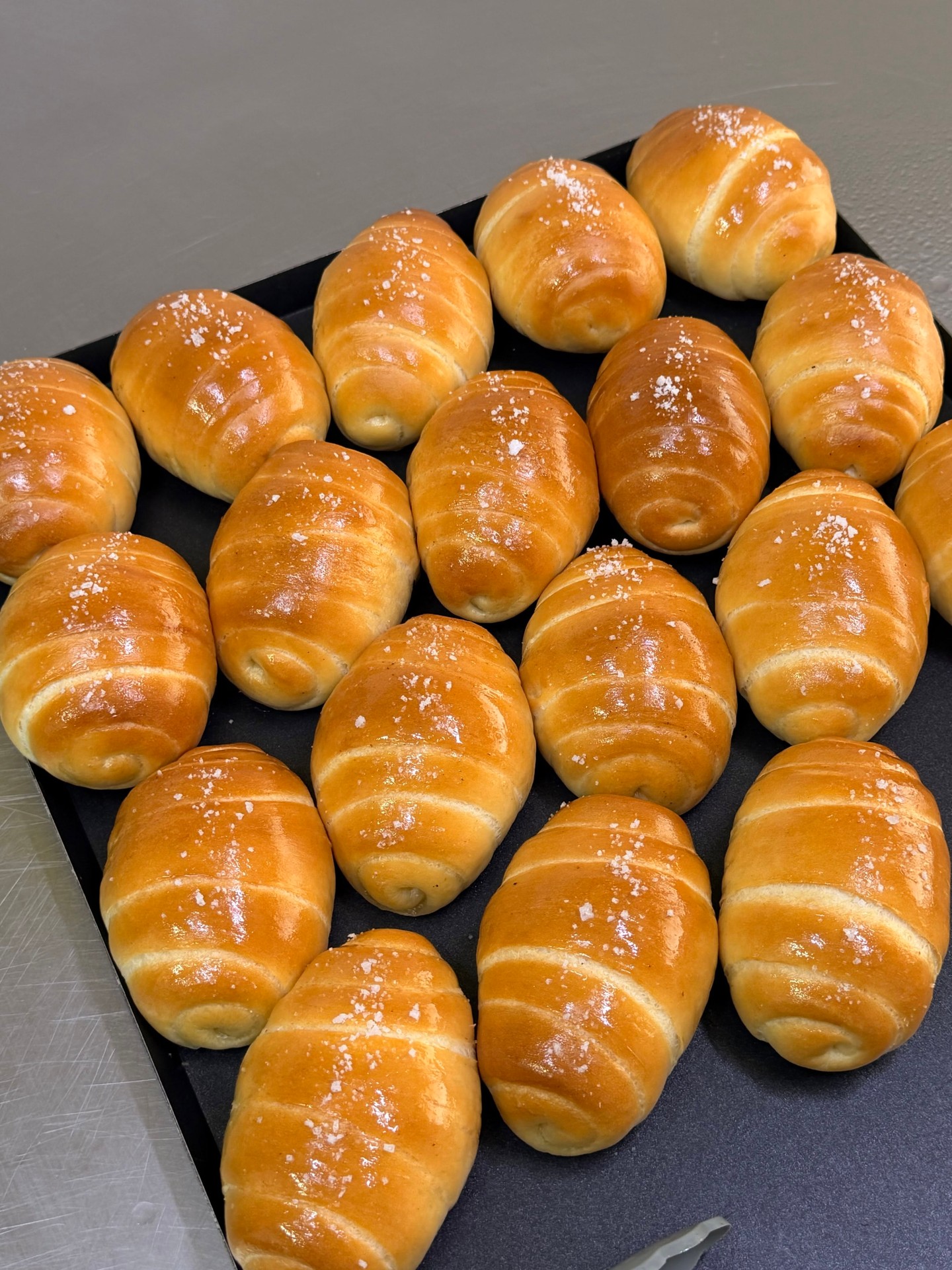
Simple Soft & Buttery Salted Dinner Rolls are fluffy, tender, and wonderfully buttery, with a delicate golden crust and a light sprinkle of flaky sea salt on top. Made with everyday ingredients, these homemade rolls are easy enough for a family dinner yet special enough for holidays and celebrations.
The combination of warm milk, butter, egg, and yeast creates a soft interior, while the melted butter brushed over the finished rolls adds extra richness and flavor.
Origin
Dinner rolls belong to the broader tradition of yeast breads that developed across Europe and later became an important part of American baking. Soft, enriched rolls made with ingredients such as milk, butter, eggs, and sugar became especially popular as home baking evolved.
This particular recipe is a modern homemade variation inspired by classic American-style dinner rolls. The addition of flaky sea salt provides a simple finishing touch that balances the buttery richness.
Cultural Significance
Freshly baked rolls have long been associated with family meals, holidays, celebrations, and hospitality. In many households, warm bread served alongside dinner is a comforting part of the meal.
Dinner rolls are especially popular during Thanksgiving, Christmas, Sunday dinners, and other gatherings where homemade bread can be placed in the center of the table for everyone to share.
Their soft texture and buttery flavor make them a versatile accompaniment to soups, roasted meats, vegetables, and other main dishes.
Ingredients & Quantities
For the Dough
- 4 cups all-purpose flour
- 2¼ teaspoons active dry yeast
- ¼ cup granulated sugar
- 1 cup warm milk
- 1 large egg
- ¼ cup melted butter
- 1 teaspoon salt
For Finishing
- 2 tablespoons melted butter
- Flaky sea salt, for topping
Optional Additions
For extra flavor, try adding:
- 1 teaspoon garlic powder for savory garlic rolls
- 1 tablespoon chopped fresh parsley
- ½ teaspoon dried rosemary or thyme
- 1 teaspoon honey instead of part of the sugar
- 1 tablespoon grated Parmesan cheese
- Sesame or poppy seeds for the topping
- A little grated cheddar cheese for cheesy dinner rolls
For a sweeter variation, slightly increase the sugar and omit the flaky sea salt.
Tips for Success
Use warm, not hot, milk: The milk should feel comfortably warm. Very hot liquid can interfere with the yeast.
Give the yeast time: Allowing the yeast to activate properly helps create a light and fluffy texture.
Don’t add too much flour: The dough should be soft and slightly tacky rather than stiff. Adding excessive flour can make the rolls dense.
Knead thoroughly: Proper kneading develops the gluten needed to give the rolls their soft, elastic structure.
Let the dough rise fully: Don’t rush the rising process. The dough should noticeably increase in volume.
Create evenly sized rolls: Dividing the dough into similar portions helps everything bake at the same rate.
Brush with butter: Brushing the warm rolls with melted butter immediately after baking gives the crust a delicious buttery finish.
Instructions
Step 1: Activate the Yeast
Pour the warm milk into a large bowl.
Add the sugar and active dry yeast. Stir gently and allow the mixture to stand for approximately 5–10 minutes, until the yeast becomes foamy.
Step 2: Add the Wet Ingredients
Add the egg and melted butter to the yeast mixture.
Whisk gently until everything is combined.
Step 3: Add the Flour and Salt
Gradually add the flour and salt, mixing as you go.
Once the dough becomes too thick to stir, transfer it to a lightly floured surface.
Step 4: Knead the Dough
Knead the dough for approximately 8–10 minutes, until it becomes smooth, elastic, and soft.
If the dough feels excessively sticky, add a very small amount of flour at a time. Avoid adding too much.
Step 5: First Rise
Place the dough in a lightly greased bowl.
Cover it with a clean kitchen towel or plastic wrap and place it somewhere warm.
Allow it to rise for approximately 1–1½ hours, or until it has roughly doubled in size.
Step 6: Shape the Rolls
Gently press the air out of the risen dough.
Divide it into approximately 12–16 equal pieces, depending on the desired roll size.
Shape each piece into a smooth ball by gently pulling the edges underneath.
Arrange the rolls in a greased baking dish or on a parchment-lined baking sheet, leaving a little space between them.
Step 7: Second Rise
Cover the shaped rolls and let them rise again for approximately 30–45 minutes, until they look noticeably puffy.
Step 8: Bake
Preheat the oven to 180°C (350°F).
Bake the rolls for approximately 18–22 minutes, or until they are puffed and lightly golden on top.
Step 9: Add the Buttery Finish
Remove the rolls from the oven and immediately brush the tops generously with the melted butter.
Sprinkle lightly with flaky sea salt.
Step 10: Serve
Allow the rolls to cool for a few minutes before serving.
Serve them warm alongside your favorite meal.
Description
These Soft & Buttery Salted Dinner Rolls are fluffy on the inside, lightly golden on the outside, and finished with a beautiful buttery sheen and delicate flakes of sea salt.
The milk and butter create a tender crumb, while the egg contributes richness and structure. A small amount of sugar provides subtle sweetness that balances the savory salt topping.
They’re especially delicious when served warm, when the interior is soft and fragrant and the butter is still melting into the crust.
Nutritional Information
Nutritional values are approximate and depend on the exact ingredients and final roll size.
Estimated per roll, assuming 16 rolls:
- Calories: approximately 170–200 kcal
- Protein: approximately 4–5 g
- Carbohydrates: approximately 25–28 g
- Fat: approximately 6–8 g
- Fiber: approximately 1 g
- Sugar: approximately 3–4 g
- Sodium: varies according to the amount of salt used
Because these are enriched yeast rolls, they provide carbohydrates along with smaller amounts of protein and fat from the milk, egg, and butter.
Conclusion
Simple Soft & Buttery Salted Dinner Rolls are a comforting homemade bread that can elevate almost any meal. Their tender texture, buttery flavor, and delicate salt topping make them incredibly versatile.
Although they require some rising time, the preparation itself is straightforward, and the result is well worth the wait.
Recommendation
Serve these rolls warm alongside roasted chicken, turkey, beef, vegetables, soups, or hearty stews.
They are particularly wonderful for holiday dinners and family gatherings. You can also split leftover rolls and use them to make small sandwiches the following day.
For the best flavor and texture, serve them fresh and brush them with butter immediately after baking.
Embracing Healthful Indulgence
Homemade bread can be enjoyed as part of a balanced meal. These dinner rolls provide comforting carbohydrates and can complement nutritious foods such as vegetables, lean proteins, soups, and salads.
For a slightly more nutrient-dense version, you can replace part of the all-purpose flour with whole-wheat flour. Keep in mind that this may produce a somewhat denser roll, so it’s best to start by replacing only a portion of the flour.
The goal is not to eliminate foods that bring comfort and enjoyment, but to appreciate them in balance. A warm homemade roll alongside a nourishing meal can be a satisfying and wholesome part of the dining experience.