
Introduction
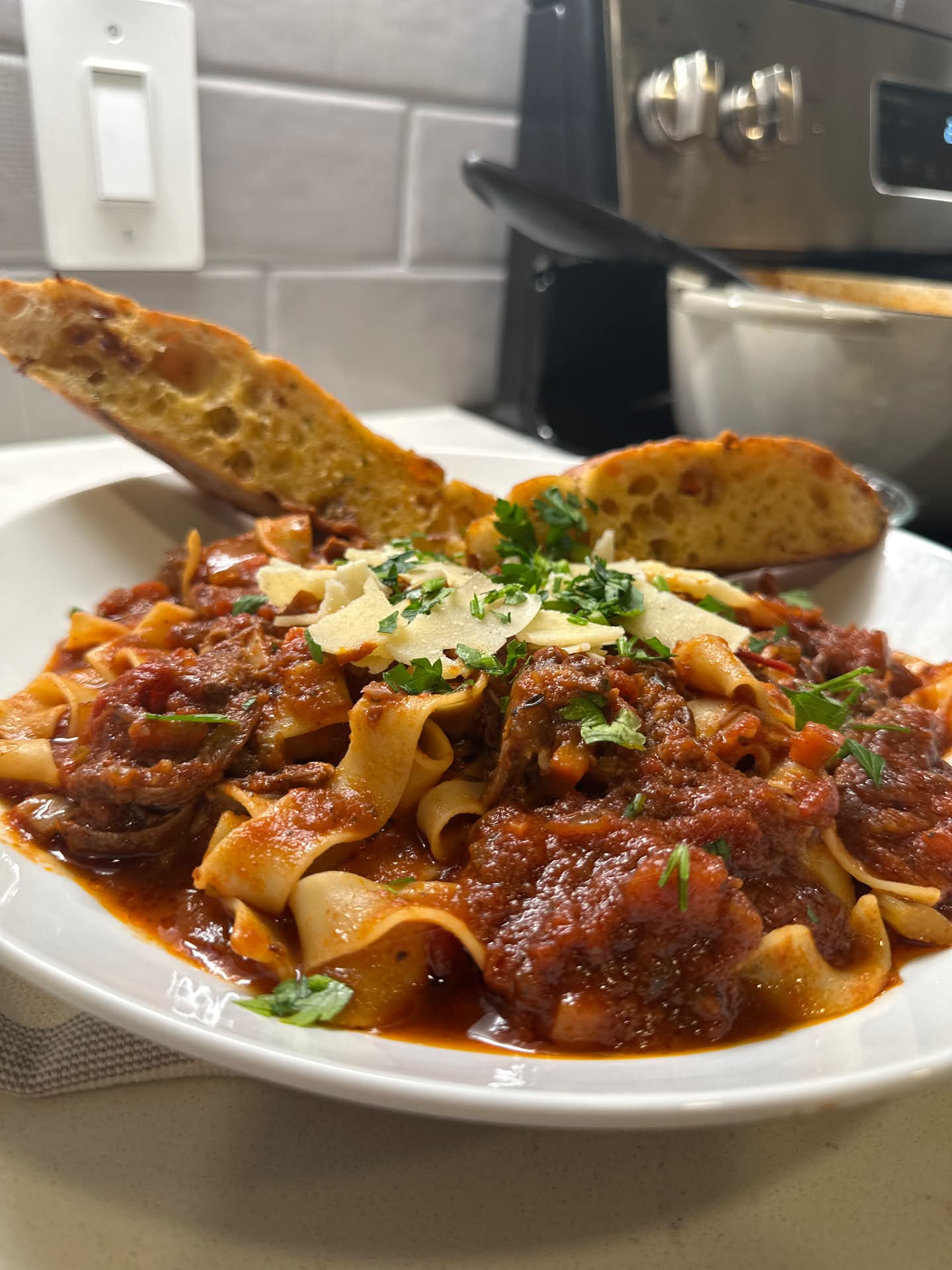
Pappardelle with Slow-Braised Beef Short Rib Ragù is a rich, comforting Italian-inspired pasta dish that combines tender, fall-apart beef with wide ribbons of egg pasta and a deeply flavorful tomato and red wine sauce.
The secret to this restaurant-quality recipe is slow braising. Beef short ribs are seared until beautifully browned, then gently cooked with aromatic vegetables, garlic, tomatoes, red wine, and fresh herbs until the meat becomes incredibly tender.
Once shredded, the beef is returned to the thick, savory sauce and tossed with pappardelle, allowing every ribbon of pasta to absorb the delicious flavors.
Finished with freshly shaved Parmesan cheese and chopped parsley, this hearty meal is perfect for cozy family dinners, special occasions, or an impressive weekend gathering.
Origin and Cultural Significance
Ragù is an important part of Italian culinary tradition, particularly in regions where slowly cooked meat sauces are served with fresh or dried pasta.
Unlike quick tomato sauces, traditional ragù preparations often involve gently cooking meat with aromatic vegetables, wine, and other ingredients over several hours. This slow process creates a rich, concentrated flavor and tender texture.
Pappardelle is a wide, flat ribbon pasta traditionally associated with Tuscany. Its broad surface makes it especially suitable for hearty sauces containing slow-cooked beef, pork, lamb, or wild game.
Beef short rib ragù is a modern Italian-inspired variation that uses braised beef short ribs to create a luxurious meat sauce. The combination of tender shredded beef, red wine, tomatoes, and pappardelle has become a popular feature on restaurant menus and in home kitchens.
Ingredients
For the Beef Short Ribs
- 2 lbs (900 g) bone-in beef short ribs
- 2 tablespoons olive oil
- 1 teaspoon salt, or to taste
- ½ teaspoon freshly ground black pepper
Alternative: Substitute boneless beef chuck roast, cut into large chunks, if short ribs are unavailable.
For the Aromatic Vegetable Base
- 1 large yellow onion, finely diced
- 2 medium carrots, finely diced
- 2 celery stalks, finely diced
- 4 garlic cloves, minced
- 2 tablespoons tomato paste
For the Red Wine Ragù Sauce
- 1 cup (240 ml) dry red wine, such as Chianti, Cabernet Sauvignon, or Merlot
- 1 can (28 oz / 800 g) crushed tomatoes
- 2 cups (480 ml) beef stock
- 2 bay leaves
- 3–4 sprigs fresh thyme
- 1 sprig fresh rosemary
- Additional salt and black pepper, to taste
For the Pasta
- 1 lb (450 g) pappardelle pasta, fresh or dried
- Water, for boiling
- Salt, for the pasta water
- ½ cup reserved pasta cooking water, as needed
For Garnish and Serving
- ½ cup freshly shaved or grated Parmesan cheese
- 2 tablespoons finely chopped fresh Italian parsley
- Freshly ground black pepper, optional
- Toasted crusty bread or garlic ciabatta, for serving
Optional Additions
- Pancetta: Add a small amount of diced pancetta to the vegetable base for extra savory richness.
- Mushrooms: Finely chopped cremini mushrooms provide a deeper earthy flavor.
- Red pepper flakes: Add a pinch for gentle heat.
- Balsamic vinegar: A small splash near the end of cooking can brighten the sauce.
- Fresh basil: Use as an alternative garnish for a slightly sweeter herbal note.
- Butter: Stir a tablespoon into the finished sauce for a richer texture.
- Pecorino Romano: Substitute for Parmesan if you prefer a sharper, saltier finish.
- Alcohol-free variation: Replace the wine with additional beef stock and a small splash of balsamic vinegar.
Tips for Success
- Pat the beef dry: Removing excess moisture helps create a deep, flavorful crust during searing.
- Sear in batches: Avoid overcrowding the pot, which can cause the meat to steam rather than brown.
- Use a Dutch oven: A heavy-bottomed pot retains heat evenly and is ideal for slow braising.
- Finely dice the vegetables: Small pieces soften into the sauce and create a smoother consistency.
- Reduce the wine: Allowing it to simmer before adding the tomatoes concentrates its flavor.
- Braise gently: A low, steady simmer helps the connective tissue break down without drying out the beef.
- Check for tenderness: The meat should shred easily with a fork before being removed from the cooking liquid.
- Remove excess fat: Short ribs can release considerable fat during cooking, so skim the surface if necessary.
- Reserve pasta water: Its starch helps the sauce cling to the pappardelle.
- Use freshly grated Parmesan: It adds a more pronounced nutty flavor and melts beautifully into the warm pasta.
Instructions
Step 1: Prepare the Beef Short Ribs
Remove the beef short ribs from the refrigerator and pat them thoroughly dry with paper towels.
Season all sides with salt and freshly ground black pepper.
Allow the meat to rest briefly while preparing the vegetables.
Finely dice the onion, carrots, and celery, and mince the garlic.
Step 2: Sear the Beef
Heat the olive oil in a large Dutch oven or heavy-bottomed pot over medium-high heat.
Once the oil is hot, add the short ribs in a single layer, working in batches if necessary.
Sear for approximately 3–4 minutes per side, until the meat develops a deep golden-brown crust.
Turn the ribs carefully to brown as many surfaces as possible.
Transfer the seared beef to a plate and set aside.
Leave approximately one to two tablespoons of fat in the pot, removing any excess if needed.
Step 3: Prepare the Soffritto
Reduce the heat to medium.
Add the finely diced onion, carrots, and celery to the pot.
Cook for approximately 6–8 minutes, stirring occasionally, until the vegetables soften and the onion becomes translucent.
As the vegetables cook, use a wooden spoon to loosen some of the browned bits from the bottom of the pot.
Add the minced garlic and cook for another minute until fragrant.
Step 4: Cook the Tomato Paste
Stir the tomato paste into the softened vegetables.
Cook for approximately 1–2 minutes, stirring frequently, until the paste darkens slightly and develops a richer aroma.
This step helps reduce the raw tomato flavor and builds depth in the finished sauce.
Step 5: Deglaze with Red Wine
Pour the red wine into the pot.
Use a wooden spoon to scrape up the browned bits stuck to the bottom.
Allow the wine to simmer for approximately 4–6 minutes, until reduced by about half.
The wine will help create a rich, flavorful base for the ragù.
Step 6: Add the Tomatoes, Stock, and Herbs
Stir in the crushed tomatoes and beef stock.
Add the bay leaves, fresh thyme, and rosemary sprig.
Return the seared short ribs to the pot, along with any juices collected on the plate.
Nestle the meat into the sauce so it is mostly surrounded by the liquid.
Bring the mixture to a gentle simmer.
Step 7: Slowly Braise the Beef
Reduce the heat to low and cover the pot with a tight-fitting lid.
Allow the beef to simmer gently for approximately 3–3½ hours, or until completely fork-tender.
Alternatively, transfer the covered Dutch oven to a preheated oven at 325°F (160°C) for approximately the same amount of time.
Check the meat occasionally and add a small splash of beef stock or water if the sauce reduces too much.
The beef is ready when it pulls apart easily with a fork.
Step 8: Shred the Beef
Carefully remove the short ribs from the pot and place them on a clean cutting board or large plate.
Allow them to cool just enough to handle safely.
Remove and discard the bones, large pieces of excess fat, and any tough connective tissue.
Using two forks, shred the tender beef into bite-sized pieces.
Remove the bay leaves, rosemary sprig, and thyme stems from the sauce.
Step 9: Thicken the Ragù
Return the shredded beef to the pot.
Stir gently until the meat is evenly distributed throughout the sauce.
Simmer uncovered over low heat for approximately 10–15 minutes, allowing the ragù to thicken.
Skim excess fat from the surface if necessary.
Taste and adjust the salt and black pepper.
The finished sauce should be rich and thick enough to cling to the pasta without becoming dry.
Step 10: Cook the Pappardelle
Bring a large pot of generously salted water to a rolling boil.
Add the pappardelle and cook according to the package instructions until al dente.
Fresh pappardelle generally cooks more quickly than dried pasta, so check it frequently.
Before draining, reserve approximately ½ cup of the starchy pasta cooking water.
Drain the pasta carefully, avoiding excessive stirring that could tear the wide ribbons.
Step 11: Combine the Pasta and Beef Ragù
Add the drained pappardelle directly to the pot of warm beef ragù.
Using pasta tongs, gently toss the noodles until they are thoroughly coated.
Add a small splash of reserved pasta water if the sauce is too thick.
Continue tossing over low heat for approximately one minute, allowing the sauce to cling to the pasta.
The finished dish should be glossy, rich, and generously coated with shredded beef.
Step 12: Plate and Garnish
Divide the pappardelle among four warm, shallow serving bowls.
Use tongs to arrange the wide pasta ribbons into generous portions.
Spoon additional beef ragù over the top of each serving.
Finish with freshly shaved Parmesan cheese, chopped Italian parsley, and a little freshly ground black pepper.
Serve immediately with toasted crusty bread or garlic ciabatta.
Description
This Pappardelle with Slow-Braised Beef Short Rib Ragù features tender, shredded beef enveloped in a rich tomato and red wine sauce.
The slow-braised short ribs develop an incredibly soft texture, while the aromatic vegetables contribute natural sweetness and depth. Garlic, thyme, rosemary, and bay leaves create a fragrant background that complements the savory beef.
Crushed tomatoes provide body and gentle acidity, while the reduced red wine adds complexity and richness.
The broad pappardelle ribbons hold the thick ragù beautifully, ensuring every bite includes tender pasta and flavorful meat.
A finishing layer of shaved Parmesan adds nutty saltiness, while fresh parsley provides color and a bright herbal contrast.
Nutritional Information
Approximate values per serving, assuming four servings, bone-in beef short ribs, dried pappardelle, and a moderate amount of Parmesan.
- Calories: 750–1,000 kcal
- Protein: 40–55 g
- Carbohydrates: 85–100 g
- Fat: 25–45 g
- Fiber: 6–9 g
- Sugar: 9–13 g
- Sodium: 850–1,250 mg
Actual values depend significantly on the amount of edible beef obtained from the bone-in ribs, the fat removed from the sauce, the pasta used, and the amount of cheese added.
Recipe Details
- Prep Time: 20 minutes
- Searing and Sauce Preparation: 20–25 minutes
- Braising Time: 3–3½ hours
- Finishing and Pasta Cooking: 15–20 minutes
- Total Time: Approximately 4–4½ hours
- Servings: 4
- Cuisine: Italian-inspired
- Course: Main course
- Cooking Methods: Searing, sautéing, braising, and boiling
- Difficulty: Moderate
Conclusion
Pappardelle with Slow-Braised Beef Short Rib Ragù is a beautiful example of how slow cooking can transform simple ingredients into an extraordinary meal.
The tender shredded beef, deeply flavorful tomato and red wine sauce, and wide ribbons of egg pasta create a comforting combination that feels both rustic and elegant.
Finished with freshly shaved Parmesan and chopped parsley, this dish is ideal for family dinners, special occasions, or cozy evenings when you want to prepare something truly memorable.
Although the ragù requires several hours of cooking, most of that time is hands-off, allowing the ingredients to develop their rich, complex flavors naturally.
Recommendation
Serving: Serve the pasta immediately in warm bowls with freshly shaved Parmesan, chopped parsley, and crusty toasted bread. A simple green salad or roasted vegetables make excellent accompaniments.
Make-ahead preparation: The beef ragù can be prepared one or two days ahead. Its flavor often becomes even more developed after resting overnight in the refrigerator. Cook the pasta fresh before serving.
Storage: Refrigerate leftover ragù in an airtight container within two hours of cooking. Consume within three to four days. Store the pasta separately when possible to preserve its texture.
Reheating: Warm the ragù gently in a saucepan over medium-low heat, adding a splash of water or beef stock if necessary. Reheat until steaming hot throughout, ideally to 165°F (74°C), before tossing with freshly cooked pasta.
Freezing: The ragù freezes well for approximately two to three months for best quality. Allow it to cool, divide into freezer-safe containers, and freeze without the pasta.
Food safety: Braise the beef until it is completely fork-tender. Short ribs typically become tender at temperatures well above the minimum safe cooking temperature for whole cuts of beef. Refrigerate leftovers promptly and thaw frozen ragù safely in the refrigerator before reheating.
Embracing Healthful Indulgence
This hearty pasta dish offers a satisfying combination of protein, carbohydrates, vegetables, and rich savory flavors.
Beef short ribs provide protein, iron, zinc, and vitamin B12, while carrots, celery, onions, and tomatoes contribute vitamins, minerals, and beneficial plant compounds.
For a lighter variation, skim excess fat from the braising liquid, serve slightly smaller pasta portions, or increase the vegetables in the sauce.
You can also pair the dish with a fresh green salad or steamed vegetables to create a more balanced meal.
The beauty of this recipe lies in its slow-cooked richness and comforting flavors. Enjoyed in a portion that suits your appetite, Pappardelle with Beef Short Rib Ragù is a wonderful way to appreciate the tradition of homemade, thoughtfully prepared food.