
Introduction
Classic lemon meringue pie is a timeless dessert that combines a crisp pastry crust, a smooth and tangy lemon filling, and a light, golden meringue topping. Every slice offers a delicious contrast of textures and flavors: buttery pastry underneath, refreshing citrus in the center, and sweet, airy meringue on top.
This homemade version uses a ready-made pie crust and simple ingredients, making it an approachable choice for home bakers who want an impressive dessert without preparing pastry from scratch. The lemon filling gets its vibrant flavor from fresh lemon juice and zest, while the meringue provides a delicate sweetness that balances the citrus.
Perfect for spring gatherings, summer celebrations, holiday meals, or an ordinary afternoon treat, lemon meringue pie brings a refreshing finish to almost any menu.
Origin
Lemon meringue pie developed from a long tradition of European custard desserts and sweet preparations made with whipped egg whites. Before modern refrigeration, cooks already understood how to combine eggs, sugar, and citrus to create rich fillings and delicate toppings.
The modern form of lemon meringue pie is strongly associated with American baking during the nineteenth century. American cooks popularized lemon custard and meringue-topped pies, building on earlier European techniques for preparing meringues and pastry creams.
Over time, the dessert became a familiar feature of American home baking and restaurant menus. Its appeal comes from the contrast between tart lemon filling and sweet meringue, along with its attractive golden topping.
Today, lemon meringue pie remains a favorite for anyone who enjoys citrus desserts that are flavorful without being overwhelmingly heavy.
Cultural Significance
Lemon meringue pie holds a special place in traditional home baking, particularly in North America, where pies are often associated with family gatherings, holidays, and shared meals.
Its bright flavor makes it especially popular during warmer months, while its elegant appearance makes it suitable for birthdays, dinner parties, and festive occasions. The distinctive peaks of golden meringue also give the pie a homemade character that can make it a centerpiece on a dessert table.
The recipe is a good example of how a few familiar ingredients can create something memorable. Eggs, sugar, lemons, and pastry come together to produce a dessert with several layers of flavor and texture.
For many home bakers, making lemon meringue pie is also an opportunity to practice useful kitchen skills, including preparing a thickened custard, tempering egg yolks, and whipping egg whites into a stable meringue.
Ingredients and Quantities
This recipe makes one 9-inch pie, approximately 8 servings.
For the Crust
- 1 ready-made 9-inch pie crust, approximately 230–250 g, depending on the brand
For the Lemon Filling
- 1/2 cup fresh lemon juice, approximately 120 ml
- 1 cup granulated sugar, approximately 200 g
- 3 large egg yolks
- 1/4 cup cornstarch, approximately 32 g
- 1 1/2 cups water, approximately 360 ml
- 2 tablespoons unsalted butter, approximately 28 g
- 1 tablespoon finely grated lemon zest
For the Meringue
- 3 large egg whites
- 1/2 cup granulated sugar, approximately 100 g
- 1/2 teaspoon vanilla extract
For the brightest flavor, use freshly squeezed lemon juice and finely grated zest from unwaxed or thoroughly washed lemons. Avoid grating the bitter white pith beneath the yellow peel.
Optional Additions
Although the classic recipe is delicious on its own, a few simple variations can personalize the flavor.
Extra lemon zest: Add a little more zest if you prefer a stronger citrus aroma. Avoid adding too much white pith, which can taste bitter.
A pinch of salt: A small pinch in the filling can balance the sweetness and enhance the lemon flavor.
Vanilla in the filling: A small amount of vanilla can add a gentle, rounded flavor without overpowering the citrus.
Graham cracker crust: Replace the traditional pastry crust with a prepared graham cracker crust for a different texture and a subtle toasted sweetness.
Decorative meringue peaks: Use the back of a spoon to create soft peaks and swirls before baking. These ridges develop an attractive golden color.
Fresh berries for serving: A few fresh raspberries or blueberries can provide a pleasant fruity contrast alongside each slice.
Tips for Success
1. Bake the Crust Properly
Follow the package instructions for your ready-made pie crust, since baking times and preparation requirements vary. If the crust is intended to be pre-baked, bake it until it is lightly golden and set before adding the filling.
Some crusts require baking weights to prevent the pastry from puffing. If the package recommends them, follow those instructions.
2. Measure the Cornstarch Carefully
Cornstarch thickens the lemon filling, helping it hold its shape when sliced. Measure it accurately and mix it thoroughly with the sugar before adding the liquids to reduce the risk of lumps.
3. Stir the Filling Continuously
Cook the lemon mixture over medium heat, stirring frequently and paying particular attention to the bottom and corners of the saucepan. Once it thickens and begins bubbling, continue cooking briefly to help activate the cornstarch.
A properly cooked filling should be thick enough to coat a spoon and hold its shape as it cools.
4. Temper the Egg Yolks
Adding hot filling directly to the egg yolks can cause them to scramble. Instead, slowly whisk a small amount of the hot lemon mixture into the yolks before returning the tempered mixture to the saucepan.
This gradual process raises the temperature of the yolks gently and helps produce a smooth custard.
5. Use Clean Equipment for the Meringue
Even small amounts of grease or egg yolk can prevent egg whites from whipping properly. Use a clean, dry bowl and beaters, and separate the eggs carefully.
Room-temperature egg whites often whip more readily than cold ones, although cleanliness is especially important.
6. Add the Sugar Gradually
Once the egg whites reach soft peaks, add the sugar a little at a time while continuing to beat. This helps the sugar dissolve and creates a glossy meringue.
Rub a small amount of meringue between clean fingers; it should feel mostly smooth rather than noticeably gritty.
7. Cover the Filling with Meringue
Spread the meringue over the lemon filling while the filling is still hot. Bring the meringue all the way to the edges of the crust so it touches the pastry around the entire perimeter.
This helps anchor the topping and reduces the chance of the meringue shrinking away from the edges.
8. Watch the Meringue Closely
Bake until the peaks are lightly golden. The exact time depends on the oven and the thickness of the topping, so begin checking after about 10 minutes.
The meringue should develop color without becoming excessively dark.
9. Cool the Pie Completely
Allow the pie to cool completely before slicing. The filling needs time to set, and cutting too early may cause the lemon layer to run.
For cleaner slices, chill the cooled pie before serving and wipe the knife between cuts.
10. Handle Eggs Safely
Because this pie contains egg-based filling and meringue, follow food-safety guidance carefully. Use pasteurized eggs if available, especially when serving people who are more vulnerable to foodborne illness. Baking the topping until golden does not, by itself, guarantee that every part of the meringue has reached a safe temperature.
Instructions
Step 1: Preheat the Oven
Preheat the oven to 350°F (180°C).
Prepare the pie crust according to the package directions. If it requires pre-baking, place it in a pie dish and bake for approximately 10 minutes, or until the pastry is set and lightly golden. Adjust the timing as needed for the specific crust.
Remove the crust from the oven and set it aside.
Step 2: Combine the Sugar and Cornstarch
In a medium saucepan, whisk together the granulated sugar and cornstarch until evenly combined.
Gradually pour in the water and lemon juice, whisking as you go to create a smooth mixture without dry pockets of cornstarch.
Step 3: Cook the Lemon Filling
Place the saucepan over medium heat. Cook the mixture, stirring frequently, until it thickens and begins to bubble.
Continue cooking briefly while stirring to ensure the cornstarch is fully cooked and the filling has a smooth, glossy consistency.
Step 4: Temper the Egg Yolks
Place the egg yolks in a separate bowl and whisk them lightly.
Slowly pour a small amount of the hot lemon mixture into the yolks while whisking continuously. Repeat with a little more hot mixture, allowing the yolks to warm gradually.
Pour the tempered yolk mixture back into the saucepan, whisking constantly.
Step 5: Finish the Lemon Filling
Return the saucepan to medium heat and cook for approximately two minutes, stirring constantly, until the filling is thick and smooth.
Remove the pan from the heat. Add the butter and lemon zest, stirring until the butter melts completely and the zest is evenly distributed.
Pour the hot lemon filling into the prepared pie crust and spread it evenly.
Step 6: Whip the Egg Whites
Place the egg whites in a clean, dry mixing bowl. Beat with an electric mixer until soft peaks form.
Gradually add the sugar while continuing to beat. Add the vanilla extract and beat until the meringue is glossy and forms firm peaks.
The meringue should hold its shape when the beaters are lifted.
Step 7: Spread the Meringue
Immediately spoon the meringue over the hot lemon filling.
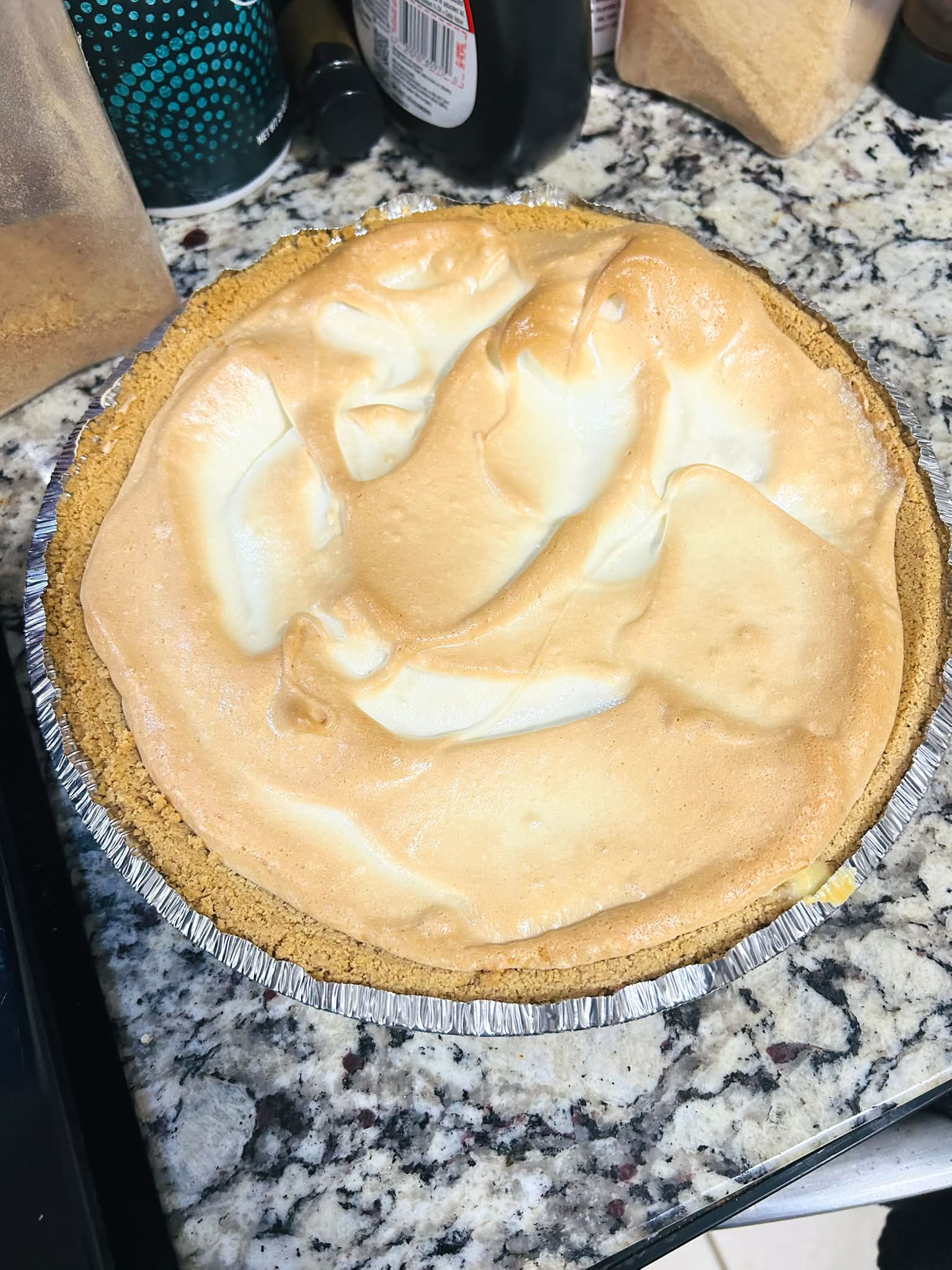
Spread it gently across the entire surface, making sure it reaches and touches the crust around the edges. Create decorative peaks with the back of a spoon if desired.
Step 8: Bake the Pie
Place the pie in the preheated oven and bake for approximately 10–15 minutes, or until the meringue peaks are lightly golden.
Watch carefully during the final few minutes because the topping can brown quickly.
Step 9: Cool and Set
Remove the pie from the oven and place it on a heat-safe surface.
Allow it to cool completely so the filling can set. For the best slicing results, refrigerate the cooled pie before serving.
Step 10: Slice and Serve
Use a sharp knife to cut the pie into eight portions, wiping the blade between cuts for neater slices.
Serve chilled or cool, depending on your preference. Each slice should feature a crisp crust, a bright lemon center, and a soft, sweet meringue topping.
Description
Classic lemon meringue pie is a beautiful combination of crisp pastry, smooth citrus custard, and sweet whipped egg whites. The filling delivers a refreshing balance of tartness and sweetness, while the meringue adds a delicate texture and a golden finish.
The lemon juice provides the pie’s signature tang, and the zest contributes a fragrant citrus aroma. Butter gives the filling a richer mouthfeel, while cornstarch helps it become firm enough to slice after cooling.
The meringue creates the final contrast. Its airy texture softens the sharper lemon flavor, making every bite balanced and satisfying.
This pie is especially enjoyable after a hearty meal because its citrus flavor feels bright and refreshing. Serve it as a standalone dessert or alongside fresh berries and a cup of tea or coffee.
Nutritional Information
The following values are estimates for one slice, assuming the pie is divided into eight equal servings and prepared with the listed ingredients.
- Calories: approximately 280–350
- Carbohydrates: approximately 45–55 g
- Protein: approximately 3–5 g
- Fat: approximately 9–14 g
- Saturated fat: approximately 4–7 g
- Sugar: approximately 30–40 g
- Fiber: approximately 0–1 g
- Sodium: approximately 100–250 mg
Actual values vary depending on the pie crust brand, egg size, ingredient measurements, and portion size. These figures are estimates rather than laboratory-tested nutritional data.
For a more accurate calculation, use the nutrition labels of the specific products you use and divide the total recipe values by the number of servings.
Conclusion
Classic lemon meringue pie is a delightful dessert that brings together the refreshing taste of lemon, the richness of a smooth custard, and the sweetness of a fluffy meringue topping.
Although the recipe involves several steps, each stage is manageable with a little patience. Properly thickening the filling, tempering the egg yolks, whipping glossy meringue, and allowing the pie to cool fully are the keys to a successful result.
Whether you prepare it for a special celebration or simply want a homemade dessert with bright citrus flavor, this lemon meringue pie is a wonderful addition to your baking collection.
Recommendation
For the best flavor and texture, prepare the pie several hours before serving so the filling has enough time to cool and set. Keep it refrigerated after cooling, and store leftovers covered in the refrigerator.
Lemon meringue pie is best enjoyed within a day or two because the meringue can gradually soften and release moisture during storage. Avoid freezing the finished pie, as the meringue and custard may become watery or change texture after thawing.
Serve each slice on its own or with a small portion of fresh berries. Since the pie already combines sweetness and citrus acidity, simple accompaniments work especially well.
If you are making the dessert for guests, prepare the crust and filling in advance when convenient, then finish with the meringue and bake closer to serving time. This can help preserve the topping’s light texture.
Embracing Healthful Indulgence
Lemon meringue pie is a sweet treat made primarily with pastry, sugar, eggs, and butter. It can fit into a varied eating pattern when enjoyed in portions that suit your needs and preferences.
For a balanced dessert plate, consider serving a moderate slice alongside fresh fruit. The fruit adds color, texture, and fiber without competing with the pie’s bright lemon flavor.
You can also experiment with slightly smaller slices or a crust with less added fat, while keeping in mind that changes to the crust may affect its texture and structure.
The goal is not to remove the enjoyment from dessert but to appreciate it as one part of a varied diet. With its refreshing citrus filling and airy meringue, homemade lemon meringue pie offers a satisfying way to enjoy a classic baked favorite.