
Introduction
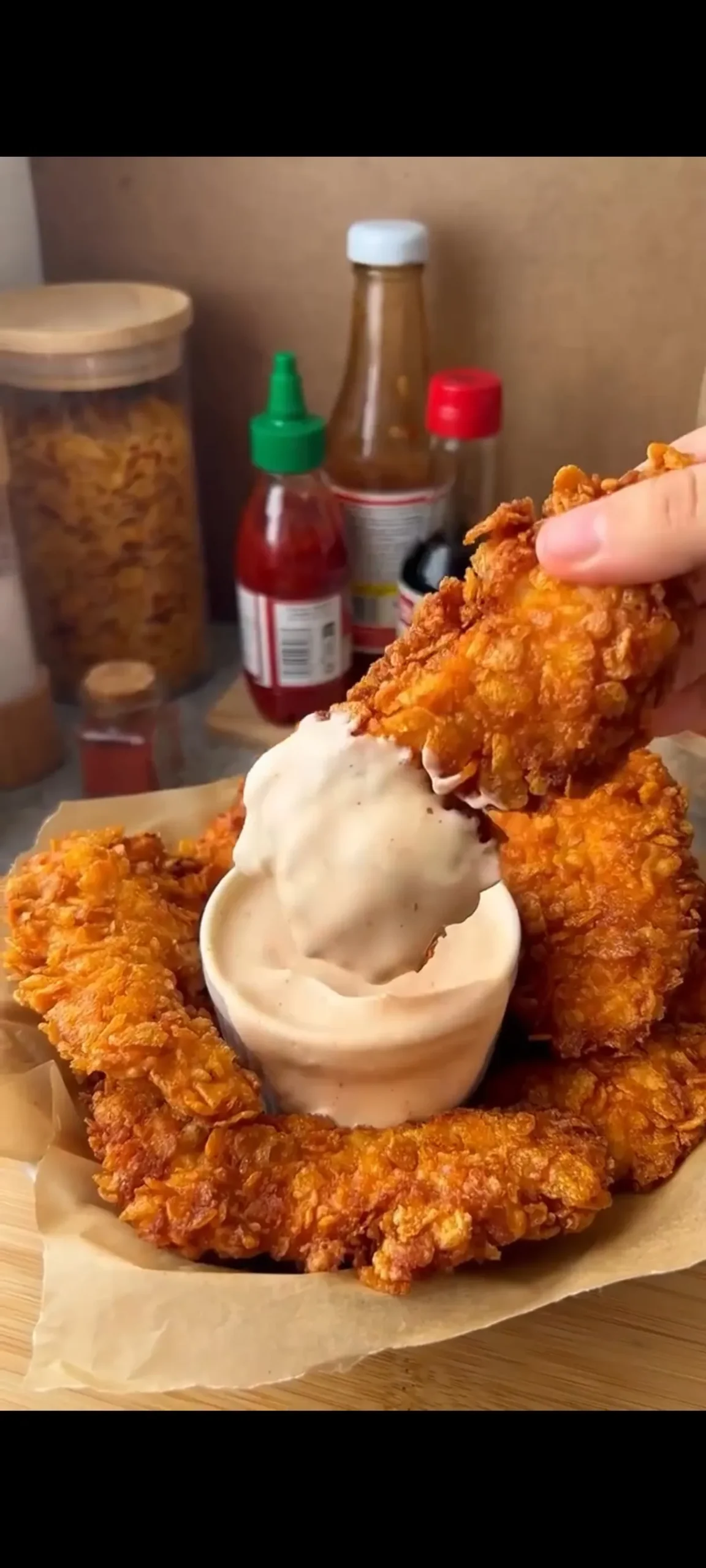
Extra Crispy Cornflake Chicken Tenders with Creamy Garlic Dipping Sauce are a delicious homemade alternative to restaurant-style chicken strips. Each tender features juicy chicken wrapped in a thick, golden coating made with crushed cornflakes, seasoned flour, and cornstarch. The result is an exceptionally crunchy exterior that contrasts beautifully with the tender chicken inside.
The secret to their irresistible texture lies in the combination of buttermilk marination and a cornflake coating. Buttermilk helps season the chicken and contributes to a tender texture, while cornflakes create a crisp, irregular crust. Garlic powder, paprika, oregano, and black pepper add savory flavor, with optional cayenne pepper providing a little heat.
The accompanying garlic dipping sauce brings everything together. Made with mayonnaise, sour cream, fresh garlic, lemon juice, Dijon mustard, and a touch of honey, it is creamy, tangy, and slightly sweet.
These chicken tenders are perfect for family dinners, weekend lunches, game-day gatherings, or casual entertaining. Serve them hot with the dipping sauce and your favorite sides for a satisfying meal.
Origin
Chicken tenders are a popular part of modern American comfort food, commonly served in restaurants, diners, and fast-food establishments. They are generally prepared from strips of chicken breast, coated in seasoned breading, and cooked until golden and crisp.
Cornflakes are a creative alternative to traditional breadcrumbs. Their light, flaky structure creates a distinctive crunch when crushed and used as a coating. Although cereal-coated chicken is not a single traditional dish with one established origin, the technique has become a popular home-cooking method for making crispy chicken.
Buttermilk-marinated chicken is also associated with Southern American cooking, where cultured buttermilk has long been used in preparations involving chicken. This recipe combines those familiar influences with a creamy garlic sauce for a modern, easy-to-enjoy meal.
Cultural Significance
Crispy chicken tenders have become a favorite across generations because they are convenient, versatile, and easy to serve. They work equally well as a main dish, party appetizer, lunchbox option, or shared snack.
Their appeal also comes from the contrast of textures. The crunchy coating provides an immediate crisp bite, while the juicy chicken and creamy sauce create a satisfying balance.
Homemade versions allow cooks to adjust the seasoning, control the amount of salt, and choose their preferred level of spice. The cornflake coating also offers a fun way to use a familiar breakfast cereal in a savory recipe.
Whether served at a family gathering or prepared for a relaxed weekend dinner, these tenders bring a familiar comfort-food experience to the table.
Ingredients and Quantities
For the Chicken Tenders
- 1 1/2 pounds boneless, skinless chicken breasts
- 1 cup buttermilk
- 1 large egg
- 1 tablespoon hot sauce, optional
- 1 teaspoon paprika
- 1 teaspoon garlic powder
- 1/2 teaspoon onion powder
- 1/2 teaspoon black pepper
- 1 teaspoon salt
For the Crispy Coating
- 3 cups plain cornflakes, lightly crushed
- 1 cup all-purpose flour
- 1/2 cup cornstarch
- 1 teaspoon smoked paprika
- 1 teaspoon garlic powder
- 1/2 teaspoon onion powder
- 1/2 teaspoon cayenne pepper, optional
- 1/2 teaspoon black pepper
- 1 teaspoon salt
- 1/2 teaspoon dried oregano
For the Creamy Garlic Sauce
- 1/2 cup mayonnaise
- 1/4 cup sour cream
- 2 cloves garlic, finely minced
- 1 tablespoon fresh lemon juice
- 1 teaspoon Dijon mustard
- 1 teaspoon honey
- 1/4 teaspoon black pepper
- 1/4 teaspoon salt
- 1 tablespoon milk, if needed
For Frying
- Vegetable oil, enough for deep frying
Choose plain, unsweetened cornflakes for the best savory flavor. Sweetened cereal can make the coating taste unexpectedly sugary and may brown more quickly during frying.
Optional Additions
These chicken tenders are easy to customize according to your taste.
- Parmesan cheese: Add 2 to 3 tablespoons of finely grated Parmesan to the coating for a savory, cheesy flavor.
- Extra smoked paprika: Increase the smoked paprika slightly for a deeper, smoky taste.
- Cajun seasoning: Replace some of the individual spices with Cajun seasoning for a more robust, spicy profile.
- Fresh herbs: Add finely chopped parsley or chives to the garlic sauce for freshness.
- Extra lemon: Add a little more lemon juice to the sauce if you prefer a brighter, tangier flavor.
- Spicy garlic sauce: Mix a small amount of hot sauce or cayenne pepper into the dipping sauce.
- Honey garlic variation: Increase the honey slightly for a sweeter contrast to the savory chicken.
For a milder version suitable for children or anyone who prefers less heat, omit the hot sauce and cayenne pepper.
Tips for Success
Cut the chicken evenly. Aim for strips approximately 1 inch wide and similar in thickness. Uniform pieces cook more evenly and help prevent smaller tenders from drying out before larger ones are done.
Allow enough marinating time. Thirty minutes is sufficient when you’re short on time, but approximately 2 hours in the refrigerator allows the seasoning to develop more fully. Avoid leaving raw chicken at room temperature to marinate.
Crush the cornflakes carefully. Small, irregular flakes create a thick, crunchy crust. Avoid grinding them into a fine powder, which will produce a different texture.
Use cornstarch for extra crispness. Cornstarch helps create a light, crisp coating when combined with flour. The cornflakes add the larger flakes responsible for the distinctive crunch.
Press the coating onto the chicken. After dredging each strip, press it gently into the cornflakes on all sides. This helps the coating adhere during frying.
Keep wet and dry ingredients separate. Use separate bowls and utensils for the marinade and coating. Discard leftover marinade that has contacted raw chicken, and never use it as a dipping sauce.
Maintain the oil temperature. Heat the oil to 350°F (175°C) and monitor it with a thermometer. Oil that is too cool can make the coating greasy, while excessively hot oil can brown the exterior before the chicken is cooked through.
Fry in small batches. Adding too many tenders at once lowers the oil temperature. Cook a few pieces at a time and allow the oil to return to the target temperature between batches.
Use a wire rack for draining. A rack allows excess oil to drip away while air circulates around the coating. Paper towels can trap steam underneath the tenders and soften their crust.
Check the internal temperature. Chicken must reach 165°F (74°C) in the thickest part. Use a food thermometer rather than relying only on the color of the coating.
Prepare the sauce in advance. Mixing the garlic sauce while the chicken marinates gives the flavors time to blend. Keep it refrigerated until serving.
Instructions
1. Prepare the Chicken
Trim away any excess fat or connective tissue from the chicken breasts. Slice them lengthwise into strips approximately 1 inch wide.
Pat the strips dry with paper towels before adding them to the marinade. This removes excess surface moisture and helps make handling easier.
2. Make the Buttermilk Marinade
In a large bowl, whisk together the buttermilk, egg, optional hot sauce, paprika, garlic powder, onion powder, salt, and black pepper.
Continue whisking until the mixture is smooth and the seasonings are evenly distributed.
Add the chicken strips and toss until each piece is thoroughly coated.
3. Marinate the Chicken
Cover the bowl and refrigerate for at least 30 minutes, or preferably about 2 hours.
Keep the chicken refrigerated throughout marination. Before breading, prepare your coating station so the chicken can move directly from the marinade to the seasoned flour and cornflakes.
4. Prepare the Crispy Coating
Place the cornflakes in a wide, shallow bowl and crush them gently with your hands or the bottom of a measuring cup. Leave some larger flakes for a more textured crust.
In a separate shallow bowl, combine the flour, cornstarch, smoked paprika, garlic powder, onion powder, optional cayenne pepper, black pepper, salt, and dried oregano.
Mix thoroughly so the seasonings are distributed evenly throughout the flour mixture.
5. Coat the Chicken Tenders
Remove one chicken strip from the marinade and let the excess liquid drip off.
Dredge it in the seasoned flour mixture, turning to coat all sides. Briefly dip it back into the marinade, then transfer it to the crushed cornflakes.
Press the cornflakes gently onto the chicken until the surface is completely covered.
Place the coated strip on a clean tray and repeat with the remaining chicken. Keep the coated pieces separate so their crusts do not stick together.
Discard any leftover marinade and coating that has been contaminated by raw chicken.
6. Heat the Oil
Pour enough vegetable oil into a deep, heavy-bottomed pot or deep fryer to safely submerge the tenders, following the cookware manufacturer’s guidance for maximum fill level.
Heat the oil to 350°F (175°C). Check the temperature using a cooking thermometer before adding the chicken.
Keep a close eye on the oil throughout cooking, and never leave hot oil unattended.
7. Fry Until Golden and Crispy
Carefully lower a small batch of coated chicken tenders into the hot oil using tongs. Avoid dropping them from a height or overcrowding the pot.
Fry for approximately 5 to 7 minutes, turning as needed, until the coating is deeply golden and crisp. Cooking time will vary depending on the thickness of the strips and the oil temperature.
Check the thickest pieces with a food thermometer to ensure the chicken reaches an internal temperature of 165°F (74°C).
If the coating becomes dark before the chicken is fully cooked, adjust the oil temperature and continue cooking carefully until the chicken is safe to eat.
Transfer the cooked tenders to a clean wire rack.
8. Drain and Rest the Chicken
Let the tenders rest on the wire rack for approximately 2 to 3 minutes before serving.
Avoid stacking them while they are hot, as trapped steam can soften the crunchy coating. If cooking multiple batches, keep finished tenders warm in a low oven on a rack while ensuring they do not become overcooked.
9. Prepare the Creamy Garlic Sauce
In a small bowl, combine the mayonnaise, sour cream, finely minced garlic, fresh lemon juice, Dijon mustard, honey, salt, and black pepper.
Whisk until smooth and creamy.
If the sauce is thicker than you prefer, add the milk a little at a time until it reaches your desired dipping consistency.
Taste and adjust the seasoning. Add a little extra lemon juice for tanginess or a small amount of honey for additional sweetness.
Cover and refrigerate until ready to serve.
10. Serve and Enjoy
Arrange the crispy chicken tenders on a serving platter and place the creamy garlic sauce in a small bowl in the center.
Serve immediately while the chicken is hot and crunchy. For a complete meal, pair the tenders with French fries, roasted potatoes, coleslaw, a green salad, or steamed vegetables.
The creamy garlic sauce can be served on the side so the cornflake coating stays crisp until each tender is dipped.
Description
These extra crispy cornflake chicken tenders combine juicy chicken breast with a thick, golden, seasoned crust. Crushed cornflakes create an irregular, flaky coating, while flour and cornstarch help the breading adhere and develop a crisp finish.
The seasoning blend brings together garlic, onion, paprika, oregano, and black pepper for a savory flavor with a gentle warmth. Optional cayenne and hot sauce add extra heat without overpowering the chicken.
The creamy garlic dipping sauce provides a cool, tangy contrast. Mayonnaise creates a rich base, sour cream adds a slight tang, fresh garlic contributes a bold aroma, and lemon juice balances the richness. A small amount of honey rounds out the flavor.
The combination is satisfying without requiring complicated ingredients or specialized cooking techniques. With careful temperature control and a few simple preparation steps, these tenders can become a dependable favorite for casual dinners and entertaining.
Nutritional Information
The following estimates are per serving, assuming the recipe serves four people and includes a reasonable amount of coating, absorbed frying oil, and garlic sauce.
| Nutrient | Approximate Amount |
|---|---|
| Calories | 650 kcal |
| Protein | 43 g |
| Carbohydrates | 40 g |
| Fat | 35 g |
| Saturated Fat | 7 g |
| Sugar | 7 g |
| Fiber | 2 g |
| Sodium | 1,100 mg |
Actual values can vary significantly depending on how much coating adheres to the chicken, the amount of oil absorbed during frying, the brands of mayonnaise and sour cream, and how much dipping sauce is consumed.
For a lighter preparation, the chicken can be cooked in an air fryer or oven with a light coating of oil. The texture will differ somewhat from deep-fried tenders, but the cornflake crust can still become pleasantly crisp.
Storage and Food Safety
Chicken tenders are best served immediately after frying, when the cornflake coating is at its crispiest. If you have leftovers, follow these storage guidelines:
- Refrigerate cooked chicken within 2 hours of cooking, or within 1 hour when the temperature is above 90°F (32°C).
- Store the chicken in a covered, airtight container in the refrigerator and use it within 3 to 4 days.
- Refrigerate the garlic dipping sauce promptly in a separate covered container.
- Reheat leftover chicken to an internal temperature of 165°F (74°C). An oven or air fryer can help restore some of the crispness.
- Freeze cooked tenders in a freezer-safe container for longer storage, separating layers with parchment paper. For best quality, use within approximately 2 to 3 months.
- Thaw frozen leftovers in the refrigerator rather than on the counter.
- Keep raw chicken, its marinade, and any utensils that contact it separate from ready-to-eat foods.
For the best texture after refrigeration, reheat the tenders in a preheated oven or air fryer until hot throughout. Avoid storing the chicken already coated in sauce, because moisture will soften the crust.
Conclusion
Extra Crispy Cornflake Chicken Tenders with Creamy Garlic Dipping Sauce are a delicious way to make a familiar comfort food at home. The crunchy cornflake crust, juicy chicken, and flavorful seasoning create a satisfying combination, while the homemade garlic sauce adds a smooth, tangy finish.
The recipe is straightforward enough for a family dinner but attractive enough to serve as a party appetizer. With even-sized chicken strips, a well-chilled marinade, and carefully controlled frying temperatures, you can achieve a golden coating without sacrificing the tenderness of the meat.
Serve them fresh with your favorite sides and enjoy a homemade version of a classic crispy chicken favorite.
Recommendation
For a balanced dinner, serve these tenders with a fresh green salad, roasted vegetables, or homemade coleslaw. If you are preparing a party platter, include the garlic dipping sauce alongside a milder sauce and a spicy option so guests can choose their favorite.
For extra convenience, make the sauce ahead of time and marinate the chicken in the refrigerator before cooking. Bread and fry the tenders shortly before serving for the best crunch.
If you prefer a less spicy flavor, omit the cayenne and hot sauce. For a stronger savory taste, add a little Parmesan cheese to the cornflake coating or finish the cooked tenders with freshly chopped parsley.
Embracing Healthful Indulgence
Crispy chicken tenders can fit into a varied, balanced eating pattern when enjoyed alongside vegetables and other foods you enjoy. The chicken provides protein, while the cornflake coating and dipping sauce contribute much of the recipe’s carbohydrates and fat.
If you want to adjust the recipe, consider baking or air-frying the tenders, using a modest amount of sauce, or serving fresh vegetables as a side. You can also adjust the salt and spice levels to suit your preferences.
The goal is not to remove the qualities that make the dish enjoyable, but to prepare it thoughtfully and savor it as part of a satisfying meal. Homemade cooking gives you the flexibility to control the ingredients, tailor the flavors, and share a delicious dish with family and friends.