
Introduction
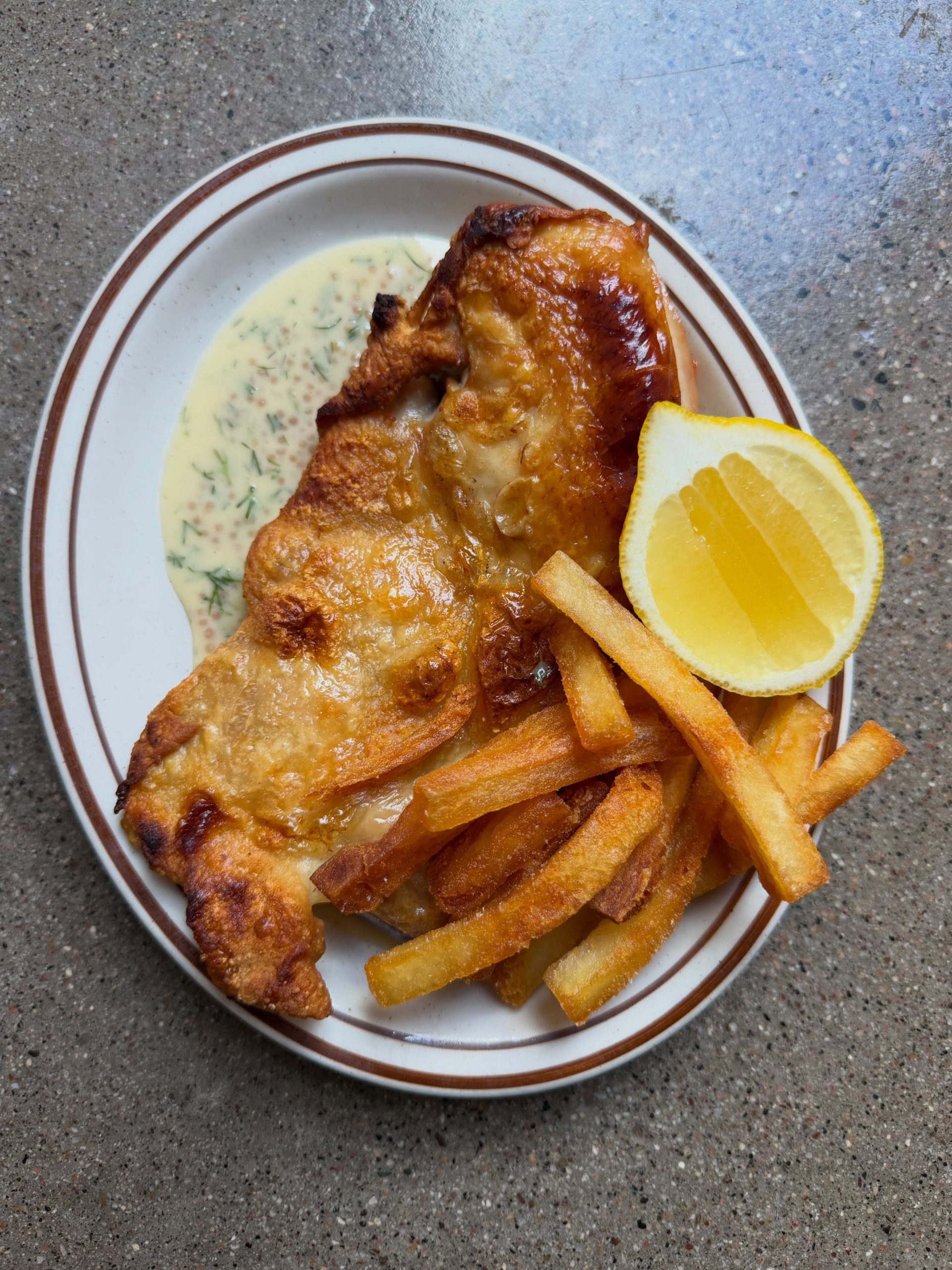
Crispy Beer-Battered Fish and Chips with Creamy Lemon Dill Sauce is a classic comfort-food meal featuring tender white fish wrapped in a light, golden crust and served with thick-cut French fries. A cool, creamy sauce made with lemon, fresh dill, garlic, and mustard adds a refreshing contrast to the rich, crispy fish.
The secret to delicious fish and chips lies in balancing textures. The outside of the fish should be crunchy and golden, while the inside remains moist, flaky, and tender. The fries should have crisp edges and soft centers, creating the perfect companion to the delicate seafood.
This homemade version uses a combination of all-purpose flour, cornstarch, and baking powder to help produce a light, crisp coating. Cold beer or sparkling water adds liquid and helps create a batter that fries beautifully. Meanwhile, the lemon dill sauce comes together in minutes and can be prepared ahead of time.
Whether you are planning a weekend family dinner, a casual gathering, or a restaurant-style meal at home, this fish and chips recipe delivers satisfying flavor without requiring complicated ingredients. Serve it hot with fresh lemon wedges and plenty of creamy sauce for a delicious seafood dinner.
Origin
Fish and chips is strongly associated with British food culture, particularly the working-class communities of England during the nineteenth century. Fried fish and fried potatoes became increasingly popular as affordable, filling foods, especially as railway transportation and urban food businesses expanded.
The exact origins of the combined dish are debated, and fried fish and fried potatoes developed through different culinary influences. By the late nineteenth and early twentieth centuries, fish and chips had become a familiar takeaway meal across Britain.
Traditional preparations often use white fish coated in a flour-based batter and fried until crisp. Cod and haddock are especially well known choices, although other suitable white fish can also be used. Potatoes are cut into chips, fried, and seasoned, while accompaniments may include lemon, vinegar, tartar sauce, or other condiments.
This recipe is a modern homemade interpretation of that familiar dish. It combines the traditional fish-and-potato pairing with a lemon dill sauce enriched with mayonnaise, sour cream, mustard, and fresh herbs. The sauce is not a defining component of every traditional fish and chips recipe, but it provides a flavorful alternative to classic accompaniments.
Cultural Significance
Fish and chips has a special place in British culinary history. For generations, it has been enjoyed as a convenient takeaway meal, a family dinner, and a familiar feature of seaside holidays.
Its popularity comes partly from its simplicity. Fish provides a delicate, savory center, while fried potatoes add substance and a satisfying contrast in texture. A squeeze of lemon or a spoonful of sauce brings brightness to the rich, fried components.
Today, fish and chips is enjoyed in many countries, with variations in fish species, batter ingredients, potato cuts, seasonings, and sauces. Some cooks prefer a very light coating, while others favor a thicker, crunchier crust. Beer batter is popular in many modern recipes because it can create a crisp, flavorful exterior.
The lemon dill sauce in this version adds a fresh, herbaceous character. Dill pairs naturally with seafood, lemon cuts through the richness, and mustard provides a gentle tang. Together, these ingredients turn a familiar comfort-food meal into something that feels both classic and distinctive.
Preparing fish and chips at home also allows you to control the seasoning, frying temperature, portion sizes, and accompanying sauce.
Ingredients and Quantities
For the Crispy Fish
- 1 1/2 pounds white fish fillets, such as cod, haddock, or pollock
- 1 cup all-purpose flour
- 1/2 cup cornstarch
- 1 teaspoon baking powder
- 1 teaspoon paprika
- 1/2 teaspoon garlic powder
- 1/2 teaspoon onion powder
- 1/2 teaspoon ground black pepper
- 1 teaspoon salt
- 1 cup cold beer or sparkling water
- 1/4 cup all-purpose flour, for dredging
- Vegetable oil, for deep-frying
For the French Fries
- 4 large russet potatoes
- 1 teaspoon salt, or to taste
- 1/2 teaspoon garlic powder
- 1/2 teaspoon paprika
- Vegetable oil, for frying
For the Creamy Lemon Dill Sauce
- 1/2 cup mayonnaise
- 1/4 cup sour cream
- 1 tablespoon Dijon mustard
- 1 tablespoon whole-grain mustard
- 2 tablespoons fresh lemon juice
- 1 teaspoon lemon zest
- 2 tablespoons fresh dill, finely chopped
- 1 tablespoon fresh parsley, chopped
- 1 small garlic clove, minced
- 1/4 teaspoon ground black pepper
- Salt, to taste
For Serving
- Fresh lemon wedges
- Extra chopped dill
- Sea salt, to taste
Ingredient Notes
White fish: Cod, haddock, and pollock are suitable choices because they have relatively mild flavors and flaky flesh. Choose fillets of similar thickness so they cook at approximately the same rate.
All-purpose flour: Flour forms the main structure of the batter and helps it adhere to the fish.
Cornstarch: Cornstarch reduces the proportion of gluten-forming flour in the coating and helps create a crisp, delicate crust.
Baking powder: This ingredient helps lighten the batter, contributing to a less dense coating.
Cold beer or sparkling water: Both can be used to make the batter. Beer contributes its own flavor, while sparkling water offers a neutral, alcohol-free alternative. Use a beer that suits your dietary requirements if choosing the beer version.
Russet potatoes: These starchy potatoes are well suited to fries because they can develop crisp exteriors and fluffy centers.
Mayonnaise and sour cream: These form the creamy base of the sauce. Mayonnaise provides richness, while sour cream contributes a pleasant tang.
Fresh dill and lemon: These ingredients brighten the sauce and complement the mild flavor of the fish.
Mustard: Dijon mustard provides a smooth, sharp flavor, while whole-grain mustard adds texture and a slightly more robust taste.
Optional Additions
This recipe can be adapted to suit different preferences while keeping its crispy fish, golden fries, and creamy sauce at the center.
Add Old Bay-Style Seasoning
Replace some of the paprika and black pepper with a seafood seasoning blend. Check its salt content before adding extra salt to the batter.
Make the Sauce Spicy
Add a small amount of cayenne pepper or hot sauce to the lemon dill sauce for a little heat. Start with a small quantity and adjust gradually.
Add Pickles to the Sauce
Finely chop one or two tablespoons of dill pickles or capers and stir them into the sauce. This creates a tangier, tartar-style variation that pairs well with fried fish.
Use Sweet Potatoes
Replace some or all of the russet potatoes with sweet potatoes. Their flavor is naturally sweeter, and they may cook at a different rate, so monitor them closely during frying.
Add Parmesan to the Fries
Sprinkle finely grated Parmesan over the hot fries after frying, together with the seasonings. This creates a savory variation, although it moves away from the traditional fish and chips style.
Try a Different Herb
If fresh dill is unavailable, use additional parsley or a small amount of finely chopped chives. The flavor will change, but the sauce will still complement the fish.
Make a Lighter Sauce
Replace part of the mayonnaise with plain Greek yogurt. The result will be tangier and less rich, with a slightly different texture.
Tips for Success
1. Dry the Fish Thoroughly
Moisture on the surface of the fish can prevent the batter from adhering properly and may cause excessive splattering when the fish enters hot oil. Pat the fillets dry with paper towels before seasoning and dredging.
2. Keep the Batter Cold
Cold batter helps produce a crisp coating when it meets hot oil. Prepare it shortly before frying and avoid letting it sit at room temperature for an extended period.
3. Do Not Overmix
Whisk the dry ingredients together before adding the liquid. Stir only until the batter is combined. A few small lumps are acceptable; excessive mixing can produce a tougher coating.
4. Use a Light Flour Dredge
Dusting the fish with a thin layer of flour helps the batter cling to its surface. Shake off the excess so the coating does not become overly thick.
5. Monitor the Oil Temperature
The oil temperature is crucial for crisp fish and fries. Oil that is too cool can make the coating greasy, while excessively hot oil can brown the outside before the fish cooks through.
Use a thermometer and allow the temperature to recover between batches. Adding too much food at once can lower the oil temperature considerably.
6. Fry in Small Batches
Avoid overcrowding the pot. Leave enough space for the fish or potatoes to move freely in the oil. Small batches also make it easier to maintain a consistent temperature.
7. Use a Wire Rack
Transfer cooked fish to a wire rack rather than stacking the pieces or covering them tightly. Air circulation helps the coating remain crisp. A paper towel-lined tray can be used, but the underside may soften as steam collects.
8. Double-Fry the Potatoes
The two-stage frying method helps produce a tender interior and a crisp exterior. The first fry cooks the potatoes gently; the second fry adds color and crunch.
9. Season Fries Immediately
Add salt and seasonings while the fries are still hot. This helps them adhere more evenly to the surface.
10. Make the Sauce Ahead
Preparing the sauce before frying allows the flavors of the dill, lemon, garlic, and mustard to blend. Keep it refrigerated until serving.
11. Avoid Crowding the Serving Plate
Serve the fish and fries in a single layer when possible. Stacking them can trap steam and soften the crispy coating.
12. Use a Thermometer for Food Safety
Fish should reach an internal temperature of 145°F (63°C). Check the thickest part of the fillet with a food thermometer rather than relying solely on the batter’s color.
Instructions
Step 1: Prepare the Potatoes
Peel the russet potatoes if desired, then cut them into evenly sized, thick fries.
Place the cut potatoes in a large bowl of cold water and soak for approximately 20 minutes. This helps remove some surface starch and can improve the final texture.
Drain the potatoes thoroughly and pat them completely dry with a clean kitchen towel or paper towels. Removing surface moisture is important because water can cause hot oil to splatter.
Step 2: Make the Lemon Dill Sauce
In a small bowl, combine the mayonnaise, sour cream, Dijon mustard, whole-grain mustard, lemon juice, lemon zest, chopped dill, parsley, minced garlic, and black pepper.
Whisk until smooth and creamy. Taste the sauce and add salt as needed.
Cover the bowl and refrigerate until serving. Chilling the sauce gives the ingredients time to blend and ensures it stays cool beside the freshly fried fish.
Step 3: Prepare the Fish
Pat the fish fillets dry with paper towels.
Cut large fillets into manageable portions if necessary, aiming for pieces of similar thickness. Season lightly with salt and black pepper.
Spread the additional 1/4 cup flour on a plate. Lightly dredge each fillet in the flour, turning to coat both sides, then shake off any excess.
Keep the prepared fish refrigerated until you are ready to batter and fry it.
Step 4: Prepare the Crispy Batter
In a large mixing bowl, whisk together the flour, cornstarch, baking powder, paprika, garlic powder, onion powder, salt, and black pepper.
Gradually pour in the cold beer or sparkling water while whisking gently. Continue until the batter reaches a smooth but slightly thick consistency that can coat the fish.
Avoid overmixing. If the batter becomes too thick to coat the fillets evenly, add a small splash of cold liquid. If it is too thin, mix in a little extra flour.
Prepare the batter shortly before frying to preserve its freshness.
Step 5: First-Fry the Potatoes
Pour vegetable oil into a deep, heavy-bottomed pot, leaving plenty of room at the top to prevent overflow. Heat the oil to 325°F (163°C), monitoring it with a thermometer.
Carefully lower a small batch of thoroughly dried fries into the oil. Fry for approximately 4 to 5 minutes, until the potatoes begin to soften but remain pale.
Remove them with a slotted spoon or spider strainer and transfer them to a wire rack. Repeat with the remaining potatoes, allowing the oil to return to temperature between batches.
Keep the partially cooked fries separate from the raw fish and its utensils.
Step 6: Fry the Fish Until Golden
Increase the oil temperature to 350°F (177°C).
Working with one fillet at a time, dip the fish into the cold batter and allow the excess to drip back into the bowl.
Carefully lower the battered fish into the hot oil, placing it away from you to reduce splashing. Fry for approximately 5 to 7 minutes, depending on thickness, turning carefully if needed for even browning.
The coating should become golden and crisp, and the fish should be opaque and flaky. Confirm that the thickest part reaches 145°F (63°C).
Transfer the cooked fillets to a wire rack and repeat with the remaining fish. Avoid placing freshly fried pieces on top of one another.
Step 7: Second-Fry the Potatoes
Once the fish is cooked, increase the oil temperature to 375°F (191°C).
Return the partially cooked potatoes to the oil in small batches. Fry for approximately 2 to 4 minutes, until the fries become deeply golden and crisp.
Watch closely because the exact cooking time depends on the thickness of the fries and the temperature of the oil.
Remove them with a slotted spoon and place them on a wire rack or a paper towel-lined tray.
Step 8: Season the French Fries
While the fries are still hot, sprinkle them with salt, garlic powder, and paprika.
Toss gently to distribute the seasoning evenly. Taste one fry and adjust the salt if necessary.
Keep the fries in a single layer until serving so steam does not soften their crisp exterior.
Step 9: Assemble the Plates
Arrange one or more pieces of crispy fish on each serving plate, alongside a generous portion of French fries.
Place the chilled lemon dill sauce in a small bowl or spoon it beside the fish. Keeping the sauce separate helps the batter remain crisp until each bite is dipped.
Step 10: Garnish and Serve
Add fresh lemon wedges and a sprinkle of chopped dill.
Serve immediately while the fish is hot, the fries are crisp, and the sauce is cool and creamy. Encourage everyone to squeeze fresh lemon over the fish just before eating for an extra burst of brightness.
Description
Crispy Beer-Battered Fish and Chips with Creamy Lemon Dill Sauce is a satisfying combination of golden fried fish, thick-cut potatoes, and a cool, tangy dipping sauce.
The fish is coated in a light batter made with flour, cornstarch, baking powder, and cold beer or sparkling water. When fried at the right temperature, the coating becomes crisp and golden while the fish inside remains tender and flaky.
The double-fried potatoes offer a crunchy exterior and a soft center. Paprika, garlic powder, and salt provide a simple seasoning that complements the fish without overwhelming it.
The lemon dill sauce brings everything together with its creamy texture, fresh herbs, citrus brightness, and gentle mustard flavor. It can be served as a dip or spooned alongside the fish for easy serving.
For the best experience, serve the meal straight from the kitchen. The contrast between hot, crunchy fish and fries and the cool sauce is one of the most appealing parts of the dish.
Nutritional Information
The following values are estimates per serving, assuming the recipe serves four people and includes a portion of fish, fries, and lemon dill sauce. Actual nutrition will vary depending on the fish species, amount of oil absorbed, portion sizes, and how much sauce is used.
| Nutrient | Approximate amount per serving |
|---|---|
| Calories | 750–950 |
| Protein | 38–45 g |
| Carbohydrates | 65–85 g |
| Total fat | 32–50 g |
| Saturated fat | 6–11 g |
| Fiber | 6–9 g |
| Sodium | 800–1,400 mg |
The original estimate of approximately 750 calories and 38 grams of protein per serving may be achievable with moderate portions and limited oil absorption. Larger servings or extra sauce can increase the total considerably.
White fish provides protein, while potatoes contribute carbohydrates and potassium. The sauce adds flavor and richness, but mayonnaise, sour cream, batter, and frying oil contribute much of the dish’s fat and energy.
To make a lighter version, bake or air-fry the potatoes with a modest amount of oil, reduce the amount of sauce served, or use a yogurt-based sauce. These changes will alter the traditional deep-fried texture but can still produce a delicious meal.
Storage and Food Safety
Fish and chips are best enjoyed immediately after cooking because the batter and fries gradually lose their crispness during storage.
Refrigerate leftover fish and potatoes in separate shallow, airtight containers within 2 hours of cooking, or within 1 hour when the surrounding temperature is above 90°F (32°C). Keep the refrigerator at 40°F (4°C) or below.
Cooked fish leftovers should generally be eaten within 3 to 4 days when refrigerated properly. Reheat the fish and fries to an internal temperature of 165°F (74°C). An oven or air fryer can help restore some crispness better than a microwave.
Store the lemon dill sauce separately in a covered container in the refrigerator. Because it contains mayonnaise, sour cream, and fresh ingredients, keep it cold and avoid leaving it at room temperature for extended periods. Discard sauce that has been left out for more than 2 hours, or more than 1 hour in temperatures above 90°F (32°C).
Do not pour used cooking oil down the drain. Allow it to cool completely, then transfer it to an appropriate container for disposal according to local guidelines.
When deep-frying, use a stable, heavy-bottomed pot and avoid filling it more than halfway with oil. Make sure the potatoes are thoroughly dried before frying, lower food carefully into the oil, and never leave hot oil unattended. Keep water away from the hot oil, and never use water to extinguish a cooking-oil fire.
Conclusion
Crispy Beer-Battered Fish and Chips with Creamy Lemon Dill Sauce brings the familiar comfort of a classic fried seafood meal into your home kitchen. The golden fish coating, fluffy-centered fries, and refreshing herb sauce create a satisfying combination of flavors and textures.
The recipe requires some attention to oil temperature and frying order, but the individual steps are straightforward. Preparing the sauce first, partially cooking the potatoes, and frying the fish in manageable batches helps keep the process organized.
For the best results, use dry fish, cold batter, evenly cut potatoes, and a thermometer to monitor the oil and fish temperatures. Finish with fresh lemon and serve everything immediately to enjoy the crispest texture.
Whether you prepare it for a weekend meal or a special seafood dinner, this homemade fish and chips recipe offers a delicious way to enjoy restaurant-style comfort food.
Recommendation
Serve the fish and chips with extra lemon wedges and a generous portion of creamy lemon dill sauce. A simple cabbage salad, steamed green beans, or a fresh cucumber salad can provide a refreshing contrast to the fried components.
If you want to prepare part of the meal ahead of time, make the sauce several hours in advance and refrigerate it. Cut and soak the potatoes before cooking, but dry them thoroughly before they enter the oil. Fry the fish and finish the fries as close to serving time as possible.
For a variation with a stronger seafood flavor, use haddock or cod and add a little extra lemon zest to the sauce. If you prefer a milder flavor, pollock is another suitable option.
You can also explore crispy fried fish with a simpler seasoning blend or garlic butter seafood for a different style of seafood dinner. Each variation offers a different way to enjoy fish while keeping the preparation practical and approachable.
Embracing Healthful Indulgence
Fried fish and chips is a rich comfort-food meal, but homemade preparation gives you the flexibility to adjust the portions, ingredients, and cooking methods according to your preferences.
Serving a moderate portion of fish alongside potatoes and a fresh vegetable side can create a satisfying meal with a range of textures and nutrients. The lemon dill sauce adds plenty of flavor, so you may find that a small serving is enough.
For a lighter alternative, bake or air-fry the fish using a seasoned coating, prepare the potatoes with less oil, or substitute part of the mayonnaise in the sauce with plain Greek yogurt. These options will produce a different texture from traditional deep-fried fish and chips, but they can preserve the important flavors of lemon, dill, and crispy potatoes.
Most importantly, enjoy this dish as a meal made to be shared and appreciated. With its crisp golden coating, tender fish, seasoned fries, and fresh lemon sauce, it offers a comforting and flavorful dining experience.