
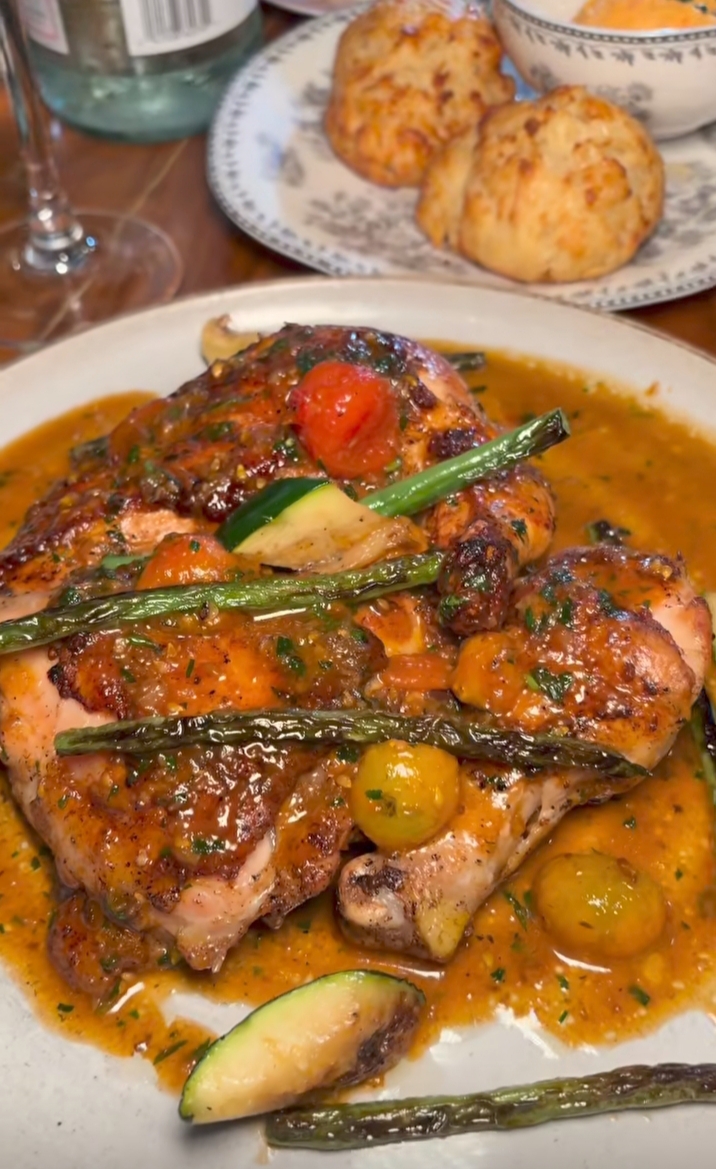
Prep Time: 20 minutes Cook Time: 40–50 minutes Total Time: Approximately 1 hour 10 minutes Servings: 1–2 Difficulty: Intermediate Category: Main Course, Southern-Inspired Cuisine, Roasted Chicken, Restaurant-Style Dinner
1. Introduction
Southern-Style Pan-Roasted Half Chicken with Summer Vegetables and Rich Chicken Jus is an elegant, restaurant-inspired dish featuring beautifully golden, crispy chicken skin, tender and juicy meat, seasonal vegetables, and a deeply flavorful homemade pan sauce.
Inspired by the elevated Southern cooking style associated with Virtue Restaurant in Chicago, this homemade interpretation combines traditional comfort-food flavors with refined restaurant presentation.
The chicken is seasoned with aromatic spices, pan-seared to develop a beautifully crisp exterior, and finished in the oven to preserve its natural juices and tenderness.
Alongside the chicken, fresh asparagus, zucchini, and colorful cherry tomatoes are quickly sautéed until lightly caramelized while retaining their natural freshness and texture.
The finishing element is the chicken jus, a concentrated savory sauce prepared using flavorful browned bits from the roasting pan, chicken stock, fresh thyme, garlic, and cold butter.
The result is a beautifully balanced dish featuring crispy chicken, tender vegetables, and a glossy sauce with remarkable depth of flavor.
Perfect for an elegant dinner, special family meal, weekend cooking, or restaurant-style dining at home, this recipe demonstrates how simple ingredients can create an impressive culinary experience.
2. Origin and Cultural Significance
Pan-roasted chicken with seasonal vegetables and natural chicken jus draws inspiration from several important culinary traditions, particularly Southern American cooking and classical French techniques.
Chicken has long been an essential ingredient in Southern American cuisine, where it appears in numerous traditional preparations, including fried chicken, roasted chicken, chicken and dumplings, and slow-cooked poultry dishes.
Southern cooking is particularly recognized for its emphasis on comfort, generous flavors, seasonal ingredients, and techniques that transform affordable ingredients into satisfying meals.
Roasting and pan-searing chicken are also closely associated with classical European culinary traditions.
French cooking, in particular, helped establish techniques such as searing meat to develop flavorful browned surfaces, deglazing pans, reducing stock, and finishing sauces with butter.
The term jus refers to the natural meat juices and concentrated cooking liquid used to accompany roasted meats.
A traditional pan jus is prepared by using the flavorful browned residue left in the cooking pan, adding stock or other liquids, and reducing the mixture to concentrate its flavor.
The combination of crispy roasted poultry, seasonal vegetables, and a carefully prepared pan reduction represents a meeting of comforting Southern-inspired ingredients and refined restaurant cooking techniques.
Virtue Restaurant in Chicago is known for its contemporary interpretation of Southern cuisine, emphasizing culinary heritage, carefully prepared ingredients, and elevated presentation.
This recipe is a homemade interpretation inspired by the described restaurant-style dish, rather than an exact reproduction of its proprietary preparation.
Today, this style of cooking represents the growing popularity of modern comfort food, where traditional ingredients are presented with refined techniques and attention to detail.
3. Ingredients and Quantities
A. For the Pan-Roasted Half Chicken
| Ingredient | Quantity |
|---|---|
| Half chicken, bone-in and skin-on | 1 (approximately 700–900 g) |
| Olive oil or unsalted butter | 1 tablespoon |
| Garlic powder | 1 teaspoon |
| Onion powder | 1 teaspoon |
| Salt | To taste |
| Freshly cracked black pepper | To taste |
| Fresh chives or parsley, finely chopped | 1 tablespoon, for garnish |
Why Use Bone-In, Skin-On Chicken?
Bone-in chicken retains moisture during roasting and develops a deeper flavor. Keeping the skin on helps create the crispy, golden exterior that makes this dish particularly appealing.
Why Use Olive Oil?
Olive oil helps promote even browning during pan-searing. It is particularly useful for developing crispy chicken skin before transferring the pan to the oven.
Why Use Garlic and Onion Powder?
These seasonings add savory depth and complement the natural flavor of the roasted chicken without overpowering it.
B. For the Summer Vegetables
| Ingredient | Quantity |
|---|---|
| Cherry or grape tomatoes, red and yellow | 1 cup (approximately 150 g) |
| Small zucchini or baby squash | 1, sliced into half-moons |
| Fresh asparagus spears | 6–8 |
| Olive oil or unsalted butter | 1 tablespoon, as needed |
| Salt | To taste |
| Freshly cracked black pepper | To taste |
Why Use Cherry Tomatoes?
Cherry tomatoes become slightly blistered during cooking, releasing their natural sweetness and juices.
Why Use Zucchini?
Zucchini provides a delicate flavor and tender texture while absorbing the savory flavors of the pan.
Why Use Asparagus?
Asparagus contributes a fresh, slightly earthy flavor and maintains a pleasant texture when lightly seared.
C. For the Rich Chicken Jus
| Ingredient | Quantity |
|---|---|
| Chicken bone broth or rich chicken stock | 1 cup (240 ml) |
| Unsalted butter, cold and cubed | 2 tablespoons (28 g) |
| Garlic clove, smashed | 1 |
| Fresh thyme | 1 sprig |
| Lemon juice or dry white wine | 1 teaspoon |
| Salt | To taste, if necessary |
| Freshly cracked black pepper | To taste |
Why Use Chicken Bone Broth?
Chicken bone broth contributes concentrated savory flavor and helps create a fuller-bodied sauce.
Why Add Cold Butter?
Cold butter is gradually incorporated into the reduced stock to create a glossy, smooth sauce with a luxurious mouthfeel.
Why Use Fresh Thyme?
Thyme provides a subtle herbal fragrance that complements roasted chicken and summer vegetables.
Why Deglaze the Pan?
Deglazing dissolves the flavorful browned residue left behind after searing, incorporating it into the sauce and adding considerable depth.
D. Recommended Equipment
- Oven-safe cast-iron or stainless-steel skillet
- Sharp chef’s knife
- Cutting board
- Kitchen tongs
- Small saucepan
- Wooden spoon
- Meat thermometer
- Fine-mesh strainer, optional
- Serving platter or shallow dinner plate
4. Optional Additions
This recipe can be customized with additional vegetables, herbs, and seasonings without losing its characteristic Southern-inspired flavor.
Mushrooms: Add ½ cup of sliced cremini or button mushrooms for an earthy flavor that complements the chicken jus.
Baby Potatoes: Include ½ cup of halved baby potatoes, partially cooked before roasting, for a more substantial meal.
Green Beans: Replace the asparagus with 1 cup of fresh green beans for a slightly different vegetable combination.
Sweet Corn: Add ½ cup of fresh corn kernels for natural sweetness and a seasonal summer flavor.
Shallots: Add one finely sliced shallot to the chicken jus for additional aromatic sweetness.
Smoked Paprika: Add ½ teaspoon to the chicken seasoning for a subtle smoky flavor and deeper golden color.
Fresh Rosemary: Replace or combine thyme with a small sprig of rosemary for a stronger herbal aroma.
Dijon Mustard: Whisk ½ teaspoon of Dijon mustard into the finished jus for additional complexity.
White Wine: Use 1–2 tablespoons of dry white wine to deglaze the roasting pan before adding the chicken stock.
Red Pepper Flakes: Add a small pinch to the vegetables for gentle heat.
Parmesan Cheese: Finish the vegetables with a light sprinkle of freshly grated Parmesan for additional savory flavor.
Lemon Zest: Add a little freshly grated lemon zest immediately before serving to brighten the dish.
5. Tips for Success
Dry the chicken skin thoroughly. Use paper towels to remove surface moisture before seasoning. Dry skin is essential for achieving a crispy, golden exterior.
Season evenly. Distribute the salt, pepper, garlic powder, and onion powder across the entire chicken surface.
Allow the chicken to temper briefly. Remove it from the refrigerator approximately 15–20 minutes before cooking, while keeping food safety in mind. Do not leave raw chicken at room temperature for extended periods.
Start skin-side down. Searing the chicken skin-side down helps render the fat and develop an attractive golden crust.
Avoid moving the chicken too early. Allow the skin to make proper contact with the hot skillet before attempting to turn it.
Use an oven-safe skillet. A cast-iron or oven-safe stainless-steel pan makes it possible to transfer the chicken directly from the stovetop to the oven.
Do not overcrowd the vegetables. Cook the asparagus, zucchini, and tomatoes in a single layer to encourage caramelization rather than steaming.
Cook vegetables separately when necessary. Different vegetables require different cooking times. Add tomatoes later if you want them to retain their shape.
Preserve the pan drippings. Do not discard all the rendered chicken fat and browned bits. These are essential for developing a flavorful jus.
Reduce the stock properly. Allow the chicken stock to simmer until its flavor becomes more concentrated before incorporating the butter.
Use cold butter. Add the butter gradually off the heat to produce a smooth, glossy sauce.
Check the internal temperature. The thickest part of the breast should reach 165°F (74°C). The thigh is often more tender around 175°F (79°C).
Rest before carving. Allow the chicken to rest for approximately 8–10 minutes so its juices redistribute.
6. Step-by-Step Instructions
Step 1: Prepare the Chicken
Remove the half chicken from its packaging.
Pat the entire surface thoroughly dry using paper towels, paying particular attention to the skin.
Inspect the chicken and remove any remaining feathers if necessary.
Place it on a clean cutting board.
If the chicken is not already prepared as a half, divide a whole chicken lengthwise through the breastbone and backbone using a suitable poultry knife or kitchen shears.
For this recipe, use one bone-in, skin-on half.
Allow the chicken to sit briefly while preparing the seasoning.
Step 2: Season the Chicken
In a small bowl, combine:
- 1 teaspoon garlic powder
- 1 teaspoon onion powder
- Salt to taste
- Freshly cracked black pepper to taste
Mix thoroughly.
Rub the seasoning evenly over the chicken, including the underside and around the legs.
Avoid applying excessive seasoning to the skin if you want to preserve its natural appearance and crispness.
For additional flavor, season the chicken a few hours ahead and refrigerate uncovered on a tray to help dry the skin further.
Step 3: Preheat the Oven
Preheat the oven to 425°F (220°C).
Position the oven rack in the middle.
Choose an oven-safe cast-iron skillet or heavy stainless-steel pan large enough to accommodate the half chicken.
Allow the oven to reach the correct temperature before roasting.
Step 4: Sear the Chicken Skin-Side Down
Place the skillet over medium heat on the stovetop.
Add the tablespoon of olive oil.
Once the oil is hot, carefully place the chicken into the skillet, skin-side down.
Press gently for a few seconds to ensure good contact between the skin and cooking surface.
Allow the chicken to sear undisturbed for approximately 6–8 minutes.
During this process, the skin will gradually release fat and develop a deep golden-brown color.
Avoid moving the chicken unnecessarily.
If the skin begins browning too quickly, reduce the heat slightly.
Step 5: Turn and Brown the Underside
Using kitchen tongs, carefully turn the chicken.
Sear the underside for approximately 2 minutes.
This brief step helps develop additional flavor and creates a more evenly browned exterior.
Turn the chicken back over so the skin faces upward.
Step 6: Transfer the Chicken to the Oven
Carefully transfer the oven-safe skillet into the preheated oven.
Roast the chicken for approximately 20–30 minutes, depending on its size and thickness.
The skin should become beautifully crisp and golden.
The meat should gradually cook through while retaining its natural moisture.
Begin checking the internal temperature after approximately 20 minutes.
Insert a meat thermometer into the thickest part of the breast without touching the bone.
The chicken must reach at least 165°F (74°C) in the thickest breast portion.
The thigh may be cooked to approximately 175°F (79°C) for a more tender texture.
Cooking time varies according to the chicken’s size, initial temperature, and oven performance.
Step 7: Rest the Roasted Chicken
Carefully remove the skillet from the oven.
Transfer the chicken to a clean plate or cutting board.
Keep the skin facing upward to help preserve its crispness.
Allow the chicken to rest for approximately 8–10 minutes.
Do not cover it tightly with foil, as trapped steam can soften the crispy skin.
Reserve the pan drippings for preparing the chicken jus.
Step 8: Prepare the Summer Vegetables
While the chicken rests, wash the cherry tomatoes, zucchini, and asparagus thoroughly.
Pat the vegetables dry.
Slice the zucchini into half-moons approximately ½ inch thick.
Trim the woody ends from the asparagus.
Keep the cherry tomatoes whole.
Season the vegetables lightly with salt and freshly cracked black pepper.
Having the vegetables prepared before cooking allows them to be sautéed quickly and evenly.
Step 9: Sear the Zucchini
Heat a tablespoon of olive oil or a small amount of butter in a separate large skillet over medium-high heat.
Arrange the zucchini slices in a single layer.
Cook for approximately 2–3 minutes on the first side.
Turn the slices and cook for another 2 minutes.
The zucchini should become lightly golden while remaining tender.
Avoid overcooking, as zucchini releases moisture quickly and can become soft.
Transfer the cooked zucchini to a plate.
Step 10: Cook the Asparagus
Using the same skillet, add the trimmed asparagus spears.
If necessary, add a small amount of olive oil.
Cook for approximately 3–5 minutes, turning occasionally.
The asparagus should become lightly seared while retaining a vibrant green color.
For thicker asparagus, add 1–2 tablespoons of water and cover briefly to help the centers cook.
Season lightly with salt and pepper.
Transfer the asparagus to the plate with the zucchini.
Step 11: Blister the Cherry Tomatoes
Add the whole cherry tomatoes to the hot skillet.
Cook for approximately 3–4 minutes, turning occasionally.
The tomato skins should begin blistering and developing small browned spots.
Some tomatoes may split slightly, releasing their sweet juices.
Avoid cooking them for too long, as the goal is to preserve their shape and natural freshness.
Remove from the heat and set aside.
Step 12: Prepare the Chicken Jus Base
Return to the skillet used for roasting the chicken.
If there is excessive rendered fat, carefully remove most of it, leaving approximately 1–2 teaspoons along with the browned residue.
Place the skillet over medium heat.
Add the smashed garlic clove and fresh thyme sprig.
Stir gently for approximately 20–30 seconds until fragrant.
Avoid burning the garlic.
Step 13: Deglaze the Pan
Add the teaspoon of lemon juice or white wine.
Use a wooden spoon to scrape the browned bits from the bottom of the skillet.
These browned pieces contain concentrated chicken flavor and are important for developing the jus.
If needed, add 1–2 tablespoons of the chicken stock to help release any remaining residue.
Allow the liquid to reduce slightly.
Step 14: Add the Chicken Stock
Pour the 1 cup of chicken bone broth or rich chicken stock into the skillet.
Stir gently to incorporate the browned residue, garlic, and thyme.
Bring the mixture to a gentle simmer over medium heat.
Allow it to reduce for approximately 5–8 minutes.
The sauce should become slightly concentrated and develop a deeper savory flavor.
Avoid reducing it excessively, as the finished jus should remain fluid enough to pool attractively on the serving plate.
Step 15: Strain the Jus
Remove the thyme sprig and smashed garlic clove.
For a refined restaurant-style presentation, pour the sauce through a fine-mesh strainer into a small saucepan or heatproof bowl.
This removes any remaining solids and creates a cleaner, smoother sauce.
If you prefer a more rustic preparation, you can leave the small aromatic pieces in the sauce.
Step 16: Finish with Cold Butter
Return the strained sauce to low heat if necessary.
Remove the saucepan from the heat.
Add the 2 tablespoons of cold unsalted butter, cut into small cubes.
Whisk gently until the butter melts and emulsifies into the reduced stock.
The finished jus should become glossy, slightly thickened, and smooth.
Taste carefully.
Add a small amount of salt or freshly cracked black pepper only if necessary.
Avoid boiling the sauce after incorporating the butter, as excessive heat can cause the emulsion to separate.
Step 17: Prepare the Chicken for Serving
Once the resting period is complete, transfer the chicken to a clean cutting board.
Depending on the desired presentation, serve the half chicken whole or divide it into smaller portions.
For a restaurant-style presentation, keep the breast and leg portions together where possible.
Ensure the crispy skin remains facing upward.
The chicken should have a golden exterior and juicy interior.
Step 18: Assemble the Summer Vegetables
Choose a large shallow serving plate.
Arrange the zucchini slices neatly on one side.
Place the asparagus spears alongside them.
Add the blistered cherry tomatoes to create a colorful arrangement.
Keep the vegetables slightly separated to showcase their individual colors and textures.
Avoid covering them completely with sauce.
Step 19: Plate the Chicken and Jus
Carefully place the roasted half chicken beside or partially over the vegetables.
Pour a generous pool of warm chicken jus onto the bottom of the serving plate.
Allow the sauce to surround the chicken without completely covering its crispy skin.
This preserves the contrast between the crisp exterior and the silky sauce.
Step 20: Garnish and Serve
Sprinkle the dish with freshly chopped chives or parsley.
For an additional finishing touch, add a small drizzle of olive oil over the vegetables.
Serve immediately while the chicken is warm, the vegetables remain tender, and the jus is glossy.
The finished plate should showcase the golden chicken, colorful summer vegetables, and rich natural pan reduction.
7. Description
Southern-Style Pan-Roasted Half Chicken with Summer Vegetables and Rich Chicken Jus is an elegant main course that combines traditional comfort-food flavors with refined restaurant-style presentation.
The centerpiece is a bone-in half chicken with beautifully crisp, golden-brown skin and tender, juicy meat.
The chicken is seasoned with garlic, onion, salt, and black pepper before being pan-seared and oven-roasted to develop its characteristic texture and deep roasted flavor.
Fresh asparagus, zucchini, and colorful cherry tomatoes provide a vibrant vegetable accompaniment.
The asparagus remains slightly firm and bright green, the zucchini develops lightly caramelized edges, and the cherry tomatoes become sweet and blistered.
The defining element is the homemade chicken jus.
Prepared from the browned chicken residue, rich chicken stock, garlic, thyme, and cold butter, the sauce develops a concentrated savory flavor and a beautiful glossy finish.
The final presentation combines the golden chicken with colorful vegetables arranged around a pool of rich pan reduction.
Each bite offers a contrast between crispy skin, succulent chicken, tender vegetables, and silky sauce.
This dish is particularly appealing to anyone who appreciates carefully prepared poultry, seasonal ingredients, and classic restaurant-style cooking.
8. Nutritional Information
Estimated Nutritional Values per Serving (Based on 2 Servings):
| Nutrient | Approximate Amount |
|---|---|
| Calories | 550–750 kcal |
| Protein | 45–60 g |
| Carbohydrates | 8–14 g |
| Total Fat | 35–50 g |
| Saturated Fat | 12–18 g |
| Sugar | 4–7 g |
| Fiber | 3–5 g |
| Sodium | 500–900 mg |
Note: Nutritional values are estimates and depend on the size of the chicken, whether the skin is consumed, the amount of rendered fat retained, the type of stock, and the quantity of butter used in the jus.
Healthier Preparation Alternatives
Remove Excess Chicken Fat: Carefully remove excessive rendered fat from the roasting pan before preparing the jus.
Use Olive Oil Moderately: Use a measured quantity of olive oil rather than adding unnecessary butter during searing.
Reduce the Finishing Butter: Use 1 tablespoon instead of 2 tablespoons in the jus for a lighter sauce.
Choose Low-Sodium Chicken Stock: This gives you better control over the sodium content.
Increase the Vegetable Portion: Add additional asparagus, zucchini, mushrooms, or green beans to increase fiber and vegetable variety.
Keep the Skin Optional: Removing the chicken skin before eating reduces the fat and calorie content, although it also removes part of the dish’s characteristic texture.
Serve Without Heavy Sides: The chicken and vegetables already provide a satisfying meal. A small portion of roasted potatoes or whole grains can be added according to individual needs.
9. Conclusion
The Ultimate Southern-Style Pan-Roasted Half Chicken with Summer Vegetables and Rich Chicken Jus is a sophisticated yet approachable dish that celebrates the natural flavors of well-prepared ingredients.
The chicken develops a beautifully crispy skin while maintaining a tender, juicy interior.
Fresh asparagus, zucchini, and cherry tomatoes contribute color, freshness, and delicate caramelized flavors.
The homemade chicken jus brings everything together through its concentrated savory character, aromatic thyme, garlic, and smooth buttery finish.
Although the finished dish looks like something served in an upscale restaurant, the preparation relies on accessible ingredients and fundamental cooking techniques.
The most important elements include drying the chicken skin properly, achieving a good initial sear, roasting to the correct internal temperature, cooking vegetables separately, and preparing the jus using the flavorful browned residue from the chicken.
The result is a balanced, visually impressive meal suitable for special dinners, family gatherings, and occasions when restaurant-quality cooking is desired at home.
10. Recommendation
For the best results, choose a fresh half chicken with the skin intact and a good balance of breast and thigh meat.
A bone-in, skin-on preparation is strongly recommended because it produces better flavor and texture.
Dry the chicken thoroughly before seasoning, and begin cooking skin-side down to achieve an evenly browned, crispy exterior.
Use a cast-iron skillet whenever possible because it retains heat effectively and transitions easily from stovetop to oven.
For the vegetables, avoid overcooking. Their natural colors and slightly firm textures provide an important contrast to the richness of the roasted chicken.
The chicken jus deserves particular attention. Use a flavorful, preferably unsalted chicken stock and allow it to reduce sufficiently before incorporating cold butter.
Do not pour the finished jus directly over the chicken skin, as this can soften its crispness.
Serving Recommendation: Serve the half chicken on a large shallow plate with asparagus, seared zucchini, and blistered cherry tomatoes arranged around it. Spoon the chicken jus underneath and finish with fresh chives or parsley.
For a more substantial dinner, accompany the dish with roasted baby potatoes, creamy mashed potatoes, or a small serving of wild rice.
Refrigerator Storage: Refrigerate leftover chicken and vegetables in separate airtight containers at 40°F (4°C) or below. Consume within 3–4 days.
Chicken Jus Storage: Store the remaining jus separately in a sealed container in the refrigerator for approximately 3–4 days.
Reheating: Reheat the chicken in an oven at 325°F (165°C) until its internal temperature reaches 165°F (74°C). Avoid microwaving the chicken skin if you want to preserve its texture.
Freezing: Cooked chicken can be frozen in airtight, freezer-safe packaging for approximately 2–3 months for best quality. The vegetables may lose some of their texture after thawing, so freshly prepared vegetables are recommended.
Allergen Information: This recipe contains dairy through the butter and may contain additional allergens depending on the chicken stock or packaged ingredients used.
11. Embracing Healthful Indulgence
Southern-Style Pan-Roasted Half Chicken with Summer Vegetables and Chicken Jus demonstrates how a rich, restaurant-inspired meal can combine satisfying flavors with a variety of nutrient-rich ingredients.
Chicken provides high-quality protein containing all nine essential amino acids. Protein supports muscle maintenance, tissue repair, and numerous important physiological functions.
Asparagus contributes dietary fiber, folate, vitamin K, and other micronutrients.
Zucchini provides water, fiber, potassium, and vitamin C, while cherry tomatoes contribute vitamin C, potassium, and naturally occurring carotenoids such as lycopene.
Fresh thyme, garlic, and other seasonings add aromatic depth without requiring excessive quantities of salt.
The chicken jus contributes concentrated flavor, allowing the dish to feel rich and satisfying without needing a heavy cream-based sauce.
However, chicken skin and butter contribute saturated fat, and the overall nutritional composition depends on the amount of fat retained during preparation.
A balanced approach involves controlling the quantity of finishing butter, using a moderate amount of olive oil, and serving generous portions of seasonal vegetables.
Choosing low-sodium chicken stock can also help manage sodium intake.
The dish can be enjoyed with or without the chicken skin depending on individual nutritional preferences.
Adding extra vegetables or serving the chicken alongside a modest portion of whole grains can further increase dietary variety and fiber.
Preparing the dish at home provides greater control over cooking oils, seasonings, sauce ingredients, and serving sizes.
It also demonstrates that refined restaurant-style cooking does not necessarily require complicated ingredients or excessive processing.
Ultimately, healthful indulgence is about enjoying flavorful, carefully prepared meals while maintaining moderation, nutritional variety, and balance in everyday eating.
Final Thought: 🍗🌿🍅 With its beautifully crispy roasted chicken skin, succulent meat, colorful summer vegetables, and glossy homemade chicken jus, this Ultimate Southern-Style Pan-Roasted Half Chicken delivers an exceptional combination of rustic comfort and refined restaurant-style elegance. Every element contributes to a balanced and memorable dining experience, making it an excellent choice for special dinners and elevated homemade meals.