
Prep Time: 15 minutes Resting Time: 15–30 minutes Cook Time: 20–25 minutes Total Time: Approximately 55–70 minutes Servings: 4–6 Yield: Approximately 20–24 wing pieces Difficulty: Easy–Intermediate Category: American Cuisine, Fried Chicken, Main Course, Comfort Food
1. Introduction
Ultimate Ultra-Crispy Golden Fried Chicken Wings are a classic comfort-food favorite featuring exceptionally crunchy skin, a beautifully seasoned coating, and tender, juicy chicken inside.
This recipe uses a simple combination of all-purpose flour, cornstarch, and baking powder to create an exceptionally crisp exterior with an attractive golden-brown appearance.
The chicken wings are first seasoned with garlic powder, onion powder, smoked paprika, salt, and freshly ground black pepper. A little cayenne pepper can also be incorporated for a subtle spicy kick.
After seasoning, the wings are coated in a dry mixture of flour, cornstarch, and baking powder. The combination creates a light, textured crust that becomes wonderfully crispy during frying.
Cornstarch is particularly important because it helps create a delicate, crunchy coating, while baking powder encourages surface blistering and contributes to a more textured finish.
The wings are then deep-fried until golden brown and fully cooked, producing a satisfying contrast between their crunchy exterior and juicy interior.
Whether served as a party appetizer, game-day snack, weekend dinner, or family meal, these homemade fried chicken wings deliver restaurant-style crispness using simple ingredients and straightforward cooking techniques.
2. Origin and Cultural Significance
Fried chicken has a long and complex history within American cuisine, particularly in the Southern United States.
Its development reflects several culinary traditions, including Scottish frying techniques and West African cooking knowledge.
Scottish immigrants brought traditions of frying chicken in fat, while enslaved Africans and their descendants contributed important seasoning techniques, culinary knowledge, and cooking practices that helped shape Southern fried chicken.
Over generations, fried chicken became an important part of Southern American food culture.
It was commonly prepared for family meals, celebrations, church gatherings, picnics, and community events.
Chicken wings eventually became particularly popular as an appetizer and casual dining food.
One of the most famous developments in American chicken wing culture occurred in Buffalo, New York, where Buffalo-style chicken wings became widely associated with a restaurant preparation introduced in 1964.
Traditional Buffalo wings are usually fried and tossed in a buttery hot sauce, whereas other American preparations emphasize seasoned coatings, dry rubs, and exceptionally crispy skin.
The recipe presented here draws inspiration from the broader American fried chicken tradition, particularly modern crispy wing preparations that use cornstarch and baking powder to enhance texture.
Today, fried chicken wings are enjoyed worldwide, with countless variations featuring different spice blends, marinades, dipping sauces, and cooking techniques.
Their popularity comes from their versatility, satisfying texture, and ability to complement a wide variety of side dishes.
3. Ingredients and Quantities
A. For the Chicken Wings and Seasoning
| Ingredient | Quantity |
|---|---|
| Whole chicken wings | 3 lbs (1.4 kg) |
| Salt | 2 teaspoons |
| Freshly ground black pepper | 1 teaspoon |
| Garlic powder | 2 teaspoons |
| Onion powder | 2 teaspoons |
| Smoked paprika | 1 teaspoon |
| Cayenne pepper (optional) | ½ teaspoon |
Why Use Chicken Wings?
Chicken wings contain a combination of meat, skin, and connective tissue that creates an excellent balance of flavor and texture when fried.
Their relatively small size also makes them convenient for individual portions and sharing.
Why Use Garlic Powder?
Garlic powder introduces a savory aromatic flavor that complements the natural taste of chicken.
Why Add Onion Powder?
Onion powder contributes mild sweetness and savory depth, helping create a more balanced seasoning mixture.
Why Use Smoked Paprika?
Smoked paprika adds a subtle smoky flavor and gives the wings a beautiful reddish-golden appearance.
Why Add Cayenne Pepper?
Cayenne introduces gentle heat and can be adjusted according to personal preference.
B. For the Extra-Crispy Coating
| Ingredient | Quantity |
|---|---|
| All-purpose flour | ½ cup (approximately 60 g) |
| Cornstarch | ½ cup (approximately 60 g) |
| Baking powder | 2 teaspoons |
Why Combine Flour and Cornstarch?
All-purpose flour creates the main structure of the coating, while cornstarch helps produce a lighter, crispier exterior.
This combination creates a delicate crust that becomes crunchy during frying.
Why Use Baking Powder?
Baking powder helps create small irregularities and a more textured coating.
It also encourages a lighter crust and contributes to attractive browning.
Use baking powder rather than baking soda, as they are not interchangeable in this preparation.
C. For Deep Frying
| Ingredient | Quantity |
|---|---|
| Canola oil | As needed |
| Vegetable oil | As needed |
| Peanut oil | As needed |
Approximately 1 quart (946 ml) is suggested, but the actual quantity depends on the size of your frying pot.
Use enough oil to provide approximately 2–3 inches of depth while keeping the pot no more than halfway full.
D. Recommended Equipment
- Large heavy-bottomed pot or Dutch oven
- Deep-frying thermometer
- Large mixing bowl
- Shallow bowl for the coating
- Kitchen tongs
- Wire cooling rack
- Baking sheet
- Paper towels
- Measuring cups and spoons
- Meat thermometer
- Sharp knife and cutting board
4. Optional Additions
These crispy chicken wings can be customized with additional seasonings and sauces to create different flavor profiles.
Cajun Seasoning: Add 1 teaspoon to the seasoning mixture for a bold Louisiana-inspired flavor.
White Pepper: Incorporate ½ teaspoon for additional peppery depth.
Dried Oregano: Add ½ teaspoon for a subtle herbal flavor.
Dried Thyme: Incorporate ½ teaspoon for additional aromatic complexity.
Mustard Powder: Add ½ teaspoon to the coating for a mild tangy flavor.
Parmesan Cheese: Mix 2 tablespoons of finely grated Parmesan into the coating for a savory, cheesy variation.
Brown Sugar: Add 1 teaspoon to the seasoning mixture for a subtle sweet-and-savory balance.
Lemon Zest: Incorporate ½ teaspoon of fresh lemon zest for a refreshing citrus aroma.
Chili Powder: Add ½ teaspoon for additional warmth and color.
Italian Seasoning: Incorporate 1 teaspoon for a Mediterranean-inspired variation.
Honey Garlic Sauce: Toss the freshly fried wings in a mixture of honey, garlic, butter, and soy sauce.
Buffalo Sauce: Coat the cooked wings in hot sauce mixed with melted butter for a classic Buffalo-style preparation.
Sweet Chili Sauce: Serve with a sweet and mildly spicy dipping sauce.
Garlic Parmesan Butter: Toss the wings in melted butter, minced garlic, and grated Parmesan.
Lemon Pepper Seasoning: Sprinkle lemon pepper over the wings immediately after frying for a bright, aromatic finish.
Hot Honey: Drizzle a small amount of hot honey over the finished wings for a sweet and spicy variation.
5. Tips for Success
Dry the chicken thoroughly. Use paper towels to remove surface moisture before applying the seasoning. Dry skin helps the coating adhere more effectively.
Separate the wings if necessary. Cutting whole wings into drumettes and flats makes them easier to coat and fry evenly.
Season every surface. Make sure the garlic powder, onion powder, paprika, salt, and pepper are distributed evenly.
Use cornstarch for extra crunch. Combining cornstarch with flour creates a lighter and crispier coating.
Use the correct baking powder. Baking powder helps produce a textured coating, but excessive quantities can introduce an unpleasant taste.
Do not confuse baking powder with baking soda. They have different chemical compositions and produce different results.
Avoid excessive moisture. Wet chicken can cause the dry coating to become pasty and uneven.
Press the coating gently. Lightly pressing the flour mixture onto the wings helps create a more consistent crust.
Rest the coated wings. Allow approximately 15–30 minutes for the coating to adhere before frying.
Maintain the correct oil temperature. Keep the oil around 350°F (175°C) for consistent frying.
Avoid overcrowding. Frying too many wings at once lowers the oil temperature and can produce greasy results.
Use a thermometer. Check the internal temperature of the largest wings to ensure they reach at least 165°F (74°C).
Turn the wings carefully. Use kitchen tongs to encourage even browning without damaging the coating.
Drain on a wire rack. This allows air to circulate and prevents steam from softening the crispy exterior.
Serve immediately. Freshly fried wings provide the best crunchy texture.
6. Step-by-Step Instructions
Part A: Preparing the Chicken Wings
Step 1: Clean and Prepare the Wings
Remove the chicken wings from their packaging.
Do not rinse raw chicken under running water, as splashing can spread bacteria around the kitchen.
Pat the wings thoroughly dry using paper towels.
If using whole wings, place them on a clean cutting board.
Locate the joints separating the drumette, flat, and wingtip.
Using a sharp knife, carefully cut through the joints to separate the pieces.
Discard the wing tips or reserve them for homemade chicken stock.
Transfer the drumettes and flats into a large mixing bowl.
Step 2: Remove Excess Moisture
Use additional paper towels to pat the chicken pieces dry.
Pay particular attention to the skin and the areas around the joints.
Removing surface moisture is important because excess water can interfere with the adhesion of the seasoning and coating.
For even crispier skin, place the uncovered wings on a wire rack in the refrigerator for 1–2 hours before seasoning.
Step 3: Prepare the Seasoning Mixture
In a small bowl, combine:
- 2 teaspoons salt
- 1 teaspoon freshly ground black pepper
- 2 teaspoons garlic powder
- 2 teaspoons onion powder
- 1 teaspoon smoked paprika
- ½ teaspoon cayenne pepper, optional
Mix thoroughly using a small spoon.
Ensure that the seasonings are evenly distributed.
Step 4: Season the Chicken
Sprinkle the seasoning mixture over the prepared chicken wings.
Using clean hands or kitchen tongs, toss the wings thoroughly.
Turn each piece several times to ensure that all surfaces are evenly seasoned.
The chicken should have a uniform coating of spices.
Avoid adding unnecessary liquid because this recipe uses a dry seasoning method.
Step 5: Allow the Seasoning to Absorb
Cover the bowl and place the seasoned chicken in the refrigerator for approximately 15–30 minutes.
This resting period allows the seasonings to distribute more evenly over the chicken.
It also gives you time to prepare the crispy coating.
Part B: Preparing the Crunchy Coating
Step 6: Combine the Dry Ingredients
In a large shallow bowl, combine:
- ½ cup all-purpose flour
- ½ cup cornstarch
- 2 teaspoons baking powder
Whisk thoroughly until the mixture becomes uniform.
Break up any lumps using the back of a spoon.
The finished coating should have a light, powdery consistency.
Step 7: Prepare the Coating Station
Place the bowl containing the flour mixture beside the seasoned chicken.
Prepare a clean wire rack or baking sheet for the coated wings.
Keeping everything organized makes the coating process easier and prevents unnecessary handling.
Step 8: Coat the Chicken Wings
Remove the seasoned chicken from the refrigerator.
Take one wing at a time and place it into the flour mixture.
Turn it carefully until all surfaces are covered.
Gently press the coating against the skin to encourage adhesion.
Pay attention to the edges, joints, and underside.
Shake off excess loose flour.
Repeat until all the wings have been coated.
Step 9: Create an Extra-Textured Crust
For a more irregular, crunchy appearance, gently press additional coating onto any areas that appear thin.
Small clusters of flour mixture can remain attached to the skin.
These irregularities contribute to the characteristic textured appearance of extra-crispy fried chicken.
Avoid creating excessively thick layers, as this can make the coating heavy.
Step 10: Rest the Coated Wings
Arrange the coated wings in a single layer on a wire rack.
Allow them to rest for approximately 15–30 minutes.
This helps the coating adhere and reduces the likelihood of it separating during frying.
Keep the chicken refrigerated during this resting period.
Part C: Preparing the Frying Oil
Step 11: Select the Frying Pot
Choose a large, heavy-bottomed pot or Dutch oven.
A heavy pot helps maintain a more stable oil temperature during frying.
Pour in enough vegetable, canola, or peanut oil to create approximately 2–3 inches of depth.
Ensure that the pot is no more than halfway full.
Step 12: Heat the Oil
Place the pot over medium-high heat.
Attach a deep-frying thermometer to the side of the pot.
Heat the oil gradually until it reaches approximately 350°F (175°C).
Avoid overheating the oil.
If the oil begins smoking, reduce the heat immediately.
Maintain a controlled temperature throughout the cooking process.
Part D: Frying the Chicken Wings
Step 13: Add the First Batch
Carefully lower a small batch of coated chicken wings into the hot oil using kitchen tongs.
Place the wings gently into the oil to avoid splashing.
Leave enough space between the pieces to allow proper heat circulation.
Avoid overcrowding the pot.
Step 14: Fry Until Golden
Allow the wings to fry for approximately 8–12 minutes, depending on their size.
Turn them occasionally using kitchen tongs.
The coating should gradually become golden brown and develop a crisp, textured surface.
Maintain an oil temperature of approximately 325–350°F (163–175°C).
Step 15: Monitor the Cooking Temperature
Check the oil temperature regularly.
When cold chicken is added, the temperature naturally decreases.
Adjust the heat gradually to maintain a suitable frying temperature.
If the oil becomes too cool, the wings may absorb excessive oil.
If it becomes too hot, the exterior may brown before the meat is fully cooked.
Step 16: Check the Internal Temperature
Remove one of the larger wings from the oil.
Insert a meat thermometer into the thickest portion of the meat without touching the bone.
The chicken must reach an internal temperature of at least 165°F (74°C).
If the temperature is too low, return the wings to the oil and continue cooking.
Check additional large pieces when necessary.
Step 17: Remove the Cooked Wings
Once the wings are fully cooked and golden brown, carefully remove them from the oil.
Allow excess oil to drip away briefly.
Transfer the wings onto a wire rack positioned over a baking sheet.
Avoid stacking the pieces.
This allows air to circulate around the coating and helps preserve its crunchiness.
Step 18: Fry the Remaining Wings
Allow the oil temperature to return to approximately 350°F (175°C).
Add the next batch of coated wings.
Repeat the frying process.
Continue until all the chicken is cooked.
Monitor the temperature carefully between batches.
Step 19: Optional Double-Frying Technique
For an even crispier exterior, you can use a two-stage frying method.
First, fry the wings at approximately 325°F (163°C) until they are fully cooked and reach an internal temperature of at least 165°F (74°C).
Remove them from the oil and allow them to rest on a wire rack for approximately 5 minutes.
Increase the oil temperature to approximately 375°F (190°C).
Return the wings to the oil for approximately 30–60 seconds, monitoring the color carefully.
Remove once the coating becomes especially crisp and golden.
This second frying stage should be brief because the chicken is already cooked.
Part E: Final Seasoning and Presentation
Step 20: Add the Final Seasoning
While the wings are still hot, taste one piece.
If desired, sprinkle a small amount of additional black pepper, paprika, or Cajun seasoning over the finished wings.
Toss gently to distribute the seasoning.
Avoid adding excessive salt because the original seasoning mixture already contains salt.
Step 21: Prepare the Serving Platter
Choose a large serving platter or wooden serving board.
Arrange the wings in a generous pile.
Position some drumettes and flats facing upward to highlight their golden, textured coating.
Step 22: Add Fresh Garnishes
For a more attractive presentation, add:
- Fresh parsley
- Lemon wedges
- Sliced green onions
- Freshly cracked black pepper
These garnishes introduce freshness and color.
Step 23: Prepare Optional Dipping Sauces
Serve the wings with one or more dipping sauces, such as:
- Ranch dressing
- Blue cheese dressing
- Honey mustard
- Garlic mayonnaise
- Buffalo sauce
- Sweet chili sauce
Place the sauces in small individual bowls around the serving platter.
Step 24: Serve Immediately
Serve the wings while hot and freshly fried.
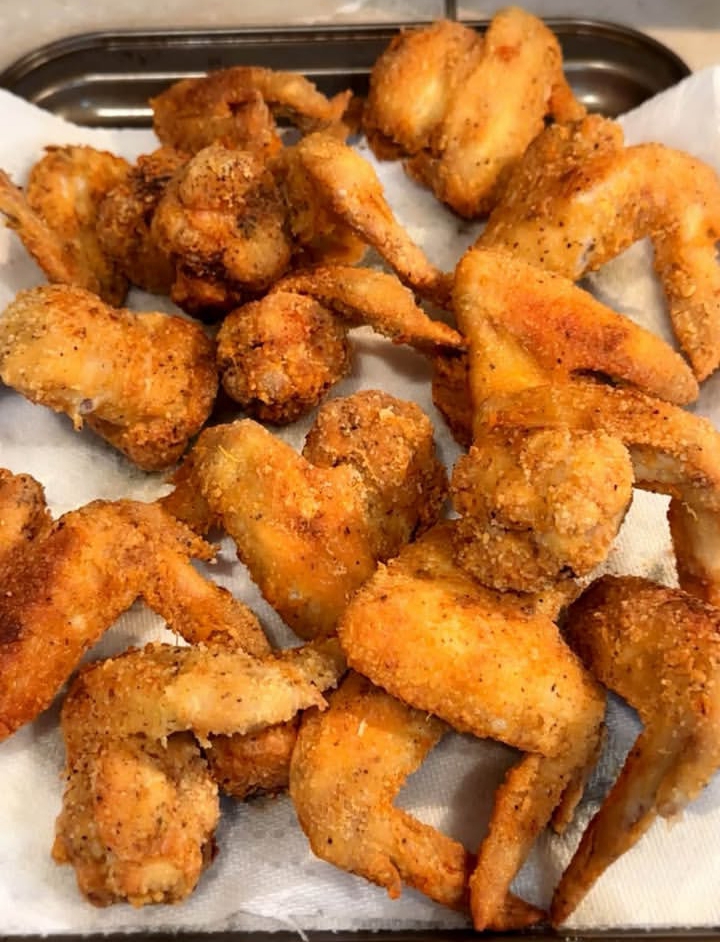
The exterior should be deeply golden and crunchy, while the interior remains tender and juicy.
Enjoy these homemade crispy chicken wings as an appetizer, party snack, or satisfying main course.
7. Description
Ultimate Ultra-Crispy Golden Fried Chicken Wings are an irresistible American-style comfort-food favorite featuring a beautifully textured coating and tender, juicy chicken.
The wings are seasoned with garlic powder, onion powder, smoked paprika, black pepper, and salt, creating a savory flavor that penetrates the surface of the chicken.
Their distinctive coating combines all-purpose flour, cornstarch, and baking powder.
This combination produces a light, irregular crust that becomes exceptionally crunchy during deep frying.
The exterior develops an attractive golden-brown color with small crispy formations, while the chicken remains flavorful and moist inside.
The smoked paprika adds subtle smoky notes, garlic and onion powder contribute savory depth, and optional cayenne pepper introduces a gentle spicy finish.
The finished wings can be enjoyed without sauce to appreciate their crunchy seasoned coating or paired with creamy, tangy, or spicy dipping sauces.
Their golden appearance, satisfying crunch, and versatile flavor make them an excellent choice for family gatherings, weekend dinners, game-day celebrations, and casual entertaining.
8. Nutritional Information
Estimated Nutritional Values per Serving (Based on 6 Servings):
| Nutrient | Approximate Amount |
|---|---|
| Calories | 400–550 kcal |
| Protein | 30–38 g |
| Carbohydrates | 12–20 g |
| Total Fat | 25–38 g |
| Saturated Fat | 6–10 g |
| Sugar | 0–2 g |
| Fiber | 0–1 g |
| Sodium | 650–1,000 mg |
Note: These are approximate estimates for seasoned, skin-on, flour-coated, deep-fried chicken wings. Actual nutritional values depend on wing size, coating adherence, oil absorption, and the number of servings.
Healthier Preparation Alternatives
Use an Air Fryer: Cook the coated wings at approximately 380°F (193°C), turning halfway through cooking. Lightly spray the coating with cooking oil to encourage browning.
Choose Baking: Arrange the coated wings on a wire rack over a baking sheet and bake at 425°F (220°C), turning as necessary until fully cooked.
Reduce the Salt: Adjust the quantity of salt according to personal preference and avoid adding additional salty seasoning blends.
Use Leaner Portions: Choose smaller wings or serve moderate portions alongside vegetables.
Avoid Excessive Oil: Maintain the correct frying temperature to help minimize unnecessary oil absorption.
Add Fresh Vegetables: Serve with carrots, celery, cucumber, or a fresh green salad.
Prepare Homemade Dips: Use plain Greek yogurt, lemon juice, garlic, and herbs to create a lighter dipping sauce.
Control the Portion Size: Enjoy a moderate serving of wings as part of a balanced meal.
9. Conclusion
Ultimate Ultra-Crispy Golden Fried Chicken Wings demonstrate how a simple combination of chicken, seasonings, and a carefully prepared coating can create an exceptionally satisfying homemade dish.
The combination of flour, cornstarch, and baking powder is particularly important for developing the distinctive crunchy exterior.
Garlic powder, onion powder, smoked paprika, and black pepper provide a savory seasoning profile that complements the natural flavor of the chicken.
Maintaining the correct frying temperature ensures that the coating becomes golden and crisp while the meat cooks thoroughly.
The recipe is versatile enough to accommodate different spice preferences, dipping sauces, and serving styles.
Whether served plain, tossed in Buffalo sauce, or finished with honey garlic glaze, these wings provide an excellent combination of texture and flavor.
Although they resemble restaurant-style fried chicken, they can be prepared at home using accessible ingredients and straightforward cooking techniques.
With proper preparation, careful frying, and attention to food safety, these wings can become a reliable favorite for family meals, parties, and special occasions.
10. Recommendation
For the best results, choose fresh, good-quality chicken wings and pat them thoroughly dry before seasoning.
Use the recommended combination of flour, cornstarch, and baking powder to create a light, crunchy coating.
Do not skip the resting period after breading, as it helps the coating adhere to the chicken.
A heavy-bottomed Dutch oven and deep-frying thermometer are strongly recommended for consistent results.
Fry in small batches and maintain a controlled oil temperature to prevent the coating from becoming greasy or excessively dark.
Always verify that the largest wings reach an internal temperature of at least 165°F (74°C).
Serving Recommendation: Arrange the golden wings on a large platter with fresh parsley, lemon wedges, and small bowls of ranch, honey mustard, or spicy Buffalo sauce.
For a complete meal, serve alongside crispy potato wedges, homemade coleslaw, corn on the cob, or a fresh garden salad.
Refrigerator Storage: Allow leftover wings to cool slightly and refrigerate in an airtight container within 2 hours of cooking. Store at 40°F (4°C) or below and consume within 3–4 days.
Reheating: Reheat in an oven or air fryer at 375°F (190°C) until the internal temperature reaches 165°F (74°C). This helps restore some of the original crispness.
Freezing: Freeze completely cooled wings in an airtight freezer-safe container for approximately 2–3 months for best quality.
Make-Ahead Recommendation: Prepare the seasoning and coating mixtures in advance. Dry the chicken in the refrigerator and season shortly before coating and frying for the best texture.
Allergen Information: This recipe contains wheat. Check packaged baking powder and seasoning labels for additional ingredients or potential allergens. Peanut oil should be avoided by anyone with a relevant allergy.
11. Embracing Healthful Indulgence
Ultra-Crispy Golden Fried Chicken Wings demonstrate how a classic comfort food can be enjoyed as part of a varied and balanced diet.
Chicken wings provide high-quality protein containing all nine essential amino acids. Protein supports muscle maintenance, tissue repair, and normal physiological functions.
Chicken also contributes important nutrients such as vitamin B12, selenium, phosphorus, and zinc.
Garlic powder, onion powder, and smoked paprika introduce aromatic plant compounds while enhancing flavor without requiring large quantities of additional ingredients.
However, deep frying and the skin-on coating increase the overall calorie and fat content of the dish.
A balanced approach involves enjoying moderate portions while making thoughtful adjustments to the preparation.
Air frying or oven baking can reduce the amount of cooking oil required while still producing a satisfying crispy exterior.
Using low-sodium seasoning blends and controlling added salt can also improve the overall nutritional balance.
Serving the wings alongside fresh vegetables, steamed greens, or a colorful salad increases dietary variety and provides additional fiber, vitamins, and minerals.
Homemade dipping sauces allow greater control over added fats, sugar, and sodium compared with many commercially prepared alternatives.
Preparing the wings at home also provides greater control over ingredient quality, cooking methods, seasoning, and portion sizes.
Ultimately, healthful indulgence is about enjoying flavorful comfort foods while maintaining moderation, nutritional variety, and balance in everyday eating.
Final Thought: 🍗🔥 With their beautifully golden exterior, intensely crunchy cornstarch coating, aromatic garlic and smoked paprika seasoning, and tender, juicy interior, these Ultimate Ultra-Crispy Fried Chicken Wings deliver everything expected from a perfect homemade fried chicken recipe. Whether served with creamy ranch, spicy Buffalo sauce, or sweet honey garlic glaze, they are an irresistible choice for family gatherings, game-day celebrations, and satisfying homemade meals.