
Prep Time: 20 minutes
Cook Time: 20 minutes
Total Time: 40 minutes
Servings: 4 sandwiches
Difficulty: Intermediate
Category: Seafood, American Cuisine, Gourmet Sandwiches, Comfort Food
1. Introduction
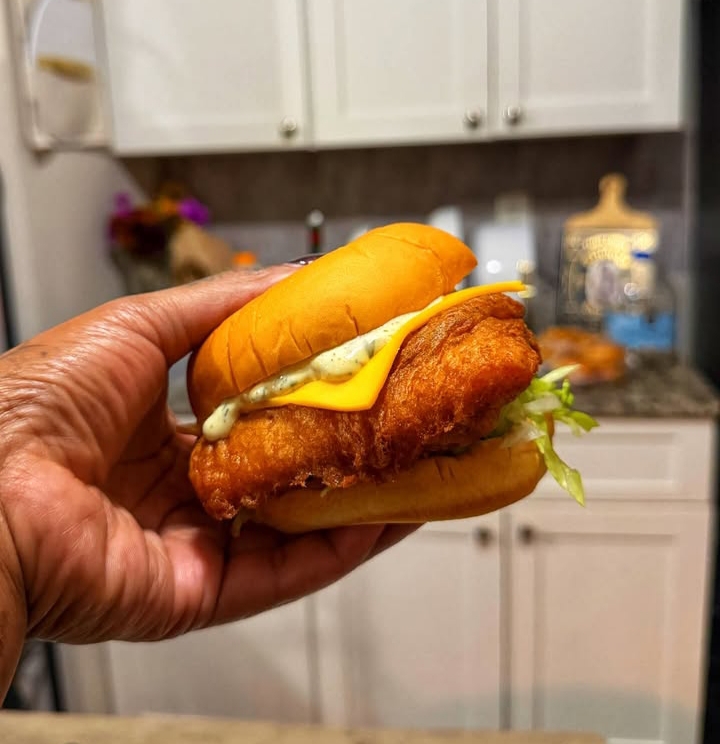
The Ultimate Crispy Fried Fish Sandwich combines thick, golden, crunchy white fish fillets with soft toasted brioche buns, melted American cheese, fresh iceberg lettuce, and homemade tangy tartar sauce.
The secret is an ice-cold batter made with flour, cornstarch, and sparkling liquid, creating an exceptionally crispy coating while keeping the fish tender and juicy.
Perfect for lunch, dinner, or a homemade restaurant-style meal.
2. Origin and Cultural Significance
Fried fish sandwiches are closely associated with American seafood restaurants, coastal communities, and traditional fast-food culture.
They developed from the broader tradition of serving fried seafood in bread, particularly in regions where fresh fish was readily available.
Their culinary influences include British fish and chips, New England fried seafood sandwiches, and Southern American fried fish preparations.
The American version commonly features crispy white fish served inside a soft bun with lettuce, pickles, and tartar sauce.
Seasonings such as Old Bay reflect the culinary traditions of the Chesapeake Bay region, where seafood dishes frequently incorporate distinctive blends of paprika, celery salt, and other spices.
Modern gourmet versions elevate the classic sandwich through brioche buns, homemade sauces, premium fish fillets, and carefully prepared crispy coatings.
3. Ingredients and Quantities
A. For the Fish and Crispy Batter
| Ingredient | Quantity |
|---|---|
| Thick skinless white fish fillets (cod, pollock, haddock, or halibut) | 4 |
| All-purpose flour | 1½ cups (approximately 190 g), divided |
| Cornstarch | ¼ cup (approximately 30 g) |
| Old Bay seasoning | 1 tablespoon |
| Paprika | 2 teaspoons |
| Garlic powder | 1 teaspoon |
| Kosher salt | 1 teaspoon |
| Ice-cold club soda, seltzer, or light beer | 1¼ cups (300 ml) |
| Neutral frying oil | As needed |
Why Use White Fish?
Cod, haddock, pollock, and halibut have mild flavors and firm textures that hold together well during frying.
Why Use Cornstarch?
Cornstarch reduces gluten development and helps produce a lighter, crispier coating.
Why Use Ice-Cold Club Soda?
The carbonation helps create a lighter batter, while the cold temperature helps maintain a crisp coating.
Why Use Old Bay Seasoning?
Old Bay provides a distinctive seafood seasoning with savory, aromatic, and slightly spicy notes.
Why Use Paprika?
Paprika contributes color, mild sweetness, and additional flavor.
B. For the Homemade Tangy Tartar Sauce
| Ingredient | Quantity |
|---|---|
| Mayonnaise | ½ cup (approximately 120 g) |
| Finely diced dill or bread-and-butter pickles | 2 tablespoons |
| Pickle juice | ½ teaspoon |
| Finely chopped capers | 1 tablespoon |
| Fresh dill, chopped | 1 tablespoon |
| Fresh lemon juice | A squeeze |
| Hot sauce | A dash |
C. For Sandwich Assembly
| Ingredient | Quantity |
|---|---|
| Brioche or potato buns | 4 |
| American cheese slices | 4 |
| Finely shredded iceberg lettuce | 1–2 cups |
| Butter for toasting buns | 1–2 tablespoons, optional |
D. Recommended Equipment
- Deep frying pan or Dutch oven
- Cooking thermometer
- Mixing bowls
- Whisk
- Sharp knife
- Cutting board
- Paper towels
- Wire cooling rack
- Slotted spoon or frying spider
- Tongs
- Small spatula
- Baking tray
4. Optional Additions
Customize your fish sandwich with these ingredients:
- Pickled Red Onions: Add a tangy, slightly sweet flavor.
- Tomato Slices: Introduce freshness and juiciness.
- Avocado: Add a creamy texture and mild flavor.
- Jalapeños: Provide additional heat.
- Cheddar Cheese: Replace American cheese with sharp cheddar.
- Swiss Cheese: Create a milder, creamy variation.
- Coleslaw: Add crunchy cabbage and a refreshing contrast.
- Hot Honey: Drizzle a small amount over the fried fish.
- Cajun Seasoning: Replace Old Bay for a stronger Southern-inspired flavor.
- Lemon Zest: Add to the tartar sauce for additional citrus aroma.
- Dijon Mustard: Add 1 teaspoon to the tartar sauce for extra tanginess.
- Smoked Paprika: Replace regular paprika for a smoky flavor.
- Fresh Parsley: Use as an additional herb garnish.
- Sriracha: Mix into the mayonnaise for a spicy sauce.
- Toasted Sesame Seeds: Sprinkle lightly over the bun for additional texture.
5. Tips for Success
- Choose firm fish: Thick fillets are easier to handle and maintain their structure during frying.
- Pat the fish dry: Excess moisture can prevent the batter from adhering properly.
- Keep the batter cold: Use ice-cold club soda immediately before mixing.
- Avoid overmixing: A few small lumps are acceptable and help prevent a heavy coating.
- Dust the fish with flour: This helps the batter adhere evenly.
- Use cornstarch: It contributes to a lighter, crispier exterior.
- Maintain oil temperature: Keep the frying oil between 350–360°F (175–180°C).
- Avoid overcrowding: Fry the fillets in batches to maintain consistent oil temperature.
- Do not move the fish too early: Allow the coating to set before turning the fillets.
- Use a wire rack: It allows excess oil to drain without making the underside soggy.
- Prepare tartar sauce in advance: Chilling it for 15–30 minutes helps develop the flavors.
- Toast the buns: Lightly toasted buns provide better texture and prevent the sauce from soaking into the bread.
- Assemble immediately: Serve shortly after frying to preserve the crispy coating.
- Check the internal temperature: Fish should reach 145°F (63°C) in the thickest part.
6. Step-by-Step Instructions
Part A: Preparing the Fish
Step 1: Prepare the Fish Fillets
Take the four white fish fillets and inspect them for any remaining bones.
Remove any bones using clean kitchen tweezers.
Pat the fillets thoroughly dry with paper towels.
Step 2: Portion the Fish
If the fillets are larger than the buns, trim them into suitable sandwich-sized portions.
Try to keep the thickness relatively uniform so that the fish cooks evenly.
Set aside in the refrigerator while preparing the batter.
Part B: Preparing the Crispy Batter
Step 3: Combine the Dry Ingredients
In a large mixing bowl, combine:
- 1¼ cups all-purpose flour.
- ¼ cup cornstarch.
- 1 tablespoon Old Bay seasoning.
- 2 teaspoons paprika.
- 1 teaspoon garlic powder.
- 1 teaspoon kosher salt.
Whisk until the ingredients are evenly distributed.
Step 4: Add the Cold Liquid
Slowly pour 1¼ cups of ice-cold club soda into the dry ingredients.
Whisk gently until a smooth but slightly lumpy batter forms.
Avoid excessive mixing because this can develop gluten and make the coating heavier.
Step 5: Check the Batter Consistency
The batter should be thick enough to coat the fish but fluid enough to drip slowly from a whisk.
If it is excessively thick, add a little more cold club soda.
Keep the batter cold until frying.
Part C: Preparing the Tartar Sauce
Step 6: Add the Mayonnaise
Place ½ cup of mayonnaise in a small mixing bowl.
Step 7: Incorporate the Pickles
Add 2 tablespoons of finely diced dill or bread-and-butter pickles.
Mix gently.
Step 8: Add the Capers
Finely chop 1 tablespoon of capers.
Add them to the mayonnaise mixture.
Step 9: Add the Fresh Dill
Add 1 tablespoon of freshly chopped dill.
Stir until evenly distributed.
Step 10: Add the Pickle Juice and Lemon
Add:
- ½ teaspoon pickle juice.
- A squeeze of fresh lemon juice.
- A dash of hot sauce.
Mix thoroughly.
Step 11: Chill the Sauce
Cover the bowl and refrigerate for 15–30 minutes.
This allows the flavors to combine.
Part D: Frying the Fish
Step 12: Prepare the Frying Oil
Pour neutral frying oil into a deep, heavy-bottomed pan or Dutch oven.
Use enough oil to allow the fillets to float or be substantially submerged.
Heat the oil to 350–360°F (175–180°C).
Check the temperature using a cooking thermometer.
Step 13: Dust the Fish with Flour
Place the remaining ¼ cup of flour in a shallow dish.
Lightly coat each fish fillet with flour.
Shake off any excess.
This preliminary coating helps the batter adhere to the fish.
Step 14: Dip the Fish into the Batter
Take one flour-dusted fillet.
Dip it into the cold batter.
Turn it carefully until all sides are coated.
Allow excess batter to drip away briefly.
Step 15: Begin Frying
Carefully lower the battered fish into the hot oil.
Release it gently to avoid splashing.
Repeat with the remaining fillets, working in batches.
Avoid overcrowding the pan.
Step 16: Fry Until Golden
Fry each fillet for approximately 4–6 minutes, depending on thickness.
Turn carefully if necessary to ensure even browning.
The coating should become golden brown, crisp, and beautifully textured.
Step 17: Check for Doneness
Use a food thermometer to check the thickest part of the fish.
The internal temperature should reach 145°F (63°C).
The flesh should be opaque and separate easily with a fork.
Step 18: Drain the Fish
Remove the cooked fillets using a slotted spoon or frying spider.
Transfer them to a wire rack positioned over a baking tray.
Allow excess oil to drain.
Avoid stacking the fillets because trapped steam can soften the crust.
Part E: Preparing the Sandwich Buns
Step 19: Slice the Buns
Take four brioche or potato buns.
Slice each bun horizontally if they are not already prepared.
Step 20: Toast the Buns
Lightly butter the cut surfaces if desired.
Place them in a skillet over medium heat.
Toast for approximately 1–2 minutes until lightly golden.
Remove and set aside.
Part F: Assembling the Sandwiches
Step 21: Spread the Tartar Sauce
Spread a generous layer of homemade tartar sauce over the bottom half of each bun.
Step 22: Add the Lettuce
Place a portion of finely shredded iceberg lettuce over the sauce.
Distribute it evenly.
Step 23: Add the Fried Fish
Place one crispy fish fillet on each prepared bun.
Position it carefully to cover most of the sandwich surface.
Step 24: Add the Cheese
Place one slice of American cheese over each hot fish fillet.
Allow the residual heat to soften the cheese.
For a more melted finish, briefly place the assembled open-faced sandwiches under a broiler, using caution to avoid overcooking the fish.
Step 25: Add More Tartar Sauce
Add a small additional spoonful of tartar sauce if desired.
Avoid adding too much because it can soften the crispy coating.
Step 26: Complete the Sandwich
Place the top half of each toasted bun over the filling.
Press gently to secure the ingredients.
Part G: Final Presentation
Step 27: Arrange the Sandwiches
Transfer the four sandwiches to individual serving plates or a wooden serving board.
Step 28: Add Optional Garnishes
Serve with fresh lemon wedges, pickles, or additional tartar sauce.
Step 29: Serve Immediately
Serve while the fish is hot and the coating remains crispy.
Enjoy your homemade gourmet fried fish sandwich!
7. Description
The Ultimate Gourmet Crispy Fried Fish Sandwich is a restaurant-style seafood creation featuring thick white fish fillets coated in a light, golden, crunchy batter.
The exterior develops a crisp texture thanks to the combination of all-purpose flour, cornstarch, and ice-cold sparkling liquid.
Inside, the fish remains tender, moist, and flaky.
The homemade tartar sauce introduces a creamy, tangy flavor through mayonnaise, chopped pickles, capers, fresh dill, lemon juice, and hot sauce.
Soft brioche or potato buns provide a slightly sweet contrast to the savory fish, while American cheese contributes a smooth, creamy finish.
Fresh iceberg lettuce adds crunch and freshness, balancing the richness of the fried coating and sauce.
Every bite combines crispy fish, creamy cheese, tangy tartar sauce, and soft toasted bread.
This sandwich is an excellent choice for seafood lovers looking for a satisfying homemade alternative to restaurant-style fried fish sandwiches.
8. Nutritional Information
Estimated Nutritional Values per Sandwich (Based on 4 Servings):
| Nutrient | Approximate Amount |
|---|---|
| Calories | 750–900 kcal |
| Protein | 35–45 g |
| Carbohydrates | 65–80 g |
| Total Fat | 35–48 g |
| Saturated Fat | 8–13 g |
| Sugar | 6–10 g |
| Fiber | 2–4 g |
| Sodium | 1,000–1,500 mg |
Note: These are approximate estimates. Actual values depend on the fish variety, amount of oil absorbed during frying, bun size, mayonnaise, cheese, and seasoning brands.
Healthier Preparation Alternatives
- Air-Fryer Preparation: Cook battered fish using an air fryer only if the batter is suitable for your appliance; wet batter generally requires a solid coating or a conventional frying method.
- Oven Baking: Use a breadcrumb-based coating and bake until crispy for a lower-oil alternative.
- Whole-Grain Buns: Replace brioche with whole-grain sandwich buns.
- Light Mayonnaise: Use reduced-fat mayonnaise in the tartar sauce.
- Greek Yogurt: Replace part of the mayonnaise with plain Greek yogurt.
- Reduce Cheese: Use a thinner cheese slice or omit it.
- Increase Vegetables: Add extra lettuce, tomatoes, and pickled onions.
- Control Seasoning: Reduce added salt if using a salty seafood seasoning blend.
9. Conclusion
The Ultimate Gourmet Crispy Fried Fish Sandwich combines classic seafood flavors with a satisfying combination of textures.
Its defining features are the golden, crunchy fish coating, tender white fish interior, creamy homemade tartar sauce, melted cheese, and soft toasted buns.
The recipe uses accessible ingredients and straightforward techniques to recreate a restaurant-style sandwich at home.
The most important preparation details include keeping the batter cold, maintaining the correct frying temperature, avoiding overcrowding, and ensuring that the fish reaches a safe internal temperature.
The homemade tartar sauce adds freshness and acidity, while the brioche buns and cheese provide richness.
Whether prepared for lunch, dinner, or a weekend gathering, this sandwich delivers a satisfying and flavorful seafood experience.
10. Recommendation
For the best results, choose thick, firm white fish fillets such as cod or haddock.
Use ice-cold club soda for a light batter and maintain the frying oil between 350–360°F (175–180°C).
Prepare the tartar sauce in advance to allow its flavors to develop.
Toast the brioche buns shortly before assembly and serve the sandwiches immediately after frying to preserve their crisp texture.
Serving Recommendation: Present each sandwich with golden French fries, fresh lemon wedges, dill pickles, and a small bowl of homemade tartar sauce.
Additional side dishes include:
- Coleslaw.
- Sweet potato fries.
- Potato wedges.
- Garden salad.
- Corn on the cob.
- Pickled vegetables.
- Onion rings.
Refrigerator Storage: Store leftover cooked fish separately from the assembled sandwiches in an airtight container at 40°F (4°C) or below. Consume within 1–2 days for best quality.
Reheating: Reheat the fish in an oven or air fryer at approximately 350°F (175°C) until thoroughly hot. Avoid microwaving because it can soften the crispy coating.
Freezing: Cooked fish can be frozen in an airtight freezer-safe container, although the coating may lose some crispness after thawing. For best quality, consume within 1–2 months.
Make-Ahead Recommendation: Prepare the tartar sauce and chop the vegetables in advance. Mix the batter immediately before frying and assemble the sandwiches just before serving.
Allergen Information: Contains fish, wheat (gluten), eggs, and milk. Club soda is suitable for a gluten-free batter, but beer contains gluten unless specifically certified gluten-free. Check mayonnaise, cheese, seasoning, and bun labels for additional allergens.
11. Embracing Healthful Indulgence
This gourmet fried fish sandwich combines protein-rich seafood with vegetables, dairy, and carbohydrate-containing bread.
White fish such as cod and haddock provides high-quality protein and nutrients, including vitamin B12, selenium, and phosphorus.
Iceberg lettuce contributes water and small amounts of vitamins and minerals, while fresh lemon juice provides vitamin C.
However, deep frying, mayonnaise, cheese, and brioche buns contribute additional calories, fat, and sodium.
A few practical modifications can improve the nutritional balance without sacrificing the sandwich’s essential flavor.
Choosing lean white fish, controlling the amount of tartar sauce, and adding more fresh vegetables can help create a more balanced meal.
Using a lighter mayonnaise or Greek yogurt-based tartar sauce can reduce the overall fat content.
Whole-grain buns provide additional dietary fiber, while oven-baked fish offers an alternative to deep frying.
Serving the sandwich with a fresh salad or roasted vegetables instead of large portions of fries can also improve the overall nutritional balance.
Preparing this dish at home allows greater control over the ingredients, cooking methods, seasoning, and portion sizes.
Ultimately, healthful indulgence means enjoying crispy, flavorful comfort food while maintaining moderation, nutritional variety, and balance in everyday eating.
Final Thought: 🐟🍔 With its golden, crunchy fish fillet, creamy homemade tartar sauce, melted cheese, fresh lettuce, and soft toasted brioche bun, this Ultimate Gourmet Fried Fish Sandwich brings restaurant-quality seafood comfort straight to your kitchen.
Follow for more delicious homemade recipes and gourmet comfort food! 🔥