
Description
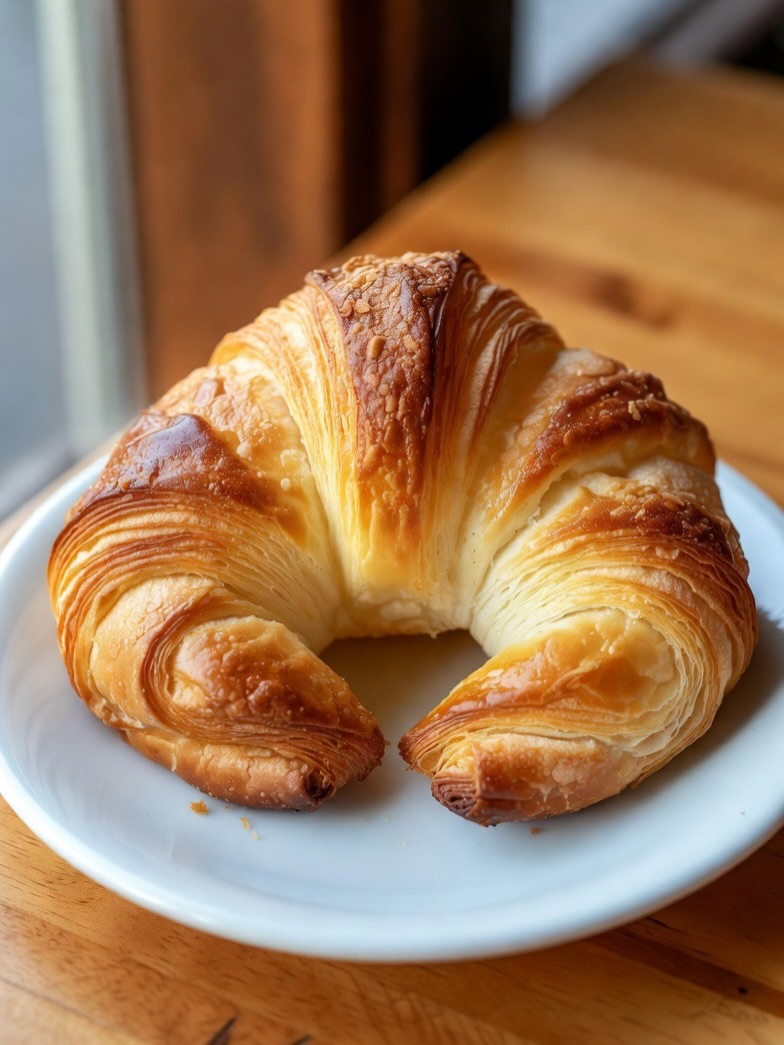
Argentine Medialunas are iconic, crescent-shaped sweet pastries that strike a flawless balance between a soft, pillowy brioche and a flaky, laminated croissant. Boasting a rich, buttery interior with distinctly visible sweet layers, these pastries are baked until deep golden-brown, then brushed with a sweet glaze to create a slightly sticky, incredibly comforting treat that melts in the mouth.
Introduction
This recipe provides a streamlined home-baking method to capture the magic of a traditional Buenos Aires confitería. Chemically, medialunas sit in a unique pastry category: they utilize a yeast-leavened dough that undergoes a simplified lamination process (hojaldrado). By folding blocks of cold butter into the dough, you create alternating micro-layers of fat and flour. When baked, the water in the butter evaporates into steam, pushing the dough layers apart to create a signature flaky interior while keeping the crumb ultra-soft and moist.
Origin and Cultural Significance
While heavily inspired by the French croissant and the Austrian Kipferl, the medialuna (literally translating to “half moon”) evolved into a distinct cultural icon in Argentina and Uruguay during the late 19th century. Italian and French immigrant bakers adapted European pastry techniques to suit local palates, favoring a smaller, sweeter, and more compact crescent. In Argentina, they are categorized into two styles: medialunas de grasa (made with beef tallow, thin and crispy) and medialunas de manteca (made with butter, plump and sweet). They represent the heartbeat of Argentine social life—the ultimate companion for a morning or afternoon mate session or a café con leche.
Ingredients Quantity
The Enriched Dough
- 500 grams all-purpose wheat flour (approx. 4 cups)
- 10 grams active dry yeast (or 25 grams fresh yeast)
- 100 grams granulated sugar
- 1 teaspoon fine salt
- 200 ml whole milk (warm, approx. 110°F/43°C)
- 1 large egg (at room temperature)
- 80 grams unsalted butter (manteca), softened to room temperature
The Lamination Layer
- 150 to 200 grams high-quality unsalted butter, cold
Sweet Topping & Glaze
- 1 large egg (beaten, for egg wash)
- Granulated sugar (for dusting)
- Optional traditional glaze: Equal parts sugar and water (¼ cup each) simmered for 2 minutes to create a simple syrup (almíbar).
Optional Additions
- Citrus Infusion: Rub the finely grated zest of 1 fresh lemon or orange into the granulated sugar before kneading to add a subtle, bright bakery aroma.
- Dulce de Leche Core: Pipe a small teaspoon of thick pastry-grade dulce de leche at the base of each triangle before rolling it up for a truly decadent Argentine twist.
- Vanilla Split: Mix 1 teaspoon of pure vanilla extract into the warm milk and egg mixture to deepen the comforting sweet profile.
Tips for Success
- Keep the Butter Cold: During the lamination process, your folding butter must be firm and cold, matching the temperature of the dough. If the butter gets too warm, it will melt into the flour instead of creating separate layers, turning your flaky pastry into regular bread.
- Roll from Base to Tip: When rolling your cut dough triangles into crescents, stretch the tip of the triangle slightly with one hand while rolling tightly from the wide base to the point with the other. This creates the classic multi-layered spiral look.
- Curvaceous Tucking: When placing the rolled medialunas onto your baking sheet, curve the two outer tips inward to form a tight crescent shape, and press the outer tips firmly down onto the tray. This prevents them from uncurling and losing their shape in the hot oven.
Instructions
1. Knead the Dough Base
In a large mixing bowl, combine the flour, yeast, sugar, and salt. Pour in the warm milk and the egg. Begin mixing, then work in the 80 grams of softened butter. Turn the dough out onto a clean surface and knead vigorously for 8 to 10 minutes until it forms a smooth, pliable, and slightly elastic ball.
2. The First Rise
Place the dough into a lightly greased bowl, cover with a damp cloth or plastic wrap, and let it rise in a warm spot for about 1 hour, or until it has completely doubled in volume.
3. Laminate the Pastry
Deflate the dough and roll it out onto a lightly floured surface into a large rectangle. Place your cold lamination butter in the center, fold the dough flaps over it like an envelope, and roll it out gently lengthwise. Fold into thirds (like a letter), wrap in plastic, and chill in the refrigerator for 20 minutes. Repeat this rolling and folding process 3 to 4 times, resting the dough in the fridge for 20 minutes between each turn to build the flaky layers.
4. Shape the Medialunas
Roll the chilled dough out into a final long rectangle about 4-5 mm thick. Using a sharp knife or pizza cutter, cut the dough into tall, even triangles. Starting from the wide base of a triangle, roll the dough tightly upward toward the point. Curve the two ends inward to form a crescent moon shape.
5. Final Tray Proof
Arrange the shaped crescents on a baking sheet lined with parchment paper, leaving space between them. Cover lightly and let them proof undisturbed for 30 to 40 minutes until they look visibly puffy and airy. Meanwhile, preheat your oven to 350°F (180°C).
6. Bake to a Rich Gold
Brush the tops of the puffy pastries gently with the beaten egg wash and scatter a light dust of granulated sugar over them. Slide into the center rack of the preheated oven and bake for 15 to 20 minutes until the layers expand beautifully and the crust turns a rich, shiny golden-brown.
7. Glaze and Serve
Remove from the oven. For an authentic confitería finish, immediately brush the hot medialunas with a simple sugar syrup glaze (almíbar). Let them sit for 5 minutes to set before serving warm.
Nutritional Information
Serving Size: 1 medialuna (assuming a yield of 10 pastries)
| Nutrient | Amount Per Serving |
| Calories | 360 kcal |
| Total Fat | 19g |
| Saturated Fat | 12g |
| Cholesterol | 65mg |
| Sodium | 240mg |
| Total Carbohydrate | 41g |
| Dietary Fiber | 1.5g |
| Sugars | 12g |
| Protein | 6g |
Recommendation
These sweet, buttery pastries are meant to be eaten fresh. They pair flawlessly with a bitter, steaming cup of Argentine mate, a strong espresso, or a milky café con leche. For a classic Buenos Aires breakfast, slice them in half horizontally and stuff them with a thin layer of cooked ham and melted cheese.
Embracing Healthful Indulgence
This recipe treats butter as a key structural component. To enjoy these pastries with a lighter profile, you can utilize organic light butter for the lamination process to reduce saturated fats, swap half of the white sugar in the dough for a zero-calorie granulized sweetener, and skip the final sugar syrup glaze, opting instead for a bright dust of ground cinnamon to enhance the perceived sweetness naturally.
Conclusion
Argentine Medialunas are a beautiful testament to how patience and folding techniques can turn simple baking staples into an art form. By respecting the chilling times to keep your butter layers intact, you unlock an incredibly tender, sweet, and flaky pastry that fills the kitchen with warmth and brings authentic South American comfort right to your morning table.