
Description
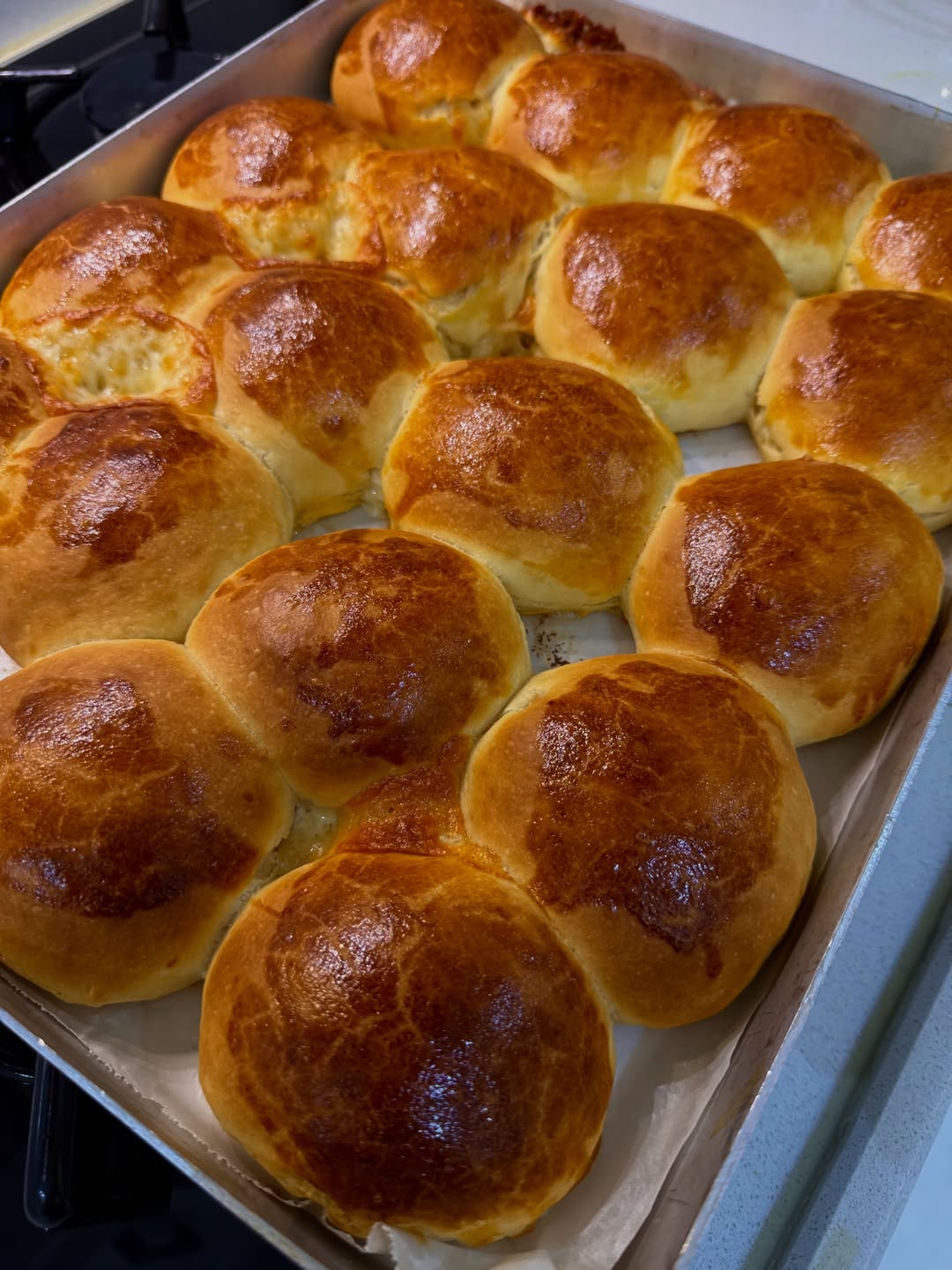
This recipe delivers Pamuk Poğaça (“Cotton Pastry”), the definitive crown jewel of Turkish baking. True to its name, these pillowy buns boast an unbelievably soft, feather-light interior that springs back at the gentlest touch. Brushed with a glossy golden egg yolk wash and baked to perfection, this versatile dough can be kept simple and plain, or stuffed with your choice of savory crumbled feta cheese, seasoned mashed potatoes, or rich black olive paste.
Introduction
The secret behind the famous “cotton-like” texture of these pastries lies entirely in its lipid-to-water ratio and a high-hydration dough. By balancing a full cup of vegetable oil with warm milk and water, you create a rich emulsion that deeply coats the flour’s proteins. Keeping the dough slightly sticky (hafif ele yapışan) ensures a high moisture content. When these buns hit the hot oven, that trapped moisture turns to steam, pushing the dough upward to create millions of tiny, ultra-soft air pockets instead of a dense, heavy bread.
Origin and Cultural Significance
In Turkey, poğaça is far more than a simple pastry—it is a daily ritual. Dating back to the Ottoman Empire, where variants were baked in the palace kitchens, these warm buns evolved into the ultimate comfort food. Today, the irresistible aroma of fresh poğaça filling a home is synonymous with mis mis (deliciously comforting) hospitality. It is the absolute centerpiece of the famous Turkish breakfast spread (kahvaltı), a staple for afternoon tea gatherings (beş çayı), and a loving snack packed into school lunchboxes.
Ingredients Quantity
The Ultra-Soft Dough Base
- 1 cup warm milk (ılık süt)
- 1 cup warm water (ılık su)
- 1 cup vegetable oil (sıvı yağ)
- 1 tablespoon active dry yeast (kuru maya)
- 1 teaspoon granulated sugar (toz şeker)
- 1½ teaspoons fine salt
- 4½ to 5½ cups all-purpose flour (added gradually / aldığı kadar)
The Golden Gloss
- 2 large egg yolks (yumurta sarısı, beaten smoothly)
Optional Filling Choices (Pick Your Favorite)
- Cheese: 1½ cups crumbled beyaz peynir (Turkish white cheese or feta) mixed with chopped flat-leaf parsley.
- Potato: 2 boiled potatoes, mashed and sautéed with a finely diced onion, paprika, salt, and pepper.
- Olive: 1 cup of pitted, finely minced black Turkish olives or ready-made olive paste (zeytin ezmesi).
Optional Additions
- Nigella & Sesame Seeds: Sprinkle a mixture of toasted sesame seeds (susam) and black nigella seeds (çörek otu) over the egg wash for a beautiful, classic bakery crunch.
- Mahleb Touch: Add ½ teaspoon of ground mahleb (mahlep) to the flour mixture to introduce a highly authentic, subtly sweet, and nutty bakery aroma.
- Butter Center: For a plain version, tuck a tiny cube of cold butter into the center of each dough ball before shaping to create an extra buttery, rich pocket.
Tips for Success
- Oven-Warm Liquids: Ensure both your milk and water are lukewarm (around 105°F / 40°C). If the liquids are too hot, they will scald the yeast cells; if they are too cold, the yeast won’t activate, robbing you of that signature cloud-like rise.
- The Oil Trick for Shaping: Since this dough must remain slightly sticky to stay soft, do not add extra flour when shaping! Instead, coat your palms with a few drops of vegetable oil. This keeps the dough from sticking to your hands while keeping the pastry perfectly light.
- Don’t Rush the Proofing: Let your shaped buns rest on the baking sheet for 15 to 20 minutes before brushing them with egg yolk. This second rise (tepsi mayası) allows the gluten to relax completely, ensuring they puff up beautifully into round, smooth spheres in the oven.
Instructions
1. Wake Up the Yeast
In a large mixing bowl, combine the 1 cup of warm milk, 1 cup of warm water, 1 tablespoon of dry yeast, and 1 teaspoon of sugar. Whisk gently and let it rest for 5 minutes until a light foam develops on top, signaling the yeast is active.
2. Form the Rich Liquid Base
Pour the 1 cup of vegetable oil and 1½ teaspoons of salt into the bowl with the activated yeast mixture. Stir briefly to combine.
3. Knead to a Soft Texture
Begin sifting in your flour one cup at a time, mixing with your hand or a wooden spoon. Continue adding flour gradually until a cohesive dough forms. It should be incredibly soft, supple, and slightly sticky to the touch (hafif ele yapışan). Avoid over-adding flour. Knead vigorously for 5 minutes until shiny and smooth.
4. The First Rest
Shape the dough into a smooth ball inside the bowl. Cover the bowl tightly with plastic wrap or a clean damp towel. Place it in a warm, draft-free spot in your kitchen for 45 to 60 minutes, or until it has beautifully doubled in size.
5. Stuff and Shape
Punch down the risen dough to release excess gas. Pour a tablespoon of vegetable oil into a small saucer. Dip your palms into the oil, tear off a golf-ball-sized piece of dough, and flatten it into a small circle in your hand. Place a generous spoonful of your chosen filling (cheese, potato, or olive) in the center, fold the edges over to seal it tightly, and roll it into a smooth ball or an oval shape.
6. Final Rise and Paint
Place the shaped pastries onto a baking sheet lined with parchment paper, leaving about 2 inches of space between them. Let them rest on the tray for 15 to 20 minutes. Meanwhile, preheat your oven to 350°F (180°C). Gently brush the tops of the puffed pastries with the beaten egg yolks.
7. Bake to Golden Perfection
Slide the tray into the middle rack of the preheated oven. Bake for 25 to 30 minutes, or until the tops turn a deep, glistening, golden-brown color. Remove from the oven, cover loosely with a clean cloth towel for 5 minutes to trap the steam (making them even softer!), and serve warm alongside fresh tea.
Nutritional Information
Serving Size: 1 soft pastry bun (assuming plain version from a yield of 16 pastry buns total)
| Nutrient | Amount Per Serving |
| Calories | 240 kcal |
| Total Fat | 14g |
| Saturated Fat | 2g |
| Cholesterol | 25mg |
| Sodium | 220mg |
| Total Carbohydrate | 25g |
| Dietary Fiber | 1g |
| Sugars | 1.5g |
| Protein | 4.5g |
Recommendation
These cotton-soft treats are a magnificent match for a traditional Turkish hot beverage. Pair them hot with a freshly brewed, clear glass of Turkish black tea (çay) or a smooth cup of filter coffee, both of which balance the rich, comforting crumb of the pastry wonderfully.
Embracing Healthful Indulgence
This classic snack offers a clean foundation of energy and essential proteins from the milk and egg enrichment. To enjoy these textures with a more mindful profile, you can easily substitute the vegetable oil with cold-pressed olive oil, use skim milk for the dough base, utilize fiber-rich whole-wheat pastry flour for half of the flour requirement, and opt for a low-sodium, low-fat curd cheese (lor peyniri) packed with fresh herbs to maximize vitamins while reducing saturated fats.
Conclusion
Pamuk gibi Poğaça perfectly showcases how celebrating a high-moisture, sticky dough can yield the most delicate, bakery-quality textures at home. By trusting the yeast activation, keeping your flour minimal, and using the oil-hand technique to shape your buns, you unlock an extraordinarily fluffy, cloud-like masterpiece that brings genuine warmth and joy to your family table.