
1. Introduction
Decorative Chia Seed and Rolled Oat Sourdough Bread is an artisan-style homemade bread featuring a naturally fermented dough covered with an elegant arrangement of chia seeds and rolled oats.
Prepared with bread flour, water, active sourdough starter, and salt, this bread develops its distinctive flavor through natural fermentation rather than commercial baker’s yeast.
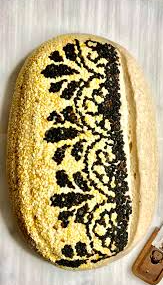
The decorative topping creates an attractive contrast between the golden crust and the dark chia seed patterns, while rolled oats form beautiful floral and ornamental designs across the surface.
The bread is baked in a preheated Dutch oven to develop a crisp, golden-brown crust and a soft, flavorful interior.
Its artistic presentation, naturally fermented dough, and wholesome ingredients make it an excellent choice for breakfast, sandwiches, family meals, and special occasions.
2. Origin
Sourdough bread has a long history dating back thousands of years, with early fermentation techniques developing in ancient civilizations, particularly in Egypt.
Before commercial baker’s yeast became widely available, bakers relied on naturally occurring wild yeasts and beneficial bacteria to ferment bread dough.
Over generations, sourdough baking spread across different regions, becoming an important part of traditional European and international baking cultures.
Decorative bread-making also developed as an artistic baking tradition, with bakers using seeds, grains, scoring patterns, and different shaping techniques to create visually distinctive loaves.
The addition of chia seeds and rolled oats represents a modern variation of traditional sourdough baking, combining natural fermentation with decorative seed arrangements.
This particular style reflects contemporary artisan baking, where appearance, texture, fermentation, and ingredient quality are equally important.
3. Cultural Significance
Sourdough bread holds an important place in traditional baking cultures around the world.
It is particularly associated with artisan bakeries, homemade food traditions, and the practice of maintaining natural sourdough starters.
The decorative chia seed and oat variation reflects the growing appreciation of visually attractive homemade bread.
It is commonly enjoyed during:
- Family breakfasts and weekend brunches.
- Homemade bread and cheese gatherings.
- Artisan bread-tasting occasions.
- Family lunches and dinners.
- Special celebrations and festive meals.
- Homemade sandwich preparations.
Sourdough baking also represents patience, craftsmanship, and the preservation of traditional fermentation techniques.
The decorative seed-and-oat design adds an artistic dimension, transforming an everyday loaf into an attractive centerpiece for the dining table.
4. Ingredients and Quantities
The following ingredients produce one medium oval sourdough loaf.
Base sourdough ingredients:
| Ingredient | Quantity |
|---|---|
| Bread flour | 350 g |
| Water | 280 g |
| Active sourdough starter | 75 g |
| Fine salt | 7 g |
Decorative seed and oat coating:
| Ingredient | Quantity |
|---|---|
| Chia seeds | As needed |
| Old-fashioned rolled oats | As needed |
| Water for moistening the dough | A small amount |
The chia seeds and rolled oats are used to create the decorative pattern across the upper surface of the loaf.
Preparation time: Approximately 30–45 minutes of active preparation, excluding fermentation.
Bulk fermentation: Variable, depending on room temperature and starter activity.
Cold fermentation: Overnight.
Covered baking time: 20 minutes.
Uncovered baking time: Approximately 15 minutes.
Oven temperature: 245°C (475°F), followed by 230°C (450°F).
Yield: 1 medium oval loaf.
5. Optional Additions
The basic sourdough recipe can be customized with additional ingredients to create different flavors, textures, and decorative appearances.
- Sunflower seeds: Add a crunchy texture and nutty flavor.
- Pumpkin seeds: Provide additional crunch and visual contrast.
- Sesame seeds: Create a delicate toasted aroma.
- Flaxseeds: Add texture and plant-based nutrients.
- Rolled barley: Introduces a different grain texture.
- Whole-wheat flour: Adds a deeper grain flavor.
- Rye flour: Creates a more distinctive sourdough flavor.
- Walnuts: Provide a rich, nutty taste.
- Dried cranberries: Introduce a slightly sweet and tart flavor.
- Rosemary: Adds a fragrant herbal aroma.
- Caraway seeds: Provide a traditional savory bread flavor.
- Black sesame seeds: Create additional contrast in decorative designs.
- Poppy seeds: Offer a delicate crunch and attractive appearance.
These additions can be incorporated into the dough or used as decorative toppings.
6. Tips for Success
- Use an active, healthy sourdough starter that has recently risen and is showing good fermentation activity.
- Measure the flour and water accurately to maintain the intended dough hydration.
- Allow sufficient autolyse time to help the flour absorb the water.
- Mix the starter thoroughly into the dough before incorporating the salt.
- Perform stretch-and-fold or coil-fold techniques to develop dough strength.
- Space the folding sessions approximately 30 minutes apart.
- Monitor the dough during bulk fermentation rather than relying exclusively on a fixed time.
- Look for an increase in volume of approximately 60%, along with visible bubbles.
- Handle the dough gently when shaping to preserve the air developed during fermentation.
- Lightly moisten the surface before applying the decorative toppings.
- Arrange the rolled oats carefully to create the desired floral and ornamental patterns.
- Press the chia seeds and oats gently into the dough so they adhere properly.
- Use a well-floured proofing basket to prevent sticking.
- Refrigerate the shaped dough overnight to develop flavor and make scoring easier.
- Preheat the Dutch oven thoroughly before baking.
- Score the dough confidently to control expansion during baking.
- Allow the finished bread to cool completely before slicing.
7. Instructions
Step 1: Prepare the flour and water
Place the 350 g of bread flour into a large mixing bowl.
Add the 280 g of water.
Mix using a spatula or your hands until all the flour is hydrated and no dry flour remains.
Cover the bowl and allow the dough to rest for approximately one hour.
This resting process is called autolyse and helps develop the dough structure.
Step 2: Add the sourdough starter
Add the 75 g of active sourdough starter to the rested dough.
Mix thoroughly until the starter is evenly incorporated.
Cover the bowl and allow the dough to rest for approximately 30 minutes.
Step 3: Incorporate the salt
Add the 7 g of salt to the dough.
Use your fingers to gently pinch and fold the dough until the salt is evenly distributed.
The dough should gradually become more cohesive.
Step 4: Perform stretch-and-fold or coil folds
Over the next two hours, perform approximately 3–4 sets of coil folds, spacing each set about 30 minutes apart.
To perform a coil fold:
- Slightly wet your hands to prevent sticking.
- Lift the center of the dough gently.
- Allow the ends to fold underneath naturally.
- Rotate the bowl and repeat the movement.
- Continue until the dough develops more strength and elasticity.
Cover the bowl between folding sessions.
Step 5: Bulk fermentation
After completing the folding sessions, cover the bowl and allow the dough to continue fermenting at room temperature.
Wait until the dough increases in volume by approximately 60%.
It should appear slightly domed, airy, and puffy, with visible bubbles along the sides and surface.
The fermentation time depends on the temperature of the kitchen and the strength of the starter.
Step 6: Shape the dough
Transfer the fermented dough onto a lightly floured work surface.
Gently shape it into an oval bâtard.
Fold the edges inward and create enough surface tension to maintain its oval structure.
Avoid pressing too firmly because this can remove too much of the air developed during fermentation.
Step 7: Prepare the decorative topping
Spread the rolled oats and chia seeds across a clean, flat work surface or board.
Arrange the rolled oats into a decorative floral or ornamental pattern.
Fill the surrounding spaces with chia seeds to create contrast.
Alternatively, arrange the oats directly onto the dough before adding the chia seeds.
Step 8: Apply the decorative coating
Lightly mist the upper surface of the shaped dough with water or gently wipe it using a damp paper towel.
Carefully roll or press the moistened surface onto the prepared chia seed and oat arrangement.
Apply gentle pressure to help the toppings adhere evenly.
Check that the decorative pattern remains visible and properly distributed.
Step 9: Transfer to the proofing basket
Place the decorated dough into a well-floured banneton or proofing basket.
Position it seam-side up.
Cover the basket and transfer it to the refrigerator for an overnight cold proof.
This process helps develop the sourdough flavor and makes the dough easier to score.
Step 10: Preheat the oven
Place a Dutch oven with its lid inside the oven.
Preheat to 245°C (475°F) for at least 30 minutes.
Make sure the Dutch oven is thoroughly heated before baking.
Step 11: Score the bread
Remove the cold dough from the refrigerator.
Carefully turn it onto parchment paper or a suitable bread sling, keeping the decorative surface facing upward.
Using a sharp bread lame, make one confident curved expansion score along the center of the loaf.
The scoring allows the bread to expand during baking while helping preserve the decorative pattern.
Step 12: Bake covered
Carefully transfer the dough into the preheated Dutch oven.
Cover with the lid.
Bake at 245°C (475°F) for approximately 20 minutes.
The covered environment traps steam, helping the bread expand and develop its crust.
Step 13: Bake uncovered
Remove the Dutch oven lid.
Reduce the oven temperature to 230°C (450°F).
Continue baking for approximately 15 minutes until the crust becomes golden brown.
The internal temperature should reach approximately 96–98°C (205–208°F).
Step 14: Cool the bread
Remove the loaf from the Dutch oven.
Transfer it to a wire cooling rack.
Allow it to cool completely before slicing, preferably for at least one hour.
This resting period allows the interior crumb to finish setting and helps preserve its texture.
Step 15: Slice and serve
Once completely cooled, slice the sourdough loaf using a serrated bread knife.
Serve with butter, cheese, olive oil, or your preferred spreads.
8. Description
Decorative Chia Seed and Rolled Oat Sourdough Bread is an artisan-style loaf characterized by its naturally fermented dough, golden crust, and elegant seed decoration.
The bread flour provides the foundation for its structure, while the active sourdough starter contributes natural fermentation and a distinctive tangy flavor.
Water hydrates the flour and supports gluten development, while salt enhances the flavor and helps regulate fermentation.
The decorative topping combines rolled oats and chia seeds to create an attractive contrast against the golden surface.
The rolled oats form floral and ornamental patterns, while the dark chia seeds fill the surrounding spaces and enhance the visual presentation.
During baking, the Dutch oven creates a steam-rich environment that encourages oven spring and helps develop a crisp exterior.
The finished loaf features a golden, crusty surface and a soft, flavorful interior with the characteristic aroma of naturally fermented bread.
Its decorative appearance makes it both a delicious homemade bread and an attractive artisan baking creation.
9. Nutritional Information
The following nutritional values are approximate estimates per serving, assuming one loaf produces 10 slices. The actual values depend on the quantity of chia seeds and oats used for decoration.
| Nutritional Component | Estimated Amount per Serving |
|---|---|
| Calories | 145–175 kcal |
| Protein | 5–7 g |
| Carbohydrates | 27–31 g |
| Fat | 2–4 g |
| Fiber | 2–4 g |
| Sugar | Less than 1 g |
Nutritional highlights:
- Bread flour provides carbohydrates for energy.
- Chia seeds contain dietary fiber and plant-based omega-3 fatty acids.
- Rolled oats provide beta-glucan and additional dietary fiber.
- Sourdough fermentation produces organic acids and modifies the dough’s carbohydrate structure.
- Salt contributes sodium and enhances flavor.
The nutritional composition varies according to the amount of decorative seeds and oats used.
10. Conclusion
Decorative Chia Seed and Rolled Oat Sourdough Bread is an attractive artisan loaf combining traditional natural fermentation with creative decorative baking techniques.
Its golden crust, flavorful interior, and carefully arranged seed-and-oat pattern make it a distinctive addition to homemade bread collections.
The recipe requires patience and attention throughout the fermentation, shaping, and baking stages, but the result is a beautifully presented loaf with excellent texture and flavor.
It is particularly suitable for people who appreciate artisan bread, natural fermentation, and creative homemade baking.
11. Recommendation
Decorative Chia Seed and Rolled Oat Sourdough Bread is highly recommended for people interested in artisan baking and naturally fermented homemade bread.
For the best results:
- Maintain an active sourdough starter.
- Follow the fermentation stages carefully.
- Develop sufficient dough strength through coil folds.
- Avoid overproofing the dough.
- Shape the loaf gently.
- Create the decorative arrangement before applying the toppings.
- Ensure the dough surface is slightly moist.
- Use a thoroughly preheated Dutch oven.
- Score the loaf carefully.
- Allow the bread to cool completely before slicing.
It pairs particularly well with:
- Fresh butter.
- Cream cheese.
- Avocado.
- Mature cheddar.
- Soft goat cheese.
- Honey.
- Homemade fruit preserves.
- Olive oil and herbs.
- Roasted vegetables.
- Homemade soups.
It is especially suitable for weekend breakfasts, artisan bread platters, family meals, and special occasions.
12. Embracing Healthful Indulgence
Decorative Chia Seed and Rolled Oat Sourdough Bread can be enjoyed as part of a balanced and varied diet.
Its ingredients provide carbohydrates, dietary fiber, plant-based nutrients, and essential minerals.
Chia seeds contribute fiber and omega-3 fatty acids, while rolled oats provide beta-glucan, a soluble fiber associated with supporting healthy cholesterol levels.
Natural sourdough fermentation also contributes distinctive flavor and changes certain characteristics of the bread’s starches and proteins.
Preparing the loaf at home allows greater control over the ingredients, seed quantities, and salt content.
For additional nutritional variety, consider:
- Incorporating some whole-wheat flour.
- Adding sunflower or pumpkin seeds.
- Including flaxseeds in the decorative topping.
- Serving slices with avocado.
- Pairing the bread with fresh vegetables.
- Choosing moderate portions alongside protein-rich foods.
- Using unsalted butter or olive oil as a spread.
- Experimenting with additional whole grains.
These variations can enhance the nutritional diversity while preserving the bread’s distinctive sourdough flavor, crisp crust, and decorative appearance.
The essence of healthful indulgence is enjoying delicious homemade bread prepared with quality ingredients while maintaining balance, variety, and moderation in everyday eating.