
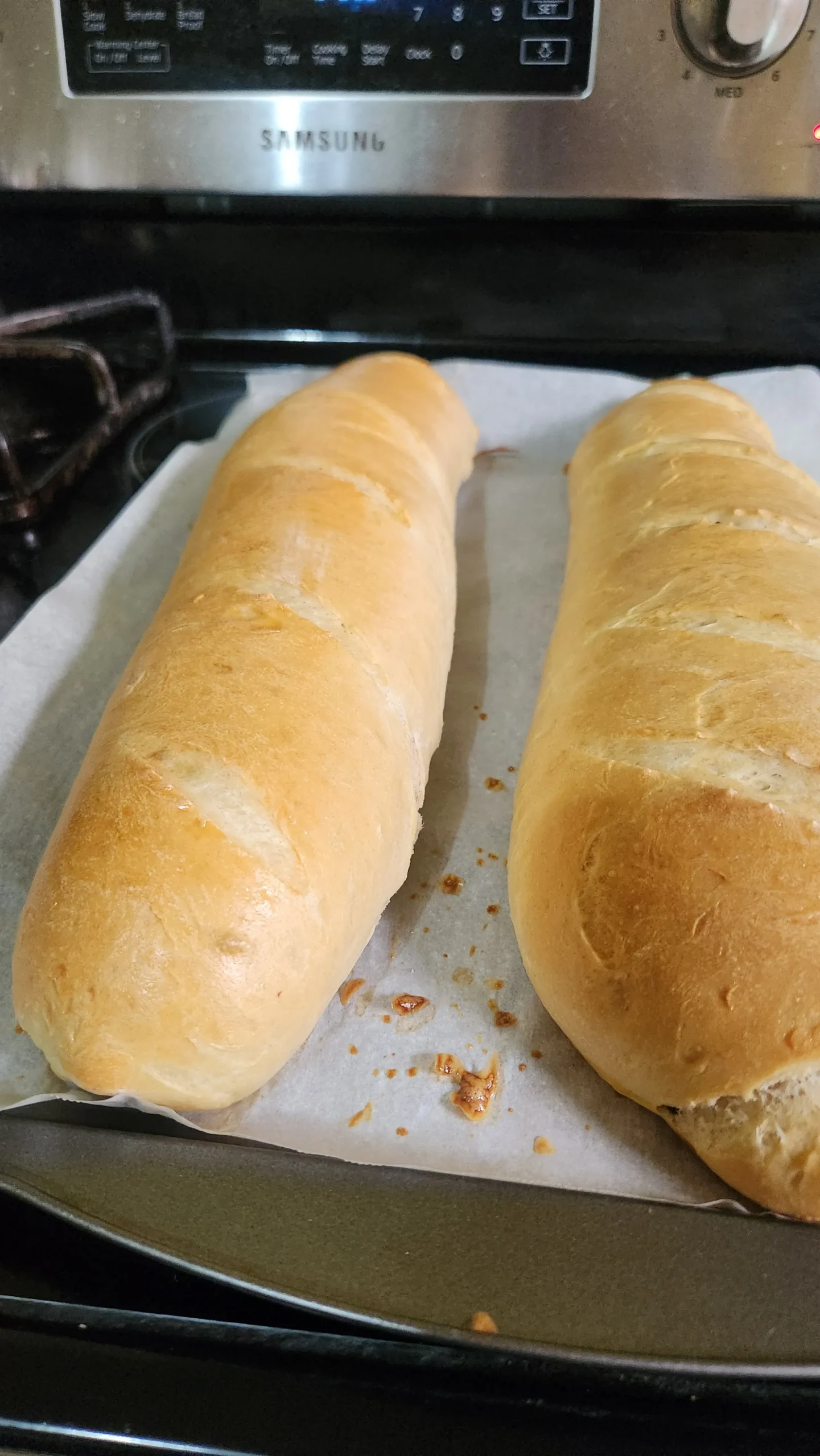
Beautifully golden homemade French bread featuring a soft, tender crust and a light, fluffy interior. Made with simple pantry ingredients, including flour, yeast, warm water, sugar, and olive oil, these bakery-style loaves are perfect for sandwiches, garlic bread, breakfast toast, or serving alongside comforting homemade meals.
Prep Time: 20 minutes | Rising Time: 90–105 minutes | Bake Time: 20–25 minutes | Yield: 2 loaves | Difficulty: Easy
1. Introduction
If you love freshly baked bread with a soft interior and beautifully golden crust, this Homemade Soft French Bread is an excellent recipe to try.
Unlike traditional French baguettes, which have a firm, crackling crust, this American-style French bread features a softer exterior and a fluffy, tender crumb.
The addition of oil helps retain moisture, while a small amount of sugar provides mild sweetness and encourages browning.
This versatile homemade bread is perfect for sandwiches, garlic bread, and everyday family meals.
2. Origin and Cultural Significance
French bread is traditionally associated with European baking techniques that use flour, water, yeast, and salt.
American-style French bread is a softer adaptation that often incorporates oil and sugar to create a more tender texture.
Its elongated shape and decorative diagonal cuts resemble traditional French loaves, while its fluffy interior makes it particularly suitable for sandwiches and toast.
3. Ingredients
For the French Bread Dough
- 2 cups (480ml) warm water
- 1 tablespoon (9g) active dry or instant yeast
- 2 tablespoons (25g) granulated sugar
- 2 tablespoons (30ml) vegetable oil, olive oil, or melted butter
- 2 teaspoons (12g) salt
- 5–5½ cups (600–660g) all-purpose flour or bread flour
For the Optional Egg Wash
- 1 egg white
- 1 tablespoon water
Optional Toppings
- Melted butter
- Sesame seeds
- Dried Italian herbs
- Garlic powder
Ingredient Notes
Warm Water: Encourages yeast activity and hydrates the flour.
Yeast: Allows the dough to rise and develop its fluffy texture.
Sugar: Adds mild sweetness and helps the crust brown.
Olive Oil: Helps create a softer crumb and tender crust.
Bread Flour: Produces a slightly chewier texture, while all-purpose flour creates a softer loaf.
Egg Wash: Provides a lightly glossy, golden finish.
4. Optional Additions
Garlic Butter French Bread: Brush the baked loaves with melted butter and minced garlic.
Italian Herb Bread: Add dried oregano, basil, and rosemary to the dough.
Sesame French Bread: Sprinkle sesame seeds over the loaves before baking.
Cheesy French Bread: Add shredded mozzarella or cheddar to the dough before shaping.
Whole-Wheat French Bread: Replace up to one-third of the white flour with whole-wheat flour, adjusting the water if necessary.
5. Tips for Success
1. Use warm water. A temperature of 105–115°F (40–46°C) is suitable for activating active dry yeast.
2. Add flour gradually. The dough should remain soft and slightly tacky rather than dry.
3. Knead thoroughly. Proper kneading develops gluten and creates a fluffy interior.
4. Allow enough rising time. The dough should visibly expand before shaping and baking.
5. Seal the seams firmly. This helps prevent the loaves from opening during baking.
6. Score before baking. Diagonal cuts allow the dough to expand naturally.
7. Brush with melted butter after baking. This helps create an even softer crust.
8. Cool before slicing. Allow the interior crumb to set properly.
6. Instructions
Step 1: Activate the Yeast
Combine the warm water, yeast, and granulated sugar in a large mixing bowl.
Stir gently and allow the mixture to rest for 5–10 minutes, until foamy.
If using instant yeast, this resting period is optional.
Step 2: Add the Remaining Ingredients
Add the oil, salt, and 3 cups of flour.
Mix until a smooth, thick dough begins to form.
Gradually incorporate the remaining flour until the dough becomes soft and slightly tacky.
Step 3: Knead the Dough
Transfer the dough to a lightly floured work surface.
Knead by hand for approximately 6–8 minutes, or use a stand mixer on medium-low speed for 5–7 minutes.
The dough should become smooth and elastic.
Step 4: Allow the First Rise
Place the dough in a lightly greased mixing bowl.
Cover with a clean kitchen towel or plastic wrap.
Allow it to rise in a warm location for approximately 1 hour, or until doubled in size.
Step 5: Divide the Dough
Gently deflate the risen dough.
Transfer it to a lightly floured surface and divide it into two equal portions.
Step 6: Shape the French Bread Loaves
Roll or flatten each portion into a rectangle approximately 12 × 8 inches.
Starting from the long edge, roll the dough into a firm log.
Pinch the seam closed and gently taper the ends.
Step 7: Allow the Second Rise
Place both loaves seam-side down on a parchment-lined baking sheet, leaving sufficient space between them.
Cover loosely and allow them to rise for 30–45 minutes, until noticeably puffy.
Step 8: Preheat the Oven
Preheat your oven to 375°F (190°C).
Prepare the optional egg wash by whisking one egg white with a tablespoon of water.
Step 9: Score the Loaves
Using a sharp knife or bread lame, make three or four shallow diagonal cuts across the top of each loaf.
Lightly brush with the egg wash if desired.
Step 10: Bake Until Golden
Place the baking sheet on the middle oven rack.
Bake for approximately 20–25 minutes, or until the loaves are golden brown.
The bread should sound hollow when tapped underneath and typically reach an internal temperature of approximately 190–200°F (88–93°C).
Step 11: Cool and Serve
Remove the loaves from the oven.
For an extra-soft crust, lightly brush the warm bread with melted butter.
Transfer to a wire rack and allow to cool before slicing.
Serve with your favorite spreads, soups, or sandwich fillings.
7. Description
Homemade Soft French Bread features a beautifully golden exterior with decorative diagonal cuts and a light, fluffy interior.
| Component | Flavor and Texture |
|---|---|
| Bread flour | Mild, soft, slightly chewy |
| Yeast dough | Light, airy, fluffy |
| Olive oil | Mild, rich, tender |
| Golden crust | Soft, lightly browned |
| Interior crumb | Fluffy, moist, delicate |
| Egg wash | Golden, lightly glossy |
| Finished bread | Soft, fragrant, satisfying |
8. Nutritional Information
Approximate nutritional values per slice, assuming two loaves divided into 20 total slices.
| Nutrient | Estimated Amount |
|---|---|
| Calories | 130–145 kcal |
| Protein | 3–5 g |
| Carbohydrates | 24–27 g |
| Total Fat | 2–3 g |
| Saturated Fat | Less than 1 g |
| Dietary Fiber | 1 g |
| Sugar | 1–2 g |
| Sodium | 230–250 mg |
Actual nutritional values depend on the flour quantity, cooking oil, slice size, and optional toppings.
9. Recipe Details
| Detail | Information |
|---|---|
| Recipe Name | Homemade Soft French Bread |
| Cuisine | American, French-Inspired |
| Course | Bread, Side Dish |
| Preparation Time | 20 minutes |
| First Rise | 60 minutes |
| Second Rise | 30–45 minutes |
| Baking Time | 20–25 minutes |
| Total Time | Approximately 2 hours 10 minutes–2 hours 30 minutes, excluding cooling |
| Yield | 2 large loaves |
| Servings | Approximately 20 slices |
| Difficulty | Easy |
| Oven Temperature | 375°F (190°C) |
| Cooking Method | Oven Baking |
| Main Ingredients | Flour, Water, Yeast, Oil |
| Texture | Soft Crust, Fluffy Interior |
10. Conclusion
Homemade Soft French Bread is a simple and rewarding recipe that transforms everyday pantry ingredients into beautifully golden bakery-style loaves.
The soft crust, fluffy interior, and delicate flavor make this bread incredibly versatile.
Whether enjoyed fresh with butter, sliced for sandwiches, or transformed into homemade garlic bread, these delicious loaves are perfect for everyday cooking.
11. Serving and Storage Recommendations
Best Ways to Serve
This homemade French bread pairs beautifully with garlic butter, vegetable soup, roasted chicken, pasta dishes, scrambled eggs, fresh cheese, homemade sandwiches, and fruit preserves.
Storing at Room Temperature
Allow the bread to cool completely before storing it in an airtight bread bag.
Keep at room temperature for 2–3 days for the best freshness.
Reheating
Wrap the bread loosely in aluminum foil and warm in an oven at 300°F (150°C) for approximately 5–10 minutes.
Individual slices can also be toasted.
Freezing
Wrap the completely cooled loaves securely and freeze for up to 3 months.
Thaw at room temperature before reheating or serving.
Make-Ahead Tips
Prepare and bake both loaves in advance.
Enjoy one freshly baked and freeze the second for future meals.
12. Embracing Healthful Indulgence
Homemade French bread provides carbohydrates for energy and some plant-based protein.
Using olive oil contributes predominantly unsaturated fats, while preparing bread at home allows you to control the amount of added sugar and salt.
For additional dietary fiber, replace a portion of the white flour with whole-wheat flour.
Serve alongside lean protein, fresh vegetables, hummus, or avocado to create a more balanced and satisfying meal.
With its beautifully golden crust, soft and fluffy interior, delicate flavor, and simple homemade ingredients, this Homemade Soft French Bread is a delicious bakery-style favorite perfect for sandwiches, family dinners, and everyday enjoyment.
#HomemadeFrenchBread #SoftFrenchBread #EasyBreadRecipe #HomemadeBaking #FluffyBread