
Description
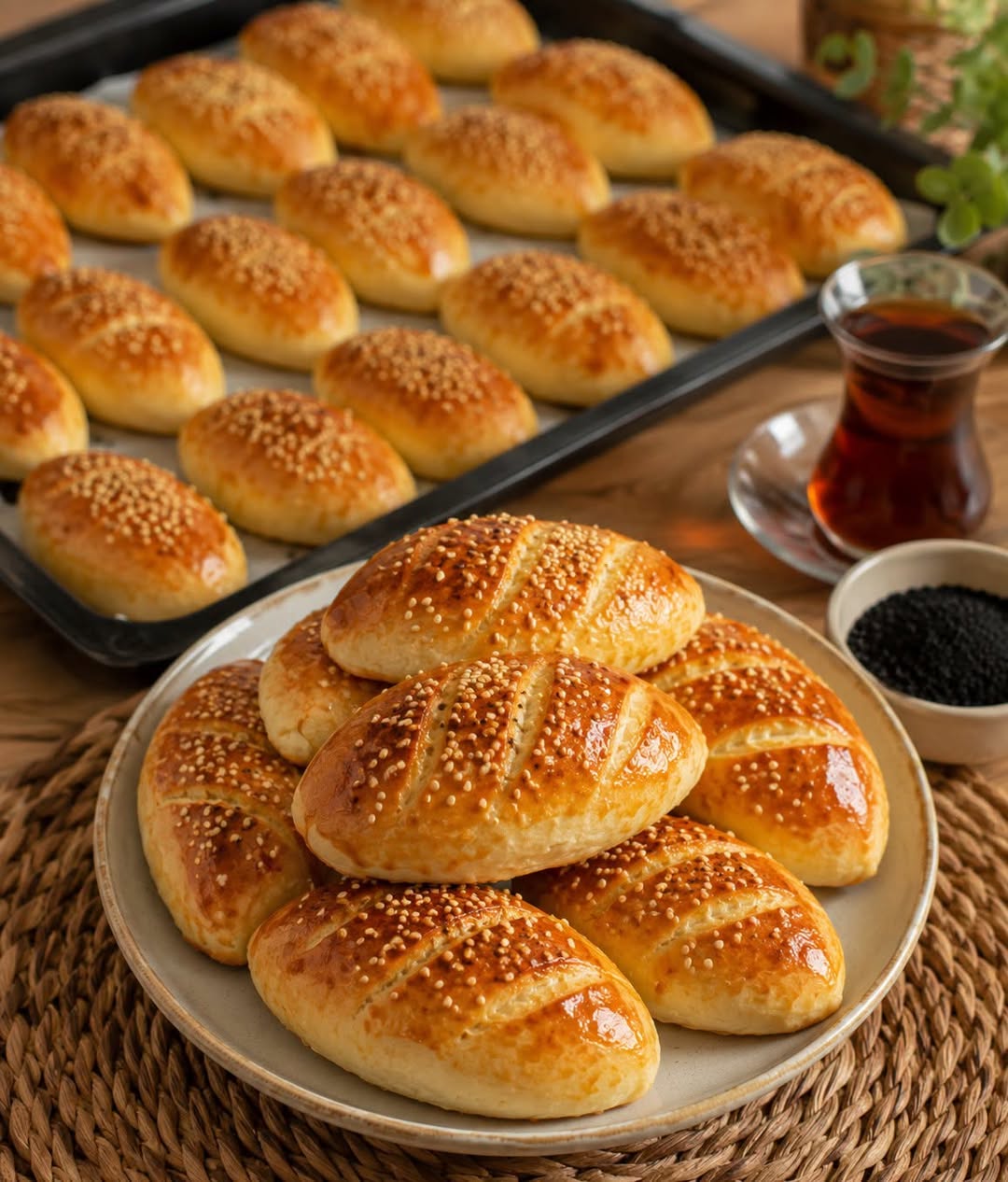
Peynirli Yumuşak Poğaça is a traditional Turkish savory pastry celebrated for its cloud-soft, pillowy texture and golden, slightly scored crust. Filled with a simple, briny mixture of white cheese and fresh parsley, these oval-shaped yeast rolls are a staple of morning bakeries and family gatherings across Turkey.
Introduction
This recipe provides a foolproof method for creating incredibly tender Turkish buns at home. The secret to their signature melt-in-your-mouth softness lies in a balanced yeast dough enriched with liquid ingredients, a double-proofing process, and a simple kitchen trick: wrapping the baked buns in a clean kitchen towel right after they leave the oven to trap the residual steam.
Origin and Cultural Significance
The word poğaça traces back to the Italian focaccia and Latin panis focacius (bread baked in the hearth), but over centuries it evolved into a distinct category of small, stuffed pastries throughout the Ottoman Empire and the Balkans. In Turkey, poğaça is a cultural cornerstone of hospitality. It is routinely served during beş çayı (afternoon tea gatherings), packed into children’s school lunchboxes, and grabbed fresh from street carts (simitçi) by busy commuters on their way to work.
Ingredients Quantity
Dough
- 1 cup warm milk (~110°F/43°C)
- ¼ cup vegetable oil (1 Turkish tea glass)
- 1 large egg (white separated for the dough, yolk reserved for the topping)
- 1 tablespoon granulated sugar
- 1 teaspoon salt
- 1 packet instant yeast (10 grams / about 2¼ teaspoons)
- 4 to 4½ cups all-purpose flour (sifted)
Filling
- 7 oz white cheese (200 grams, such as Feta or Turkish Beyaz Peynir), crumbled
- 3 to 4 sprigs fresh flat-leaf parsley, finely chopped
Topping
- Reserved egg yolk
- 1 tablespoon sesame seeds (or nigella seeds)
Optional Additions
- Olive Filling: Swap the cheese for chopped, pitted Turkish black olives (zeytinli poğaça).
- Potato Filling: Use mashed potatoes seasoned with sautéed onions, paprika, and black pepper.
- Herb Twist: Mix a pinch of dried mint or pul biber (Aleppo pepper) into the white cheese for a layer of heat.
Tips for Success
- Check Milk Warmth: The milk must be lukewarm, not hot. Hot milk will kill the yeast, preventing the dough from rising into a soft bun.
- Gradual Flour Addition: Add the flour in stages. The final dough should be highly pliable, smooth, and slightly tacky, but not sticking to your hands. Adding too much flour results in a dense, heavy roll.
- The Steam Hack: Covering the hot pastries with a clean cloth immediately after baking softens the outer crust beautifully via trapped humidity.
Instructions
1. Activate the Yeast
In a large mixing bowl, combine the warm milk, sugar, and instant yeast. Stir gently and let it rest for 5 minutes until the mixture begins to look slightly frothy.
2. Mix Liquid Ingredients
Add the egg white, vegetable oil, and salt to the activated yeast mixture. Whisk gently until fully combined.
3. Knead the Dough
Gradually add the flour, cup by cup, stirring until a cohesive dough forms. Turn the dough out onto a lightly floured surface and knead for 5 to 7 minutes until it becomes smooth, elastic, and soft.
4. First Proofing
Place the kneaded dough into a clean, lightly greased bowl. Cover the top with a damp towel or plastic wrap. Let it ferment in a warm, draft-free spot for about 40 minutes, or until it doubles in size.
5. Prepare the Filling and Shape
While the dough rises, mash the white cheese in a small bowl and mix in the finely chopped parsley. Punch down the risen dough to release air. Tear off golf-ball-sized pieces of dough and flatten them gently into small discs inside the palm of your hand. Place a spoonful of the cheese filling in the center, fold the dough over to enclose it, and pinch the edges firmly to seal, forming an oval shape.
6. Tray Proofing and Topping
Arrange the shaped pastries on a baking sheet lined with parchment paper. Cover loosely and let them rise on the tray for another 15 minutes. Meanwhile, preheat your oven to 350°F (180°C). Gently brush the tops of the buns with the reserved egg yolk, make a few light scores across the top using a sharp knife, and sprinkle with sesame seeds.
7. Bake and Soften
Bake in the preheated oven for 20 to 25 minutes, or until the tops turn a rich, golden-brown color. Once removed from the oven, immediately drape a clean kitchen towel over the hot poğaça and let them rest for 10 minutes before serving.
Nutritional Information
Serving Size: 1 bun (assuming a yield of 12 buns)
| Nutrient | Amount Per Serving |
| Calories | 245 kcal |
| Total Fat | 9g |
| Saturated Fat | 3g |
| Cholesterol | 25mg |
| Sodium | 380mg |
| Total Carbohydrate | 34g |
| Dietary Fiber | 1.2g |
| Sugars | 2.5g |
| Protein | 7g |
Recommendation
Poğaça is best enjoyed warm, fresh out of the oven. Serve it alongside a classic spread of sliced cucumbers, juicy tomatoes, black olives, and a steaming glass of Turkish black tea (çay).
Embracing Healthful Indulgence
These traditional savory buns are a delightful treat. To balance the meal nutritionally, pair them with crisp, raw vegetables or a light Mediterranean side salad. For a high-fiber alternative, you can replace a third of the white flour with whole wheat flour and choose a reduced-sodium, low-fat feta cheese for the interior filling.
Conclusion
Peynirli Yumuşak Poğaça is a true comfort baking classic that brings the authentic aroma of a Turkish bakery right into your home kitchen. Its simple ingredients, straightforward shaping technique, and heavenly, pillowy texture make it a versatile addition to any breakfast table or casual afternoon gathering.