
Prep Time: 15 minutes Cook Time: 20–25 minutes Total Time: 35–40 minutes Yield: 8–10 portions Servings: 8 Difficulty: Easy Category: Baking, Southern Cuisine, Side Dish, Comfort Food
1. Introduction
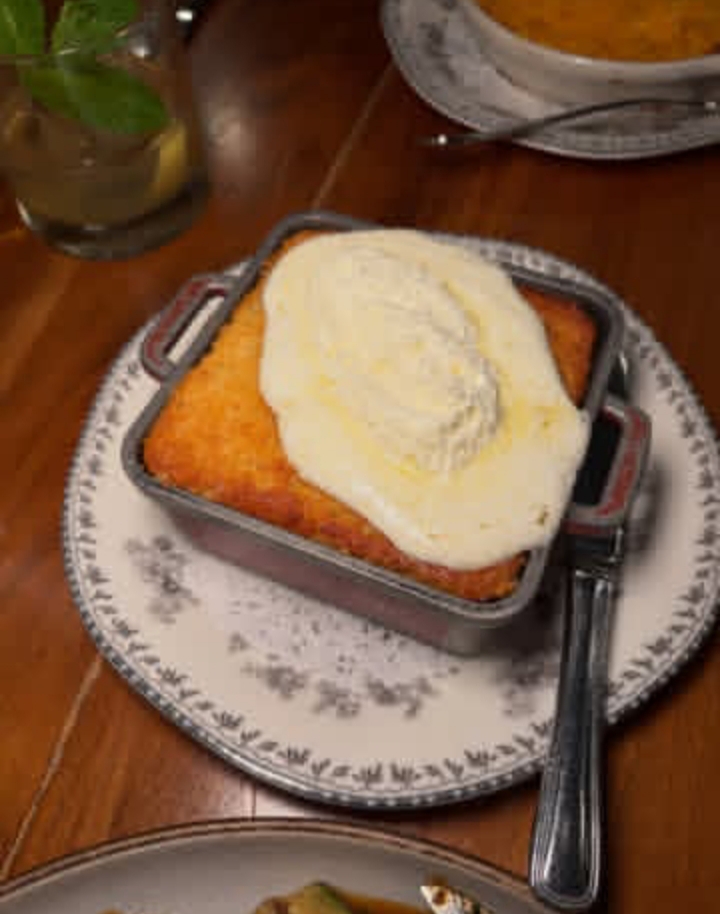
Restaurant-Style Skillet Honey Butter Cornbread is a deliciously rich and comforting baked treat featuring a golden, slightly crisp exterior, an exceptionally moist interior, and a generous serving of light, fluffy whipped honey butter.
Inspired by the famous Honey Butter Cornbread served at Virtue Restaurant in Chicago, this homemade copycat interpretation recreates the signature combination of tender cornbread and sweet, buttery richness.
The cornbread batter combines yellow cornmeal, all-purpose flour, buttermilk, eggs, melted butter, honey, and a touch of sugar. These ingredients create a beautifully balanced texture that is soft, moist, and delicately crumbly without becoming dry.
The real highlight is the whipped honey butter. Made by beating softened butter with liquid honey, a little powdered sugar, and a pinch of salt, it develops an airy, cloud-like consistency that melts beautifully over freshly baked cornbread.
Baked in a cast-iron skillet, the cornbread develops a golden crust while maintaining a tender center.
Perfect for family dinners, holiday gatherings, weekend brunches, or as a comforting accompaniment to savory meals, this recipe transforms simple ingredients into an irresistible restaurant-inspired experience.
2. Origin and Cultural Significance
Cornbread has deep roots in North American culinary history, particularly in Indigenous food traditions and the cooking cultures of the American South.
Long before European colonization, Indigenous communities across the Americas cultivated corn and developed numerous techniques for preparing it, including grinding corn into meal for breads, porridges, and other foods.
As corn became a staple ingredient in North American cooking, European settlers incorporated cornmeal into their own baking traditions.
Cornbread gradually became particularly important in Southern American cuisine because cornmeal was widely available, affordable, and adaptable to different cooking methods.
Traditional Southern cornbread was commonly prepared with cornmeal, buttermilk, eggs, and sometimes flour, then baked in cast-iron skillets.
The use of cast iron became especially popular because it distributes heat effectively and helps develop a distinctive golden crust.
Over time, different regional variations emerged. Some Southern cornbreads are savory and contain little or no sugar, while sweeter versions incorporate sugar, honey, or other sweeteners.
Honey butter became a popular accompaniment because its sweetness and creamy texture complement the earthy flavor of cornmeal.
The modern restaurant-style combination of moist, sweet cornbread and whipped honey butter represents a contemporary interpretation of these traditional ingredients.
Virtue Restaurant in Chicago is particularly associated with this celebrated style of cornbread. The recipe presented here is a homemade interpretation inspired by its described flavor and presentation, rather than the restaurant’s verified proprietary recipe.
Today, honey butter cornbread represents the continued popularity of Southern-inspired comfort food, combining familiar ingredients with indulgent presentation and nostalgic flavors.
3. Ingredients and Quantities
A. For the Moist Skillet Cornbread
| Ingredient | Quantity |
|---|---|
| Yellow cornmeal | 1 cup (approximately 150 g) |
| All-purpose flour | 1 cup (125 g) |
| Granulated sugar | ½ cup (100 g) |
| Baking powder | 1 tablespoon |
| Baking soda | ½ teaspoon |
| Kosher salt | 1 teaspoon |
| Full-fat buttermilk | 1 cup (240 ml) |
| Large eggs | 2 |
| Unsalted butter, melted and slightly cooled | ½ cup (113 g) |
| Liquid honey | 2 tablespoons (30 ml) |
| Vegetable oil or shortening | 1 tablespoon, for greasing the skillet |
Why Use Yellow Cornmeal?
Yellow cornmeal provides the characteristic cornbread flavor, slightly grainy texture, and beautiful golden color.
It also contributes a naturally sweet, earthy taste that complements honey and butter.
Why Combine Cornmeal with All-Purpose Flour?
Cornmeal provides flavor and texture, while flour gives the cornbread additional structure and helps create a tender, cohesive crumb.
Why Use Buttermilk?
Buttermilk contributes moisture and a gentle tanginess. Its acidity also reacts with baking soda, helping the cornbread rise and develop a lighter texture.
Why Add Melted Butter?
Butter enriches the batter, creating a moist interior and adding a distinctive buttery flavor.
Why Include Honey?
Honey enhances the natural sweetness of cornmeal and contributes to the warm, caramelized flavor of the finished cornbread.
B. For the Signature Whipped Honey Butter
| Ingredient | Quantity |
|---|---|
| Unsalted butter, softened to room temperature | ½ cup (113 g) |
| Liquid honey | ¼ cup (85 g approximately) |
| Powdered sugar (optional) | 1–2 tablespoons |
| Fine sea salt | A tiny pinch |
Why Use Softened Butter?
Softened butter incorporates air more easily during whipping, creating a light and fluffy consistency.
Why Add Liquid Honey?
Honey provides natural sweetness and a delicate floral flavor that pairs beautifully with freshly baked cornbread.
Why Use Powdered Sugar?
Powdered sugar is optional, but it helps stabilize the whipped butter and gives it a slightly thicker, smoother consistency.
Why Add Sea Salt?
A small amount of salt balances the sweetness and enhances the buttery flavor.
C. Optional Finishing Ingredients
- Additional liquid honey, for drizzling
- A small pat of salted butter
- Flaky sea salt
- Fresh thyme, for an optional savory presentation
4. Optional Additions
This skillet cornbread is highly versatile and can be customized with additional ingredients to create different flavor combinations.
Fresh Corn Kernels: Add ½ cup of fresh or thawed sweet corn kernels to the batter for extra sweetness and a pleasant texture.
Cheddar Cheese: Incorporate ½ cup of shredded sharp cheddar for a savory, cheesy variation.
Jalapeños: Add 1–2 finely diced jalapeños for a mildly spicy Southern-inspired cornbread.
Smoked Paprika: Include ½ teaspoon of smoked paprika for a subtle smoky flavor.
Brown Sugar: Replace part of the granulated sugar with brown sugar for deeper caramel-like notes.
Maple Syrup: Substitute a portion of the honey with pure maple syrup for a different natural sweetness.
Cinnamon: Add ¼ teaspoon of ground cinnamon for a warm, bakery-inspired variation.
Chopped Pecans: Fold ¼ cup of toasted pecans into the batter for a nutty flavor and additional crunch.
Bacon: Add ¼ cup of cooked, finely chopped bacon for a savory and smoky variation.
Orange Zest: Incorporate ½ teaspoon of finely grated orange zest for a subtle citrus aroma.
Vanilla Extract: Add ½ teaspoon of vanilla extract to the batter for a slightly sweeter dessert-style cornbread.
5. Tips for Success
Use good-quality cornmeal. Choose fresh yellow cornmeal with a pleasant natural corn aroma. Avoid overly coarse varieties if you prefer a tender crumb.
Measure flour correctly. Too much flour can produce dense and dry cornbread. Spoon the flour into the measuring cup and level it rather than packing it down.
Use room-temperature ingredients. Room-temperature eggs and buttermilk combine more evenly with melted butter.
Do not use hot melted butter. Allow the butter to cool slightly before adding it to the wet ingredients to prevent unwanted changes in the egg mixture.
Avoid overmixing. Stir the batter only until the dry ingredients are incorporated. Excessive mixing can develop gluten and make the cornbread tough.
Use full-fat buttermilk. It contributes moisture, richness, and the acidity needed to activate the baking soda.
Preheat the skillet if desired. A properly heated cast-iron skillet encourages a beautifully golden bottom crust.
Grease the skillet thoroughly. Butter, vegetable oil, or shortening helps prevent sticking and improves browning.
Do not overbake. Excessive baking dries out the interior. Remove the cornbread when a toothpick inserted near the center comes out with a few moist crumbs.
Whip the honey butter properly. Beat the softened butter until pale and fluffy before gradually incorporating the honey.
Serve the butter while the cornbread is warm. The contrast between the warm cornbread and cool whipped honey butter creates the signature experience.
6. Step-by-Step Instructions
Step 1: Preheat the Oven
Preheat the oven to 400°F (200°C).
Position the oven rack in the middle.
Choose a 9-inch or 10-inch cast-iron skillet.
Add the tablespoon of vegetable oil or shortening and spread it evenly across the bottom and sides.
For a crispier bottom crust, place the greased skillet in the oven for approximately 5 minutes while preparing the batter.
Use oven mitts when handling the hot skillet.
Step 2: Prepare the Dry Ingredients
In a large mixing bowl, combine:
- 1 cup yellow cornmeal
- 1 cup all-purpose flour
- ½ cup granulated sugar
- 1 tablespoon baking powder
- ½ teaspoon baking soda
- 1 teaspoon kosher salt
Whisk thoroughly for approximately 30 seconds.
Ensure that the baking powder, baking soda, and salt are evenly distributed throughout the dry mixture.
Set the bowl aside.
Step 3: Prepare the Wet Ingredients
In a separate mixing bowl, add the two large eggs.
Whisk until the yolks and whites are fully combined.
Pour in the full-fat buttermilk.
Add the two tablespoons of liquid honey.
Whisk gently until the ingredients are evenly incorporated.
The mixture should have a smooth, slightly creamy consistency.
Step 4: Incorporate the Melted Butter
Melt the ½ cup of unsalted butter in a small saucepan or microwave-safe bowl.
Allow it to cool slightly.
Slowly pour the melted butter into the egg and buttermilk mixture while whisking gently.
Continue mixing until the butter is incorporated.
Avoid adding extremely hot butter directly to the eggs.
Step 5: Combine the Wet and Dry Mixtures
Create a small well in the center of the dry ingredients.
Pour the wet mixture into the well.
Using a silicone spatula or wooden spoon, gently fold the ingredients together.
Continue mixing until the flour and cornmeal are just incorporated.
The batter should be thick, smooth, and slightly grainy.
A few small lumps are perfectly acceptable.
Do not overmix, as this can produce a dense cornbread.
Step 6: Prepare the Hot Skillet
Carefully remove the skillet from the oven using oven mitts.
Place it on a heat-resistant surface.
The oil should be hot and evenly distributed across the cooking surface.
If the skillet is extremely hot, allow it to cool slightly before pouring in the batter.
This helps prevent excessive browning before the center has time to cook.
Step 7: Pour the Cornbread Batter
Carefully pour the prepared batter into the greased skillet.
Use a spatula to distribute it evenly.
Gently smooth the surface without pressing the batter down.
The batter should spread naturally toward the edges of the skillet.
A properly filled skillet will produce a thick, tender cornbread with a beautifully golden exterior.
Step 8: Bake the Cornbread
Place the skillet on the middle rack of the preheated oven.
Bake for approximately 20–25 minutes.
During baking, the cornbread will rise gradually and develop a golden-brown surface.
The edges should become slightly darker and begin pulling away from the sides of the skillet.
Check the center after approximately 20 minutes by inserting a toothpick.
If it comes out with wet batter, continue baking for another 3–5 minutes.
The cornbread is ready when a toothpick inserted into the center comes out clean or with a few moist crumbs.
Avoid overbaking, as this can dry out the delicate interior.
Step 9: Remove and Cool Slightly
Carefully remove the skillet from the oven.
Place it on a heat-resistant surface or cooling rack.
Allow the cornbread to rest for approximately 5–10 minutes.
This brief resting period allows the crumb to settle and makes it easier to serve.
The cornbread should remain warm when the whipped honey butter is added.
Step 10: Prepare the Whipped Honey Butter
While the cornbread is baking, prepare the signature honey butter.
Place the ½ cup of softened unsalted butter into a medium mixing bowl.
Using an electric hand mixer, beat the butter on medium speed for approximately 2–3 minutes.
Continue until the butter becomes noticeably lighter in color and develops a soft, fluffy consistency.
Scrape the sides of the bowl with a spatula as needed.
Step 11: Incorporate the Honey
Reduce the mixer speed to low.
Gradually add the ¼ cup of liquid honey.
Continue beating until the honey is fully incorporated.
Increase the speed to medium and whip for another 1–2 minutes.
The mixture should become smooth, airy, and creamy.
Avoid adding all the honey at once, as gradual incorporation helps create a more uniform texture.
Step 12: Add Powdered Sugar and Salt
Add 1 tablespoon of powdered sugar if you prefer a slightly thicker and fluffier consistency.
Add a tiny pinch of fine sea salt.
Continue whipping for approximately 30–60 seconds.
Taste the honey butter and adjust the sweetness if desired.
If the mixture becomes too soft, refrigerate it for approximately 10 minutes before whipping briefly again.
Transfer the finished whipped honey butter into a small serving bowl.
Step 13: Prepare the Signature Presentation
Once the cornbread has rested for approximately 5–10 minutes, prepare it for serving.
For a traditional restaurant-inspired presentation, use a large spoon to place a generous scoop of whipped honey butter in the center of the warm cornbread.
Allow the butter to soften and begin melting naturally.
For additional sweetness, drizzle a small amount of liquid honey over the top.
A tiny pinch of flaky sea salt can provide an attractive finishing touch.
Step 14: Slice the Cornbread
Using a sharp knife, cut the skillet cornbread into 8–10 wedges.
The edges should be golden and slightly crisp, while the center should remain moist and tender.
Carefully lift each portion using a spatula.
Transfer the pieces to individual serving plates or a large wooden serving board.
Step 15: Serve and Enjoy
Serve the cornbread warm with additional whipped honey butter on the side.
Enjoy the combination of buttery golden crust, soft cornmeal interior, sweet honey, and creamy whipped butter.
For a savory Southern-inspired meal, pair it with barbecue chicken, slow-cooked beef, chili, or roasted vegetables.
For a sweeter breakfast or brunch presentation, serve alongside fresh berries, scrambled eggs, or a cup of coffee.
7. Description
Restaurant-Style Skillet Honey Butter Cornbread is a rich and comforting baked dish featuring a beautifully golden exterior and an exceptionally soft, moist interior.
The yellow cornmeal provides a distinctive corn flavor and delicate texture, while all-purpose flour creates a tender structure.
Buttermilk contributes a gentle tanginess, and melted butter enriches the batter with a smooth, buttery taste.
A touch of honey and granulated sugar enhances the natural sweetness without overpowering the characteristic flavor of cornmeal.
The defining feature is the signature whipped honey butter.
Light, airy, and beautifully creamy, this sweet butter melts over the warm cornbread, creating a luxurious coating that seeps into the tender crumb.
The contrast between the slightly crisp skillet-baked edges and the soft, buttery center makes every bite particularly satisfying.
Its warm golden color, generous whipped butter topping, and inviting aroma create an attractive presentation suitable for both casual family meals and restaurant-inspired dining.
Whether served as a savory side dish or enjoyed as a sweet afternoon treat, this cornbread delivers the comforting flavors of traditional American Southern-inspired cooking.
8. Nutritional Information
Estimated Nutritional Values per Serving (Based on 8 Servings, Including Whipped Honey Butter):
| Nutrient | Approximate Amount |
|---|---|
| Calories | 430–500 kcal |
| Protein | 6–8 g |
| Carbohydrates | 48–58 g |
| Total Fat | 23–28 g |
| Saturated Fat | 13–16 g |
| Sugar | 24–30 g |
| Fiber | 1–3 g |
| Sodium | 350–500 mg |
Note: These are approximate estimates. Actual nutritional values depend on the cornmeal and flour brands, butter quantity, buttermilk composition, honey, and the amount of whipped butter served with each portion.
Healthier Preparation Alternatives
Reduce the Whipped Butter: Serve a smaller scoop of honey butter to reduce the overall saturated fat and calorie content.
Use Whole-Wheat Flour: Replace approximately half of the all-purpose flour with whole-wheat flour for additional dietary fiber.
Reduce Added Sugar: Reduce the granulated sugar slightly and rely more on the natural sweetness of honey.
Choose Reduced-Fat Buttermilk: This can lower the fat content while preserving the characteristic tangy flavor.
Add Fresh Corn: Incorporate fresh sweet corn kernels for additional texture and natural sweetness.
Serve with Vegetables: Pair the cornbread with a fresh salad, roasted vegetables, or vegetable-based soup to create a more balanced meal.
Control Portion Sizes: Enjoy a moderate wedge with a small amount of whipped honey butter rather than several generous servings.
9. Conclusion
The Ultimate Restaurant-Style Skillet Honey Butter Cornbread is a delicious homemade interpretation of a celebrated American comfort-food favorite.
Its combination of yellow cornmeal, buttermilk, melted butter, and honey produces a moist, tender crumb with a beautifully golden exterior.
The signature whipped honey butter takes the recipe to another level, adding an airy, creamy sweetness that melts over the warm cornbread.
Although the presentation looks luxurious, the recipe uses simple ingredients and straightforward baking techniques.
The keys to success include measuring ingredients accurately, avoiding overmixing, using properly heated cookware, and removing the cornbread from the oven before it becomes dry.
Whipping the honey butter until light and fluffy is equally important for achieving the distinctive restaurant-inspired finishing touch.
Whether served alongside savory meals, enjoyed at brunch, or presented as a comforting homemade snack, this cornbread offers an irresistible combination of traditional flavor and indulgent texture.
10. Recommendation
For the best results, use good-quality yellow cornmeal, fresh buttermilk, unsalted butter, and natural liquid honey.
A 9-inch cast-iron skillet is particularly recommended because it helps create a beautifully golden bottom and crisp edges.
If you prefer a softer crust, use a conventional baking pan instead of preheating the skillet.
Mix the batter gently and avoid excessive stirring to maintain a tender crumb.
Do not skip the buttermilk, as its acidity contributes to the leavening process and helps create the desired texture.
For the signature topping, ensure the butter is softened but not melted before whipping.
Gradually incorporate the honey and continue beating until the mixture becomes pale, airy, and smooth.
Serving Recommendation: Serve a generous warm wedge of cornbread topped with a large scoop of whipped honey butter and a light drizzle of additional honey. Pair with barbecue dishes, chili, roasted chicken, or a fresh vegetable salad.
Storage Recommendation: Allow leftover cornbread to cool completely before transferring it to an airtight container. Store at room temperature for up to 2 days or refrigerate for approximately 4–5 days.
Whipped Honey Butter Storage: Store the whipped honey butter in an airtight container in the refrigerator for up to 1–2 weeks. Allow it to soften slightly before serving.
Reheating: Warm individual cornbread portions in an oven at 300°F (150°C) for approximately 5–8 minutes. Add the whipped honey butter after reheating to preserve its fluffy texture.
Freezing: Wrap completely cooled cornbread portions individually and freeze in an airtight freezer-safe container for approximately 2–3 months for best quality. Thaw in the refrigerator or at room temperature before reheating.
11. Embracing Healthful Indulgence
Restaurant-Style Honey Butter Cornbread demonstrates how traditional comfort foods can be enjoyed while maintaining a thoughtful approach to ingredients and portion sizes.
Cornmeal provides carbohydrates that serve as an important energy source, along with small quantities of dietary fiber, magnesium, and other minerals.
Buttermilk contributes calcium and protein, while eggs provide high-quality protein and nutrients such as choline, selenium, and vitamin B12.
Honey offers natural sweetness and distinctive flavor, although it remains a source of added sugars when incorporated into recipes.
Butter contributes the rich, creamy texture that makes this dish particularly satisfying, but it also contains substantial saturated fat.
A balanced approach involves appreciating the cornbread as an occasional indulgence while considering the quantity of whipped honey butter served alongside it.
Using a smaller amount of honey butter, reducing added sugar slightly, or replacing part of the flour with whole-wheat flour can provide practical adjustments.
Fresh corn kernels can also introduce additional texture and natural sweetness.
When served as part of a meal, pairing cornbread with lean proteins, beans, leafy vegetables, or vegetable-based soups can create a more balanced combination of nutrients.
Preparing this recipe at home offers greater control over ingredient quality, sweetness, butter quantity, and portion sizes.
The traditional flavors of cornmeal, buttermilk, and honey can still be enjoyed without requiring excessive amounts of additional toppings.
Ultimately, healthful indulgence means appreciating the pleasure of homemade comfort food while maintaining variety, moderation, and balance in everyday eating.
Final Thought: 🌽🍯🧈 With its beautifully golden skillet-baked crust, exceptionally moist cornmeal center, and generous cloud-like whipped honey butter, this Ultimate Restaurant-Style Honey Butter Cornbread delivers an unforgettable combination of sweetness, richness, and Southern-inspired comfort. Simple ingredients, beautiful presentation, and irresistible buttery flavor make it a wonderful addition to family dinners, festive gatherings, and homemade restaurant-style meals.