
Prep Time: 15 minutes Cook Time: 25–30 minutes Total Time: Approximately 45 minutes Servings: 2 Difficulty: Intermediate Category: Southern American Cuisine, Seafood, Comfort Food, Main Course
1. Introduction
Southern Crispy Fried Catfish with Creamy Cheddar Grits and Rich Cajun Cream Sauce is a comforting and flavorful dish inspired by the traditional culinary heritage of the American South.
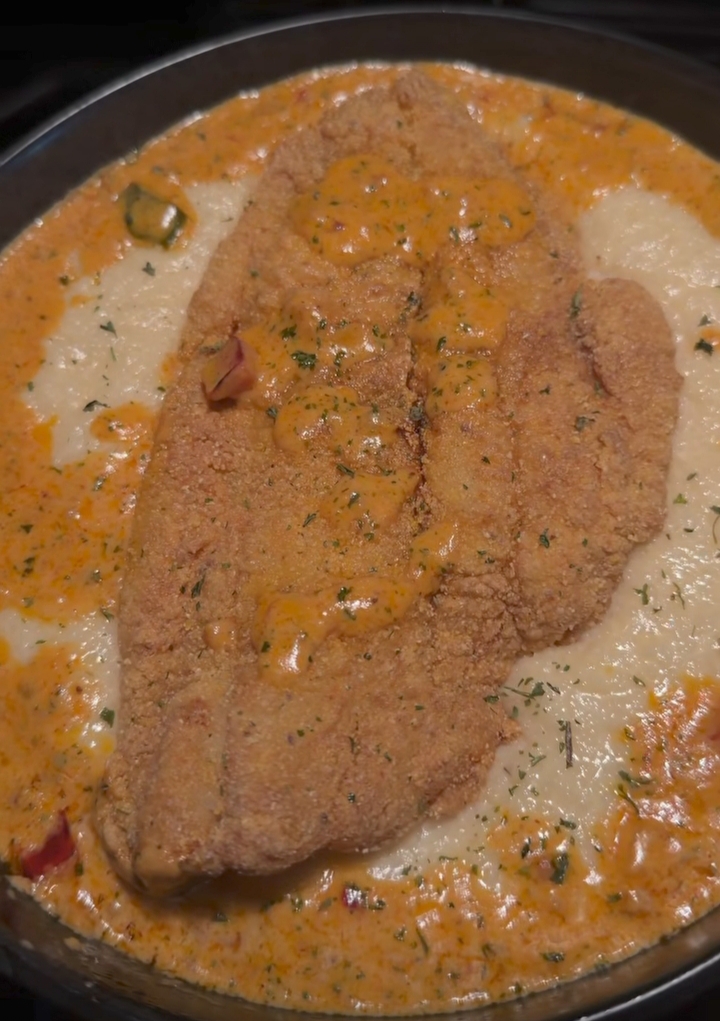
This restaurant-style preparation combines three delicious components: golden, crispy catfish fillets, smooth and cheesy corn grits, and a rich Cajun cream sauce infused with garlic, smoked paprika, and aromatic seasonings.
The catfish is first soaked in buttermilk to help tenderize the fish and create a suitable surface for the seasoned cornmeal coating. It is then coated in a mixture of yellow cornmeal, flour, garlic powder, onion powder, and Cajun seasoning before being shallow-fried until beautifully golden and crunchy.
The creamy grits provide the perfect foundation for the crispy fish. Prepared with chicken stock, whole milk, butter, sharp cheddar, and Parmesan cheese, they develop a smooth, rich consistency with a delicious savory flavor.
The finishing element is the Cajun cream sauce, prepared with butter, fresh garlic, heavy cream, chicken stock, smoked paprika, and Cajun seasoning. Its silky texture and slightly spicy character complement the crispy catfish and cheesy grits beautifully.
Fresh parsley or green onions provide a final touch of color and freshness.
Perfect for weekend dinners, family gatherings, seafood lovers, or anyone who appreciates traditional Southern comfort food, this dish delivers a satisfying combination of crispy, creamy, savory, and slightly spicy flavors.
2. Origin and Cultural Significance
Fried catfish and cheese grits are strongly associated with the culinary traditions of the American South, particularly the Mississippi Delta, Louisiana, and other regions where freshwater fishing and corn-based cooking have historically played important roles.
Catfish has long been an important food source in Southern communities because it is widely available in rivers, lakes, and aquaculture farms.
In the Mississippi Delta, catfish became especially popular through traditional home cooking, fish fries, roadside restaurants, and family gatherings.
Southern fried catfish is commonly prepared using cornmeal-based coatings, which create a distinctive crunchy exterior while allowing the delicate fish to retain its natural flavor.
Grits have an even older culinary history. They originate from Indigenous American corn preparations, particularly traditions involving ground maize.
European settlers adopted and adapted these preparations, and grits eventually became an important part of Southern American cooking.
Traditionally, grits are prepared by simmering ground corn in water, milk, or stock until tender and creamy.
They can be served simply with butter and salt or enriched with cheese, seafood, bacon, and other ingredients.
The combination of shrimp or fish with creamy grits is particularly associated with Southern coastal cooking and Lowcountry culinary traditions.
Cajun seasoning introduces another important influence through Louisiana cuisine.
Cajun cooking developed through the cultural heritage of the Acadian people, who settled in Louisiana after their displacement from parts of Canada.
Their culinary traditions evolved through the use of locally available ingredients, including seafood, rice, vegetables, peppers, and aromatic seasonings.
Cajun cooking is particularly recognized for its bold seasoning combinations, often featuring paprika, garlic, onion, cayenne pepper, and black pepper.
Although the creamy Cajun sauce in this recipe is a contemporary restaurant-style interpretation rather than a traditional preparation, it reflects the bold flavors associated with Louisiana cooking.
Today, crispy catfish served over cheesy grits represents a delicious combination of Southern comfort food, regional seafood traditions, and modern restaurant presentation.
3. Ingredients and Quantities
A. For the Creamy Cheddar-Parmesan Grits
| Ingredient | Quantity |
|---|---|
| Stone-ground or quick-cooking grits | ½ cup (approximately 85–90 g) |
| Chicken stock | 1 cup (240 ml) |
| Whole milk | 1 cup (240 ml) |
| Unsalted butter | 1 tablespoon (14 g) |
| Sharp cheddar cheese, shredded | ½ cup (approximately 55 g) |
| Parmesan cheese, grated | 2 tablespoons |
| Salt | To taste |
| Freshly cracked black pepper | To taste |
Why Use Grits?
Grits are made from ground corn and provide a naturally creamy, slightly grainy texture that works particularly well with fried seafood.
Their mild flavor makes them an excellent base for stronger ingredients such as Cajun-seasoned fish and garlic cream sauce.
Why Combine Chicken Stock and Milk?
Chicken stock introduces savory depth, while whole milk contributes richness and helps create a smooth, creamy consistency.
Why Use Sharp Cheddar?
Sharp cheddar provides a pronounced cheesy flavor that complements the delicate catfish.
Why Add Parmesan?
Parmesan introduces additional savory depth and a slightly nutty flavor, making the grits more complex.
Why Use Butter?
Butter adds richness and improves the overall texture of the grits.
B. For the Crispy Fried Catfish
| Ingredient | Quantity |
|---|---|
| Catfish fillets | 2 (approximately 5–6 oz / 140–170 g each) |
| Buttermilk | ½ cup (120 ml) |
| Yellow cornmeal | ½ cup (approximately 75 g) |
| All-purpose flour | ¼ cup (approximately 30 g) |
| Cajun seasoning | 1 teaspoon |
| Garlic powder | ½ teaspoon |
| Onion powder | ½ teaspoon |
| Smoked paprika | ½ teaspoon |
| Ground black pepper | To taste |
| Vegetable or canola oil | As needed for shallow frying |
Why Use Catfish?
Catfish has a mild, slightly sweet flavor and a firm texture that makes it particularly suitable for frying.
Its relatively thick fillets can develop a crispy exterior while remaining moist inside.
Why Use Buttermilk?
Buttermilk helps the seasoned coating adhere to the fish and contributes a subtle tangy flavor.
It also helps create a tender texture.
Why Combine Cornmeal and Flour?
Cornmeal produces the characteristic crunchy texture of Southern fried catfish, while flour helps create a more even coating.
Why Use Cajun Seasoning?
Cajun seasoning contributes a combination of savory, smoky, and slightly spicy flavors that enhance the natural taste of the fish.
C. For the Rich Cajun Cream Sauce
| Ingredient | Quantity |
|---|---|
| Unsalted butter | 1 tablespoon (14 g) |
| Garlic cloves, minced | 2 |
| Heavy cream | ½ cup (120 ml) |
| Chicken stock | ¼ cup (60 ml) |
| Cajun seasoning | ½ teaspoon |
| Smoked paprika | ¼ teaspoon |
| Fresh lemon juice | A small squeeze |
| Fresh parsley or green onion, chopped | For garnish |
| Black pepper | To taste |
Why Use Heavy Cream?
Heavy cream creates a smooth, rich sauce that coats the catfish and grits beautifully.
Why Add Garlic?
Fresh garlic provides an aromatic savory foundation that complements the cream and Cajun spices.
Why Use Smoked Paprika?
Smoked paprika contributes a subtle smoky flavor and enhances the color of the sauce.
Why Add Lemon Juice?
A small amount of lemon juice balances the richness of the cream and butter while introducing freshness.
D. Recommended Equipment
- Medium saucepan for the grits
- Large skillet for frying the catfish
- Small saucepan for the Cajun cream sauce
- Three shallow bowls
- Whisk
- Wooden spoon
- Kitchen tongs
- Fish spatula
- Measuring cups and spoons
- Paper towels
- Wire cooling rack
- Meat thermometer
- Serving plates
4. Optional Additions
This Southern-inspired catfish dish can be customized with additional ingredients to create different flavor combinations.
Cayenne Pepper: Add ¼ teaspoon to the cornmeal mixture for additional heat.
Old Bay Seasoning: Replace part of the Cajun seasoning with Old Bay for a different seafood-inspired flavor.
Fresh Thyme: Add ½ teaspoon of chopped fresh thyme to the Cajun cream sauce for additional herbal aroma.
Cream Cheese: Stir 1 tablespoon of cream cheese into the grits for an even richer texture.
Monterey Jack Cheese: Replace part of the cheddar with Monterey Jack for a smoother, milder cheese flavor.
Corn Kernels: Add ¼ cup of sweet corn kernels to the grits for additional sweetness and texture.
Green Bell Peppers: Sauté ¼ cup of finely diced green bell peppers with the garlic for a traditional Louisiana-inspired aromatic base.
Red Bell Peppers: Add finely diced red bell peppers to introduce sweetness and color.
Crispy Bacon: Sprinkle 2 tablespoons of cooked, crumbled bacon over the finished grits for a smoky flavor.
Green Onions: Add chopped green onions to the sauce or use them as a fresh garnish.
Hot Sauce: Add a few drops of Louisiana-style hot sauce to the cream sauce for additional spice.
Parmesan Cheese: Add an extra tablespoon to the sauce for a stronger savory flavor.
Lemon Zest: Incorporate a small amount of lemon zest into the finished sauce for a refreshing citrus aroma.
Crispy Shallots: Sprinkle fried shallots over the finished dish for additional crunch.
Fresh Dill: Add a small amount of chopped dill to the catfish garnish for a fresh herbal note.
5. Tips for Success
Choose fresh catfish fillets. Select firm fillets with a mild, fresh smell and an even thickness.
Pat the fish dry before marinating. Removing excess surface moisture helps the buttermilk and cornmeal coating adhere properly.
Do not skip the buttermilk. It helps create a flavorful surface for the breading and contributes to a tender result.
Use stone-ground grits when possible. They provide a more traditional texture and deeper corn flavor, although they require longer cooking.
Whisk the grits regularly. Stirring prevents lumps and reduces the risk of the grits sticking to the bottom of the saucepan.
Add cheese gradually. Incorporate the cheddar and Parmesan after the grits have softened to produce a smoother consistency.
Use freshly shredded cheddar. It generally melts more smoothly than many pre-shredded varieties.
Season the cornmeal coating evenly. Distribute the Cajun seasoning, garlic powder, onion powder, and paprika throughout the dry mixture.
Shake off excess buttermilk. Too much liquid can cause the breading to become excessively thick or uneven.
Press the coating onto the fish. Gentle pressure helps the cornmeal mixture adhere and creates a more consistent crust.
Allow the breaded fish to rest briefly. Resting for approximately 5–10 minutes helps the coating adhere before frying.
Maintain the correct oil temperature. Aim for approximately 350°F (175°C) for shallow frying.
Avoid overcrowding the skillet. Frying too many fillets at once can lower the oil temperature and produce a greasy coating.
Use moderate heat for the cream sauce. Heavy cream should simmer gently rather than boil vigorously.
Add lemon juice at the end. This preserves its fresh flavor and prevents it from overpowering the sauce.
Serve immediately. The catfish is at its crispiest when freshly fried, while the grits and cream sauce are best enjoyed warm.
6. Step-by-Step Instructions
Part A: Preparing the Creamy Cheddar-Parmesan Grits
Step 1: Prepare the Ingredients
Measure the ½ cup of grits.
Measure 1 cup of chicken stock and 1 cup of whole milk.
Shred the cheddar cheese and grate the Parmesan.
Cut the butter into small pieces.
Keep the ingredients ready before starting the cooking process.
Step 2: Heat the Chicken Stock and Milk
Place a medium saucepan over medium heat.
Pour in the chicken stock and whole milk.
Stir gently to combine.
Heat the mixture until it becomes hot and begins to develop small bubbles around the edges.
Avoid allowing the milk to boil aggressively.
Step 3: Add the Grits
Gradually pour the grits into the warm liquid while whisking continuously.
Adding the grits slowly helps prevent lumps from forming.
Continue whisking until the mixture is evenly combined.
Reduce the heat to low.
Step 4: Cook the Grits
Allow the grits to simmer gently.
For quick-cooking grits, follow the package instructions, generally approximately 5–10 minutes.
For stone-ground grits, cooking may take approximately 25–40 minutes, depending on the product.
Stir regularly using a wooden spoon or whisk.
As the grits cook, they will absorb the liquid and develop a thicker consistency.
If they become excessively thick before fully tender, add a little warm stock or milk.
Step 5: Add the Butter
Once the grits are tender, add the tablespoon of unsalted butter.
Stir until completely melted.
The butter contributes richness and helps create a smooth texture.
Step 6: Incorporate the Cheeses
Reduce the heat to its lowest setting.
Add the shredded cheddar gradually, stirring continuously.
Once the cheddar has melted, add the grated Parmesan.
Continue stirring until both cheeses are fully incorporated.
The grits should become creamy, smooth, and slightly thick.
Step 7: Season the Grits
Add salt and freshly cracked black pepper to taste.
Stir thoroughly.
Taste a small spoonful and adjust the seasoning if necessary.
If the grits are too thick, add a little warm milk.
If they are too thin, allow them to cook gently for another minute or two.
Remove from the heat and cover to keep warm.
Part B: Preparing the Catfish
Step 8: Prepare the Catfish Fillets
Remove the catfish fillets from their packaging.
Check carefully for any remaining bones.
Pat both sides dry using paper towels.
If the fillets are particularly large, cut them into manageable portions.
Try to maintain an even thickness so that they cook consistently.
Step 9: Prepare the Buttermilk
Pour the ½ cup of buttermilk into a shallow bowl.
Place the catfish fillets into the buttermilk.
Turn them gently to coat both sides.
Ensure that the entire surface is covered.
Allow the fish to marinate for approximately 15–20 minutes in the refrigerator.
This provides enough time for the buttermilk to coat the fish and develop its characteristic tangy flavor.
Step 10: Prepare the Cornmeal Breading
In a separate shallow bowl, combine:
- ½ cup yellow cornmeal
- ¼ cup all-purpose flour
- 1 teaspoon Cajun seasoning
- ½ teaspoon garlic powder
- ½ teaspoon onion powder
- ½ teaspoon smoked paprika
- Freshly cracked black pepper to taste
Whisk thoroughly until the seasoning is distributed evenly.
The mixture should have a uniform appearance.
Step 11: Coat the Catfish
Remove one fillet from the buttermilk.
Allow the excess liquid to drip away.
Place the fillet into the seasoned cornmeal mixture.
Turn it carefully to coat both sides.
Gently press the cornmeal mixture onto the surface.
Make sure the edges are coated as well.
Shake off any loose excess breading.
Repeat with the second fillet.
Step 12: Rest the Breaded Fillets
Place the coated catfish fillets on a wire rack or clean plate.
Allow them to rest for approximately 5–10 minutes.
This helps the coating adhere and reduces the risk of it separating during frying.
Part C: Frying the Catfish
Step 13: Heat the Cooking Oil
Place a large skillet over medium heat.
Add enough vegetable or canola oil to create approximately ¼–½ inch of depth.
Allow the oil to heat gradually.
Use a cooking thermometer to check the temperature.
The ideal frying temperature is approximately 350°F (175°C).
Avoid allowing the oil to smoke.
Step 14: Fry the First Side
Carefully place the first catfish fillet into the hot oil.
Lay it away from yourself to minimize splashing.
Allow it to fry undisturbed for approximately 3–4 minutes.
The cornmeal coating should gradually become golden and crispy.
Avoid moving the fish too frequently because this can disturb the crust.
Step 15: Turn the Catfish
Using a fish spatula, carefully turn the fillet.
Cook the opposite side for approximately another 3–4 minutes, depending on thickness.
The exterior should become evenly golden brown.
The fish should remain moist and tender inside.
Step 16: Check for Doneness
Insert a food thermometer into the thickest part of the fillet.
The internal temperature should reach 145°F (63°C).
The flesh should appear opaque and separate easily with a fork.
If the coating browns before the fish reaches the correct internal temperature, reduce the heat slightly and continue cooking until fully done.
Step 17: Drain the Fried Fish
Remove the cooked catfish from the skillet.
Transfer it to a wire rack positioned over a baking sheet.
Allow excess oil to drain.
Avoid stacking the fillets, as this can trap steam and soften the crispy coating.
Repeat the process with the second fillet if necessary.
Part D: Preparing the Cajun Cream Sauce
Step 18: Prepare the Garlic
Peel and finely mince the two garlic cloves.
Measure the butter, heavy cream, chicken stock, Cajun seasoning, and smoked paprika.
Keep the ingredients ready before starting.
Step 19: Melt the Butter
Place a small saucepan over medium-low heat.
Add 1 tablespoon of unsalted butter.
Allow it to melt completely.
Swirl the pan gently to distribute the butter.
Step 20: Sauté the Garlic
Add the minced garlic to the melted butter.
Stir continuously for approximately 30–45 seconds.
Allow the garlic to release its aroma.
Avoid browning it excessively because burnt garlic can make the sauce bitter.
Step 21: Add the Chicken Stock
Pour in the ¼ cup of chicken stock.
Stir gently to combine it with the butter and garlic.
Allow the mixture to simmer for approximately 1 minute.
This helps develop a flavorful foundation for the sauce.
Step 22: Incorporate the Heavy Cream
Slowly pour in the ½ cup of heavy cream.
Stir continuously using a whisk.
Allow the sauce to warm over low heat.
The mixture should become smooth and slightly thicker.
Avoid vigorous boiling.
Step 23: Add the Cajun Seasoning
Add:
- ½ teaspoon Cajun seasoning
- ¼ teaspoon smoked paprika
- Freshly cracked black pepper to taste
Whisk thoroughly until the spices are evenly distributed.
Allow the sauce to simmer gently for approximately 2–3 minutes.
Step 24: Adjust the Consistency
Observe the sauce carefully.
If it is too thick, add 1–2 tablespoons of chicken stock.
If it is too thin, allow it to simmer gently for another 1–2 minutes.
The finished sauce should be smooth, creamy, and pourable.
Step 25: Add Fresh Lemon Juice
Remove the saucepan from the heat.
Add a small squeeze of fresh lemon juice.
Stir gently.
Taste the sauce and adjust the seasoning if necessary.
Avoid adding excessive salt because Cajun seasoning and chicken stock may already contain sodium.
Step 26: Finish with Fresh Herbs
Add a little finely chopped parsley or green onion.
Stir gently.
Reserve additional herbs for garnishing the finished dish.
Part E: Plating and Presentation
Step 27: Prepare the Serving Plates
Choose two large shallow serving plates.
Ensure the plates are warm but not excessively hot.
This helps keep the grits at a pleasant serving temperature.
Step 28: Spoon the Creamy Grits onto the Plate
Divide the prepared cheddar-Parmesan grits between the two plates.
Place a generous portion in the center of each plate.
Using the back of a spoon, spread the grits slightly to create a smooth circular base.
The grits should be creamy but thick enough to support the fried fish.
Step 29: Position the Fried Catfish
Carefully place one crispy catfish fillet over each portion of grits.
Position the fillet slightly off-center if you want a more refined restaurant-style presentation.
Keep the golden crust visible.
Avoid pressing the fish into the grits.
Step 30: Add the Cajun Cream Sauce
Using a spoon, drizzle the warm Cajun cream sauce over the catfish.
Allow some sauce to flow naturally onto the grits.
Avoid completely covering the crispy fish, as preserving some exposed crust creates a more appealing contrast.
Step 31: Garnish the Dish
Sprinkle freshly chopped parsley or green onions over the fish and sauce.
Add a little freshly cracked black pepper.
For additional color, place a small lemon wedge beside each serving.
If desired, add a light dusting of smoked paprika.
Step 32: Serve Immediately
Serve the dish while the grits are warm, the Cajun sauce is silky, and the catfish remains freshly fried.
Each serving should feature a generous bed of creamy cheese grits, a golden crispy catfish fillet, and a rich Cajun cream sauce.
Enjoy the combination of crunchy seafood, smooth cheesy corn grits, and savory garlic cream sauce.
7. Description
Southern Crispy Fried Catfish with Creamy Cheddar Grits and Cajun Cream Sauce is a comforting seafood dish that brings together traditional Southern ingredients in an elegant restaurant-style presentation.
The catfish fillets are coated in seasoned yellow cornmeal and flour, then shallow-fried until they develop a beautiful golden-brown crust.
Their exterior is crunchy and flavorful, while the interior remains tender, moist, and delicate.
Beneath the fish is a generous serving of creamy corn grits prepared with chicken stock, whole milk, butter, sharp cheddar, and Parmesan cheese.
The grits have a rich, velvety consistency and a mild savory flavor that complements the crispy seafood.
The defining finishing element is the Cajun cream sauce.
Prepared with butter, fresh garlic, heavy cream, chicken stock, smoked paprika, and Cajun seasoning, it introduces a luxurious texture and a gentle spicy character.
Fresh parsley or green onions add a final herbal note and brighten the overall presentation.
Each bite combines the crunchy cornmeal coating, delicate catfish, creamy cheese grits, and aromatic Cajun sauce.
The contrast between the different textures and flavors makes this dish particularly satisfying.
Perfect for seafood lovers, weekend dinners, family gatherings, and special occasions, this Southern-inspired preparation transforms simple ingredients into an impressive homemade meal.
8. Nutritional Information
Estimated Nutritional Values per Serving (Based on 2 Servings):
| Nutrient | Approximate Amount |
|---|---|
| Calories | 850–1,050 kcal |
| Protein | 40–50 g |
| Carbohydrates | 55–70 g |
| Total Fat | 45–65 g |
| Saturated Fat | 20–28 g |
| Sugar | 5–9 g |
| Fiber | 2–4 g |
| Sodium | 900–1,400 mg |
Note: These values are estimates based on two servings containing one fried catfish fillet, half the prepared grits, and half the Cajun cream sauce. Actual nutritional values depend on the oil absorbed during frying, cheese quantities, cream brand, and Cajun seasoning.
Healthier Preparation Alternatives
Use an Air Fryer: Cook the breaded catfish in an air fryer at approximately 390°F (200°C), lightly spraying the coating with oil and turning halfway through cooking.
Choose Low-Fat Milk: Replace whole milk with reduced-fat milk to decrease the fat content of the grits.
Reduce the Butter: Use slightly less butter in the grits and Cajun sauce while maintaining enough for flavor.
Use Light Cooking Cream: Replace heavy cream with light cooking cream for a less rich sauce.
Control the Cheese: Reduce the quantity of cheddar and Parmesan slightly while preserving their flavor.
Choose Low-Sodium Stock: This helps control the sodium content of the dish.
Increase the Vegetables: Add sautéed spinach, green beans, asparagus, or roasted zucchini alongside the catfish.
Use Whole-Grain Cornmeal: Choose less-refined cornmeal when available for additional dietary fiber.
Control the Portion Size: Serve a moderate portion of grits and sauce alongside one fish fillet.
9. Conclusion
Southern Crispy Fried Catfish with Creamy Cheddar Grits and Rich Cajun Cream Sauce is a delicious interpretation of traditional Southern comfort food.
The dish combines the distinctive crunch of cornmeal-coated catfish with the smooth, cheesy texture of homemade grits and the bold flavor of a garlic-infused Cajun cream sauce.
Each component contributes something important to the final preparation.
The catfish provides a delicate seafood flavor and golden crispy coating, while the cheddar-Parmesan grits introduce richness and a satisfying creamy base.
The Cajun sauce brings everything together through its aromatic garlic, smoky paprika, and gently spiced cream.
Although the presentation looks sophisticated, the recipe relies on accessible ingredients and fundamental cooking techniques.
The most important steps include preparing smooth grits, allowing the fish to absorb the buttermilk, applying an even cornmeal coating, maintaining the correct frying temperature, and simmering the cream sauce gently.
When served together, these components create a balanced combination of crispy, creamy, savory, and slightly spicy flavors.
Whether prepared for a family dinner, weekend gathering, or special homemade meal, this Southern-inspired dish offers an impressive and satisfying dining experience.
10. Recommendation
For the best results, choose fresh catfish fillets with a firm texture and relatively even thickness.
Use stone-ground grits if you prefer a traditional Southern texture and have sufficient time for cooking. Quick-cooking grits are an excellent alternative when preparing a faster meal.
Freshly shredded sharp cheddar and freshly grated Parmesan are recommended because they provide better melting and flavor.
For the fish, allow sufficient time for the buttermilk marinade and use a combination of yellow cornmeal and flour to achieve a characteristic Southern-style crust.
A heavy skillet and a reliable cooking thermometer will help produce evenly fried catfish.
Prepare the Cajun cream sauce shortly before serving to maintain its smooth consistency and fresh garlic aroma.
Serving Recommendation: Present the dish in a shallow white bowl with creamy cheddar grits at the bottom, a golden fried catfish fillet positioned on top, and Cajun cream sauce drizzled over the fish and surrounding grits. Finish with fresh parsley, sliced green onions, and a lemon wedge.
For a complete Southern-inspired meal, accompany the dish with sautéed collard greens, roasted asparagus, Southern coleslaw, or sweet corn.
Refrigerator Storage: Store leftover catfish, grits, and Cajun cream sauce separately in airtight containers at 40°F (4°C) or below. Consume within 3–4 days.
Reheating the Catfish: Reheat in an oven or air fryer at 350°F (175°C) until the internal temperature reaches 165°F (74°C). This helps restore some of the original crispness.
Reheating the Grits: Warm gently in a saucepan over low heat, adding a little milk or chicken stock to restore their creamy consistency.
Reheating the Sauce: Warm the Cajun cream sauce over low heat, stirring frequently. Avoid vigorous boiling, which may cause the sauce to separate.
Freezing: Cooked catfish can be frozen for approximately 1–2 months for best quality. Creamy grits and cream-based sauce may change texture after freezing, so freshly prepared accompaniments are recommended.
Make-Ahead Recommendation: Prepare the grits and measure the sauce ingredients ahead of time. Season the cornmeal coating in advance, but coat and fry the catfish shortly before serving to preserve its crunch.
Allergen Information: This recipe contains fish, dairy, and wheat. Check Cajun seasoning and packaged broth labels for additional allergens.
11. Embracing Healthful Indulgence
Southern Crispy Fried Catfish with Creamy Cheddar Grits and Cajun Cream Sauce demonstrates how traditional comfort food can combine satisfying flavors with several valuable nutrients.
Catfish provides high-quality protein containing all nine essential amino acids. Protein supports muscle maintenance, tissue repair, and numerous physiological functions.
It also contributes important nutrients such as vitamin B12, phosphorus, and selenium.
Corn grits provide carbohydrates that serve as an important source of energy, while milk and cheese contribute calcium and protein.
Cheddar and Parmesan also supply additional nutrients, although they increase the saturated fat and sodium content of the dish.
Garlic, parsley, green onions, and smoked paprika introduce aromatic plant compounds and enhance the flavor without requiring excessive quantities of additional seasoning.
However, deep frying, heavy cream, butter, and cheese make this preparation relatively rich in calories and saturated fat.
A balanced approach involves enjoying appropriate portions while making thoughtful adjustments to the cooking method and accompanying ingredients.
Air frying or oven baking the catfish can reduce the quantity of cooking oil required while maintaining an appealing crispy coating.
Using reduced-fat milk, lighter cooking cream, and moderate quantities of cheese can also create a lighter variation.
Adding green vegetables such as collard greens, spinach, asparagus, or green beans increases dietary fiber and provides additional vitamins and minerals.
Choosing low-sodium chicken stock and controlling the quantity of Cajun seasoning can help manage sodium intake.
Preparing this dish at home allows greater control over the ingredients, cooking oils, portion sizes, and seasoning.
Ultimately, healthful indulgence is about enjoying flavorful, satisfying meals while maintaining moderation, nutritional variety, and balance in everyday eating.
Final Thought: 🐟🌽🔥 With its golden, crunchy cornmeal-coated catfish, luxurious cheddar-Parmesan grits, and silky garlic Cajun cream sauce, this Ultimate Southern Fried Catfish delivers an exceptional combination of Southern comfort and restaurant-style elegance. Every bite brings together crispy seafood, creamy cheese, and bold Cajun flavors, making it a memorable choice for seafood lovers, family dinners, and special homemade meals.