
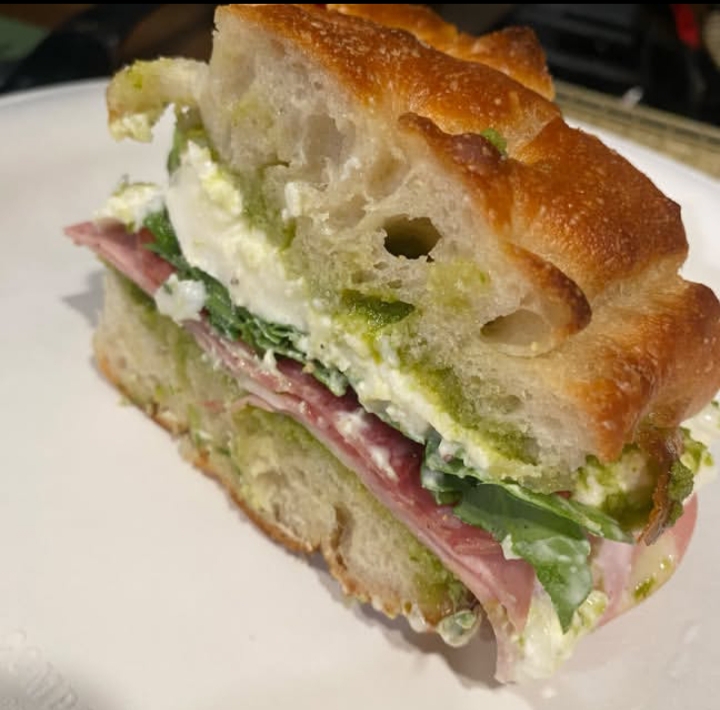
Prep Time: 15 minutes Cook Time: 5–8 minutes (optional, for toasting) Total Time: 20–25 minutes Yield: 2 large sandwiches or 4 smaller portions Servings: 2–4 Difficulty: Easy Category: Lunch, Italian Cuisine, Gourmet Sandwiches, Mediterranean Food
1. Introduction
The Ultimate Italian Focaccia Sandwich with Prosciutto, Burrata, Fresh Arugula, and Basil Pesto is a delicious gourmet sandwich that brings together the distinctive flavors and textures of traditional Italian ingredients.
Prepared with freshly baked, olive oil-rich focaccia bread, this sandwich features layers of delicate cured Italian meat, exceptionally creamy burrata cheese, peppery fresh arugula, and vibrant basil pesto.
Every bite delivers a beautiful contrast between the lightly crisp exterior and soft, airy interior of the focaccia, the silky creaminess of burrata, and the savory richness of prosciutto or salami.
The basil pesto introduces a fragrant combination of fresh basil, garlic, Parmesan, pine nuts, and olive oil, while arugula adds a refreshing peppery flavor that balances the richness of the cheese and cured meats.
A final drizzle of extra-virgin olive oil, flaky sea salt, and freshly cracked black pepper enhances the natural flavors of the ingredients.
Perfect for a sophisticated lunch, picnic, casual dinner, weekend brunch, or homemade café-style meal, this Italian-inspired sandwich transforms a handful of quality ingredients into an impressive culinary creation.
2. Origin and Cultural Significance
The Italian Focaccia Sandwich draws inspiration from several important regional culinary traditions, particularly those of Liguria and Puglia.
Focaccia is a traditional Italian flatbread with particularly strong historical connections to Liguria, a coastal region in northwestern Italy.
The city of Genoa is especially famous for Focaccia Genovese, a bread characterized by its soft interior, golden surface, distinctive dimples, and generous use of extra-virgin olive oil.
Traditionally, focaccia is enjoyed on its own, served alongside meals, or filled with simple ingredients such as cheese, vegetables, and cured meats.
Basil pesto also originates from Ligurian culinary traditions. Known as Pesto alla Genovese, this aromatic sauce traditionally combines fresh basil, garlic, pine nuts, Parmesan or Pecorino cheese, and olive oil.
Burrata, meanwhile, comes from the southern Italian region of Puglia, particularly the area around Andria.
Created in the early twentieth century, burrata is a fresh cheese made with an outer mozzarella shell containing a rich, creamy mixture of mozzarella strands and cream known as stracciatella.
Its delicate texture and luxurious interior have made it particularly popular in contemporary Italian cuisine.
Prosciutto and salami represent Italy’s long-standing traditions of curing and preserving meat. These products vary considerably between regions, with different methods of seasoning, aging, and preparation.
Arugula, known in Italy as rucola, is another familiar ingredient in Mediterranean cooking, valued for its slightly bitter and peppery flavor.
Although the exact combination of focaccia, burrata, prosciutto, pesto, and arugula is a contemporary gourmet sandwich interpretation rather than one historically fixed regional recipe, it celebrates the diversity of Italian ingredients.
Today, these sandwiches are popular in Italian cafés, gourmet delis, restaurants, and modern Mediterranean-inspired kitchens.
3. Ingredients and Quantities
A. For the Focaccia Bread
| Ingredient | Quantity |
|---|---|
| Fresh focaccia bread | 1 large rectangle or square (approximately 400–450 g) |
| Extra-virgin olive oil | 1 tablespoon, if needed |
Why Use Fresh Focaccia?
Focaccia provides a soft, airy texture with a slightly crisp exterior and a characteristic olive oil flavor.
Its thickness makes it particularly suitable for holding generous layers of cheese, cured meats, pesto, and fresh vegetables.
For the best results, choose freshly baked focaccia with a moist interior and a lightly golden crust.
B. For the Basil Pesto Spread
| Ingredient | Quantity |
|---|---|
| Fresh basil pesto | 2–3 tablespoons |
| Extra-virgin olive oil | 1 teaspoon, optional |
Why Use Basil Pesto?
Basil pesto introduces a fresh, aromatic flavor that complements the creamy burrata and salty cured meats.
Its combination of basil, garlic, cheese, nuts, and olive oil adds complexity without requiring additional sauces.
C. For the Creamy Burrata and Italian Meats
| Ingredient | Quantity |
|---|---|
| Fresh burrata cheese | 1 ball (4–8 oz / 115–225 g) |
| Prosciutto | 4–5 thin slices |
| Italian salami (optional) | 4–5 thin slices |
Why Use Burrata?
Burrata provides an exceptionally creamy interior that creates a luxurious texture and balances the saltiness of the cured meats.
Why Use Prosciutto?
Prosciutto contributes a delicate, savory flavor with a slightly sweet finish.
Why Add Salami?
Salami introduces a stronger, more seasoned flavor, creating additional depth and contrast.
You can use prosciutto alone or combine both cured meats according to your preference.
D. For the Fresh Vegetables and Seasoning
| Ingredient | Quantity |
|---|---|
| Fresh arugula (rocket) | 1 generous handful |
| Extra-virgin olive oil | 1–2 teaspoons |
| Flaky sea salt | A small pinch |
| Freshly cracked black pepper | To taste |
Why Use Arugula?
Arugula contributes a fresh, peppery flavor that balances the richness of the burrata and pesto.
Why Add Extra-Virgin Olive Oil?
A light drizzle enhances the Mediterranean character of the sandwich and brings the ingredients together.
E. Recommended Equipment
- Sharp serrated bread knife
- Cutting board
- Small mixing bowl
- Kitchen tongs
- Small spoon or offset spatula
- Skillet or sandwich press, optional
- Serving platter
4. Optional Additions
This Italian focaccia sandwich can be customized with additional ingredients to create different flavor combinations.
Sun-Dried Tomatoes: Add 2 tablespoons of chopped sun-dried tomatoes for concentrated sweetness and a slightly tangy Mediterranean flavor.
Roasted Red Peppers: Include ¼ cup of thinly sliced roasted red peppers for additional sweetness and color.
Fresh Tomato Slices: Add ½ medium ripe tomato, thinly sliced, for extra freshness and juiciness.
Balsamic Glaze: Drizzle 1 teaspoon of balsamic glaze over the burrata for a sweet and tangy contrast.
Parmesan Cheese: Sprinkle 1–2 tablespoons of freshly shaved Parmesan over the arugula for additional savory depth.
Fresh Basil Leaves: Add a few whole basil leaves for a more pronounced herbal aroma.
Grilled Zucchini: Incorporate a few thin slices of grilled zucchini for a lighter vegetable addition.
Black Olives: Add 1–2 tablespoons of sliced Kalamata olives for a salty Mediterranean flavor.
Calabrian Chili: Spread a small amount of Calabrian chili paste over the focaccia for a spicy variation.
Caramelized Onions: Add 2 tablespoons of slowly cooked onions for natural sweetness.
Artichoke Hearts: Include a few sliced marinated artichoke hearts for additional Mediterranean flavor.
Lemon Zest: Add a little freshly grated lemon zest to the arugula for a refreshing citrus note.
5. Tips for Success
Choose high-quality focaccia. Fresh, olive oil-rich bread provides the foundation for an excellent sandwich.
Avoid overly thick bread. The focaccia should be substantial enough to hold the fillings without overpowering them.
Use room-temperature burrata briefly. Remove the burrata from the refrigerator approximately 10–15 minutes before assembling to improve its creamy texture. Do not leave fresh cheese unrefrigerated for extended periods.
Drain the burrata properly. Remove excess liquid before placing it inside the sandwich to prevent the bread from becoming soggy.
Use fresh arugula. Wash and dry the leaves thoroughly to preserve their crisp texture.
Do not overload the sandwich. Use balanced quantities of meat, cheese, pesto, and greens so that every ingredient remains noticeable.
Spread pesto evenly. Distribute it across the interior surfaces of the bread to ensure consistent flavor in every bite.
Layer the ingredients strategically. Place the cured meats beneath the burrata and the arugula near the top to create a balanced structure.
Use good-quality olive oil. A small quantity of extra-virgin olive oil adds fragrance and enhances the natural flavors.
Avoid excessive salt. Prosciutto, salami, and pesto already contain salt, so season carefully.
Toast only when desired. Lightly warming the focaccia enhances its aroma and crispness, but excessive heat can make the burrata lose its distinctive texture.
Assemble shortly before serving. This preserves the freshness of the arugula and prevents the bread from absorbing too much moisture.
6. Step-by-Step Instructions
Step 1: Prepare the Focaccia
Place the fresh focaccia bread on a clean cutting board.
Using a sharp serrated bread knife, carefully slice the focaccia horizontally through the center to create a top and bottom half.
If the bread is particularly thick, remove a small amount of the excess interior crumb to create additional space for the fillings.
Avoid cutting too deeply or making the bread too thin.
The two halves should remain sturdy enough to support the ingredients.
Step 2: Prepare the Bread for Toasting
If you prefer a slightly crisp exterior, preheat a skillet or grill pan over medium heat.
Lightly brush the cut sides of the focaccia with extra-virgin olive oil.
Place the bread cut-side down in the warm skillet.
Toast for approximately 1–2 minutes, until lightly golden and fragrant.
Remove from the skillet and allow it to cool slightly.
Alternatively, leave the focaccia untoasted for a softer, more traditional sandwich texture.
Step 3: Prepare the Basil Pesto
Measure 2–3 tablespoons of prepared basil pesto.
If the pesto is particularly thick, add approximately 1 teaspoon of extra-virgin olive oil.
Stir gently until it becomes easier to spread.
Taste and adjust the seasoning if necessary.
The pesto should have a fresh basil aroma, a smooth consistency, and a balanced savory flavor.
Step 4: Prepare the Burrata
Remove the burrata from its packaging.
Drain the excess liquid carefully.
Place the cheese on a clean plate and gently tear it open using your hands or a spoon.
The outer mozzarella shell should separate to reveal the creamy interior.
Break the burrata into several generous pieces.
Keep the creamy stracciatella and mozzarella together, as this combination provides the signature texture of the sandwich.
Step 5: Prepare the Prosciutto and Salami
Remove the prosciutto and salami from their packaging.
Separate the slices carefully.
If using prosciutto alone, gently fold each slice to create loose layers.
If combining prosciutto and salami, alternate the slices to distribute their different flavors evenly.
Avoid pressing the cured meats into compact layers.
Keeping them loosely arranged creates a more attractive presentation and allows their delicate textures to remain noticeable.
Step 6: Prepare the Arugula
Wash the arugula thoroughly under cold running water.
Remove any damaged or wilted leaves.
Dry the leaves carefully using a salad spinner or clean kitchen towel.
Place them in a small bowl.
Add a few drops of extra-virgin olive oil and a small pinch of black pepper.
Toss gently to coat.
Avoid adding too much salt because the cured meats and pesto already provide considerable seasoning.
Step 7: Spread the Basil Pesto
Place the bottom half of the focaccia on the cutting board with the cut side facing upward.
Using a spoon or offset spatula, spread approximately 1–1½ tablespoons of basil pesto evenly over the surface.
Make sure the pesto reaches close to the edges.
Spread the remaining pesto over the cut surface of the top half if desired.
This creates a fragrant basil layer throughout the sandwich.
Step 8: Add the Prosciutto and Salami
Arrange the folded prosciutto slices over the bottom half of the focaccia.
Distribute them evenly across the bread.
If using salami, add the slices between or alongside the prosciutto.
Allow some of the cured meat to remain slightly folded rather than completely flat.
This creates a more attractive layered appearance and prevents the sandwich from becoming overly compact.
Step 9: Add the Creamy Burrata
Distribute the torn burrata pieces over the cured meats.
Use a spoon to add some of the creamy interior between the mozzarella pieces.
Spread the cheese gently without pressing it too firmly.
The burrata should create a generous, creamy layer that contrasts with the savory meat.
For the best presentation, leave a few visible pieces of creamy stracciatella near the edges.
Step 10: Add the Fresh Arugula
Place the prepared arugula over the burrata.
Arrange the leaves loosely to create an even green layer.
Avoid compressing the greens.
The fresh arugula should remain visible and provide a refreshing contrast to the creamy cheese and cured meats.
Step 11: Add the Final Seasoning
Drizzle a small amount of extra-virgin olive oil over the arugula.
Add freshly cracked black pepper.
Finish with a tiny pinch of flaky sea salt if necessary.
For an additional Mediterranean touch, add a few drops of balsamic glaze or a little freshly grated lemon zest.
Avoid excessive seasoning because the other ingredients already contain plenty of flavor.
Step 12: Close the Sandwich
Carefully place the top half of the focaccia over the fillings.
Press gently with your hands to bring the layers together.
Do not apply excessive pressure, as this can squeeze out the burrata and compress the bread.
The sandwich should remain generously filled while maintaining its shape.
Step 13: Allow the Sandwich to Rest Briefly
Let the assembled sandwich rest for approximately 1–2 minutes.
This allows the ingredients to settle and makes slicing easier.
If the focaccia has been toasted, serve while the exterior is still slightly crisp.
Avoid leaving the assembled sandwich at room temperature for extended periods because it contains fresh cheese and cured meat.
Step 14: Slice the Sandwich
Using a sharp serrated knife, carefully cut the sandwich into two large portions or four smaller pieces.
Apply gentle, controlled pressure to prevent the creamy burrata from squeezing out.
For a more attractive presentation, cut diagonally to reveal the colorful layers of prosciutto, burrata, pesto, and arugula.
Wipe the knife between cuts if necessary.
Step 15: Arrange and Garnish
Arrange the sandwich pieces on a serving board or large plate.
If desired, add a small amount of fresh arugula alongside the sandwich.
Garnish with a few fresh basil leaves.
Finish with a light drizzle of extra-virgin olive oil and freshly cracked black pepper.
For an elegant presentation, add a few sun-dried tomatoes or a small bowl of extra basil pesto on the side.
Step 16: Serve and Enjoy
Serve immediately while the focaccia remains fresh and the burrata is creamy.
Enjoy the contrast between the soft bread, savory cured meats, rich burrata, peppery arugula, and aromatic basil pesto.
For a complete Italian-inspired meal, accompany the sandwich with a fresh tomato salad, roasted vegetables, or a bowl of Mediterranean olives.
7. Description
The Ultimate Italian Focaccia Sandwich with Prosciutto, Burrata, Fresh Arugula, and Basil Pesto is a gourmet sandwich that combines the distinctive flavors of traditional Italian ingredients in a beautifully layered presentation.
The focaccia provides a soft, airy interior and a lightly crisp, olive oil-rich exterior.
A generous layer of vibrant green basil pesto introduces fresh herbal notes, while delicate slices of prosciutto and savory salami add depth and a satisfying cured-meat flavor.
The centerpiece is the burrata cheese, with its delicate mozzarella exterior and exceptionally creamy stracciatella interior.
As the sandwich is cut, the burrata spreads gently between the layers, creating a luxurious texture that complements the savory meats.
Fresh arugula introduces a peppery, slightly bitter note that balances the richness of the cheese and pesto.
A finishing drizzle of extra-virgin olive oil and freshly cracked black pepper enhances the Mediterranean character of the ingredients.
The finished sandwich features beautiful layers of golden focaccia, pink cured meats, creamy white cheese, vibrant green pesto, and fresh arugula.
Each bite delivers a combination of softness, creaminess, savory richness, and refreshing herbal flavor.
Perfect for gourmet lunches, picnics, casual entertaining, or homemade café-style dining, this Italian-inspired sandwich offers an elegant yet approachable culinary experience.
8. Nutritional Information
Estimated Nutritional Values per Serving (Based on 4 Smaller Portions):
| Nutrient | Approximate Amount |
|---|---|
| Calories | 550–700 kcal |
| Protein | 22–30 g |
| Carbohydrates | 45–60 g |
| Total Fat | 28–40 g |
| Saturated Fat | 10–15 g |
| Sugar | 2–5 g |
| Fiber | 2–4 g |
| Sodium | 850–1,300 mg |
Note: Nutritional values are estimates and depend on the size and recipe of the focaccia, amount of burrata, type and quantity of cured meats, pesto ingredients, and olive oil used.
Healthier Preparation Alternatives
Choose Whole-Wheat Focaccia: Replace conventional focaccia with a whole-grain version for additional dietary fiber.
Control the Cheese Portion: Use a smaller quantity of burrata or combine it with fresh mozzarella for a lighter variation.
Use Leaner Cured Meat Portions: Reduce the quantity of prosciutto and salami while increasing the vegetables.
Add More Fresh Vegetables: Include tomatoes, grilled zucchini, roasted peppers, or additional arugula.
Prepare Homemade Pesto: Making pesto at home allows you to control the quantity of olive oil, Parmesan, and salt.
Moderate the Olive Oil: Use a measured drizzle rather than adding large quantities.
Choose Lower-Sodium Ingredients: Look for lower-sodium bread, pesto, and cured meats when available.
Serve Smaller Portions: Cut the sandwich into smaller pieces and accompany it with a fresh salad.
9. Conclusion
The Ultimate Italian Focaccia Sandwich with Prosciutto, Burrata, Fresh Arugula, and Basil Pesto is a delicious celebration of Italian-inspired ingredients and Mediterranean flavors.
Its appeal comes from the beautiful contrast between the soft, olive oil-rich focaccia, savory cured meats, creamy burrata, fragrant basil pesto, and peppery fresh arugula.
Although the sandwich looks sophisticated and restaurant-worthy, it requires minimal preparation and no complicated cooking techniques.
The most important elements include choosing fresh focaccia, using high-quality burrata, distributing the pesto evenly, and assembling the ingredients shortly before serving.
The creamy cheese balances the savory meats, while the arugula introduces freshness and prevents the sandwich from feeling excessively rich.
Whether prepared for a gourmet lunch, picnic, family gathering, or casual dinner, this sandwich delivers a memorable combination of flavor, texture, and presentation.
10. Recommendation
For the best results, choose freshly baked focaccia with a generous olive oil flavor and a soft, airy crumb.
Use high-quality prosciutto and fresh burrata, as these ingredients contribute significantly to the overall character of the sandwich.
Prepare the basil pesto using fresh basil and good-quality extra-virgin olive oil whenever possible.
Drain the burrata before assembling to prevent excessive moisture from soaking into the bread.
Toast the focaccia lightly if you prefer a crisp exterior, but avoid heating the completed sandwich because excessive heat can cause the burrata to lose its characteristic texture.
Arrange the cured meats loosely, distribute the burrata evenly, and add the arugula just before serving.
Serving Recommendation: Serve the sandwich cut diagonally, revealing the colorful layers of prosciutto, creamy burrata, pesto, and fresh arugula. Accompany it with a Mediterranean tomato salad, marinated olives, or roasted vegetables.
Refrigerator Storage: This sandwich is best assembled and eaten fresh. If necessary, refrigerate leftover assembled portions in an airtight container and consume within 24 hours for best quality. Keep the fresh burrata refrigerated at 40°F (4°C) or below.
Ingredient Storage: Store leftover focaccia, pesto, burrata, cured meats, and vegetables separately. This preserves their individual textures and makes it possible to assemble another fresh sandwich.
Reheating: If using toasted focaccia, reheat the bread separately before adding the cold burrata, prosciutto, and arugula. Avoid reheating the completed sandwich.
Make-Ahead Recommendation: Prepare the pesto, wash and dry the arugula, and portion the cured meats ahead of time. Assemble the sandwich immediately before serving.
Allergen Information: This recipe contains dairy, wheat, and potentially nuts from traditional pesto. Check pesto labels for pine nuts or other tree nuts, and verify packaged bread and cured meat ingredients.
11. Embracing Healthful Indulgence
The Italian Focaccia Sandwich with Prosciutto, Burrata, Arugula, and Basil Pesto demonstrates how Mediterranean-inspired ingredients can create a satisfying meal with a variety of flavors and nutrients.
Arugula contributes dietary fiber, vitamin K, folate, and other micronutrients while adding freshness and a naturally peppery flavor.
Fresh basil provides aromatic plant compounds and small quantities of vitamins and minerals.
Burrata contributes protein and calcium, although its cream-filled interior also makes it relatively rich in saturated fat.
Prosciutto and salami provide protein, but cured meats can contain significant quantities of sodium and should be enjoyed in moderation.
Extra-virgin olive oil supplies predominantly monounsaturated fats and contributes the characteristic flavor of Mediterranean cooking.
Focaccia provides carbohydrates that serve as an important source of energy, although conventional varieties may contain considerable amounts of refined flour, oil, and salt.
A balanced approach involves appreciating the sandwich’s rich ingredients while adjusting portions and including additional vegetables.
Using a moderate amount of burrata, limiting the cured meats, and adding fresh tomatoes, roasted vegetables, or extra arugula can improve the overall nutritional balance.
Choosing whole-grain focaccia and preparing homemade pesto also provides greater control over dietary fiber, salt, and added fats.
Serving a smaller sandwich portion alongside a fresh green salad can create a satisfying meal with greater vegetable variety.
Preparing the sandwich at home allows you to select high-quality ingredients and adjust the quantities according to your preferences.
Ultimately, healthful indulgence is about enjoying flavorful foods while maintaining moderation, variety, and balance in everyday eating.
Final Thought: 🥪🇮🇹🌿 With its soft, olive oil-rich focaccia, delicate prosciutto, luxurious creamy burrata, vibrant basil pesto, and fresh peppery arugula, the Ultimate Italian Focaccia Sandwich delivers an irresistible combination of authentic Italian-inspired flavors. Beautifully layered, effortlessly elegant, and bursting with Mediterranean character, it is the perfect gourmet sandwich for a memorable lunch or relaxed homemade dining experience.