
1. Introduction
Thai Red Curry Chicken with Broccoli and Bell Peppers is a rich, creamy, and flavorful dish that brings the aromatic taste of Thai-inspired cooking into your kitchen.
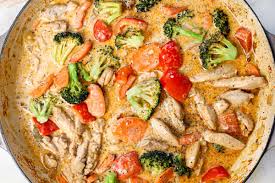
Tender chicken pieces simmer in a silky coconut milk sauce infused with Thai red curry paste, fresh garlic, ginger, and savory seasonings. Crisp broccoli florets and colorful bell peppers add freshness, texture, and natural sweetness.
The combination of spicy curry paste, creamy coconut milk, and tangy lime juice creates a beautifully balanced meal.
Ready in approximately 35 minutes, this easy chicken curry is perfect for busy weeknights, family dinners, or meal preparation.
2. Origin and Cultural Significance
Thai red curry, known as Gaeng Phed in Thailand, is part of the country’s rich culinary tradition.
Traditional Thai red curries typically combine aromatic curry paste with coconut milk, protein, vegetables, and seasonings such as fish sauce and sugar.
Red curry paste commonly contains dried red chilies, lemongrass, galangal, garlic, shallots, and other fragrant ingredients.
The coconut milk provides richness while balancing the heat of the chilies.
Thai basil and other fragrant herbs are often used to finish the dish.
This recipe is a convenient, Thai-inspired variation featuring chicken, broccoli, and bell peppers. While these vegetables may differ from traditional regional preparations, they complement the curry’s bold flavors beautifully. thewoksoflife.com+1
3. Ingredients
Preparation: 15 minutes | Cooking: 20 minutes | Servings: 4
For the Chicken Curry
- 1 lb (450 g) boneless, skinless chicken breast or thighs, thinly sliced
- 2 tablespoons Thai red curry paste
- 1 can (14 oz / 400 ml) full-fat coconut milk
- 1 tablespoon coconut oil or vegetable oil
- 3 cloves garlic, minced
- 1 tablespoon fresh ginger, finely minced
- 1 tablespoon fish sauce or soy sauce
- 1 teaspoon brown sugar or honey
- Juice of ½ fresh lime
For the Vegetables
- 1 cup fresh broccoli florets
- 1 red bell pepper, sliced or chopped
For Garnishing
- Fresh cilantro or Thai basil
- Fresh lime wedges
For Serving
- Steamed jasmine rice
- Optional extra sliced chilies
Ingredient note: Thai red curry pastes vary in heat and saltiness. Some also contain shrimp paste, so check the label if you have a shellfish allergy or need a vegetarian version.
4. Optional Additions and Variations
This creamy Thai-inspired chicken curry can easily be customized.
- Bamboo shoots: Add ½ cup for an extra crunch.
- Carrots: Include thinly sliced carrots for sweetness and color.
- Snow peas: Add a handful during the final minutes of cooking.
- Mushrooms: Use sliced mushrooms for an earthy flavor.
- Baby spinach: Stir in a handful just before serving.
- Thai chilies: Add finely chopped fresh chilies for extra heat.
- Tofu: Replace the chicken with firm tofu for a plant-based alternative, using a vegetarian curry paste and soy sauce.
- Light coconut milk: Substitute it for full-fat coconut milk if you prefer a thinner, less rich sauce.
For the classic creamy result described in this recipe, full-fat coconut milk is recommended.
5. Tips for Making the Best Thai Red Curry Chicken
Use good-quality red curry paste
The curry paste provides much of the dish’s distinctive flavor.
Choose a Thai red curry paste with aromatic ingredients such as lemongrass, galangal, garlic, and dried chilies.
Slice the chicken evenly
Cutting the chicken into similar-sized pieces helps it cook evenly.
Chicken thighs generally remain juicier during simmering, while chicken breast provides a leaner option.
Cook the curry paste briefly
Heating the curry paste before adding most of the coconut milk helps release its aromatic flavors.
This technique is commonly used in Thai curry preparation. hot-thai-kitchen.com
Avoid boiling the sauce aggressively
After adding coconut milk, maintain a gentle simmer.
High heat can cause excessive evaporation and make the chicken tough.
Preserve the vegetables’ texture
Add broccoli and bell peppers toward the end of cooking.
They should become tender while retaining a little bite.
Balance the flavors
Taste your curry before serving.
- Too spicy? Add a little extra coconut milk.
- Too salty? Add a splash of water or unsalted coconut milk.
- Too rich? Add a little extra lime juice.
- Not flavorful enough? Add a small amount of fish sauce or curry paste.
6. Step-by-Step Instructions
Step 1: Prepare the Ingredients
Start by slicing the chicken into thin, bite-sized pieces.
Wash the broccoli and cut it into small florets.
Remove the seeds from the red bell pepper and slice it into strips or bite-sized pieces.
Mince the garlic and ginger.
Having everything prepared before cooking makes the process much easier.
Step 2: Heat the Oil
Place a large skillet, wok, or deep frying pan over medium heat.
Add 1 tablespoon of coconut oil or vegetable oil.
Allow the oil to heat until it shimmers slightly.
Step 3: Sauté the Aromatics
Add the minced garlic and ginger.
Stir continuously for approximately 30–60 seconds until fragrant.
Be careful not to burn the garlic, as it can develop a bitter flavor.
Step 4: Cook the Chicken
Add the sliced chicken to the skillet.
Spread the pieces into a relatively even layer.
Cook for approximately 4–5 minutes, stirring occasionally, until the outside begins to turn lightly golden.
The chicken does not need to be completely cooked at this stage because it will continue simmering in the curry sauce.
Step 5: Add the Thai Red Curry Paste
Push the chicken toward one side of the skillet.
Place 2 tablespoons of Thai red curry paste in the empty space.
Stir the paste into the hot oil for approximately 1 minute.
This step helps develop its aroma.
Mix the curry paste thoroughly with the chicken until the pieces are evenly coated.
Step 6: Add the Coconut Milk
Slowly pour in the full can of coconut milk.
Stir until the curry paste is completely incorporated into the liquid.
The sauce should develop a rich reddish-orange color.
Add:
- 1 tablespoon fish sauce or soy sauce
- 1 teaspoon brown sugar or honey
Stir well.
Bring the sauce to a gentle simmer over medium-low heat.
Step 7: Add the Vegetables
Add the broccoli florets and sliced red bell pepper to the skillet.
Gently stir to coat them in the coconut curry sauce.
Allow the curry to simmer uncovered for approximately 5–7 minutes.
The broccoli should become tender-crisp, and the peppers should soften slightly.
Continue cooking as needed until the thickest chicken pieces reach an internal temperature of 165°F (74°C), the recommended minimum safe temperature for poultry. FoodSafety.gov
Step 8: Adjust the Curry Sauce
Taste the sauce.
If you prefer a stronger curry flavor, add a small amount of extra curry paste.
For a sweeter curry, stir in a pinch of additional brown sugar.
If the sauce becomes too thick, add 2–3 tablespoons of water.
For a thicker sauce, let it simmer uncovered for another 1–2 minutes.
Step 9: Finish with Lime Juice
Turn off the heat.
Squeeze the juice of half a lime into the curry.
Stir gently.
The lime adds a refreshing tanginess that balances the richness of the coconut milk.
Step 10: Garnish and Serve
Transfer the curry to individual serving bowls.
Garnish with fresh cilantro or Thai basil.
Serve alongside freshly cooked jasmine rice.
Add extra lime wedges for anyone who prefers a brighter, tangier finish.
Enjoy immediately while the sauce is warm and creamy.
7. Description: What Does Thai Red Curry Chicken Taste Like?
Thai Red Curry Chicken delivers a delicious combination of creamy, savory, mildly sweet, and spicy flavors.
The coconut milk creates a rich, silky sauce that coats every piece of chicken.
Red curry paste brings aromatic depth from chilies, herbs, and spices, while garlic and ginger contribute warmth and fragrance.
Tender chicken absorbs the flavorful sauce, making every bite juicy and satisfying.
Broccoli adds a fresh, slightly earthy taste, while red bell peppers contribute natural sweetness.
Fish sauce enhances the savory flavor, and lime juice provides a refreshing finish.
When served with fluffy jasmine rice, the curry becomes a comforting and satisfying meal.
8. Nutritional Information
Thai Red Curry Chicken provides protein from the chicken, vitamins and fiber from the vegetables, and fats from the coconut milk.
The following values are approximate estimates per serving, assuming the recipe makes four portions.
| Nutrient | Estimated Amount |
|---|---|
| Calories | 340–450 kcal |
| Protein | 25–32 g |
| Carbohydrates | 10–17 g |
| Total Fat | 23–33 g |
| Dietary Fiber | 2–4 g |
| Sodium | Varies by curry paste and fish sauce |
Estimates exclude jasmine rice and depend on the cut of chicken, coconut milk brand, and seasoning quantities.
Chicken provides protein, while broccoli and bell peppers contribute vitamin C and other micronutrients.
Full-fat coconut milk also contributes substantial saturated fat, so portion size is worth considering when planning a balanced meal.
9. Recipe Details
| Category | Details |
|---|---|
| Recipe Name | Thai Red Curry Chicken with Broccoli and Bell Peppers |
| Cuisine | Thai-Inspired |
| Dish Type | Main Course |
| Preparation Time | 15 Minutes |
| Cooking Time | 20 Minutes |
| Total Time | 35 Minutes |
| Servings | 4 |
| Cooking Method | Sautéing and Simmering |
| Difficulty | Easy |
| Main Protein | Chicken |
| Main Vegetables | Broccoli and Red Bell Pepper |
| Sauce Base | Coconut Milk and Thai Red Curry Paste |
| Best Served With | Jasmine Rice |
10. Conclusion
Thai Red Curry Chicken with Broccoli and Bell Peppers is a wonderful choice for anyone who loves comforting meals with bold, aromatic flavors.
With tender chicken, colorful vegetables, and a creamy coconut curry sauce, this recipe delivers satisfying flavor without requiring complicated preparation.
The combination of red curry paste, coconut milk, garlic, ginger, and lime creates a beautifully balanced dish.
Best of all, it comes together in approximately 35 minutes, making it ideal for weeknight dinners.
Whether you’re preparing a quick family meal or cooking ahead for the week, this easy Thai-inspired curry is a delicious recipe worth adding to your collection.
11. Recommendations for Serving and Storage
Best Side Dishes
Thai Red Curry Chicken pairs beautifully with several accompaniments.
- Jasmine rice: The classic pairing for absorbing the flavorful coconut sauce.
- Brown rice: Adds a heartier texture and extra fiber.
- Rice noodles: A delicious alternative to steamed rice.
- Steamed vegetables: Add extra broccoli, carrots, or green beans.
- Fresh cucumber salad: Provides a cool contrast to the warm curry.
Storage Instructions
To store leftover curry:
- Transfer the curry to shallow, airtight containers.
- Refrigerate within 2 hours of cooking.
- Store in the refrigerator at 40°F (4°C) or below.
- Consume refrigerated leftovers within 3–4 days.
- Reheat thoroughly to 165°F (74°C) before serving.
These recommendations follow general cooked-poultry storage and reheating guidance. FoodSafety.gov
Freezing Instructions
The chicken curry can be frozen for approximately 2–3 months for best quality.
Allow it to cool safely before transferring it into freezer-safe containers.
Thaw overnight in the refrigerator before reheating.
Be aware that coconut milk sauces can separate slightly after freezing. Stir gently during reheating to help restore their creamy consistency.
12. Embracing Healthful Indulgence
Thai Red Curry Chicken with Broccoli and Bell Peppers shows how a rich, comforting dish can also include nutritious ingredients.
The chicken provides protein, while broccoli and bell peppers contribute vitamins, minerals, and dietary fiber.
Coconut milk creates the sauce’s luxurious texture, while curry paste, garlic, ginger, and lime provide bold flavor without requiring many additional ingredients.
For a lighter variation, use a smaller portion of coconut milk or replace some of it with unsalted broth.
You can also increase the amount of broccoli and bell peppers to make the dish more vegetable-forward.
Serve it with a moderate portion of jasmine rice or another preferred grain to create a satisfying meal.
With its balance of tender chicken, fresh vegetables, warming spices, and creamy coconut sauce, this Thai-inspired red curry is a delicious way to bring variety and comfort to your everyday cooking.