
1. Introduction
Traditional Mexican Mole Poblano is one of the most celebrated sauces in Mexican cuisine, known for its deep reddish-brown color, luxurious texture, complex aroma, and extraordinary combination of savory, smoky, earthy, spicy, and subtly sweet flavors.
This iconic sauce is prepared by combining several varieties of dried Mexican chiles with toasted nuts, seeds, aromatic vegetables, warm spices, dried fruit, and Mexican chocolate.
Unlike ordinary sauces that rely on just a few ingredients, Mole Poblano develops its distinctive character through carefully prepared layers of flavor.
Ancho, pasilla, and mulato chiles provide the foundation of the sauce. Each chile contributes a slightly different flavor, ranging from fruity and earthy to smoky and mildly bitter.
Toasted almonds, peanuts, pumpkin seeds, and sesame seeds add richness, body, and nutty depth.
Raisins and ripe plantain introduce natural sweetness, while a corn tortilla and stale bread help create the sauce’s characteristic thick, velvety consistency.
Onion, garlic, and roasted tomatoes contribute savory flavor and gentle acidity.
Cinnamon, cloves, anise seeds, and black peppercorns add warmth and aromatic complexity.
Finally, Mexican dark chocolate brings the ingredients together with subtle bitterness, sweetness, and a rich cocoa aroma.
One of the most important characteristics of Mole Poblano is its preparation method.
The dried chiles are briefly toasted and softened in hot broth.
Nuts, seeds, fruit, and thickeners are cooked separately to develop their individual flavors.
The ingredients are then blended into a smooth paste and simmered slowly until the sauce becomes rich, thick, and deeply aromatic.
Although preparing traditional-style Mole Poblano requires more time and attention than an everyday sauce, the process is rewarding.
The finished mole can be served over chicken, turkey, roasted vegetables, rice, or other savory dishes.
With its layered flavors and distinctive texture, Mole Poblano is an excellent recipe for special occasions, family gatherings, and anyone interested in exploring the richness of Mexican culinary traditions.
2. Origin and Cultural Significance
Mole Poblano is closely associated with Puebla, Mexico, and represents an important part of the country’s culinary heritage.
The word mole is derived from the Nahuatl word mōlli, commonly understood to mean sauce or mixture.
Mexican mole traditions developed through the interaction of Indigenous ingredients and cooking techniques with ingredients introduced during the colonial period.
Indigenous Foundations
Long before the arrival of Europeans, Indigenous communities in Mesoamerica prepared sauces using chiles, seeds, herbs, and other local ingredients.
Chiles were central to these preparations and remain fundamental to Mexican cuisine today.
Grinding ingredients into sauces using stone tools, including the metate, was an important culinary practice.
The Development of Mole Poblano
The precise historical origin of Mole Poblano is debated.
Popular legends associate the dish with convent kitchens in Puebla, particularly during the colonial period.
However, historians generally recognize that mole developed through a longer process of culinary exchange and adaptation rather than a single documented invention.
The Importance of Dried Chiles
Dried chiles are essential to Mole Poblano.
Ancho chiles are dried poblano peppers and often contribute fruity, mildly sweet notes.
Pasilla chiles provide earthy, raisin-like flavors.
Mulato chiles add darker, more complex notes that can resemble chocolate, dried fruit, or tobacco-like aromas.
Together, they form the foundation of the sauce.
Nuts, Seeds, and Spices
Nuts and seeds help create mole’s distinctive richness.
Ingredients such as almonds, sesame seeds, and peanuts reflect the diversity of ingredients incorporated into Mexican cooking over time.
Warm spices, including cinnamon and cloves, add another layer of complexity.
Chocolate in Mole Poblano
Chocolate is one of the most recognizable ingredients in Mole Poblano.
However, mole is not simply a chocolate sauce.
Chocolate is generally used to complement the chiles, spices, and other ingredients rather than dominate them.
Its role is to add depth, balance, and subtle bitterness.
Mole and Mexican Celebrations
Mole Poblano is frequently associated with weddings, religious celebrations, holidays, and important family gatherings.
Preparing mole from scratch can be a time-consuming process, and traditional recipes are often passed down through generations.
Different households prepare their own versions, adjusting chile varieties, nuts, spices, and cooking methods.
The recipe below is a traditional-style home preparation inspired by these established culinary practices.
3. Ingredients
This recipe makes approximately 8 cups of Mole Poblano sauce, depending on the amount of broth used and the final reduction.
A. Dried Mexican Chiles
| Ingredient | Quantity |
|---|---|
| Dried ancho chiles, stemmed and seeded | 6 |
| Dried pasilla chiles, stemmed and seeded | 6 |
| Dried mulato chiles, stemmed and seeded | 4 |
B. Aromatics and Vegetables
| Ingredient | Quantity |
|---|---|
| Medium white onion, chopped | 1 |
| Garlic cloves | 5 |
| Roma tomatoes | 3 |
C. Nuts and Seeds
| Ingredient | Quantity |
|---|---|
| Raw almonds | ⅓ cup |
| Unsalted peanuts | ⅓ cup |
| Pumpkin seeds (pepitas) | ⅓ cup |
| Sesame seeds | 3 tablespoons |
D. Thickeners and Natural Sweeteners
| Ingredient | Quantity |
|---|---|
| Corn tortilla, torn into pieces | 1 |
| Stale bread, or 6 animal crackers | 1 slice |
| Raisins | ⅓ cup |
| Ripe plantain, sliced | ½ |
E. Warm Spices
| Ingredient | Quantity |
|---|---|
| Cinnamon stick | 1 |
| Whole cloves | 3 |
| Anise seeds | ½ teaspoon |
| Black peppercorns | ½ teaspoon |
F. Liquid and Finishing Ingredients
| Ingredient | Quantity |
|---|---|
| Warm chicken or vegetable broth | 6–8 cups |
| Mexican dark chocolate, such as Abuelita or Ibarra | 3 oz (approximately 85 g) |
| Salt | To taste |
G. Cooking Fat
| Ingredient | Quantity |
|---|---|
| Neutral vegetable oil or lard | ¼ cup total |
For a pork-free version, use neutral vegetable oil instead of lard. Check that the broth and chocolate meet your dietary requirements.
H. Equipment
- Large heavy-bottomed skillet
- Large Dutch oven or deep cooking pot
- Blender or high-powered food processor
- Spice grinder
- Fine-mesh strainer
- Large heatproof bowl
- Wooden spoon
- Heat-resistant spatula
- Kitchen tongs
- Measuring cups and spoons
- Cutting board
- Sharp knife
- Ladle
- Airtight storage containers
4. Optional Additions
Traditional-style Mole Poblano can be customized with additional ingredients, although the original combination already provides a complex flavor.
Extra Ancho Chiles: Add another ancho chile for a slightly fruitier flavor.
Extra Mulato Chiles: Use additional mulato chiles for deeper earthy notes.
Chipotle Chile: Add a small amount for a smokier, hotter variation.
Dried Guajillo Chile: Include for brighter chile flavor and color.
Roasted Tomatillos: Add a small quantity for extra acidity.
Additional Raisins: Increase slightly for a sweeter mole.
Additional Plantain: Add a small amount for a richer, sweeter sauce.
Toasted Pecans: Substitute for some of the almonds or peanuts.
Walnuts: Add a small quantity for extra nutty complexity.
Additional Sesame Seeds: Use as a garnish or incorporate a little more into the sauce.
Cumin: Add a small pinch for warm, earthy flavor.
Mexican Oregano: Include a pinch for an herbal note.
Orange Zest: Add a small amount for a subtle citrus aroma.
Additional Mexican Chocolate: Increase cautiously if a more noticeable cocoa flavor is desired.
Extra Broth: Use to adjust the final consistency.
Shredded Chicken: Serve the finished mole over cooked shredded chicken.
Roasted Turkey: Pair with turkey for a traditional celebratory presentation.
Roasted Vegetables: Use as a sauce for roasted cauliflower, potatoes, or squash.
Warm Corn Tortillas: Serve alongside the finished dish.
The original recipe is designed to balance chile flavor, nuts, fruit, spices, and chocolate, so additions should be made carefully.
5. Tips for Success
Use the Correct Chile Varieties
Ancho, pasilla, and mulato chiles provide distinct flavors that contribute to the complexity of Mole Poblano.
Remove Stems and Seeds
Removing the stems and most of the seeds helps produce a smoother sauce.
Toast the Chiles Briefly
Dried chiles can burn quickly.
Toast for approximately 10–15 seconds per side over medium-low heat.
Avoid Burnt Chiles
Burnt chiles can make the entire sauce unpleasantly bitter.
Soak the Chiles Thoroughly
Soaking in hot broth softens the dried chiles and makes them easier to blend.
Fry Ingredients Separately
Raisins, nuts, seeds, bread, tortilla, and plantain have different cooking times.
Cooking them separately provides better control.
Watch the Sesame Seeds
Sesame seeds can brown quickly.
Caramelize the Plantain
Lightly browned plantain adds sweetness and complexity.
Roast the Vegetables
Softened, slightly charred tomatoes, onion, and garlic contribute savory depth.
Grind the Spices Finely
Finely ground spices help create a smoother texture.
Blend in Batches
Avoid overfilling the blender, especially when processing warm ingredients.
Strain for a Silky Texture
A fine-mesh strainer can remove coarse chile skins and seed fragments.
Simmer the Mole Paste Carefully
The thick puree may splatter when added to hot oil.
Stir Frequently
Mole can stick to the bottom of the pot as it thickens.
Add Chocolate Near the End
Chocolate should be incorporated during the final simmering stage.
Adjust the Broth Gradually
Add enough broth to create a thick, pourable sauce.
Taste Before Adding Salt
Broth and Mexican chocolate can already contribute seasoning.
Allow the Sauce to Rest
The flavors often become more integrated after the mole rests.
6. Step-by-Step Instructions
Part A: Preparing the Ingredients
Step 1: Gather all ingredients and equipment.
Step 2: Place the dried chiles on a clean work surface.
Step 3: Count 6 ancho chiles.
Step 4: Count 6 pasilla chiles.
Step 5: Count 4 mulato chiles.
Step 6: Prepare a large heatproof bowl.
Step 7: Measure the nuts and seeds.
Step 8: Prepare the raisins, tortilla, bread, and plantain.
Step 9: Measure the spices.
Step 10: Set the chocolate aside for the finishing stage.
Part B: Cleaning the Dried Chiles
Step 11: Remove the stem from each ancho chile.
Step 12: Open the chile carefully.
Step 13: Remove the seeds.
Step 14: Repeat with the remaining ancho chiles.
Step 15: Remove the stems from the pasilla chiles.
Step 16: Open them and remove the seeds.
Step 17: Repeat with the mulato chiles.
Step 18: Shake out any remaining loose seeds.
Step 19: Check for tough stem fragments.
Step 20: Set the cleaned chiles aside.
Part C: Toasting the Dried Chiles
Step 21: Place a large dry skillet over medium-low heat.
Step 22: Allow the skillet to warm.
Step 23: Place a few dried chiles in the skillet.
Step 24: Press them gently against the hot surface.
Step 25: Toast for approximately 10–15 seconds.
Step 26: Turn the chiles over.
Step 27: Toast the second side for another 10–15 seconds.
Step 28: Watch for a slightly darker color and fragrant aroma.
Step 29: Remove the chiles before they burn.
Step 30: Transfer them to the heatproof bowl.
Step 31: Repeat with the remaining chiles.
Part D: Soaking the Chiles
Step 32: Warm a portion of the chicken or vegetable broth.
Step 33: Pour enough hot broth over the toasted chiles to cover them.
Step 34: Gently press the chiles beneath the liquid.
Step 35: Allow them to soak for approximately 20 minutes.
Step 36: Turn them occasionally if necessary.
Step 37: Check that the chile skins have softened.
Step 38: Reserve the soaking broth for blending, tasting it first for excessive bitterness.
Part E: Preparing the Aromatics
Step 39: Peel the white onion.
Step 40: Chop it into medium pieces.
Step 41: Peel the garlic cloves.
Step 42: Wash the Roma tomatoes.
Step 43: Remove the tomato stems.
Step 44: Cut the tomatoes into halves or quarters if desired.
Step 45: Set the vegetables aside.
Part F: Frying the Raisins
Step 46: Add approximately 2 tablespoons of the measured oil to the skillet.
Step 47: Heat over medium heat.
Step 48: Add the raisins.
Step 49: Stir gently.
Step 50: Fry briefly until the raisins begin to puff.
Step 51: Avoid burning them.
Step 52: Remove the raisins with a slotted spoon.
Step 53: Transfer them to a clean plate.
Part G: Frying the Almonds
Step 54: Add the almonds to the skillet.
Step 55: Stir them through the warm oil.
Step 56: Cook until lightly golden and fragrant.
Step 57: Watch carefully to prevent burning.
Step 58: Remove the almonds.
Step 59: Set them aside with the raisins.
Part H: Frying the Peanuts
Step 60: Add the unsalted peanuts to the skillet.
Step 61: Stir frequently.
Step 62: Cook until lightly toasted.
Step 63: Remove the peanuts before they become too dark.
Step 64: Transfer them to the prepared plate.
Part I: Frying the Pumpkin Seeds
Step 65: Add the pumpkin seeds to the skillet.
Step 66: Stir continuously.
Step 67: Allow them to toast until fragrant.
Step 68: Watch for slight puffing or color changes.
Step 69: Remove the pumpkin seeds.
Step 70: Set them aside.
Part J: Toasting the Sesame Seeds
Step 71: Add the sesame seeds to the skillet.
Step 72: Stir frequently.
Step 73: Toast until lightly golden.
Step 74: Remove immediately to prevent burning.
Step 75: Transfer them to the other toasted ingredients.
Part K: Frying the Tortilla and Bread
Step 76: Tear the corn tortilla into smaller pieces.
Step 77: Place the tortilla pieces in the skillet.
Step 78: Fry until lightly browned.
Step 79: Remove and set aside.
Step 80: Tear the stale bread into pieces.
Step 81: Add the bread to the skillet.
Step 82: Fry until golden.
Step 83: Remove the bread.
Step 84: Set it aside with the tortilla.
Part L: Frying the Plantain
Step 85: Peel the ripe plantain.
Step 86: Slice half of the plantain into rounds.
Step 87: Place the slices in the skillet.
Step 88: Fry until lightly golden on one side.
Step 89: Turn the slices.
Step 90: Continue until both sides are browned and lightly caramelized.
Step 91: Remove from the skillet.
Step 92: Set aside.
Part M: Charring the Vegetables
Step 93: Add the chopped onion to the skillet.
Step 94: Cook until softened and lightly charred.
Step 95: Add the garlic cloves.
Step 96: Cook until fragrant and lightly browned.
Step 97: Avoid burning the garlic.
Step 98: Add the Roma tomatoes.
Step 99: Cook until softened.
Step 100: Allow some surfaces to develop dark roasted spots.
Step 101: Stir occasionally.
Step 102: Remove the vegetables from the heat.
Part N: Grinding the Spices
Step 103: Place the cinnamon stick in a suitable spice grinder.
Step 104: Add the whole cloves.
Step 105: Add ½ teaspoon anise seeds.
Step 106: Add ½ teaspoon black peppercorns.
Step 107: Grind into a fine powder.
Step 108: Check for coarse pieces.
Step 109: Continue grinding if necessary.
Step 110: Set the spice mixture aside.
Part O: Preparing the Blender
Step 111: Set up a high-powered blender.
Step 112: Check that the blender jar is clean.
Step 113: Allow hot ingredients to cool enough for safe blending.
Step 114: Work in batches to avoid overfilling.
Step 115: Follow the blender manufacturer’s instructions for processing warm mixtures.
Part P: Blending the Mole Ingredients
Step 116: Add a portion of the softened chiles to the blender.
Step 117: Add some of the fried nuts and seeds.
Step 118: Add a portion of the raisins.
Step 119: Add some tortilla and bread pieces.
Step 120: Add the fried plantain.
Step 121: Add a portion of the charred vegetables.
Step 122: Sprinkle in some ground spices.
Step 123: Pour in enough reserved broth to help the ingredients blend.
Step 124: Secure the blender lid.
Step 125: Blend until smooth.
Step 126: Add more broth if necessary.
Step 127: Continue until the mixture becomes a thick puree.
Step 128: Transfer the puree to a large bowl.
Step 129: Repeat with the remaining ingredients.
Step 130: Combine the blended batches.
Part Q: Straining the Mole
Step 131: Place a fine-mesh strainer over a large bowl.
Step 132: Pour a portion of the puree into the strainer.
Step 133: Press it through using a spatula.
Step 134: Remove any coarse chile skins or fragments.
Step 135: Repeat with the remaining puree.
Step 136: Check that the finished paste is smooth.
Step 137: Set the strained mole paste aside.
Part R: Cooking the Mole Paste
Step 138: Place a large Dutch oven over medium-low heat.
Step 139: Add the remaining measured oil.
Step 140: Allow the oil to warm.
Step 141: Carefully add a small amount of mole paste.
Step 142: Watch for splattering.
Step 143: Add the remaining paste gradually.
Step 144: Stir continuously.
Step 145: Reduce the heat if the mixture splatters excessively.
Step 146: Continue cooking for approximately 20 minutes.
Step 147: Scrape the bottom of the pot frequently.
Step 148: Allow the paste to darken slightly.
Step 149: Watch as the aroma becomes richer.
Part S: Adding the Chocolate
Step 150: Chop or break the Mexican chocolate into small pieces.
Step 151: Add the chocolate to the mole.
Step 152: Stir gently.
Step 153: Allow the chocolate to melt gradually.
Step 154: Continue stirring until incorporated.
Step 155: Check that no large chocolate pieces remain.
Part T: Adding Additional Broth
Step 156: Measure approximately 2–3 cups additional warm broth from the total amount.
Step 157: Pour a portion into the mole.
Step 158: Stir until combined.
Step 159: Add more broth gradually.
Step 160: Continue until the sauce becomes thick but pourable.
Step 161: Reserve any remaining broth for later adjustments.
Part U: Final Simmering
Step 162: Reduce the heat to low.
Step 163: Allow the mole to simmer gently.
Step 164: Cook for approximately 30–45 minutes.
Step 165: Stir frequently.
Step 166: Scrape the bottom and corners of the pot.
Step 167: Watch as the sauce becomes darker and smoother.
Step 168: Check that it does not stick or scorch.
Step 169: Add a little broth if it becomes excessively thick.
Step 170: Continue simmering until the flavors are well blended.
Part V: Checking the Consistency
Step 171: Dip a clean spoon into the sauce.
Step 172: Lift it carefully.
Step 173: Check whether the mole coats the back of the spoon.
Step 174: If it is too thin, continue simmering briefly.
Step 175: If it is too thick, stir in additional warm broth.
Step 176: Continue until the desired consistency is achieved.
Part W: Final Seasoning
Step 177: Taste a small amount of mole carefully.
Step 178: Add salt to taste.
Step 179: Stir thoroughly.
Step 180: Taste again.
Step 181: Check the balance of chile, spice, sweetness, and chocolate.
Step 182: Adjust the consistency if necessary.
Step 183: Remove the pot from the heat.
Part X: Serving the Mole Poblano
Step 184: Prepare a serving bowl or cooked main dish.
Step 185: Stir the mole before serving.
Step 186: Ladle the warm sauce over cooked chicken, turkey, or vegetables.
Step 187: Spread the sauce evenly.
Step 188: Sprinkle with optional toasted sesame seeds.
Step 189: Serve with warm tortillas or rice.
Step 190: Enjoy while warm.
7. Description
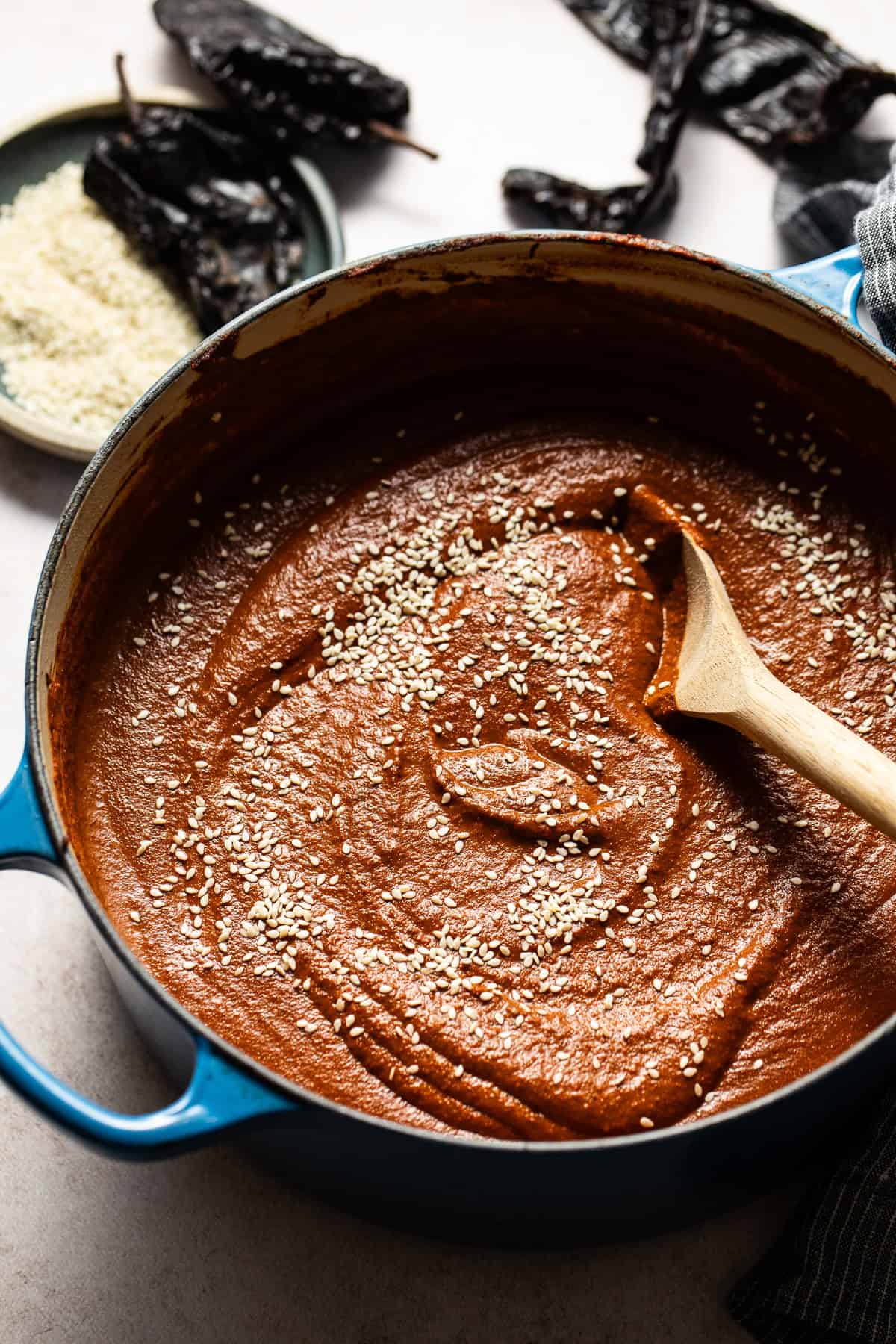
Traditional Mexican Mole Poblano is a thick, velvety, and deeply aromatic sauce with a rich reddish-brown to dark chocolate-brown appearance.
Its texture is smooth and luxurious, with a consistency that coats the back of a spoon.
The dried chiles provide the foundation of the flavor.
Ancho chiles contribute fruity and mildly sweet notes.
Pasilla chiles add earthiness and complexity.
Mulato chiles provide darker, richer flavors with subtle chocolate-like undertones.
Toasted almonds, peanuts, pumpkin seeds, and sesame seeds contribute nuttiness and body.
Raisins and ripe plantain add natural sweetness that balances the bitterness and heat of the chiles.
The roasted onion, garlic, and tomatoes create a savory foundation.
Cinnamon, cloves, anise, and black pepper provide warmth and aromatic complexity.
Mexican chocolate adds a subtle cocoa flavor and helps round out the sauce.
The finished mole is not simply sweet, spicy, or chocolatey.
Instead, it offers a layered combination of earthy, smoky, fruity, nutty, savory, mildly spicy, and bittersweet flavors.
Its aroma is intense and inviting.
When served over chicken or turkey, the sauce creates a rich and memorable meal.
8. Nutritional Information
Approximate nutritional values per ½-cup serving, assuming the recipe yields 8 cups:
| Nutrient | Estimated Amount |
|---|---|
| Calories | 220–320 kcal |
| Protein | 5–9 g |
| Carbohydrates | 20–30 g |
| Total Fat | 13–22 g |
| Saturated Fat | 2–5 g |
| Fiber | 4–7 g |
| Sugar | 8–14 g |
| Sodium | Variable |
| Iron | Present |
| Magnesium | Present |
| Potassium | Present |
These are broad estimates. Actual values depend on chile sizes, broth, chocolate brand, amount of oil retained during frying, and final sauce yield. Chicken, rice, and other accompaniments are not included.
9. Recipe Details
| Category | Details |
|---|---|
| Recipe Name | Traditional Mexican Mole Poblano |
| Cuisine | Mexican / Puebla |
| Preparation Time | Approximately 45 Minutes |
| Cooking Time | Approximately 1 Hour 30 Minutes |
| Total Time | Approximately 2 Hours 15 Minutes |
| Yield | Approximately 8 Cups |
| Difficulty | Advanced / Intermediate |
| Main Ingredients | Dried Chiles, Nuts, Seeds, Chocolate |
| Main Chiles | Ancho, Pasilla, Mulato |
| Main Nuts | Almonds, Peanuts |
| Main Seeds | Pumpkin Seeds, Sesame Seeds |
| Main Sweeteners | Raisins, Ripe Plantain |
| Main Spices | Cinnamon, Cloves, Anise, Black Pepper |
| Main Liquid | Chicken or Vegetable Broth |
| Cooking Method | Toasting, Frying, Blending, Simmering |
| Flavor Profile | Earthy, Smoky, Nutty, Spicy, Bittersweet |
| Texture | Thick, Smooth, Velvety |
| Course | Sauce / Main Dish Accompaniment |
| Best For | Celebrations, Family Gatherings, Special Meals |
| Recommended Pairings | Chicken, Turkey, Rice, Tortillas |
| Dietary Adaptation | Vegetarian with Vegetable Broth and Vegetable Oil |
| Potential Allergens | Peanuts, Tree Nuts, Sesame, Wheat, Depending on Ingredients |
10. Conclusion
Traditional Mexican Mole Poblano is a remarkable sauce that demonstrates the depth and complexity of Mexican culinary traditions.
The recipe combines three varieties of dried chiles with toasted nuts, seeds, vegetables, spices, dried fruit, and Mexican chocolate.
Each ingredient contributes a different element to the finished sauce.
The dried chiles provide earthy and fruity flavors.
The nuts and seeds add richness.
Raisins and plantain introduce sweetness.
Roasted vegetables create a savory foundation.
Warm spices contribute aromatic depth, while Mexican chocolate provides a distinctive bittersweet finish.
The preparation process requires patience and careful attention.
The ingredients are toasted, fried, softened, blended, strained, and simmered until the sauce becomes thick and smooth.
Although the process is more involved than preparing an ordinary sauce, the result is deeply flavorful.
Mole Poblano can be served over chicken, turkey, vegetables, or other savory dishes.
It is especially suitable for celebrations and family gatherings.
With its beautiful dark color, velvety texture, and layered flavor, homemade Mole Poblano offers a memorable way to experience one of Mexico’s most distinctive culinary preparations.
11. Serving and Storage Recommendations
Chicken: Serve warm mole over cooked chicken pieces.
Turkey: Pair with roasted turkey for a traditional celebratory meal.
Rice: Serve alongside Mexican-style rice or plain white rice.
Corn Tortillas: Offer warm corn tortillas for scooping up the sauce.
Roasted Vegetables: Spoon over roasted cauliflower, squash, or potatoes.
Enchiladas: Use as a sauce for mole-style enchiladas.
Sesame Garnish: Sprinkle toasted sesame seeds over the finished dish.
Fresh Herbs: Add a small amount of chopped cilantro if desired.
Refrigeration: Cool the sauce promptly and transfer it to airtight containers.
Storage Duration: Refrigerate for approximately 3–4 days.
Freezing: Freeze in individual portions for approximately 2–3 months for best quality.
Reheating: Warm gently in a saucepan over low heat.
Adding Broth: Stir in a little broth or water if the sauce becomes too thick.
Stirring: Stir frequently during reheating to prevent sticking.
Make-Ahead: Prepare the mole a day before serving if desired.
Flavor Development: The flavors may become more integrated after resting overnight.
Food Safety: Refrigerate leftovers within 2 hours and reheat thoroughly.
Allergen Information: The recipe contains almonds, peanuts, pumpkin seeds, and sesame. Bread or crackers may introduce wheat, while chocolate may contain milk or soy depending on the brand.
12. Embracing Healthful Indulgence
Traditional Mexican Mole Poblano is a richly flavored sauce made from a diverse combination of plant-based ingredients.
Although it is relatively calorie-dense compared with lighter vegetable sauces, it also provides nutrients from chiles, nuts, seeds, tomatoes, and spices.
Nutrients from Dried Chiles
Dried chiles contribute dietary fiber and naturally occurring plant compounds.
They also provide flavor and color.
Different chile varieties contain varying amounts of vitamins, minerals, and carotenoid pigments.
Nuts and Seeds
Almonds, peanuts, pumpkin seeds, and sesame seeds contribute unsaturated fats, protein, and minerals.
Pumpkin seeds provide magnesium and other nutrients.
Almonds contribute vitamin E.
Sesame seeds provide additional minerals and flavor.
Tomatoes and Aromatic Vegetables
Tomatoes contribute naturally occurring plant compounds, including lycopene.
Onions and garlic add flavor and small amounts of nutrients.
Spices and Flavor Complexity
Cinnamon, cloves, anise, and black pepper contribute aromatic compounds.
Their primary role in this recipe is culinary, helping create the distinctive flavor of Mole Poblano.
Chocolate in Mole
Mexican chocolate adds cocoa flavor and richness.
Depending on the product, it may also contain substantial added sugar.
Using the specified quantity helps maintain the balance between chocolate and chile flavors.
Portion Awareness
Mole is generally served as a sauce rather than consumed as an entire meal.
A moderate portion can add significant flavor to chicken, turkey, or vegetables.
Because the sauce contains nuts, seeds, chocolate, and oil, portion size influences its calorie content.
Balanced Serving Ideas
Serving Mole Poblano over chicken with rice and vegetables creates a more complete meal.
For a vegetarian option, the sauce can be prepared with vegetable broth and neutral vegetable oil, then served over roasted vegetables or legumes.
A Celebration of Culinary Diversity
Mole Poblano demonstrates how many different ingredients can work together to create a balanced and complex flavor.
Its preparation encourages attention to technique, patience, and the careful development of flavor.
Enjoyed in suitable portions and paired with a variety of foods, Traditional Mexican Mole Poblano can be part of a balanced diet while offering the rich culinary experience that has made it an important dish in Mexican cooking.