
1. Introduction
Steamed Chicken and Vegetable Meatballs with Rice is a wholesome, comforting, and colorful meal that combines tender chicken meatballs, finely chopped vegetables, fluffy white rice, and gently steamed greens.
This simple homemade recipe is especially appealing for families with babies and toddlers because it uses familiar ingredients, mild seasonings, and a gentle steaming method.
The meatballs are prepared using lean ground chicken, finely grated carrots, chopped spinach or bok choy, a small egg, and breadcrumbs or baby oat cereal.
These ingredients come together to create a moist mixture that becomes tender and easy to break apart after steaming.
Unlike traditional meatballs that are fried in oil or baked until browned, these chicken meatballs are cooked with steam.
Steaming helps the meatballs retain moisture without requiring additional frying oil.
It also allows the vegetables to soften while preserving their natural colors and flavors.
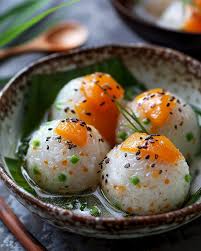
The finished dish features pale golden chicken meatballs with small orange and green flecks from the vegetables.
Soft cooked carrots and leafy greens provide additional color, texture, and variety.
A bed of fluffy jasmine or short-grain rice completes the meal.
One of the biggest advantages of this recipe is its convenience.
The meatballs take approximately 15 minutes to prepare and about 12–15 minutes to steam, depending on their size.
The vegetables can be cooked alongside the meatballs, reducing the number of pans and cooking steps required.
The recipe also works well for family meal preparation, because the ingredients are affordable and easy to find.
For toddlers, the meatballs can be served in appropriately sized pieces alongside rice and soft vegetables.
For babies beginning solid foods, the texture and shape must be adapted to their developmental abilities. Whole round meatballs and round carrot coins should not simply be served as pictured, because their shape can create a choking hazard. CDC
With its tender protein, colorful vegetables, and simple seasonings, Steamed Chicken and Vegetable Meatballs with Rice offers a practical way to prepare a nourishing family meal.
2. Origin and Cultural Significance
Steamed meatballs are found in several culinary traditions, particularly in Asian cuisines where steaming is widely used to prepare meat, fish, vegetables, buns, and dumplings.
The combination of minced chicken, vegetables, and rice is also common in contemporary family cooking.
Steaming in Traditional Cooking
Steaming is one of the oldest methods of cooking food.
It involves surrounding ingredients with hot steam rather than immersing them in water or cooking them directly in oil.
In Chinese and other East and Southeast Asian cooking traditions, steaming is frequently used for delicate foods such as fish, meatballs, dumplings, eggs, and vegetables.
The method is valued for producing tender textures and allowing the natural flavors of ingredients to remain noticeable.
Chicken Meatballs in Family Meals
Chicken meatballs are a versatile variation of traditional meatballs.
Ground chicken has a mild flavor that combines easily with vegetables, herbs, and gentle seasonings.
Because minced chicken can be shaped into different sizes, it is convenient for preparing smaller portions.
Vegetables in Children’s Meals
Finely grated carrots and chopped leafy greens are often incorporated into minced meat dishes.
This allows vegetables to become part of the overall texture rather than being served only as separate side dishes.
However, children should also be offered vegetables separately so they can become familiar with different tastes and textures.
Rice as a Staple Food
Rice is a staple ingredient in many parts of the world.
Jasmine rice is particularly associated with Southeast Asian food traditions, while short-grain rice is common in East Asian cuisines and other regions.
Its mild taste makes it a suitable accompaniment to savory chicken dishes.
Modern Baby-Led Weaning and Family Cooking
Baby-led weaning is an approach in which babies who are developmentally ready are offered appropriately prepared foods that they can explore and feed themselves.
Complementary foods are generally introduced at around 6 months, when babies show appropriate developmental signs such as good head control and the ability to sit with support. CDC
This recipe is best understood as a contemporary family-friendly dish influenced by steaming traditions rather than a recipe belonging to one specific national cuisine.
3. Ingredients
This recipe makes approximately 10–12 mini meatballs and 2–3 toddler-sized portions, depending on appetite.
A. Chicken Meatballs
| Ingredient | Quantity |
|---|---|
| Lean ground chicken or turkey | 250 g (approximately ½ pound) |
| Carrot, finely grated or pulsed | ¼ cup |
| Spinach or bok choy, finely chopped | ¼ cup |
| Small egg | 1 |
| Breadcrumbs or baby oat cereal | 2 tablespoons |
| Garlic powder or onion powder | A small pinch, optional |
B. Rice
| Ingredient | Quantity |
|---|---|
| Cooked short-grain or jasmine white rice | 1 cup |
C. Steamed Vegetable Sides
| Ingredient | Quantity |
|---|---|
| Medium carrot, sliced for steaming | 1 |
| Baby bok choy leaves or spinach | A few leaves |
D. Seasoning Considerations
For babies younger than 12 months, omit added salt and use unsalted breadcrumbs or oat cereal.
For older children and adults, season individual portions according to taste.
E. Equipment
- Medium mixing bowl
- Measuring cups and spoons
- Cutting board
- Sharp knife
- Vegetable grater
- Spatula or mixing spoon
- Steamer pot
- Steamer basket
- Heat-safe plate or steamer-safe parchment paper
- Pot lid
- Kitchen tongs
- Food thermometer
- Small serving bowls or plates
- Fork for breaking apart the cooked meatballs
4. Optional Additions
Steamed Chicken and Vegetable Meatballs can be customized with mild flavors and other soft vegetables.
Ground Turkey: Replace the chicken with lean ground turkey.
Finely Grated Zucchini: Add a small amount of grated zucchini, squeezing out excess moisture.
Sweet Potato: Include a little finely grated sweet potato for natural sweetness.
Pumpkin: Add a small quantity of cooked, mashed pumpkin.
Broccoli: Use very finely chopped, cooked broccoli.
Cauliflower: Mix in finely minced cauliflower.
Fresh Parsley: Add a small amount of finely chopped parsley.
Mild Ginger: Include a tiny pinch of ground ginger for gentle flavor.
Onion Powder: Use instead of garlic powder.
Baby Oat Cereal: Substitute for breadcrumbs when a softer texture is desired.
Cooked Quinoa: Serve alongside the meatballs instead of some of the rice.
Brown Rice: Use well-cooked brown rice as a variation for children who can safely manage its texture.
Mashed Avocado: Add a small portion as a creamy side.
Mashed Peas: Serve with well-cooked peas that are mashed for younger children.
Plain Yogurt: Offer a little unsweetened plain yogurt as a dip if dairy has already been introduced and tolerated.
Olive Oil: Add a small drizzle to a family or older-child portion if desired.
When preparing food for babies, new ingredients—particularly common allergens—should be introduced appropriately so reactions can be recognized.
The original recipe contains egg and may contain wheat, depending on the breadcrumbs used. NHS
5. Tips for Success
Use Fresh, Lean Ground Chicken
Fresh ground chicken works well because its mild flavor pairs naturally with carrots, spinach, and other vegetables.
Chop the Vegetables Very Finely
Large pieces of vegetables can prevent the meatball mixture from holding together evenly.
Finely grated carrots and finely chopped greens blend more smoothly into the chicken.
Avoid Excess Moisture
If the grated vegetables release a lot of liquid, gently squeeze out some of the excess before adding them to the meatball mixture.
Use the Egg as a Binder
The egg helps hold the chicken and vegetables together during shaping and steaming.
Add Breadcrumbs or Oat Cereal
These ingredients absorb some moisture and help create a cohesive texture.
Do Not Overmix
Mix until the ingredients are combined. Excessive mixing can make the meatballs unnecessarily dense.
Keep the Meatballs Similar in Size
Uniform portions cook more evenly.
Wet Your Hands Before Shaping
Lightly damp hands help prevent the chicken mixture from sticking.
Avoid Compressing the Meatballs
Shape the mixture gently to help keep the cooked texture tender.
Use a Proper Steamer
The meatballs should cook above simmering water rather than being submerged in it.
Keep the Steamer Covered
A properly fitted lid helps maintain consistent steam.
Do Not Overcrowd the Basket
Allow steam to circulate around the meatballs and vegetables.
Check the Chicken Temperature
Ground chicken and turkey must reach 165°F (74°C) in the center. Appearance alone is not a reliable way to determine whether poultry is safely cooked. ask.fsis.usda.gov+1
Make the Vegetables Very Soft
Carrots for babies should be cooked until they can be easily mashed with a fork.
Adapt Shapes Before Serving
Whole round meatballs and carrot coins should be cut, flattened, crumbled, or mashed into developmentally appropriate shapes and textures before serving to babies.
Supervise Every Meal
Children should sit upright and remain closely supervised while eating. CDC
6. Step-by-Step Instructions
Part A: Preparing the Ingredients
Step 1: Gather all the ingredients and equipment.
Step 2: Place the ground chicken in the refrigerator until ready to mix.
Step 3: Measure 250 g ground chicken.
Step 4: Prepare a medium mixing bowl.
Step 5: Wash the vegetables under running water.
Step 6: Clean the cutting board and utensils.
Step 7: Measure the breadcrumbs or baby oat cereal.
Step 8: Prepare the egg.
Step 9: Set aside the cooked rice for serving.
Part B: Preparing the Carrot for the Meatballs
Step 10: Wash the carrot thoroughly.
Step 11: Peel it if desired.
Step 12: Trim the ends.
Step 13: Place the carrot on a clean cutting board.
Step 14: Use the fine side of a grater to shred a portion of the carrot.
Step 15: Measure ¼ cup finely grated carrot.
Step 16: Check that the pieces are small.
Step 17: Gently remove excess moisture if necessary.
Step 18: Set the grated carrot aside.
Part C: Preparing the Greens
Step 19: Wash the spinach or bok choy thoroughly.
Step 20: Remove damaged leaves.
Step 21: Drain the vegetables.
Step 22: Pat away excess water.
Step 23: Place the leaves on a cutting board.
Step 24: Chop them very finely.
Step 25: Measure ¼ cup.
Step 26: Check that no large or tough pieces remain.
Step 27: Set the greens aside.
Part D: Preparing the Chicken Mixture
Step 28: Place the ground chicken into the mixing bowl.
Step 29: Add the finely grated carrot.
Step 30: Add the chopped greens.
Step 31: Crack the small egg into a separate bowl.
Step 32: Check that no eggshell fragments are present.
Step 33: Add the egg to the chicken mixture.
Step 34: Measure 2 tablespoons breadcrumbs or baby oat cereal.
Step 35: Add the chosen binder to the bowl.
Step 36: Sprinkle in a tiny pinch of garlic powder or onion powder if desired.
Step 37: Omit added salt when preparing the mixture for babies younger than 12 months.
Part E: Mixing the Ingredients
Step 38: Use a spatula or clean hands to begin mixing.
Step 39: Fold the vegetables into the ground chicken.
Step 40: Incorporate the egg gradually.
Step 41: Continue mixing until the breadcrumbs are evenly distributed.
Step 42: Scrape the sides of the bowl.
Step 43: Check that the vegetables are distributed throughout the mixture.
Step 44: Mix until the ingredients form a cohesive, slightly sticky paste.
Step 45: Avoid mixing longer than necessary.
Step 46: Keep the mixture refrigerated if it will not be shaped immediately.
Part F: Shaping the Meatballs
Step 47: Prepare a clean plate or tray.
Step 48: Lightly wet your hands with water.
Step 49: Scoop approximately 1 tablespoon of chicken mixture.
Step 50: Place it between your palms.
Step 51: Gently roll it into a smooth ball.
Step 52: Avoid squeezing it too firmly.
Step 53: Place the shaped meatball on the plate.
Step 54: Repeat with the remaining mixture.
Step 55: Aim for approximately 10–12 small meatballs.
Step 56: Check that the meatballs are similar in size.
Step 57: Refrigerate them briefly if the steamer is not yet ready.
Part G: Preparing the Vegetable Sides
Step 58: Wash the medium carrot.
Step 59: Peel it if desired.
Step 60: Trim both ends.
Step 61: Slice the carrot into relatively even coins for steaming.
Step 62: Set the carrot slices aside.
Step 63: Wash the baby bok choy leaves or spinach.
Step 64: Remove tough or damaged parts.
Step 65: Drain the leaves.
Step 66: Prepare them for steaming.
Part H: Setting Up the Steamer
Step 67: Fill the bottom of the steamer pot with water according to the manufacturer’s instructions.
Step 68: Make sure the water will remain below the steamer basket.
Step 69: Place the pot on the stove.
Step 70: Turn the heat to medium-high.
Step 71: Bring the water to a boil.
Step 72: Prepare the steamer basket.
Step 73: If desired, line it with steamer-safe parchment paper, a suitable heat-safe plate, or clean vegetable leaves.
Step 74: Make sure the lining does not block all steam circulation.
Part I: Arranging the Meatballs and Vegetables
Step 75: Carefully place the meatballs inside the steamer basket.
Step 76: Leave a little space between each meatball.
Step 77: Arrange the carrot slices beside the meatballs.
Step 78: Place the green leaves in the available space.
Step 79: Avoid stacking the meatballs.
Step 80: Check that the basket is not overcrowded.
Step 81: Place the basket over the simmering water.
Step 82: Cover the steamer with its lid.
Part J: Steaming the Meatballs
Step 83: Maintain steady steam over medium-high heat.
Step 84: Set a timer for approximately 12 minutes.
Step 85: Keep the steamer covered during most of the cooking period.
Step 86: Allow the chicken meatballs to cook gently.
Step 87: Monitor the water level to prevent the pot from boiling dry.
Step 88: After approximately 12 minutes, carefully lift the lid away from your face.
Step 89: Check the largest meatball using an instant-read thermometer.
Step 90: Confirm that the center reaches 165°F (74°C).
Step 91: If the temperature is too low, cover and continue steaming.
Step 92: Recheck after a few additional minutes.
Step 93: Continue until all the meatballs are fully cooked.
Step 94: Allow additional time if the meatballs are larger than tablespoon-sized.
Part K: Checking the Vegetables
Step 95: Test a steamed carrot slice with a fork.
Step 96: Check that it is very soft.
Step 97: If it remains firm, continue steaming until easily mashed.
Step 98: Check that the spinach or bok choy is tender.
Step 99: Remove the vegetables with clean utensils once cooked.
Step 100: Make sure the meatballs have reached their safe internal temperature before removing them.
Part L: Preparing the Rice
Step 101: Measure 1 cup fully cooked white rice.
Step 102: Make sure the rice has been cooked safely and kept at a suitable temperature.
Step 103: If using refrigerated rice, reheat it thoroughly.
Step 104: Check that the rice is soft and moist.
Step 105: Fluff gently with a fork.
Step 106: Divide the rice between 2–3 serving bowls.
Part M: Preparing Baby- or Toddler-Safe Portions
Step 107: Transfer the cooked meatballs to a clean plate.
Step 108: Allow them to cool slightly.
Step 109: Cut or break a meatball open to check its texture.
Step 110: For babies, flatten, crumble, mash, or otherwise prepare the meatball in a shape and texture appropriate for their feeding abilities.
Step 111: Do not offer a firm, whole, round meatball to a baby.
Step 112: Cut the cooked carrot coins into safer non-round shapes or mash them completely for younger eaters.
Step 113: Check that the vegetables are soft enough to mash easily.
Step 114: Finely chop any long or stringy leafy vegetables when necessary.
Step 115: Make sure the rice is soft and served in a manageable texture.
Step 116: Allow everything to cool to a comfortable eating temperature.
Part N: Assembling the Bowls
Step 117: Prepare a small serving bowl.
Step 118: Add a portion of warm cooked rice.
Step 119: Place the appropriately prepared chicken meatballs on top or beside the rice.
Step 120: Add the tender steamed carrots.
Step 121: Arrange the soft greens alongside.
Step 122: Make sure the serving contains a balance of chicken, vegetables, and rice.
Step 123: Check the food temperature before serving.
Step 124: Serve the meal fresh.
Part O: Serving and Cleanup
Step 125: Place the child in a safe, upright seating position.
Step 126: Offer an age-appropriate portion.
Step 127: Stay with the child during eating.
Step 128: Allow time for comfortable chewing and swallowing.
Step 129: Refrigerate any untouched portions promptly.
Step 130: Discard food left on the child’s plate rather than storing it for another meal.
Step 131: Wash all utensils and surfaces that contacted raw chicken.
7. Description
Steamed Chicken and Vegetable Meatballs with Rice is a soft, delicate, and mildly flavored meal featuring tender chicken meatballs, colorful vegetables, and fluffy white rice.
The meatballs have a pale, lightly golden appearance with visible orange carrot pieces and small green flecks.
Their texture is moist, soft, and easy to break apart when cooked correctly.
The ground chicken provides a mild savory flavor.
Finely grated carrot adds a subtle natural sweetness, while spinach or bok choy contributes a gentle vegetable flavor.
The egg and breadcrumbs help the mixture stay together without creating an overly dense texture.
The steamed carrots become naturally sweet and tender.
Leafy greens add color and freshness.
The white rice provides a neutral, comforting base that complements the other ingredients.
Unlike fried meatballs, these steamed meatballs do not develop a crispy exterior.
Instead, they have a uniform, soft texture.
This makes them particularly suitable for meals where tenderness is preferred, provided the finished foods are prepared in shapes and textures appropriate for the child’s development.
The dish is mild enough for young eaters while still being suitable for adults who prefer simple, lightly seasoned meals.
8. Nutritional Information
Approximate nutritional information per serving, assuming the recipe is divided into three portions:
| Nutrient | Estimated Amount |
|---|---|
| Calories | 230–300 kcal |
| Protein | 18–25 g |
| Carbohydrates | 15–22 g |
| Total Fat | 7–13 g |
| Saturated Fat | 2–4 g |
| Fiber | 1–3 g |
| Sugar | 2–4 g |
| Sodium | Variable |
| Iron | Present |
| Vitamin A | Present in carrots |
| Vitamin B12 | Present in chicken and egg |
| Potassium | Present |
These values are approximate and depend on chicken fat content, egg size, type of breadcrumbs or cereal, rice portion, and vegetable quantities. Actual serving sizes for babies may be substantially smaller.
The meatballs provide protein, while the rice supplies carbohydrates and the vegetables contribute vitamins, minerals, and fiber.
9. Recipe Details
| Category | Details |
|---|---|
| Recipe Name | Steamed Chicken and Vegetable Meatballs with Rice |
| Alternative Name | Steamed Chicken & Veggie Meatballs |
| Cuisine | Asian-Inspired / Modern Family Cooking |
| Preparation Time | 15 Minutes |
| Cooking Time | Approximately 12–15 Minutes |
| Total Time | Approximately 30 Minutes, Using Pre-Cooked Rice |
| Yield | Approximately 10–12 Mini Meatballs |
| Servings | 2–3 Toddler-Sized Portions |
| Difficulty | Easy |
| Main Protein | Ground Chicken or Turkey |
| Main Vegetables | Carrot, Spinach or Bok Choy |
| Main Grain | White Rice |
| Binding Ingredients | Egg and Breadcrumbs or Baby Oat Cereal |
| Cooking Method | Steaming |
| Safe Internal Temperature | 165°F (74°C) |
| Course | Lunch / Dinner |
| Flavor Profile | Mild, Savory, Naturally Sweet |
| Texture | Soft, Moist, Tender |
| Added Salt | None Needed for Babies |
| Dietary Style | High-Protein, Family-Friendly |
| Potential Allergens | Egg, Wheat if Using Standard Breadcrumbs |
| Best For | Family Meals, Toddler Lunches, Meal Preparation |
| Serving Style | Rice Bowl with Soft Vegetables |
| Baby-Led Weaning | Only with Developmentally Appropriate Texture and Shape |
10. Conclusion
Steamed Chicken and Vegetable Meatballs with Rice is a simple, nourishing, and convenient meal that combines lean chicken, vegetables, and rice in one balanced dish.
The recipe begins with ground chicken mixed with finely grated carrots, chopped greens, egg, and breadcrumbs or baby oat cereal.
The ingredients are gently combined into a cohesive mixture and shaped into small meatballs.
The meatballs are then arranged in a steamer alongside sliced carrots and leafy greens.
After approximately 12–15 minutes of steaming, the chicken becomes tender and fully cooked, provided it has reached an internal temperature of 165°F (74°C).
The vegetables become soft, making them suitable for serving after any necessary adjustments to their shape and texture.
Fluffy white rice completes the meal.
One of the best features of this recipe is that it does not require frying or a heavy sauce.
The natural flavors of the chicken, carrots, and greens remain the focus.
The recipe is also versatile and can be adapted with different vegetables, proteins, or grains.
For families introducing solid foods, the finished meal can be modified to suit a child’s development and feeding abilities.
With its simple preparation, tender texture, and colorful ingredients, Steamed Chicken and Vegetable Meatballs with Rice is a practical recipe for family lunches, dinners, and make-ahead meals.
11. Serving and Storage Recommendations
Serving Suggestions
For Toddlers: Serve appropriately cut or broken-up meatballs with soft rice and tender vegetables.
For Younger Babies: Prepare the meatballs and vegetables in shapes and textures that match the baby’s developmental feeding skills.
For Adults: Serve whole meatballs over rice with additional vegetables and seasonings if desired.
Rice: Use fully cooked, soft jasmine or short-grain rice.
Carrots: Steam until soft enough to mash easily with a fork. Avoid serving intact round coins to babies.
Leafy Greens: Finely chop or otherwise adapt cooked greens so they are manageable for the child.
Soft Vegetables: Additional steamed broccoli, zucchini, or pumpkin can be served alongside the dish.
Plain Yogurt: Use a small amount as a dip if it has already been introduced safely.
Extra Moisture: Add a small amount of water or unsalted broth to older leftovers if the meatballs become dry during reheating.
Refrigeration and Freezing
Refrigeration: Cool cooked meatballs promptly and transfer to clean, shallow airtight containers.
Baby Food Storage: For food prepared for babies, use refrigerated chicken-and-vegetable portions within 1–2 days. FoodSafety.gov
Freezing: Freeze individual portions for convenient future meals. For homemade baby food, 1–2 months is a practical freezer-storage guideline. FoodSafety.gov
Rice Storage: Cool cooked rice quickly, ideally within one hour, and refrigerate or freeze promptly. For meals intended for babies, use refrigerated rice within 24 hours and reheat only once. NHS
Reheating: Reheat stored meatballs thoroughly to 165°F (74°C), then allow them to cool to a safe eating temperature.
Defrosting: Thaw frozen portions safely in the refrigerator or using an appropriate microwave defrost setting.
Leftovers: Discard any food remaining on a baby’s plate after the meal.
Raw Chicken Safety: Keep raw ground chicken separate from cooked rice and ready-to-eat vegetables. Wash utensils, hands, and work surfaces thoroughly after handling raw poultry.
Important Feeding Precautions
- Never leave a baby or toddler unattended while eating.
- Keep children upright and seated during meals.
- Avoid whole round meatballs and round carrot coins for babies; adapt the shapes appropriately.
- Introduce egg and wheat carefully if they have not previously been eaten.
- Do not add salt to portions intended for babies younger than 12 months.
These precautions help make the finished meal more appropriate for young eaters.
12. Embracing Healthful Indulgence
Steamed Chicken and Vegetable Meatballs with Rice is a nutrient-rich meal that combines protein, vegetables, and carbohydrates in a simple homemade preparation.
Its mild flavor and tender texture make it appealing to families who prefer gently cooked foods.
Protein from Chicken
Chicken provides complete protein, containing all nine essential amino acids.
Protein is important for normal growth, tissue development, and muscle maintenance.
Ground chicken also provides nutrients such as vitamin B6, niacin, phosphorus, and selenium.
Nutrients from Carrots
Carrots are a source of beta-carotene, which the body can convert into vitamin A.
Vitamin A plays a role in normal vision, immune function, and growth.
The carrots also contribute natural sweetness to the meatball mixture.
Benefits of Leafy Greens
Spinach and bok choy provide vitamins, minerals, and naturally occurring plant compounds.
Depending on the vegetable chosen, they can contribute vitamin K, folate, and other nutrients.
Finely chopping the greens allows them to blend into the chicken mixture.
The Role of Rice
White rice provides carbohydrates, which are an important source of energy.
Its mild taste complements the chicken and vegetables.
For variety, families can alternate rice with other suitable grains and starches rather than relying on one grain for every meal.
Eggs and Breadcrumbs
The egg helps bind the chicken mixture and contributes protein and other nutrients.
Breadcrumbs or baby oat cereal help absorb moisture and create a tender, cohesive texture.
Egg and wheat are common food allergens, but their introduction does not generally need to be delayed once an infant is ready for solids. They should be introduced in age-appropriate forms, with additional medical guidance when a child has significant allergy-related concerns. NHS+1
Steaming as a Cooking Method
Steaming cooks the meatballs without requiring frying oil.
It produces a moist, tender texture and allows the natural flavors of chicken and vegetables to remain prominent.
However, steaming alone does not guarantee that a food is safe for babies. The internal cooking temperature, texture, shape, and feeding environment all matter.
Supporting Food Variety
Offering vegetables in both mixed dishes and separate portions gives children opportunities to experience different flavors.
Carrots provide mild sweetness, while leafy greens introduce different tastes and textures.
Repeated exposure to a variety of foods can be a useful part of developing balanced eating habits.
An Age-Appropriate Approach
Babies develop eating skills at different rates.
Food should be adapted to their ability to sit, control their head, grasp food, and manage textures.
For babies who are beginning complementary feeding, breast milk or infant formula continues to play an important nutritional role alongside solid foods. CDC
Families can also adjust portion sizes according to appetite rather than expecting every child to eat the same amount.
A Simple, Nourishing Family Meal
With tender chicken, soft vegetables, and fluffy rice, Steamed Chicken and Vegetable Meatballs offers a practical combination of flavor, nutrition, and convenience.
The recipe is easy to prepare, adaptable to different ingredients, and suitable for sharing as a family meal.
By cooking the chicken thoroughly and adjusting the finished food to the child’s developmental needs, families can enjoy a mild, colorful, and satisfying dish that fits into a varied eating pattern.