
1. Introduction
Chinese Wheat-Ear Dumplings, also known as Mài Suì Jiǎo (麦穗饺), are traditional Chinese dumplings distinguished by their beautiful wheat-ear-shaped decorative folds and flavorful fillings.
These dumplings are prepared using a simple homemade wheat-flour dough filled with a delicious mixture of scrambled eggs, finely chopped garlic chives, and glass noodles.
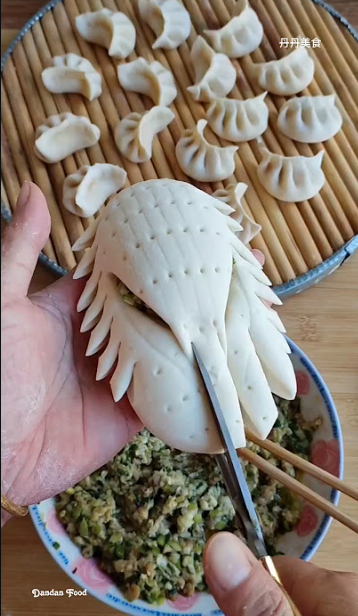
Their distinctive appearance comes from an alternating pleating technique that creates a decorative pattern resembling an ear of wheat.
The dumplings can be steamed or pan-fried, producing a tender wrapper and a flavorful filling. Their delicate appearance, satisfying texture, and versatile ingredients make them an excellent choice for family meals, celebrations, and traditional Chinese-inspired cooking.
2. Origin
Chinese dumplings, commonly known as Jiaozi (饺子), have a long history in Chinese culinary traditions.
They are traditionally associated with northern China, where wheat flour has historically been an important ingredient in everyday cooking.
Dumplings developed into numerous regional variations, with different fillings, cooking methods, and decorative folding techniques.
Wheat-ear dumplings represent a decorative variation of traditional Chinese dumplings. Their characteristic pleated edges resemble wheat grains arranged along a stalk.
This style of shaping demonstrates the artistic techniques developed by Chinese home cooks and professional dumpling makers.
Over time, different fillings, including vegetables, eggs, meat, and noodles, have been incorporated into dumpling recipes to create a wide variety of flavors.
3. Cultural Significance
Chinese dumplings hold an important place in Chinese food culture and are particularly associated with family gatherings, celebrations, and traditional festivals.
They are especially popular during Chinese New Year, when their shape is traditionally associated with prosperity and good fortune.
Wheat-ear dumplings also reflect the importance of craftsmanship in Chinese cooking, where food preparation combines flavor, presentation, and decorative techniques.
They are commonly prepared during:
- Chinese New Year celebrations.
- Family gatherings and reunions.
- Traditional festive meals.
- Weekend family cooking activities.
- Special occasions and celebrations.
- Homemade Chinese-style dinners.
Preparing dumplings is often a shared family activity in which different family members participate in preparing the dough, making the filling, and shaping the dumplings.
The decorative wheat-ear pattern adds an artistic element that makes these dumplings particularly attractive when served.
4. Ingredients and Quantities
The following ingredients produce approximately 25–30 dumplings.
For the dough:
| Ingredient | Quantity |
|---|---|
| All-purpose flour | 2 cups (250 g) |
| Warm water | ½ cup + 1–2 tablespoons (130–140 ml) |
| Salt | ¼ teaspoon |
For the filling:
| Ingredient | Quantity |
|---|---|
| Garlic chives, finely chopped | 1 cup |
| Large eggs | 3 |
| Glass noodles (vermicelli) | 40 g |
| Neutral cooking oil | 2 tablespoons |
| Sesame oil | 1 tablespoon |
| Light soy sauce | 1 tablespoon |
| Oyster sauce or vegetarian mushroom sauce | 1 tablespoon |
| White pepper | ¼ teaspoon |
| Salt | ½ teaspoon |
Optional alternative meat filling:
- Ground pork or chicken: 300 g.
- Freshly grated ginger: 1 tablespoon.
- Light soy sauce: 1 tablespoon.
- Sesame oil: 1 tablespoon.
- Water: 2 tablespoons.
- White pepper: As desired.
Preparation time: Approximately 45 minutes.
Dough resting time: 30 minutes.
Cooking time: 10–12 minutes for steaming.
Yield: 25–30 dumplings.
5. Optional Additions
The basic wheat-ear dumpling recipe can be customized with additional ingredients to create different flavors and textures.
- Ground pork: Adds a rich, savory flavor.
- Ground chicken: Provides a mild protein-rich alternative.
- Shrimp: Introduces a delicate seafood flavor.
- Shiitake mushrooms: Add an earthy aroma.
- Green onions: Enhance the freshness of the filling.
- Fresh ginger: Provides warmth and aromatic depth.
- Grated carrots: Add sweetness, color, and texture.
- Napa cabbage: Creates a softer and juicier filling.
- Firm tofu: Offers a plant-based alternative.
- Sesame seeds: Add a delicate nutty flavor.
- Chili oil: Provides a spicy finishing touch.
- Fresh cilantro: Adds freshness and fragrance.
- Black pepper: Enhances the savory flavor.
These additions can be incorporated into the original filling according to personal preferences.
6. Tips for Success
- Measure the flour and water accurately to obtain a smooth and workable dough.
- Add the warm water gradually rather than pouring it all at once.
- Knead the dough until it becomes smooth and elastic.
- Allow the dough to rest for approximately 30 minutes to make rolling easier.
- Keep the dough covered during preparation to prevent it from drying out.
- Roll the wrappers evenly, keeping the center slightly thicker than the edges.
- Avoid adding excessive filling because this can make the dumplings difficult to seal.
- Allow the scrambled eggs to cool completely before combining them with the other filling ingredients.
- Coat the chopped garlic chives lightly with oil to help reduce moisture release.
- Drain the glass noodles thoroughly before chopping them.
- Avoid making the filling too wet because excess moisture can weaken the wrappers.
- Practice the alternating left-right pleating technique to achieve the characteristic wheat-ear appearance.
- Pinch the ends firmly to prevent the dumplings from opening during cooking.
- Leave sufficient space between dumplings in the steamer to prevent sticking.
- Use parchment paper or lightly oiled steamer trays.
- Allow cooked dumplings to cool slightly before serving.
7. Instructions
Step 1: Prepare the dough ingredients
Place the all-purpose flour and salt in a large mixing bowl.
Gradually pour in the warm water while stirring with chopsticks or a fork.
Continue mixing until rough dough flakes begin to form.
Step 2: Knead the dough
Transfer the mixture onto a clean work surface.
Knead for approximately 5–8 minutes until the dough becomes smooth, elastic, and uniform.
If the dough feels excessively dry, add a small amount of water.
If it becomes too sticky, lightly dust the work surface with flour.
Step 3: Rest the dough
Shape the dough into a ball.
Place it in a bowl and cover with a damp kitchen towel or plastic wrap.
Allow it to rest for approximately 30 minutes.
This resting period helps relax the gluten and makes the dough easier to roll.
Step 4: Prepare the glass noodles
Place the glass noodles in a bowl of hot water.
Allow them to soak until softened according to the package instructions.
Drain thoroughly and chop them into small pieces.
Set aside.
Step 5: Prepare the scrambled eggs
Crack the three eggs into a bowl and beat until combined.
Heat one tablespoon of cooking oil in a frying pan over medium heat.
Pour in the beaten eggs.
Stir continuously using chopsticks or a spatula until small, fluffy egg curds form.
Remove from the heat and allow the eggs to cool completely.
Step 6: Prepare the garlic chives
Wash the garlic chives thoroughly and dry them.
Finely chop the chives into small pieces.
Place them in a mixing bowl and add one tablespoon of neutral cooking oil.
Toss gently to coat the chopped chives.
This helps reduce moisture release when the filling is mixed.
Step 7: Combine the filling ingredients
Place the cooled scrambled eggs, chopped glass noodles, and prepared garlic chives in a large mixing bowl.
Add the sesame oil, soy sauce, oyster sauce or vegetarian mushroom sauce, white pepper, and salt.
Mix gently until all ingredients are evenly distributed.
Set the filling aside.
Step 8: Divide and roll the dough
Transfer the rested dough onto a lightly floured surface.
Divide it into approximately 25–30 small portions.
Roll each portion into a small ball weighing approximately 12–15 g.
Using a rolling pin, flatten each ball into a circular wrapper approximately 9 cm in diameter.
Keep the center slightly thicker than the edges to provide additional support for the filling.
Step 9: Add the filling
Place approximately 1–2 tablespoons of filling in the center of each wrapper.
Arrange the filling into a slightly elongated shape.
Avoid overfilling because sufficient space is needed to create the decorative pleats.
Step 10: Begin the wheat-ear fold
Bring the two sides of the wrapper together.
Pinch one end firmly to create the initial seal.
Hold the dumpling comfortably between your fingers.
Step 11: Create the decorative pleats
Using your thumb and index finger, push a small section of dough inward from the left edge toward the center seam.
Pinch the fold firmly.
Next, take a small section from the right edge and fold it inward, slightly overlapping the previous pleat.
Continue alternating between the left and right sides.
Repeat the process along the entire length of the dumpling.
The alternating pleats should gradually create a decorative pattern resembling an ear of wheat.
Pinch the final end securely to close the dumpling completely.
Step 12: Arrange the dumplings
Place the shaped dumplings on a lightly floured tray or parchment-lined surface.
Arrange them carefully, leaving space between each piece.
Continue shaping until all the dough and filling have been used.
Step 13: Steam the dumplings
Bring water to a boil in a steamer.
Arrange the dumplings on parchment paper or lightly oiled steamer trays.
Leave sufficient space between them.
Cover and steam for approximately 10–12 minutes, until the wrappers are fully cooked.
If using a raw meat filling, steam for approximately 15 minutes or until the filling reaches a safe internal temperature.
Step 14: Alternative pan-frying method
Heat one tablespoon of cooking oil in a non-stick skillet over medium heat.
Arrange the dumplings flat-side down.
Fry for approximately two minutes until the bottoms become golden brown.
Carefully add ¼ cup of water and immediately cover the skillet with a lid.
Allow the dumplings to steam for approximately 6–8 minutes, until the water evaporates and the filling is fully cooked.
Remove the lid and allow the bottoms to crisp slightly.
Step 15: Serve
Transfer the cooked dumplings to a serving plate.
Arrange them neatly to highlight their decorative wheat-ear folds.
Serve warm with soy sauce, black vinegar, sesame oil, or chili oil.
8. Description
Chinese Wheat-Ear Dumplings are distinctive handmade dumplings characterized by their delicate wheat-flour wrappers and decorative braided edges.
The dough is prepared using flour, warm water, and salt, producing a smooth and elastic wrapper that becomes tender during cooking.
The traditional filling in this recipe combines scrambled eggs, garlic chives, and glass noodles.
Scrambled eggs provide a soft texture and mild savory flavor, while garlic chives contribute freshness and a distinctive aromatic taste.
Glass noodles add a delicate, slightly chewy texture that complements the other ingredients.
Soy sauce, sesame oil, oyster sauce, and white pepper enhance the filling with a balanced combination of savory and aromatic flavors.
The most distinctive feature is the wheat-ear folding technique, which creates alternating decorative pleats along the dumpling.
When steamed, the dumplings develop soft, tender wrappers that preserve the detailed folds.
When pan-fried, they develop an additional crispy golden-brown base while maintaining a soft interior.
Their attractive appearance and flavorful filling make them a distinctive addition to homemade Chinese-style meals.
9. Nutritional Information
The following nutritional values are approximate estimates per serving, assuming the recipe produces approximately 30 dumplings and one serving contains five dumplings.
| Nutritional Component | Estimated Amount per Serving |
|---|---|
| Calories | 220–270 kcal |
| Protein | 8–11 g |
| Carbohydrates | 30–36 g |
| Fat | 7–10 g |
| Fiber | 1–3 g |
| Sugar | 1–2 g |
Nutritional highlights:
- Wheat flour provides carbohydrates for energy.
- Eggs contribute protein and essential nutrients.
- Garlic chives provide vitamins and plant compounds.
- Glass noodles contribute carbohydrates.
- Sesame oil provides unsaturated fats.
- Chives contribute small amounts of dietary fiber and vitamin K.
The nutritional values vary depending on the filling quantities, sauces, and cooking method. Pan-frying generally increases the fat content compared with steaming.
10. Conclusion
Chinese Wheat-Ear Dumplings are a beautiful and flavorful homemade dish that combines traditional Chinese dough preparation with an artistic folding technique.
Their soft wrappers, savory egg and garlic chive filling, and delicate glass noodle texture create a satisfying combination of flavors and textures.
The alternating pleating method gives these dumplings their distinctive wheat-ear appearance, making them both delicious and visually appealing.
Although the decorative shaping requires some practice, the recipe uses accessible ingredients and straightforward cooking methods.
Whether steamed or pan-fried, these dumplings are an excellent choice for family meals, celebrations, and homemade Chinese-inspired cooking.
11. Recommendation
Chinese Wheat-Ear Dumplings are highly recommended for people who enjoy handmade dumplings and traditional Asian cooking techniques.
For the best results:
- Prepare a smooth and elastic dough.
- Allow sufficient resting time.
- Use finely chopped garlic chives.
- Drain the glass noodles thoroughly.
- Cool the scrambled eggs before mixing.
- Avoid excessive filling.
- Keep the wrappers covered while shaping.
- Practice alternating pleats to achieve the wheat-ear pattern.
- Seal both ends carefully.
- Steam gently or pan-fry for a crispy bottom.
They pair particularly well with:
- Soy sauce.
- Chinese black vinegar.
- Chili oil.
- Sesame dipping sauce.
- Fresh cucumber salad.
- Chinese vegetable soup.
- Stir-fried vegetables.
- Steamed rice.
- Green tea.
They are especially suitable for Chinese New Year celebrations, family gatherings, weekend meals, and homemade dumpling-making activities.
12. Embracing Healthful Indulgence
Chinese Wheat-Ear Dumplings can be enjoyed as part of a balanced and varied diet.
Their combination of wheat flour, eggs, garlic chives, and glass noodles provides carbohydrates, protein, and several essential nutrients.
Preparing dumplings at home also allows greater control over the filling ingredients, seasoning, cooking oil, and portion sizes.
For a lighter variation, consider:
- Choosing steaming instead of pan-frying.
- Reducing the quantity of added cooking oil.
- Increasing the proportion of garlic chives.
- Adding finely chopped mushrooms.
- Incorporating grated carrots or cabbage.
- Using reduced-sodium soy sauce.
- Choosing lean ground chicken instead of fatty meat.
- Serving with fresh vegetables.
- Preparing a homemade dipping sauce with moderate sodium content.
These adjustments can help improve the nutritional balance while preserving the characteristic flavors and delicate texture of traditional dumplings.
The essence of healthful indulgence is enjoying delicious homemade food prepared with quality ingredients while maintaining balance, variety, and moderation in everyday eating.