
Introduction
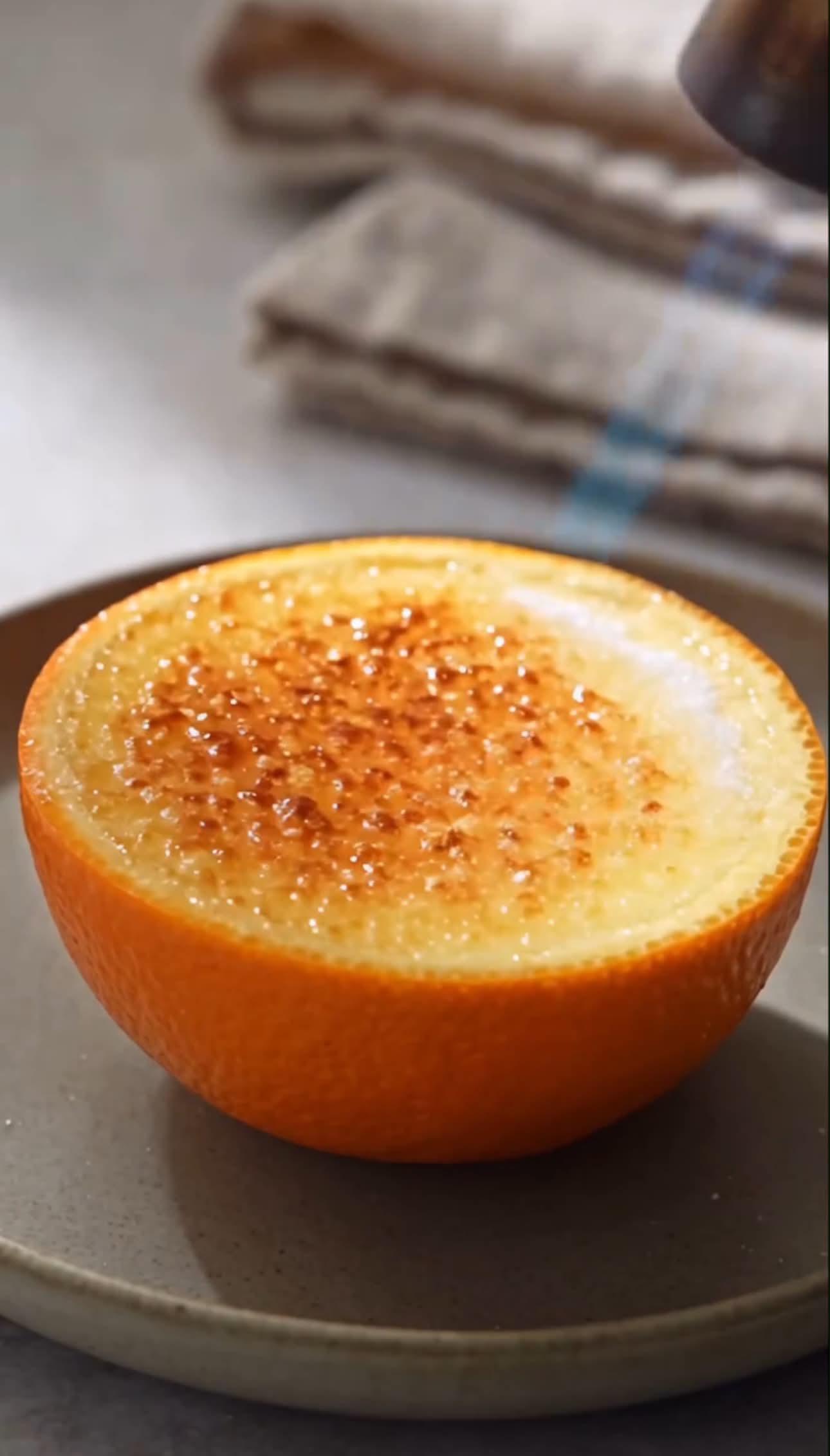
Orange Crème Brûlée is an elegant twist on the classic French custard dessert. Smooth, creamy vanilla custard is infused with fresh orange zest and baked directly inside hollowed orange shells. Once chilled, each portion is finished with a thin layer of sugar that is caramelized until golden and crisp.
The contrast between the cool, silky custard and the delicate crack of caramelized sugar makes this dessert especially satisfying. The natural citrus aroma from the orange shells and zest also gives the traditional crème brûlée a bright, refreshing character.
Origin
Crème brûlée is a classic European custard dessert traditionally made with cream, egg yolks, sugar, and vanilla, then finished with a caramelized sugar topping.
While variations of baked custards have existed for centuries across Europe, crème brûlée is particularly associated with French cuisine. This orange version adds fresh citrus flavor and presents the custard in orange shells, creating a visually appealing variation suitable for dinner parties and special occasions.
Cultural Significance
Crème brûlée has become one of the most recognizable French-style desserts around the world. Its defining feature is the contrast between a smooth custard base and a crisp caramelized sugar surface.
Using orange shells as serving vessels adds a creative presentation inspired by the long tradition of using fresh fruit in desserts. The combination of citrus and vanilla also reflects a popular pairing in pastry, where bright fruit flavors help balance rich cream-based desserts.
Ingredients and Quantities
For the Orange Custard
- 4 large oranges
- 4 egg yolks
- ½ cup heavy cream
- ¼ cup granulated sugar
- 1 teaspoon vanilla extract
- 1 teaspoon fresh orange zest
For the Caramelized Topping
- 4 tablespoons granulated sugar, approximately 1 tablespoon per orange half
Optional Additions
For additional flavor, you can customize the custard with:
- A small pinch of salt to enhance the flavors
- A little extra orange zest for a stronger citrus aroma
- ½ teaspoon orange blossom water for a floral note
- A small amount of finely grated lemon zest for extra brightness
- Fresh orange segments for serving
A tiny amount of orange liqueur can also be used in adult versions, although it is completely optional.
Tips for Success
Choose large oranges: Larger oranges provide sturdier shells and more room for the custard.
Scoop carefully: Remove the orange flesh without cutting through the peel. A spoon works well for gently hollowing the shells.
Avoid over-whisking: Mix the custard until smooth, but avoid creating too many air bubbles. This helps produce a silky finished texture.
Use a water bath: The hot-water bath helps the custard cook gently and evenly while reducing the risk of curdling.
Do not overbake: The centers should still have a slight wobble when the custards are removed from the oven. They will continue setting as they cool.
Chill thoroughly: Refrigerating the custards for at least two hours allows them to become properly firm and creamy.
Caramelize just before serving: The sugar topping is best when freshly caramelized, giving you the ideal contrast between crisp caramel and chilled custard.
Instructions
1. Prepare the Orange Shells
Preheat the oven to 160°C (325°F).
Cut the oranges carefully in half.
Using a spoon, gently scoop out the flesh while keeping the orange shells intact. Take care not to puncture the peel.
Arrange the hollow orange halves upright in a baking dish so they remain stable.
2. Prepare the Custard
In a mixing bowl, whisk together the egg yolks and granulated sugar until smooth.
Add the heavy cream, vanilla extract, and orange zest.
Whisk gently until all the ingredients are fully combined and the mixture is smooth.
3. Fill the Orange Shells
Carefully pour the custard mixture into the hollowed orange halves.
Avoid filling them completely to the top, leaving a small amount of space to prevent spills during baking.
4. Prepare the Water Bath
Place the baking dish in the oven.
Carefully pour hot water into the dish until it reaches approximately halfway up the outside of the orange shells.
This water bath will help the custard cook gently and evenly.
5. Bake the Custards
Bake for approximately 25–30 minutes.
The custard should be set around the edges while remaining slightly wobbly in the center.
Avoid baking until the center is completely firm, as this can result in a less creamy texture.
6. Chill
Carefully remove the baking dish from the water bath.
Allow the orange crème brûlées to cool slightly, then transfer them to the refrigerator.
Chill for at least 2 hours, or until thoroughly cold and set.
7. Caramelize the Sugar
Just before serving, sprinkle approximately 1 tablespoon of granulated sugar evenly over each custard.
Use a kitchen torch to caramelize the sugar until it becomes golden brown and crisp.
Move the torch continuously to prevent one area from becoming too dark.
8. Serve
Allow the caramelized topping to harden for approximately 1 minute.
Serve the orange crème brûlée chilled while the caramel crust is crisp.
Description
Orange Crème Brûlée combines a silky vanilla custard with the bright aroma of fresh orange zest and a beautifully crisp caramel topping.
Baking the custard inside orange shells gives the dessert a distinctive presentation while allowing the citrus aroma to complement the creamy filling. Each spoonful brings together smooth custard and brittle caramel for a classic contrast of textures.
This dessert is elegant enough for celebrations but simple enough to prepare at home with a few basic ingredients.
Nutritional Information
Nutritional values are approximate and will vary depending on the size of the oranges, the amount of sugar used, and the specific dairy products.
Approximate nutrition per serving may include:
- Calories: 250–320
- Protein: 4–6 g
- Carbohydrates: 30–38 g
- Fat: 13–17 g
- Fiber: 2–3 g
- Sugar: 25–32 g
- Sodium: 40–70 mg
The oranges contribute vitamin C and natural citrus flavor, while the egg yolks provide protein and other nutrients. Cream and sugar give the dessert its characteristic richness and caramelized finish.
Conclusion
Orange Crème Brûlée is a beautiful combination of classic pastry technique and fresh citrus flavor. The creamy vanilla custard becomes even more aromatic with orange zest, while the caramelized sugar creates the signature crisp topping.
Serving the custard inside orange shells makes the dessert especially memorable and gives it an elegant presentation without requiring complicated decoration.
Recommendation
Serve Orange Crème Brûlée immediately after caramelizing the sugar so the topping remains crisp.
For an elegant presentation, arrange the orange halves on a serving platter and garnish with a little finely grated orange zest or a small mint leaf.
This dessert works especially well after a dinner featuring roasted chicken, seafood, or other savory dishes because its bright citrus character provides a refreshing finish.
Embracing Healthful Indulgence
Orange Crème Brûlée is designed as an occasional dessert that celebrates rich, creamy textures and fresh citrus flavor. The oranges provide natural fruit, vitamin C, and aromatic zest, while the custard delivers the classic indulgence associated with crème brûlée.
Enjoying a dessert like this alongside a varied diet allows the focus to remain on flavor, presentation, and the pleasure of sharing a homemade treat. The fresh orange element also brings brightness to an otherwise rich and creamy dessert.