
Introduction
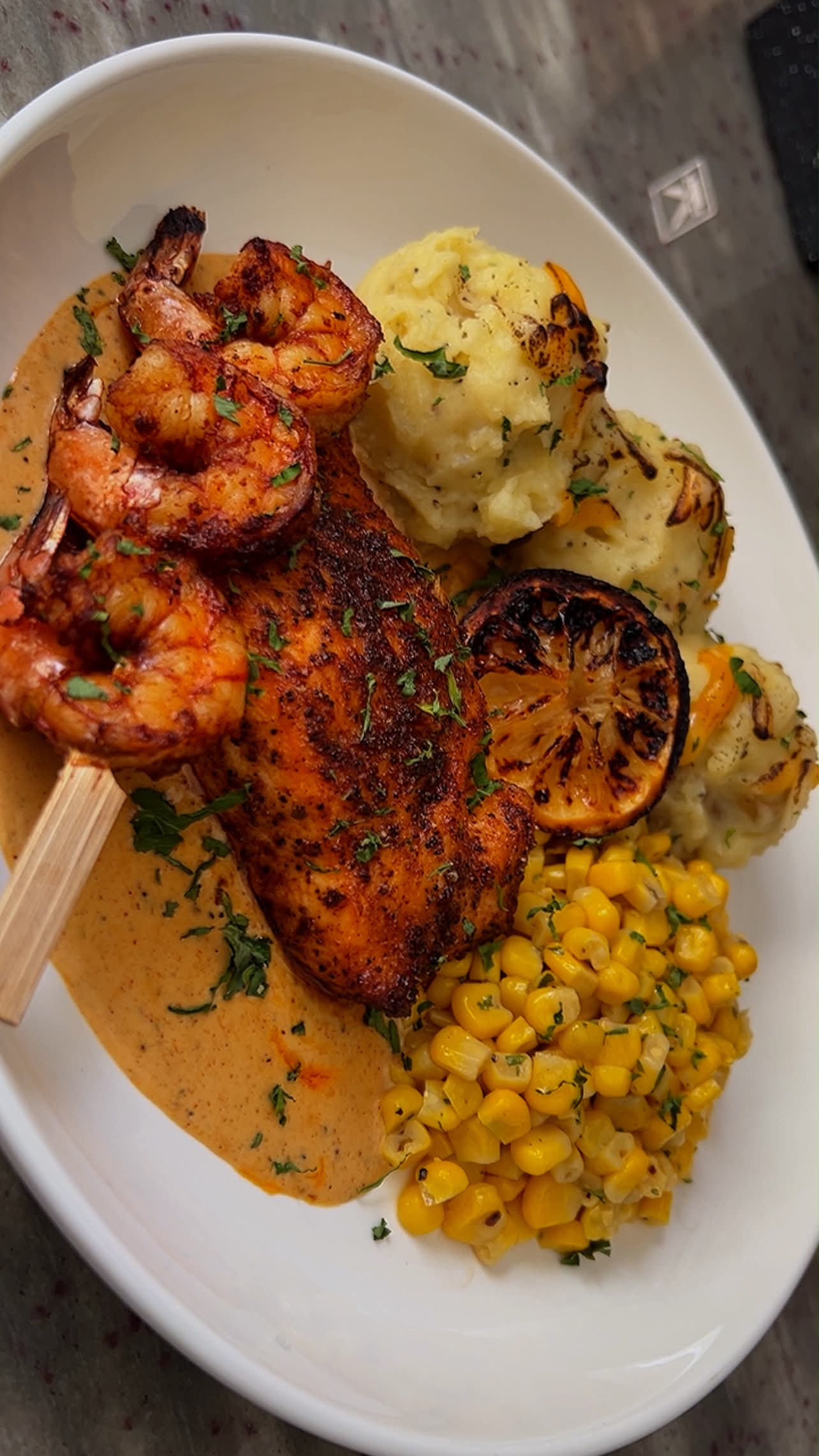
Bring the bold flavors of a restaurant-style seafood dinner into your kitchen with this irresistible Cheesecake Factory-Inspired Cajun Salmon and Shrimp. Featuring beautifully blackened salmon fillets, juicy Cajun-seasoned shrimp, a rich and velvety cream sauce, fluffy garlic-herb mashed potatoes, and sweet buttered corn, this impressive meal combines savory, smoky, creamy, and slightly spicy flavors on one satisfying plate.
The centerpiece of this dish is the perfectly seared salmon, generously coated in a fragrant Cajun spice blend. As the salmon cooks in a hot skillet, the seasonings develop a deeply colored, flavorful crust while the fish remains tender and flaky inside.
Alongside the salmon, succulent shrimp are seasoned with the same aromatic spices, threaded onto skewers, and quickly seared until lightly charred. Their naturally sweet flavor provides a delicious contrast to the smoky seasoning and creamy sauce.
What truly brings this dish together is the homemade Cajun cream sauce. Prepared with butter, fresh garlic, heavy cream, chicken broth, smoked paprika, and Parmesan cheese, this smooth sauce adds a luxurious finish that complements both the salmon and shrimp.
The accompanying garlic-herb mashed potatoes provide a soft, buttery foundation, while the sweet corn adds brightness, natural sweetness, and a pleasant contrast in texture.
A lightly charred lemon slice and a sprinkle of fresh parsley complete the presentation, creating a colorful and elegant seafood dinner that looks as impressive as it tastes.
Perfect for date nights, weekend dinners, celebrations, or whenever you want to recreate the experience of a restaurant-quality meal at home, this Cajun salmon and shrimp combination is both flavorful and surprisingly approachable.
Origin and Cultural Significance
Cajun cuisine developed in Louisiana through the culinary traditions of the Acadian people, who settled in the region after being displaced from parts of eastern Canada during the eighteenth century.
Over time, Cajun cooking evolved through interactions with local ingredients and the culinary influences of Indigenous, African, French, Spanish, and other communities.
Traditional Cajun dishes are known for their deeply developed flavors, practical cooking techniques, and frequent use of ingredients such as seafood, rice, onions, peppers, garlic, and aromatic seasonings.
Cajun-inspired seasoning blends often include paprika, garlic, onion, black pepper, cayenne pepper, and herbs. These combinations create the bold, savory flavor commonly associated with modern Cajun-style dishes.
Blackening is a cooking technique particularly associated with Louisiana chef Paul Prudhomme, who helped popularize blackened redfish during the 1980s.
The technique involves coating fish or other proteins in spices and cooking them in a very hot skillet to develop a dark, intensely flavored crust.
Although blackening is frequently associated with Cajun cuisine, many contemporary restaurant versions adapt the method to different proteins, including salmon, shrimp, chicken, and steak.
Creamy Cajun seafood sauces are another popular feature of modern American restaurant cooking. They combine the bold flavors of Cajun-style spices with rich dairy ingredients to create a smooth, indulgent sauce.
Mashed potatoes and buttered corn complement the seafood by introducing familiar American comfort food elements.
This recipe is a homemade, restaurant-inspired interpretation of those flavors rather than an authenticated copy of The Cheesecake Factory’s proprietary preparation.
Together, the blackened seafood, creamy sauce, buttery potatoes, and sweet corn create a contemporary American seafood dinner inspired by Louisiana flavors.
Ingredients
For the Blackened Cajun Salmon
- 2 large salmon fillets, approximately 6–8 oz (170–225 g) each
- 1–1½ tablespoons Cajun or blackening seasoning
- 1 tablespoon olive oil
- 1 tablespoon unsalted butter
- ¼ teaspoon freshly ground black pepper, optional
- 1 teaspoon fresh lemon juice, optional
Note: Use a Cajun seasoning blend appropriate for your preferred spice level. Commercial blends vary considerably in salt content, so taste or check the label before adding additional salt.
For the Blackened Shrimp Skewers
- ½ lb (approximately 225 g) large raw shrimp, peeled and deveined
- 1–1½ teaspoons Cajun or blackening seasoning
- 1 tablespoon olive oil
- 1 tablespoon unsalted butter
- 1 teaspoon fresh lemon juice
- 2–3 wooden or metal skewers
Note: If using wooden skewers, soak them in water for approximately 20–30 minutes before cooking. This reduces scorching, although exposed wood can still darken in a hot skillet.
For the Creamy Cajun Parmesan Sauce
- 2 tablespoons unsalted butter
- 3 garlic cloves, finely minced
- 1 cup heavy cream
- ¼ cup low-sodium chicken broth or seafood stock
- 1 teaspoon Cajun seasoning
- ½ teaspoon smoked paprika
- ¼ cup freshly grated Parmesan cheese
- ¼ teaspoon freshly ground black pepper, or to taste
- 1 teaspoon fresh lemon juice, optional
- Salt, only if needed
- 1 tablespoon chopped fresh parsley, optional
For the Garlic-Herb Mashed Potatoes
- 4 medium Yukon Gold or Russet potatoes, approximately 1½–2 lb (680–900 g)
- 4 tablespoons unsalted butter
- ½ cup warm whole milk or heavy cream
- ½ teaspoon garlic powder
- 1 tablespoon finely chopped fresh parsley
- ½ teaspoon salt, or to taste
- ¼ teaspoon freshly ground black pepper
- 2 tablespoons sour cream, optional
For the Sweet Buttered Corn
- 2 cups sweet corn kernels, canned, frozen, or freshly removed from the cob
- 1 tablespoon unsalted butter
- ¼ teaspoon garlic powder
- ¼ teaspoon salt, or to taste
- A pinch of freshly ground black pepper
- 1 teaspoon finely chopped fresh parsley
- ½ teaspoon honey, optional, if the corn is not naturally sweet
For Garnishing and Serving
- 1 lemon, cut into thick slices or wedges
- 1 teaspoon olive oil or butter, for charring the lemon
- 2 tablespoons freshly chopped parsley
- Additional Cajun seasoning, optional
- Freshly ground black pepper
- Extra Cajun cream sauce, for serving
Optional Additions
- Extra Cajun seasoning: Increase the seasoning slightly for a more intense, spicy flavor.
- Cayenne pepper: Add a pinch to the cream sauce for extra heat.
- Smoked paprika: Sprinkle a small amount over the finished salmon for deeper smoky notes.
- Fresh thyme: Add ½ teaspoon of chopped thyme to the mashed potatoes for an aromatic herbal finish.
- Roasted garlic: Replace garlic powder in the potatoes with 2–3 cloves of roasted garlic.
- Cream cheese: Stir 1–2 tablespoons into the mashed potatoes for additional richness.
- Fresh chives: Use as a garnish for the potatoes or sauce.
- Lemon zest: Add a little finely grated zest to the Cajun cream sauce for brightness.
- Parmesan cheese: Increase the amount slightly for a thicker, cheesier sauce.
- Baby spinach: Stir a handful into the sauce until wilted for added color.
- Sautéed mushrooms: Serve alongside the seafood for an earthy variation.
- Bell peppers: Add sautéed red or yellow bell peppers to the plate for additional sweetness and color.
- Fresh cilantro: Use sparingly as an alternative garnish if preferred.
- Hot sauce: Add a few drops to the sauce for a spicier restaurant-style finish.
Tips for Success
- Choose fresh, high-quality salmon: Look for firm flesh with a mild, clean aroma. Thicker fillets are generally easier to sear without overcooking.
- Pat the seafood dry: Removing excess surface moisture helps the seasoning adhere and encourages a better crust.
- Adjust Cajun seasoning carefully: Commercial blends may contain substantial salt, so avoid adding extra salt automatically.
- Use a heavy-bottomed skillet: Cast iron or stainless steel works well for developing a dark, flavorful crust.
- Preheat the skillet properly: A sufficiently hot skillet encourages browning, but excessively high heat can burn the spices and butter.
- Avoid moving the salmon too soon: Allow the first side to sear undisturbed so the crust develops properly.
- Do not overcrowd the pan: Cook the salmon and shrimp in batches if necessary.
- Watch the seafood temperature: For straightforward food safety, cook salmon and shrimp to an internal temperature of 145°F (63°C).
- Avoid overcooking shrimp: Shrimp cook quickly and can become rubbery if left in the skillet too long.
- Use fresh garlic in the sauce: Freshly minced garlic provides a more aromatic flavor than garlic powder.
- Simmer the cream sauce gently: High heat can cause dairy-based sauces to separate or become excessively thick.
- Use freshly grated Parmesan: It generally melts more smoothly than some pre-shredded varieties.
- Add Parmesan gradually: Stirring the cheese into the warm sauce in small amounts helps prevent clumping.
- Start potatoes in cold water: This encourages even cooking throughout the pieces.
- Warm the milk and butter: Warm dairy ingredients incorporate more smoothly into mashed potatoes.
- Avoid overmixing potatoes: Excessive mixing can produce a gluey texture.
- Drain canned corn thoroughly: Removing excess liquid helps the corn become glossy and buttery rather than watery.
- Char lemon slices briefly: A short sear creates attractive color and a mellow citrus aroma.
- Prepare the sides first: Keeping the potatoes and corn warm allows the seafood to be cooked immediately before serving.
- Serve the sauce separately or underneath the salmon: This helps preserve the blackened crust while allowing each bite to be enjoyed with the creamy sauce.
Instructions
Step 1: Prepare the Ingredients
Gather all the ingredients before beginning.
Peel the potatoes if desired and cut them into evenly sized cubes.
Finely mince the garlic cloves.
Chop the fresh parsley.
Measure the Cajun seasoning, smoked paprika, cream, broth, and Parmesan cheese.
If using frozen shrimp, thaw them safely in the refrigerator or under cold running water in a sealed bag.
Pat the salmon and shrimp dry with paper towels.
If using wooden skewers, place them in water to soak while preparing the side dishes.
Step 2: Begin Cooking the Potatoes
Place the cubed potatoes in a large saucepan.
Cover with cold water by approximately 1 inch.
Add a generous pinch of salt.
Bring the water to a boil over medium-high heat.
Reduce to a steady simmer.
Cook for approximately 12–20 minutes, depending on the size of the potato pieces.
The potatoes should become completely tender when pierced with a fork.
Step 3: Drain and Mash the Potatoes
Drain the cooked potatoes thoroughly in a colander.
Return them to the warm saucepan.
Allow them to sit over very low heat for approximately 30–60 seconds to evaporate excess moisture.
Remove from the heat.
Mash using a potato masher or potato ricer until smooth.
Avoid using a blender or food processor, which can overwork the potato starch and create a sticky texture.
Step 4: Add Butter, Garlic, and Herbs
In a small saucepan or microwave-safe container, gently warm the milk or heavy cream together with the butter.
Stir until the butter melts.
Gradually add the warm mixture to the mashed potatoes.
Fold gently until the potatoes become creamy and fluffy.
Add the garlic powder, chopped parsley, salt, and black pepper.
If desired, stir in the sour cream for a slightly tangy finish.
Taste and adjust the seasoning.
Cover the saucepan and keep the potatoes warm until serving.
Step 5: Prepare the Sweet Corn
If using canned corn, drain thoroughly.
If using frozen corn, thaw or cook according to the package instructions.
Place a small skillet or saucepan over medium heat.
Add the butter and allow it to melt.
Stir in the corn kernels.
Sprinkle with garlic powder, salt, and black pepper.
Cook for approximately 4–6 minutes, stirring occasionally, until the corn is heated through and lightly glossy.
For a sweeter variation, stir in a small amount of honey.
Add the chopped parsley and mix gently.
Reduce the heat to low or cover the pan to keep the corn warm.
Step 6: Season the Salmon
Place the salmon fillets on a clean plate or cutting board.
Pat them thoroughly dry with paper towels.
Brush lightly with olive oil.
Sprinkle the Cajun or blackening seasoning evenly over the flesh side and exposed edges.
If using skinless salmon, season both broad sides.
Press the seasoning gently onto the surface so it adheres.
Avoid using excessive seasoning, especially if the blend contains a large amount of salt.
Set the salmon aside briefly while the skillet heats.
Step 7: Prepare the Shrimp Skewers
Place the peeled and deveined shrimp in a mixing bowl.
Drizzle with olive oil.
Add the Cajun seasoning and lemon juice.
Toss gently until evenly coated.
Thread the shrimp onto the prepared skewers, leaving a little space between them.
Avoid packing the shrimp too tightly, as this can interfere with even cooking.
Keep the prepared skewers refrigerated if they will not be cooked immediately.
Step 8: Preheat the Skillet
Place a heavy cast-iron or stainless-steel skillet over medium-high heat.
Allow it to heat until hot.
Add approximately 1 tablespoon of olive oil and 1 tablespoon of butter for the salmon.
Swirl the pan gently to coat the surface.
The butter should melt and foam without becoming heavily burnt.
If the skillet begins smoking excessively, reduce the heat slightly.
Step 9: Blacken the Salmon
Carefully place the salmon fillets in the hot skillet.
For skinless fillets, place the presentation side down first.
For skin-on fillets, you may begin skin-side down to crisp the skin before turning.
Cook for approximately 4–5 minutes on the first side, depending on thickness.
Avoid moving the salmon unnecessarily while the crust develops.
The seasoning should become dark and aromatic, forming a flavorful blackened exterior.
Using a fish spatula, turn the fillets carefully.
Cook for another 3–5 minutes, or until the fish reaches the desired safe internal temperature.
For food safety, the center should reach 145°F (63°C).
The flesh should be opaque and separate easily into flakes.
Remove the salmon from the skillet and transfer it to a clean plate.
Step 10: Sear the Cajun Shrimp Skewers
Reduce the heat slightly if the skillet is excessively hot.
Add the remaining tablespoon of butter.
Place the seasoned shrimp skewers into the skillet.
Cook for approximately 1½–2 minutes on the first side.
Turn carefully and cook for another 1–2 minutes, depending on shrimp size.
The shrimp should become opaque and lightly golden, with a few darker seasoned areas.
Check that the shrimp reach 145°F (63°C) internally.
Avoid overcooking, as shrimp can quickly become tough.
Transfer the cooked skewers to a clean plate.
Step 11: Char the Lemon Slices
Cut the lemon into thick slices or halves.
Heat a small amount of olive oil or butter in the skillet over medium-high heat.
Place the lemon slices cut-side down.
Cook for approximately 1–2 minutes until lightly caramelized.
The surface should develop attractive golden-brown marks.
Remove the lemon slices and set them aside for garnishing.
The brief cooking process softens the lemon’s sharpness and creates a warm citrus aroma.
Step 12: Prepare the Cajun Cream Sauce Base
Reduce the skillet heat to medium-low.
If the pan contains heavily burnt spices, carefully wipe away the burnt residue before continuing.
Leave any flavorful browned bits that are not burnt.
Add the butter and allow it to melt.
Stir in the minced garlic.
Cook for approximately 30–60 seconds, stirring constantly, until fragrant.
Avoid browning the garlic too deeply.
Step 13: Add the Cream and Broth
Slowly pour the heavy cream into the skillet.
Add the chicken broth or seafood stock.
Stir gently, scraping up any flavorful browned bits from the bottom of the pan.
Allow the mixture to warm over medium-low heat.
Do not bring it to a vigorous boil.
The cream and broth should combine into a smooth, pale sauce.
Step 14: Season the Cajun Sauce
Sprinkle in the Cajun seasoning and smoked paprika.
Add the black pepper.
Whisk until the spices are evenly distributed.
Allow the sauce to simmer gently for approximately 2–3 minutes.
As it warms, the paprika will give the cream a warm orange color.
Taste before adding additional salt, since the Cajun seasoning, broth, and Parmesan may already contain enough.
Step 15: Add the Parmesan Cheese
Reduce the heat to low.
Gradually sprinkle the freshly grated Parmesan cheese into the sauce.
Whisk gently until the cheese melts and becomes incorporated.
Continue cooking for approximately 1–2 minutes until the sauce thickens slightly.
It should be smooth and pourable, with enough body to lightly coat the back of a spoon.
If the sauce becomes too thick, stir in a small amount of additional broth or cream.
If it remains too thin, simmer gently for another minute.
Add a small amount of lemon juice if desired to brighten the flavor.
Remove from the heat.
Step 16: Adjust the Final Seasoning
Taste the Cajun cream sauce carefully.
Add a small amount of black pepper or Cajun seasoning if necessary.
For a spicier finish, add a pinch of cayenne pepper.
For a more pronounced smoky flavor, add a little extra smoked paprika.
If the sauce tastes too rich, a few drops of lemon juice can help balance it.
Keep the sauce warm over very low heat until serving, stirring occasionally.
Step 17: Prepare the Serving Plates
Choose two or three large dinner plates.
Place a generous scoop of garlic-herb mashed potatoes on one side of each plate.
Use the back of a spoon to create a smooth, rounded presentation.
Add a serving of sweet buttered corn beside the potatoes.
Keep the corn in a separate section to preserve its bright color and texture.
Step 18: Add the Cajun Cream Sauce
Spoon a generous pool of warm Cajun cream sauce onto the center of each plate.
Spread it slightly with the back of the spoon.
Reserve additional sauce for drizzling or serving on the side.
The sauce should create a rich, colorful base for the blackened seafood.
Step 19: Arrange the Salmon and Shrimp
Place one blackened salmon fillet over the pool of Cajun cream sauce.
Position the shrimp skewer diagonally across the salmon or alongside it.
If serving three people, divide the salmon and shrimp into smaller portions as appropriate.
Arrange the seafood carefully to preserve the blackened crust.
Spoon a small amount of additional sauce around the seafood if desired.
Avoid covering the entire salmon surface so the dark, seasoned crust remains visible.
Step 20: Garnish and Serve
Place a charred lemon slice beside or on top of the seafood.
Sprinkle freshly chopped parsley over the salmon, shrimp, potatoes, and sauce.
Add a small pinch of freshly ground black pepper.
Serve immediately while the salmon is tender, the shrimp are juicy, the mashed potatoes are fluffy, and the Cajun cream sauce is warm and velvety.
Optional Method: Oven-Finished Cajun Salmon
For thicker salmon fillets, you may begin cooking them in a hot, oven-safe skillet and finish them in the oven.
Preheat the oven to 400°F (204°C).
Sear the seasoned salmon for approximately 2–3 minutes on the first side.
Turn the fillets carefully and transfer the skillet to the oven.
Bake for approximately 5–8 minutes, depending on thickness, until the salmon reaches 145°F (63°C) internally.
Remove from the oven and allow the salmon to rest briefly before serving.
This method can help thicker fillets cook more evenly without excessively darkening the spice crust.
Description
Cheesecake Factory-Inspired Cajun Salmon and Shrimp with Creamy Cajun Sauce, Garlic-Herb Mashed Potatoes, and Buttered Sweet Corn is a rich, colorful seafood dinner featuring bold Cajun-inspired seasoning and comforting side dishes.
The salmon has a deeply seasoned exterior with a dark, flavorful crust, while the interior remains tender and flaky.
The shrimp are lightly charred and juicy, with a savory spice coating that complements their natural sweetness.
The Cajun cream sauce is smooth, rich, and gently spicy, combining garlic, smoked paprika, Parmesan, and cream into a luxurious accompaniment.
Garlic-herb mashed potatoes provide a soft, buttery contrast to the seafood, while sweet corn adds freshness, natural sweetness, and a pleasant pop of texture.
A charred lemon slice introduces a bright citrus finish, and fresh parsley adds color and aroma.
Together, the components create a restaurant-inspired meal that balances smoky, creamy, savory, and sweet flavors.
Nutritional Information
Approximate values per serving, assuming the recipe serves 2 generously and includes equal portions of salmon, shrimp, Cajun cream sauce, mashed potatoes, and buttered corn:
- Calories: 1,100–1,450 kcal
- Protein: 60–80 g
- Carbohydrates: 55–80 g
- Fat: 70–100 g
- Saturated Fat: 30–45 g
- Fiber: 5–8 g
- Sugar: 6–12 g
- Sodium: 1,000–1,800 mg
These values are estimates and vary depending on the size of the salmon fillets, the amount of cream and butter used, the Cajun seasoning blend, and serving portions.
Dividing the meal into three servings will reduce the approximate nutritional values per portion.
Using whole milk instead of heavy cream in the potatoes can lower the saturated fat content.
The seafood provides substantial protein, while the salmon contributes omega-3 fatty acids.
Recipe Details
- Prep Time: Approximately 20–25 minutes
- Cook Time: Approximately 25–35 minutes
- Total Time: Approximately 45–60 minutes
- Servings: 2 generous servings or 3 smaller servings
- Cuisine: American restaurant-style, Cajun-inspired
- Course: Main course
- Cooking Methods: Pan-searing, blackening, boiling, mashing, sautéing, and simmering
- Difficulty: Moderate
Conclusion
Cheesecake Factory-Inspired Cajun Salmon and Shrimp with Creamy Cajun Sauce, Garlic-Herb Mashed Potatoes, and Buttered Sweet Corn brings together bold seafood flavors and comforting side dishes in one impressive homemade meal.
The blackened salmon delivers a savory, smoky crust with a tender interior, while the Cajun shrimp add a juicy and lightly spicy seafood element.
The rich Parmesan cream sauce complements both proteins with its smooth texture and aromatic garlic flavor.
Creamy mashed potatoes provide a satisfying foundation, while the buttered sweet corn introduces natural sweetness and color.
A charred lemon slice and fresh parsley complete the dish with a bright, elegant presentation.
Although the finished plate looks restaurant-worthy, the cooking process is manageable when the sides are prepared first and the seafood is cooked shortly before serving.
Whether enjoyed for a special dinner, weekend gathering, or homemade date night, this Cajun-inspired seafood meal offers an indulgent combination of flavor, texture, and visual appeal.
Recommendation
For the best results, use thick, fresh salmon fillets and large shrimp that are similar in size.
Prepare the mashed potatoes and buttered corn first, keeping them warm while cooking the seafood.
Pat the salmon and shrimp thoroughly dry before seasoning to encourage a well-developed crust.
Use a heavy skillet and maintain controlled heat to prevent the Cajun spices from burning.
Cook the seafood just until it reaches the recommended safe internal temperature of 145°F (63°C).
Prepare the Cajun cream sauce after cooking the seafood, using the flavorful pan residue when it is not burnt.
Serve the sauce underneath or alongside the salmon to preserve the blackened exterior.
For a more balanced meal, add a side of steamed asparagus, roasted broccoli, sautéed green beans, or a fresh garden salad.
Store leftover salmon, shrimp, mashed potatoes, corn, and sauce separately in airtight containers.
Refrigerate cooked leftovers promptly, within 2 hours of preparation, or within 1 hour if the surrounding temperature exceeds 90°F (32°C).
Use refrigerated leftovers within 3–4 days.
Reheat the seafood gently to avoid drying it out, ensuring leftovers reach 165°F (74°C).
Warm the Cajun cream sauce over low heat, stirring frequently and adding a small splash of milk or broth if it becomes too thick.
Avoid vigorously boiling the sauce during reheating, as this can cause the cream and cheese to separate.
For the best presentation, serve the seafood over a pool of warm sauce, arrange the mashed potatoes and corn neatly, and finish with charred lemon and fresh parsley.
Embracing Healthful Indulgence
This Cajun-inspired seafood dinner combines nutrient-rich ingredients with the rich flavors of restaurant-style comfort food.
Salmon provides high-quality protein and omega-3 fatty acids, which are important components of a balanced diet.
Shrimp contributes lean protein, vitamin B12, selenium, and other nutrients.
Potatoes provide carbohydrates for energy, along with potassium and vitamin C.
Sweet corn contributes dietary fiber, carbohydrates, and naturally occurring plant compounds.
Garlic, herbs, paprika, and lemon add flavor and aroma, allowing the dish to develop complexity without relying entirely on salt.
The Cajun cream sauce contributes much of the meal’s richness and saturated fat because it contains heavy cream, butter, and Parmesan cheese.
For a lighter variation, reduce the quantity of sauce served per portion or replace part of the heavy cream with milk, recognizing that the sauce will be less rich and may require gentle thickening.
The mashed potatoes can also be prepared with whole milk instead of heavy cream and a smaller amount of butter.
Using a low-sodium Cajun seasoning blend can help control the sodium content.
Adding a generous serving of green vegetables provides additional fiber, color, and freshness.
Portion sizes can be adjusted according to individual needs, especially when serving this rich seafood combination as part of a larger meal.
Ultimately, this homemade Cajun salmon and shrimp dinner demonstrates how bold seasonings, quality seafood, and carefully prepared sides can create an enjoyable restaurant-inspired experience while allowing flexibility for balanced eating and personal preferences.