
Introduction
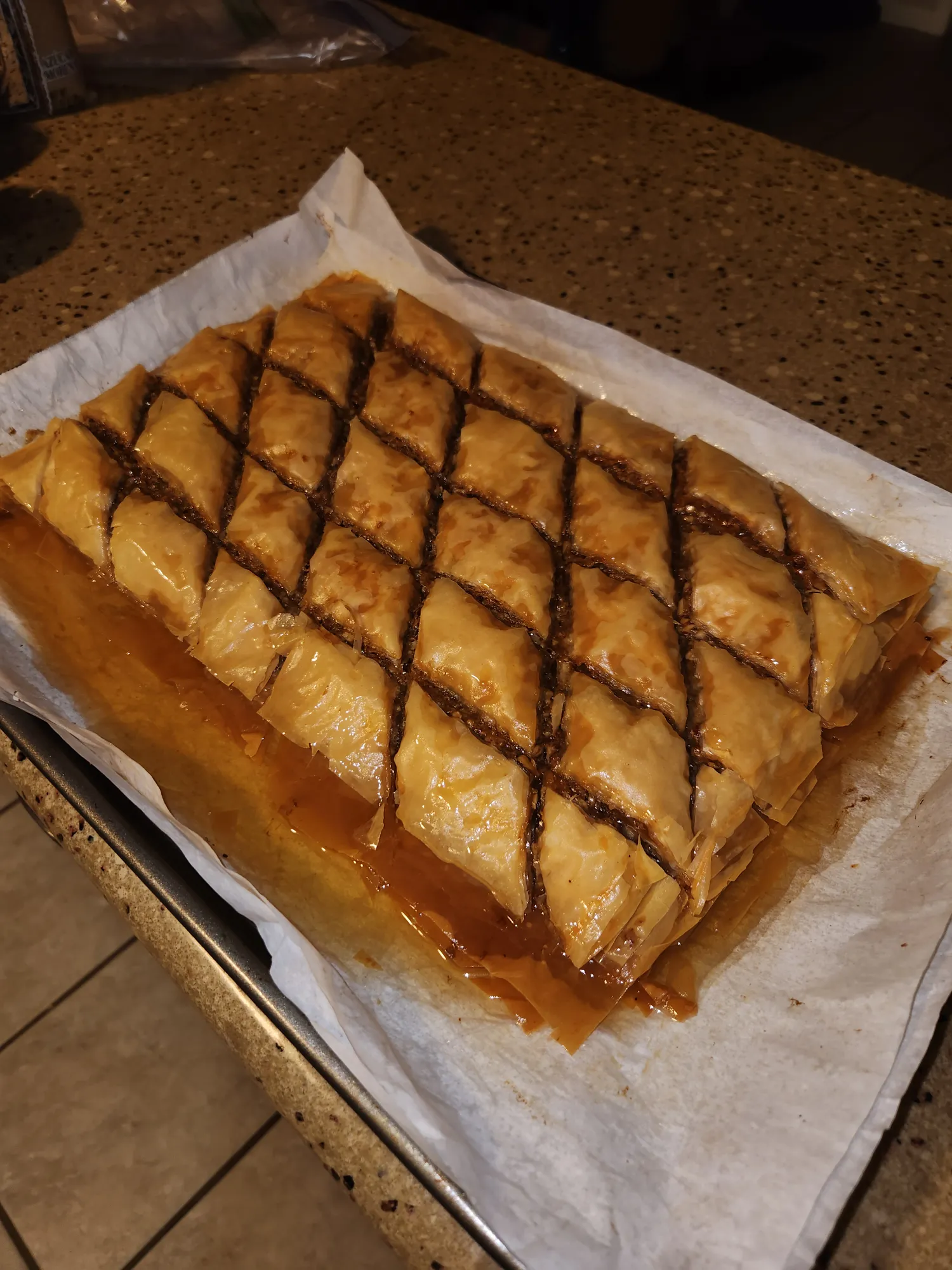
Walnut and Honey Baklava is a classic layered dessert made with delicate phyllo pastry, buttery walnuts, warm cinnamon, and a fragrant honey syrup. Each bite combines crisp pastry with a rich nut filling and a sweet, aromatic finish.
This recipe keeps the preparation straightforward while creating the beautiful layered texture that makes baklava so special. The phyllo sheets are generously brushed with melted butter, layered with seasoned walnuts, baked until golden, and then soaked with a warm honey syrup.
Although baklava is often associated with special occasions and celebrations, this homemade version can be prepared whenever you want an impressive dessert with a satisfying combination of crunch and sweetness.
Origin
Baklava is a famous layered pastry with a long and complex history across the Middle East, Eastern Mediterranean, Balkans, and surrounding regions. Different cultures have developed their own versions, using various nuts, spices, sweeteners, and preparation techniques.
The exact origin of modern baklava is debated, but its development is closely connected to the culinary traditions of the Ottoman Empire and the wider region.
Walnuts are among the traditional nuts commonly used in baklava, while honey and sugar-based syrups provide the characteristic sweetness and moisture.
Cultural Significance
Baklava is frequently associated with hospitality, celebrations, holidays, weddings, and family gatherings throughout many cultures.
Its layered appearance and careful preparation make it a dessert that is often prepared for guests and special occasions. Sharing a tray of baklava can also be an expression of generosity and hospitality.
Although recipes differ from one region to another, the combination of thin pastry, nuts, butter, and sweet syrup remains central to many versions of this beloved dessert.
Ingredients and Quantities
For the Baklava
- 1 package phyllo pastry
- 250 g chopped walnuts
- 100 g melted butter
- 2 tablespoons granulated sugar
- 1 teaspoon ground cinnamon
- ½ teaspoon ground cardamom, optional
For the Honey Syrup
- 1 cup honey
- ½ cup granulated sugar
- ½ cup water
- 1 tablespoon lemon juice
- 1 teaspoon vanilla extract
Optional Additions
You can personalize the baklava with a few additional ingredients:
- Chopped pistachios for garnish
- A small amount of orange zest
- ½ teaspoon ground cloves
- A pinch of ground nutmeg
- A few drops of orange blossom water in the syrup
These additions can provide different aromas while keeping the traditional character of the dessert.
Tips for Success
Keep the phyllo covered. Phyllo pastry dries quickly when exposed to air. Keep unused sheets covered with a clean, slightly damp kitchen towel while assembling the baklava.
Do not skip the butter. Brushing each layer lightly with melted butter helps create the characteristic crisp and flaky texture.
Chop the walnuts evenly. Small, fairly uniform pieces distribute more easily between the pastry layers and make the finished baklava easier to cut.
Do not overfill each layer. Several thin layers of nuts generally work better than placing all the filling in one thick layer.
Cut before baking. Pre-cutting the baklava makes it much easier to create clean pieces after baking.
Watch the final minutes of baking. Phyllo can become golden relatively quickly, so keep an eye on the pastry during the final part of the baking time.
Pour the syrup over the hot baklava. Adding the syrup immediately after the baklava comes out of the oven allows it to soak into the crisp pastry.
Allow enough resting time. The baklava should rest for at least 4 hours so that the syrup can distribute throughout the layers.
Instructions
1. Prepare the Oven and Pan
Preheat the oven to 175°C (350°F).
Generously butter a rectangular baking dish and set it aside.
2. Prepare the Walnut Filling
In a bowl, combine the chopped walnuts, sugar, cinnamon, and ground cardamom if using.
Mix until the spices and sugar are evenly distributed throughout the walnuts.
3. Begin Layering the Phyllo
Place several sheets of phyllo pastry into the prepared baking dish.
Brush each sheet lightly and evenly with melted butter before adding the next sheet.
Continue layering until you have created a solid buttery base.
4. Add the Walnut Filling
Spread a layer of the walnut mixture evenly over the phyllo.
Add several more sheets of phyllo, brushing each one with melted butter.
Repeat the process of adding walnuts followed by buttered phyllo until the ingredients have been used.
Finish with several layers of phyllo pastry on top.
5. Cut the Baklava
Using a sharp knife, cut the unbaked baklava into squares or diamond-shaped pieces.
Cutting it before baking makes the finished dessert much easier to portion.
Pour or brush the remaining melted butter generously over the top.
6. Bake
Place the baklava in the preheated oven.
Bake for approximately 40–50 minutes, or until the pastry is deeply golden and crisp.
The exact baking time can vary depending on the thickness of the layers and the type of baking dish used.
7. Prepare the Honey Syrup
While the baklava is baking, combine the honey, sugar, and water in a saucepan.
Bring the mixture to a gentle simmer.
Add the lemon juice and vanilla extract, then continue simmering for approximately 5 minutes.
Remove from the heat.
8. Add the Syrup
As soon as the baklava comes out of the oven, slowly pour the hot honey syrup evenly over the entire surface.
Allow the syrup to soak into the layers naturally.
9. Rest and Serve
Allow the baklava to cool and rest for at least 4 hours.
This resting period gives the syrup time to penetrate the pastry and allows the layers to develop their characteristic texture.
Serve at room temperature.
Description
Walnut and Honey Baklava combines crisp, buttery phyllo pastry with a fragrant walnut filling seasoned with cinnamon and optional cardamom.
The honey syrup adds sweetness and moisture while the lemon juice helps balance the richness. After several hours of resting, the pastry becomes crisp, tender, and pleasantly syrupy without losing its layered structure.
The diamond or square-shaped pieces also make this dessert particularly attractive for serving at gatherings and celebrations.
Nutritional Information
Nutritional values are approximate and can vary considerably depending on the size of each piece, the amount of butter absorbed by the pastry, and the exact quantity of syrup used.
An estimated serving may provide approximately:
- Calories: 300–400
- Carbohydrates: 35–45 g
- Protein: 4–6 g
- Fat: 16–22 g
- Saturated Fat: 5–8 g
- Sugar: 20–30 g
These values are estimates rather than exact nutritional measurements.
Conclusion
Walnut and Honey Baklava is a beautifully layered dessert that combines crisp phyllo pastry, buttery walnuts, warm spices, and a fragrant honey syrup.
While it looks impressive, the basic technique is straightforward: layer the pastry and walnut mixture, bake until golden, add the syrup, and allow the dessert enough time to rest.
The result is a rich and aromatic dessert with a satisfying contrast between crisp pastry and tender, syrup-soaked layers.
Recommendation
Serve the baklava at room temperature with coffee, black tea, or mint tea.
For an elegant presentation, garnish the pieces with finely chopped pistachios or walnuts just before serving. You can also add a very small amount of cinnamon for extra aroma.
Because baklava is rich and sweet, relatively small pieces are often ideal for serving. It is particularly well suited to dessert platters, family gatherings, holiday tables, and celebrations.
Store the finished baklava covered at room temperature for several days, provided it is kept in a cool, dry place. Avoid sealing it while it is still warm, as trapped moisture can soften the pastry.
Embracing Healthful Indulgence
Baklava is naturally a rich dessert, with butter, nuts, honey, and sugar contributing to its characteristic flavor and texture. It is best appreciated as an occasional treat rather than something that needs to be modified into a restrictive version.
Walnuts provide protein, fiber, and unsaturated fats, while the pastry and syrup contribute the sweetness and richness that define baklava.
Enjoying a small serving slowly and appreciating the combination of textures and flavors can make this traditional dessert a satisfying part of a varied and balanced approach to eating.