
1. Introduction
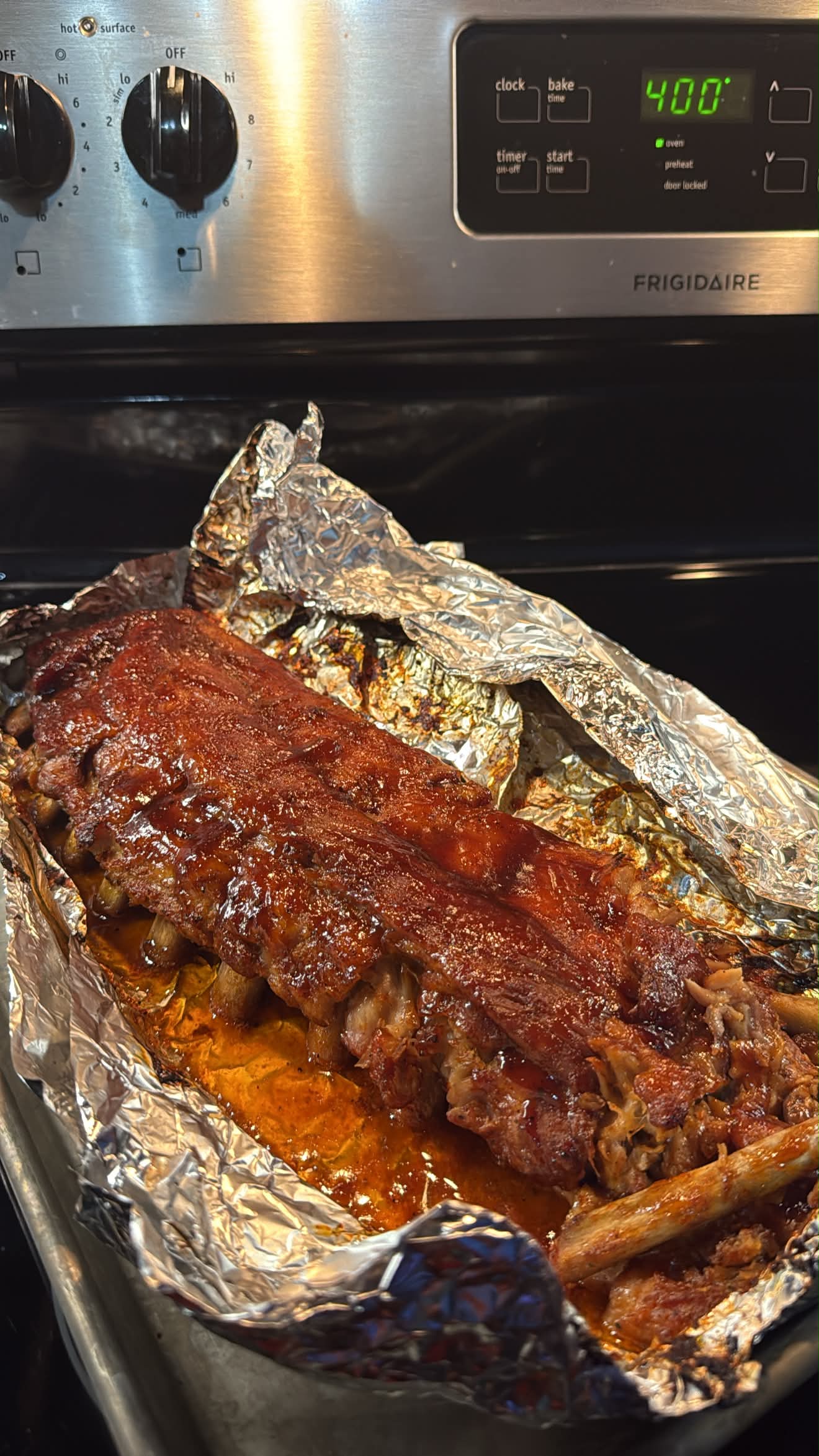
Fall-Off-the-Bone Oven-Baked BBQ Pork Ribs are the ultimate comfort food for barbecue lovers. Slowly baked at a low temperature, these ribs become wonderfully tender and juicy, while a sweet and smoky spice rub infuses the meat with rich flavor. A final coating of barbecue sauce, honey, and apple cider vinegar creates a glossy, caramelized finish that makes every bite irresistible.
The secret to this recipe is patience. The ribs cook slowly in a tightly sealed foil packet with a little broth, helping them retain moisture as the connective tissue softens. Once tender, they are uncovered, brushed generously with homemade-style barbecue glaze, and returned to a hot oven until the sauce becomes sticky and beautifully browned.
Although these ribs taste like something from a barbecue restaurant, they are surprisingly easy to make at home. No smoker or outdoor grill is required. Serve them with roasted potatoes, coleslaw, corn on the cob, or your favorite barbecue sides for a satisfying meal.
2. Origin
Barbecue ribs are strongly associated with American barbecue traditions, particularly in regions such as the Southern United States, where slow-cooked meat and distinctive sauces have developed into an important part of local food culture.
Different barbecue regions favor different techniques and flavors. Some use dry spice rubs and smoky cooking methods, while others are known for tomato-based sauces, vinegar-forward seasonings, or sweeter glazes. Pork ribs are especially popular because slow cooking can transform their connective tissue into a tender, flavorful dish.
This oven-baked version adapts barbecue-inspired flavors for the home kitchen. Smoked paprika provides a smoky character, brown sugar adds sweetness, and garlic, onion, and mustard powder create a savory spice blend. The final barbecue glaze brings everything together with a balance of sweetness and tanginess.
3. Cultural Significance
Barbecue ribs are often associated with family gatherings, summer cookouts, game-day meals, and casual celebrations. Their rich flavor and shareable presentation make them a popular centerpiece for meals enjoyed with friends and family.
Although traditional barbecue often involves outdoor grills or smokers, oven-baked ribs offer a convenient alternative for home cooks who want tender meat without specialized equipment. The slow cooking process allows the flavors to develop while leaving the cook free to prepare side dishes.
The sweet and smoky seasoning in this recipe reflects a familiar American-style barbecue profile. The final glaze adds a sticky finish that pairs well with classic sides such as baked beans, cornbread, potato salad, and coleslaw.
4. Ingredients and Quantities
For the Pork Ribs
- 1.5 kg pork ribs
- 2 tablespoons olive oil
- 2 tablespoons brown sugar
- 1 tablespoon smoked paprika
- 1 teaspoon garlic powder
- 1 teaspoon onion powder
- 1 teaspoon mustard powder
- ½ teaspoon chili powder or cayenne pepper, optional
- Salt and black pepper, to taste
- ½ cup beef or chicken broth
For the BBQ Glaze
- 1 cup barbecue sauce
- 2 tablespoons honey
- 1 tablespoon apple cider vinegar
Ingredient Notes
Pork ribs: Baby back ribs and spare ribs both work well. Baby back ribs are generally smaller and may cook more quickly, while spare ribs are often meatier and may need additional time.
Smoked paprika: This gives the dry rub a smoky flavor without requiring a smoker. Regular paprika can be used, but the flavor will be less smoky.
Brown sugar: Brown sugar adds sweetness and helps the seasoning develop a rich, browned surface during the final stage of cooking.
Mustard powder: This adds a subtle savory sharpness that balances the sugar and smoky paprika.
Broth: Beef or chicken broth adds moisture to the foil packet and contributes flavor as the ribs slowly cook.
Barbecue sauce: Use your favorite bottled sauce, whether sweet, smoky, spicy, or tangy. The final flavor of the dish will depend partly on the sauce you choose.
Honey: Honey adds sweetness and helps the glaze become glossy and caramelized.
Apple cider vinegar: A little vinegar balances the sweetness of the barbecue sauce and honey, giving the glaze a more rounded flavor.
5. Optional Additions
You can customize the seasoning and glaze to suit your preferences.
- Worcestershire sauce: Add 1 tablespoon to the barbecue glaze for extra savory depth.
- Hot sauce: Mix a little into the glaze if you prefer a spicy finish.
- Cayenne pepper: Increase the amount slightly for more heat in the dry rub.
- Garlic paste: Add a small amount to the barbecue sauce for a stronger garlic flavor.
- Molasses: Replace part of the honey with molasses for a deeper, darker sweetness.
- Orange juice: Add a small splash to the glaze for a subtle citrus note.
- Ground cumin: Include a pinch in the spice rub for earthy warmth.
- Fresh herbs: Serve the finished ribs with chopped parsley or green onions for a fresh contrast.
- Extra smoky flavor: Choose a smoky barbecue sauce or add a small amount of smoked chili powder.
6. Tips for Success
Remove the membrane. The thin membrane on the bone side of the ribs can remain chewy after cooking. Slide a butter knife underneath one edge, loosen it carefully, and pull it away using a paper towel for a better grip.
Dry the ribs thoroughly. Pat the meat dry before adding the oil and spice rub. This helps the seasoning adhere evenly.
Season generously. Spread the spice mixture over both sides of the ribs, paying attention to the meaty areas and the edges.
Seal the foil tightly. A secure foil packet helps retain moisture during the long cooking process. Use heavy-duty foil or a double layer if necessary, and place the packet on a rimmed baking sheet to catch any leaks.
Allow enough cooking time. The exact time depends on the rib cut, thickness, and your oven. Begin checking tenderness after about 2½ hours, and continue cooking if the meat still feels firm.
Judge tenderness by texture, not time alone. A fork or thin knife should slide into the meat with little resistance. The ribs should be tender, but they do not need to fall apart completely to be ready.
Apply the glaze near the end. Barbecue sauce and honey contain sugars that can burn during prolonged high-heat cooking. Brush the glaze on only after the ribs are tender.
Watch the final browning closely. At 220°C (425°F), the glaze can darken quickly. Check the ribs after about 8–10 minutes and remove them once the sauce is sticky and caramelized.
Rest before slicing. Let the ribs rest for approximately 10 minutes after baking. This makes them easier to handle and helps the juices settle.
Handle the foil carefully. Open the packet away from your face and hands because hot steam will escape.
7. Instructions
Step 1: Preheat the Oven and Prepare the Ribs
Preheat the oven to 300°F (150°C).
Place the pork ribs on a clean work surface. Remove the membrane from the bone side if it has not already been removed. Pat the ribs dry with paper towels.
If the rack is too large for your baking sheet, cut it into two manageable sections.
Step 2: Prepare the Dry Rub
In a small bowl, combine the brown sugar, smoked paprika, garlic powder, onion powder, mustard powder, optional chili powder, salt, and black pepper.
Mix thoroughly so the seasonings are evenly distributed.
Step 3: Season the Ribs
Rub the olive oil over both sides of the ribs. Sprinkle the spice mixture evenly over the meat, gently pressing it onto the surface.
For deeper flavor, you can let the seasoned ribs rest in the refrigerator for a few hours before cooking. If you do, keep them covered and return to the recipe when ready.
Step 4: Wrap the Ribs in Foil
Place the ribs on a large sheet of heavy-duty aluminum foil, meat side facing up. Pour the broth around the ribs, taking care not to wash away the seasoning.
Fold the foil over the meat and seal the edges tightly to create a packet that retains moisture.
Place the packet on a rimmed baking sheet.
Step 5: Bake Until Tender
Transfer the baking sheet to the preheated oven and bake for approximately 2½–3 hours.
Begin checking after 2½ hours. Carefully open a corner of the foil, watching for hot steam, and test the meat with a fork or thin knife. If the meat still feels firm, reseal the packet and continue cooking until tender.
Step 6: Prepare the BBQ Glaze
While the ribs finish cooking, combine the barbecue sauce, honey, and apple cider vinegar in a small bowl.
Stir until smooth. Taste and adjust if needed. Add a little more vinegar for extra tanginess or a small amount of honey for additional sweetness.
Step 7: Glaze the Ribs
Once the ribs are tender, carefully open the foil packet and fold the foil back. If there is a large amount of liquid, spoon off some of it carefully.
Brush the barbecue glaze generously over the top and sides of the ribs.
Increase the oven temperature to 425°F (220°C). Return the uncovered ribs to the oven and bake for approximately 10–15 minutes, until the sauce is sticky, glossy, and lightly caramelized.
Watch closely during this stage to prevent the sugars in the glaze from burning.
Step 8: Rest and Serve
Remove the ribs from the oven and let them rest for 10 minutes.
Transfer them to a cutting board and slice between the bones using a sharp knife. Arrange the ribs on a serving platter and brush with any remaining barbecue sauce that has not come into contact with raw meat.
Serve warm with your favorite sides.
8. Description
Fall-Off-the-Bone Oven-Baked BBQ Pork Ribs combine tender meat with a rich, smoky-sweet glaze. The slow oven cooking allows the ribs to become soft and juicy, while the spice rub adds layers of flavor from smoked paprika, garlic, onion, mustard, and black pepper.
The final barbecue coating creates a sticky, caramelized exterior with a balance of sweetness and acidity. Honey adds a glossy finish, while apple cider vinegar prevents the glaze from tasting overly sweet.
Each rib offers a satisfying contrast between the tender interior and the richly seasoned surface. The result is a comforting, barbecue-inspired dish that can be prepared indoors without a grill or smoker.
These ribs pair especially well with creamy coleslaw, roasted potatoes, corn on the cob, cornbread, or a fresh green salad. Their bold flavor also makes them an excellent choice for a casual gathering or a weekend family meal.
9. Nutritional Information
Approximate nutritional values per serving, assuming four servings from the full recipe:
- Calories: 650–800
- Protein: 35–45 g
- Carbohydrates: 25–35 g
- Fat: 40–55 g
- Saturated fat: 12–18 g
- Sugar: 18–25 g
- Sodium: 800–1,200 mg
These estimates can vary significantly depending on the cut of pork, the amount of edible meat, the barbecue sauce brand, and how much glaze is consumed. The values do not include side dishes.
For a more complete meal, serve the ribs with vegetables or a fresh salad alongside your preferred starch. You can also choose a lower-sodium barbecue sauce if you wish to reduce the salt content.
10. Conclusion
Fall-Off-the-Bone Oven-Baked BBQ Pork Ribs are a delicious way to enjoy classic barbecue-inspired flavors without needing outdoor cooking equipment. A smoky spice rub, slow oven cooking, and a glossy honey barbecue glaze create a dish that is tender, flavorful, and satisfying.
The method is straightforward: season the ribs, wrap them with broth, bake until tender, then glaze and finish at a higher temperature. Giving the meat enough time to soften and watching the final caramelization are the keys to excellent results.
Serve these ribs at a family dinner, a weekend gathering, or whenever you want a hearty meal with bold barbecue flavor. Once you master the basic technique, you can experiment with different sauces and seasonings to create your own signature version.
11. Recommendation
For a classic barbecue-style meal, serve the ribs with creamy coleslaw, baked beans, roasted potatoes, or corn on the cob. These sides complement the smoky sweetness of the glaze and provide a variety of textures.
For a balanced plate, add a green salad or steamed vegetables. If you are serving guests, arrange the ribs on a large platter with extra barbecue sauce on the side so everyone can adjust the amount to their liking.
The ribs can be prepared ahead by seasoning them and refrigerating them, covered, before cooking. You can also slow-bake them until tender and complete the glazing stage shortly before serving.
Refrigerate leftovers in an airtight container within two hours of cooking and use them within 3–4 days. Reheat thoroughly to 165°F (74°C), covered in the oven with a little broth or water to help prevent the meat from drying out. Uncover near the end if you want to refresh the glaze.
12. Embracing Healthful Indulgence
Enjoying barbecue ribs can be part of a varied eating pattern. Pork provides protein and several important nutrients, while the spice rub and glaze contribute much of the dish’s distinctive flavor.
If you prefer a less sweet glaze, use a little less honey or choose a barbecue sauce with less added sugar. You can also serve the ribs with a generous selection of vegetables, such as roasted carrots, broccoli, green beans, or a crisp cabbage salad.
Cooking the ribs slowly at home gives you control over the ingredients and seasoning. You can adjust the level of sweetness, salt, and spice to suit your preferences while preserving the rich barbecue character of the dish.
The goal is to enjoy a flavorful meal that suits the occasion. With tender pork, smoky seasoning, and a glossy barbecue finish, these oven-baked ribs offer a satisfying homemade alternative to restaurant-style barbecue.