
Introduction
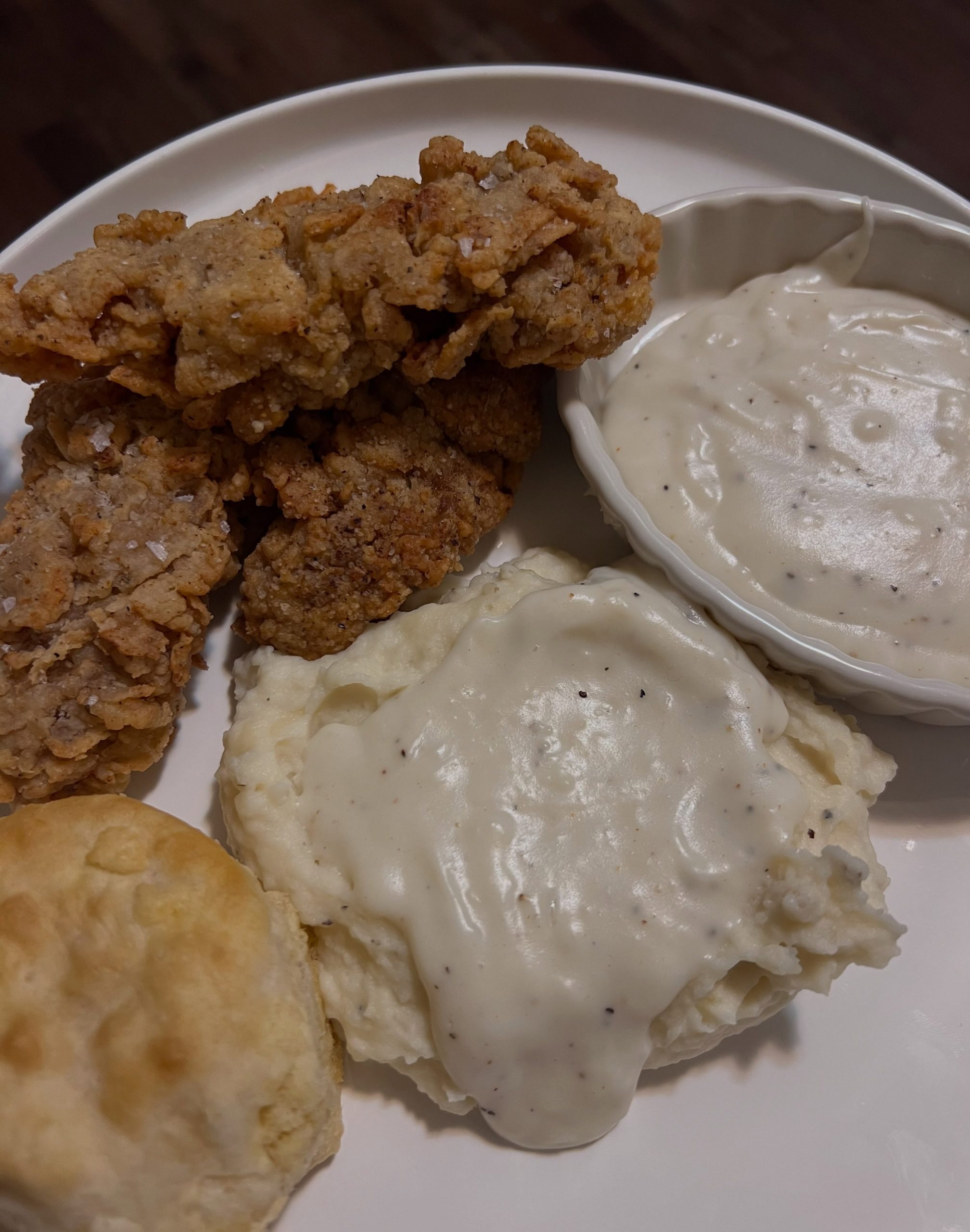
Bring the comforting flavors of a classic Southern-style dinner to your kitchen with this delicious combination of crispy fried chicken tenders, creamy mashed potatoes, fluffy homemade buttermilk biscuits, and rich country pepper gravy. This hearty meal brings together golden, crunchy chicken, buttery potatoes, tender biscuits, and a smooth, peppery sauce for an unforgettable comfort food experience.
The chicken tenders are marinated in tangy buttermilk, coated in seasoned flour, and fried until beautifully golden and crisp. The buttermilk helps create a tender, juicy interior, while the seasoned coating develops a satisfying crunch that makes every bite delicious.
Alongside the chicken, creamy mashed potatoes provide a soft, buttery contrast. Made with tender Yukon Gold or Russet potatoes, warm cream, and melted butter, they create the perfect base for a generous spoonful of homemade country gravy.
The freshly baked buttermilk biscuits add another layer of comfort. Their golden tops, delicate buttery layers, and soft centers make them ideal for enjoying with the rich gravy or serving alongside the crispy chicken.
What truly brings the entire plate together is the traditional white country pepper gravy. Prepared with a simple flour-and-fat roux, warm milk, and plenty of freshly ground black pepper, this velvety sauce complements every component of the meal.
Whether prepared for a Sunday family dinner, a weekend gathering, or a special homemade comfort food feast, this Southern-inspired combination delivers generous portions, familiar flavors, and satisfying textures.
Origin and Cultural Significance
Southern fried chicken, buttermilk biscuits, mashed potatoes, and country gravy are closely associated with the culinary traditions of the American South, where hearty home-cooked meals have long played an important role in family gatherings and community celebrations.
Fried chicken has a complex history shaped by African, European, and American culinary influences. African American cooks made particularly important contributions to the development and popularity of Southern fried chicken, including the seasoning and frying techniques that helped define the dish.
Buttermilk became a familiar ingredient in Southern cooking because of its availability in traditional dairy households and its usefulness in baking and marinades. In fried chicken recipes, its mild acidity contributes flavor and can help tenderize the meat.
Southern-style biscuits developed into an iconic accompaniment to breakfast and dinner meals. Unlike yeast breads, these biscuits rely on chemical leavening agents such as baking powder and baking soda to create a light, tender texture.
Country gravy, sometimes called white gravy or cream gravy, is another recognizable element of Southern comfort food. It is commonly prepared by combining cooking fat with flour and milk, creating a thick, creamy sauce seasoned generously with black pepper.
The practice of using flavorful pan drippings in gravy reflects a resourceful cooking tradition in which ingredients were used efficiently to add richness to otherwise simple dishes.
Mashed potatoes, although enjoyed in many cultures, became a natural companion to Southern-style meat dishes because their mild, creamy texture pairs beautifully with savory sauces and gravies.
Together, these four components create a meal that reflects the generous, comforting character of Southern-inspired home cooking.
Ingredients
For the Southern Fried Chicken Tenders
- 1 lb (approximately 450 g) chicken tenderloins
- 1 cup buttermilk
- 1 teaspoon hot sauce, optional
- 1 cup all-purpose flour
- 1 teaspoon salt
- 1 teaspoon garlic powder
- ½ teaspoon onion powder
- ½ teaspoon paprika
- ½ teaspoon freshly ground black pepper
- ¼ teaspoon cayenne pepper, optional
- Vegetable oil or canola oil, enough for approximately 1 inch of oil in the skillet
For the Creamy Country Pepper Gravy
- ¼ cup reserved chicken frying fat, carefully strained, or 4 tablespoons unsalted butter
- ¼ cup all-purpose flour
- 2–3 cups whole milk, slightly warmed
- ½ teaspoon coarsely ground black pepper, plus more to taste
- ½ teaspoon salt, or to taste
Note: Reserved frying fat adds savory flavor, but butter produces a delicious gravy as well. Use only clean, properly heated fat without burnt flour particles, and cook the gravy thoroughly.
For the Creamy Mashed Potatoes
- 2 lb (approximately 900 g) Yukon Gold or Russet potatoes
- ½ cup heavy cream or whole milk
- 4 tablespoons unsalted butter
- ½–1 teaspoon salt, or to taste
- ¼ teaspoon freshly ground black pepper
- 2 tablespoons sour cream or cream cheese, optional
For the Fluffy Buttermilk Biscuits
- 2 cups all-purpose flour, approximately 250 g
- 1 tablespoon baking powder
- ½ teaspoon baking soda
- 1 teaspoon salt
- ½ cup (113 g) cold unsalted butter, cubed or grated
- ¾–1 cup cold buttermilk, as needed
- 1 tablespoon additional flour for dusting, as needed
- 1–2 tablespoons melted butter, optional, for brushing after baking
Optional Additions
- Extra hot sauce: Add another teaspoon to the chicken marinade for a more noticeable spicy flavor.
- Smoked paprika: Replace regular paprika with smoked paprika for a deeper, slightly smoky chicken coating.
- Cayenne pepper: Add a pinch to the flour mixture for additional heat.
- Cornstarch: Replace 2 tablespoons of the dredging flour with cornstarch for an especially crisp coating.
- Fresh herbs: Add chopped parsley, chives, or thyme to the mashed potatoes for freshness.
- Roasted garlic: Mash a few roasted garlic cloves into the potatoes for a sweeter, richer garlic flavor.
- Cheddar cheese: Fold shredded cheddar into the hot mashed potatoes for a cheesy variation.
- Sour cream: Add a spoonful to the mashed potatoes for extra tanginess.
- Honey butter: Serve the biscuits with softened butter mixed with a little honey for a sweet contrast.
- Sausage gravy variation: Add cooked, crumbled breakfast sausage to the white gravy for a heartier sauce.
- Cracked black pepper: Sprinkle additional pepper over the finished gravy for a more traditional country-style presentation.
- Fresh parsley: Garnish the completed plate with finely chopped parsley for a little color.
Tips for Success
- Use fresh chicken tenderloins: Chicken tenderloins cook quickly and remain juicy when prepared correctly. Remove any tough tendons if desired.
- Allow time for marinating: A buttermilk soak of at least 30 minutes helps the seasoning coat the chicken and contributes to tenderness. For deeper flavor, refrigerate the chicken in the marinade for 2–4 hours.
- Season the flour generously: The flour coating provides much of the chicken’s flavor, so distribute the seasonings evenly.
- Double-dredge for extra crunch: Dipping the chicken into the buttermilk and flour mixture twice creates a thicker, more textured crust.
- Maintain the correct oil temperature: Aim for approximately 350°F (175°C). Oil that is too cool produces greasy chicken, while excessively hot oil may brown the exterior before the center cooks.
- Avoid overcrowding the skillet: Fry the tenders in small batches so the oil temperature remains relatively stable.
- Use a meat thermometer: Chicken must reach a safe internal temperature of 165°F (74°C).
- Drain on a wire rack: A wire rack allows excess oil to drip away while helping the crust remain crisp.
- Choose suitable potatoes: Yukon Gold potatoes produce a naturally creamy texture, while Russet potatoes create lighter, fluffier mashed potatoes.
- Start potatoes in cold water: This helps the pieces cook more evenly.
- Avoid overmixing mashed potatoes: Excessive mixing can release too much starch and create a gluey texture.
- Warm the dairy ingredients: Adding warm milk or cream and melted butter helps the potatoes remain smooth.
- Keep biscuit ingredients cold: Cold butter creates small pockets of steam during baking, helping the biscuits develop tender, flaky layers.
- Do not overwork biscuit dough: Excessive mixing and kneading can make biscuits dense and tough.
- Cut biscuits straight down: Avoid twisting the biscuit cutter, which may seal the edges and interfere with rising.
- Whisk gravy continuously at first: Gradually incorporating the milk prevents lumps and produces a smooth sauce.
- Adjust gravy thickness: Add additional warm milk if the gravy becomes too thick.
- Coordinate cooking times: Bake the biscuits and prepare the potatoes before frying the chicken. Make the gravy near the end so everything can be served warm.
Instructions
Step 1: Prepare the Chicken Tenderloins
Place the chicken tenderloins on a clean cutting board.
Inspect each piece and remove any visible tough tendons if desired.
Pat the chicken lightly with paper towels to remove excess surface moisture.
If the tenderloins vary significantly in thickness, gently flatten the thickest sections to encourage more even cooking.
Transfer the prepared chicken to a large bowl or resealable food-safe bag.
Keep raw chicken separate from ready-to-eat ingredients and wash your hands and utensils thoroughly after handling it.
Step 2: Marinate the Chicken in Buttermilk
Pour the buttermilk over the chicken tenderloins.
Add the optional hot sauce and stir gently until every piece is coated.
Cover the bowl or seal the bag and place it in the refrigerator.
Allow the chicken to marinate for at least 30 minutes. For a more developed flavor, refrigerate for approximately 2–4 hours.
The buttermilk helps the seasoned coating adhere to the chicken and contributes to a tender texture.
When ready to fry, remove the chicken from the refrigerator while preparing the flour mixture and heating the oil. Do not leave it at room temperature for extended periods.
Step 3: Prepare the Seasoned Flour Coating
In a wide, shallow bowl, combine the all-purpose flour, salt, garlic powder, onion powder, paprika, and black pepper.
Add cayenne pepper if you prefer a lightly spicy coating.
Whisk thoroughly to distribute the seasonings evenly.
For an extra-crispy variation, replace 2 tablespoons of the flour with cornstarch.
Set the seasoned flour near the bowl of marinated chicken to create an organized dredging station.
Step 4: Dredge the Chicken Tenders
Remove one chicken tenderloin from the buttermilk marinade, allowing the excess liquid to drip back into the bowl.
Place the chicken in the seasoned flour and press the coating gently onto all sides.
Shake off any loose flour.
For a thicker, crunchier crust, briefly return the coated chicken to the buttermilk and then dredge it in the seasoned flour a second time.
Place the breaded chicken on a clean tray or wire rack.
Repeat with the remaining tenderloins.
Allow the coating to rest for approximately 5–10 minutes while the oil heats. This helps the flour hydrate slightly and adhere to the chicken.
Discard any leftover marinade and flour mixture that have come into contact with raw chicken.
Step 5: Heat the Frying Oil
Pour enough vegetable or canola oil into a deep, heavy-bottomed skillet to reach approximately 1 inch in depth.
Make sure the skillet has sufficiently high sides and is not filled more than halfway with oil.
Heat over medium to medium-high heat until the oil reaches approximately 350°F (175°C).
Use a cooking thermometer to monitor the temperature accurately.
Prepare a clean wire rack set over a baking sheet for draining the cooked chicken.
Avoid adding the chicken before the oil reaches the correct temperature, as this may result in a greasy coating.
Step 6: Fry the Chicken Until Golden and Crispy
Carefully lower a few breaded chicken tenders into the hot oil using tongs.
Do not overcrowd the skillet.
Fry for approximately 3–4 minutes on the first side, then turn and cook for another 3–4 minutes, depending on the thickness of the chicken.
The coating should become deeply golden brown and crisp.
Check the thickest part of each tenderloin with an instant-read thermometer.
The chicken is fully cooked when it reaches an internal temperature of 165°F (74°C).
Transfer the cooked tenders to the prepared wire rack.
Repeat with the remaining chicken, allowing the oil to return to approximately 350°F (175°C) between batches.
Keep the cooked chicken warm in a low oven if necessary while finishing the meal.
Step 7: Reserve the Frying Fat for the Gravy
Once the chicken has finished frying, turn off the heat and allow the oil to cool enough to handle safely.
Carefully measure ¼ cup of usable frying fat, straining out burnt flour particles.
Transfer it to a saucepan for preparing the country gravy.
If the frying fat is excessively dark, bitter-smelling, or contains burnt coating, discard it safely after cooling and use unsalted butter instead.
Never pour hot frying oil down the sink.
Step 8: Prepare the Potatoes for Mashing
Peel the Yukon Gold or Russet potatoes if desired.
Cut them into evenly sized cubes, approximately 1½ inches thick.
Place the potatoes in a large saucepan and cover with cold water by approximately 1 inch.
Add a generous pinch of salt.
Bring the water to a boil over medium-high heat.
Reduce to a steady simmer and cook for approximately 15–20 minutes, until the potatoes are completely tender when pierced with a fork.
The pieces should break apart easily without remaining firm in the center.
Step 9: Drain and Mash the Potatoes
Drain the cooked potatoes thoroughly in a colander.
Return them to the warm saucepan over very low heat for approximately 30–60 seconds, stirring gently to evaporate excess moisture.
Remove the pan from the heat.
Use a potato masher or potato ricer to mash the potatoes until smooth and fluffy.
Avoid using a food processor or blender, as excessive mechanical mixing can produce a sticky texture.
Step 10: Add the Butter and Cream
In a small saucepan, warm the heavy cream or whole milk together with the butter over low heat.
Stir until the butter melts completely.
Gradually pour the warm mixture into the mashed potatoes, folding gently with a spoon or spatula.
Continue until the potatoes become creamy and smooth.
Add the salt and black pepper.
If desired, fold in the sour cream or softened cream cheese for additional richness.
Taste and adjust the seasoning.
Cover the saucepan and keep the mashed potatoes warm until serving.
Step 11: Preheat the Oven for the Buttermilk Biscuits
Preheat the oven to 425°F (220°C).
Line a baking sheet with parchment paper.
For biscuits with soft sides and a higher rise, arrange them close together on the baking sheet.
For slightly crispier edges, leave a little space between them.
Place the butter in the refrigerator or freezer until ready to incorporate it into the dough.
Cold ingredients are essential for creating tender, flaky biscuit layers.
Step 12: Mix the Biscuit Dry Ingredients
In a large mixing bowl, whisk together the all-purpose flour, baking powder, baking soda, and salt.
Make sure the leavening agents are evenly distributed throughout the flour.
This helps the biscuits rise consistently during baking.
Avoid packing the flour tightly when measuring. For the most reliable results, use a kitchen scale.
Step 13: Incorporate the Cold Butter
Add the cold, cubed or grated butter to the flour mixture.
Using a pastry blender, fork, or your fingertips, work the butter into the flour until the mixture resembles coarse crumbs with some pea-sized pieces of butter remaining.
Do not blend the butter completely into the flour.
Small visible pieces of butter help create flaky layers as they melt and release steam during baking.
Work quickly to prevent the butter from becoming too warm.
Step 14: Add the Buttermilk and Form the Dough
Begin by pouring ¾ cup of cold buttermilk into the flour-and-butter mixture.
Stir gently with a fork or spatula until the ingredients begin forming a shaggy dough.
If dry flour remains at the bottom of the bowl, add additional buttermilk one tablespoon at a time.
The dough should be slightly sticky but not excessively wet.
Avoid stirring until completely smooth.
Overmixing develops gluten and may produce dense, tough biscuits.
Step 15: Fold the Dough for Flaky Layers
Turn the dough onto a lightly floured work surface.
Gently press it together and pat it into a rectangle.
Fold one-third of the dough toward the center, then fold the opposite third over it, similar to folding a letter.
Rotate the dough and gently flatten it again.
Repeat this folding process approximately 3–4 times, handling the dough as lightly as possible.
These folds create layers of dough and butter that separate during baking.
After the final fold, pat the dough to approximately 1 inch thick.
Avoid pressing too firmly or using excessive flour.
Step 16: Cut and Bake the Buttermilk Biscuits
Using a sharp, round biscuit cutter approximately 2–2½ inches wide, press straight down into the dough.
Lift the cutter without twisting.
Arrange the biscuits on the prepared baking sheet.
Gather any scraps gently and cut additional biscuits, minimizing reworking.
Bake for approximately 12–15 minutes, or until the biscuits have risen and developed lightly golden tops.
Depending on their thickness and your oven, they may need a few additional minutes.
Remove the biscuits from the oven and immediately brush the tops with melted butter if desired.
Allow them to cool briefly before serving.
Step 17: Prepare the Country Gravy Roux
Place the reserved frying fat or unsalted butter in a medium saucepan over medium heat.
Once the fat is warm, sprinkle in the flour.
Whisk continuously until the mixture becomes smooth.
Cook for approximately 1–2 minutes, stirring constantly.
The flour should lose its raw aroma while remaining pale golden rather than deeply browned.
This flour-and-fat mixture, known as a roux, forms the thickening base of the country gravy.
Step 18: Gradually Add the Milk
Warm the whole milk slightly in a separate saucepan or microwave-safe container.
Begin adding the milk to the roux a small amount at a time.
Whisk continuously as the liquid is incorporated.
The mixture may initially become very thick, but it will loosen as more milk is added.
Continue adding milk gradually until approximately 2 cups have been incorporated.
Whisk until the gravy becomes smooth and free of lumps.
Reserve the remaining milk for adjusting the consistency.
Step 19: Simmer and Season the Country Gravy
Bring the gravy to a gentle simmer over medium-low heat.
Cook for approximately 5–7 minutes, stirring frequently, until it thickens enough to coat the back of a spoon.
Add the salt and coarsely ground black pepper.
Stir thoroughly and taste.
For a traditional peppery country gravy, the black pepper should be noticeable without overwhelming the creamy flavor.
If the gravy becomes too thick, add a little additional warm milk.
If it remains too thin, simmer gently for another minute or two.
Keep the gravy warm over very low heat until serving.
Step 20: Assemble the Southern Comfort Food Plate
Place a generous scoop of creamy mashed potatoes on each serving plate.
Arrange two or three crispy fried chicken tenders alongside the potatoes, depending on their size.
Add a freshly baked buttermilk biscuit to the plate.
Spoon warm country pepper gravy over the mashed potatoes, allowing some of it to flow naturally around the chicken.
For maximum crispness, serve additional gravy on the side rather than covering all the fried chicken.
Sprinkle a little freshly cracked black pepper over the gravy.
Garnish with chopped parsley if desired.
Serve immediately while the chicken is crisp, the potatoes are creamy, the biscuits are warm, and the gravy is smooth and flavorful.
Optional Method: Prepare Extra-Crispy Chicken Tenders
For an especially textured coating, replace 2 tablespoons of the dredging flour with cornstarch.
After the first flour coating, dip each tenderloin back into the buttermilk and coat it with seasoned flour again.
Press the flour mixture gently onto the chicken to encourage small, irregular pieces of coating.
Rest the breaded chicken briefly before frying.
Maintain the oil temperature near 350°F (175°C) and cook until the chicken reaches 165°F (74°C) internally.
Drain on a wire rack rather than directly on paper towels to help preserve the crisp crust.
Description
Southern Fried Chicken Tenders with Creamy Mashed Potatoes, Fluffy Buttermilk Biscuits, and Country Pepper Gravy is a comforting, generously portioned meal that combines several beloved Southern-style dishes.
The chicken tenders feature a deeply golden, seasoned crust with a satisfying crunch. Inside, the chicken remains tender and juicy, thanks to the buttermilk marinade and careful frying.
The mashed potatoes provide a smooth, buttery contrast to the crispy chicken. Their soft texture makes them especially delicious when topped with warm country gravy.
Freshly baked buttermilk biscuits add a delicate, flaky element to the meal. Their golden tops and tender centers are perfect for soaking up the creamy sauce.
The country pepper gravy brings the entire plate together with its velvety consistency, savory richness, and distinctive black pepper flavor.
Each component complements the others, creating a satisfying combination of crispy, creamy, fluffy, and savory textures.
This meal is especially appealing for family dinners, weekend comfort food gatherings, and occasions when a hearty homemade plate is the perfect choice.
Nutritional Information
Approximate values per serving, assuming the recipe serves 4 and includes fried chicken tenders, mashed potatoes, one biscuit, and a portion of country gravy:
- Calories: 1,000–1,400 kcal
- Protein: 38–50 g
- Carbohydrates: 95–125 g
- Fat: 45–75 g
- Saturated Fat: 18–30 g
- Fiber: 4–7 g
- Sugar: 8–13 g
- Sodium: 1,100–1,800 mg
These estimates vary considerably depending on the size of the chicken tenders, the amount of oil absorbed during frying, the quantity of butter and cream used, biscuit size, and gravy portions.
The meal is rich in protein and carbohydrates but can also be relatively high in calories, saturated fat, and sodium.
Serving smaller portions of gravy or biscuits and pairing the meal with vegetables can help create a more balanced plate.
Recipe Details
- Prep Time: Approximately 35–45 minutes, plus chicken marinating time
- Cook Time: Approximately 40–55 minutes, with overlapping preparation
- Total Time: Approximately 1 hour 20 minutes to 1 hour 40 minutes, plus any extended marinating
- Servings: 4 generous servings
- Cuisine: Southern American-inspired comfort food
- Course: Main course
- Cooking Methods: Marinating, dredging, shallow frying, boiling, mashing, baking, and simmering
- Difficulty: Moderate
Conclusion
Southern Fried Chicken Tenders with Creamy Mashed Potatoes, Fluffy Buttermilk Biscuits, and Country Pepper Gravy brings together some of the most comforting elements of Southern-inspired home cooking.
The crispy, golden chicken offers a delicious contrast to the smooth mashed potatoes, while the freshly baked biscuits contribute buttery layers and a soft, tender interior.
The homemade country pepper gravy ties the meal together with its creamy texture and bold black pepper seasoning.
Although preparing four components requires a little planning, each recipe uses familiar ingredients and approachable cooking techniques.
The result is a hearty, satisfying meal that feels special enough for a family gathering while remaining achievable in a home kitchen.
Whether enjoyed for Sunday dinner, a weekend treat, or a comforting homemade feast, this combination delivers rich flavors, appealing textures, and the pleasure of classic comfort food.
Recommendation
For the best eating experience, serve the chicken tenders immediately after frying while their crust remains crisp.
Keep the mashed potatoes warm and covered until serving, and prepare the gravy shortly before bringing the meal to the table.
Freshly baked biscuits taste especially delicious when served warm with a light brushing of melted butter.
If preparing the meal for guests, consider baking the biscuits first and keeping them loosely covered. Cook the potatoes next, then fry the chicken and prepare the gravy near serving time.
For a more balanced presentation, add a side of steamed green beans, roasted broccoli, sautéed greens, or a simple garden salad.
Leftover chicken, mashed potatoes, biscuits, and gravy should be stored separately in airtight containers.
Refrigerate cooked leftovers promptly, within 2 hours of preparation, or within 1 hour if the surrounding temperature exceeds 90°F (32°C).
Use refrigerated leftovers within 3–4 days.
For reheating, place the chicken tenders on a wire rack in a 350°F (175°C) oven until heated thoroughly to 165°F (74°C). This method helps restore some of the coating’s crispness.
Reheat mashed potatoes gently with a splash of milk or cream to restore their creamy texture.
Warm the gravy in a saucepan over low heat, whisking in additional milk if it has thickened during refrigeration.
Biscuits can be reheated briefly in a warm oven until soft and heated through.
For longer storage, freeze the cooked chicken tenders and biscuits separately in freezer-safe containers for approximately 2–3 months for best quality.
Embracing Healthful Indulgence
This Southern-inspired comfort food meal demonstrates how familiar ingredients can come together to create a satisfying and memorable dining experience.
Chicken tenderloins provide protein, while potatoes contribute carbohydrates, potassium, and vitamin C. Milk and buttermilk supply calcium and additional nutrients.
The biscuits and gravy add richness and flavor, making the meal particularly comforting, although the combination is relatively high in energy and saturated fat.
For a lighter variation, chicken tenders can be oven-baked or air-fried with a light coating of oil rather than shallow-fried. The resulting texture will differ from traditional fried chicken but can still be flavorful and satisfying.
Mashed potatoes can be prepared with whole milk instead of heavy cream, and the amount of butter can be adjusted to personal preference.
For the country gravy, using part low-fat milk and a smaller portion of fat can reduce richness while maintaining a creamy consistency.
Serving a moderate portion of gravy and including a generous side of vegetables can also help balance the meal.
Fresh green beans, roasted carrots, steamed broccoli, or a crisp salad provide additional fiber, color, and freshness.
Ultimately, enjoying comfort food is about appreciating flavor, tradition, and the pleasure of a well-prepared meal. By adjusting portions and including a variety of foods, this delicious Southern-style dinner can be enjoyed as an occasional indulgence within a balanced eating pattern.