
Introduction
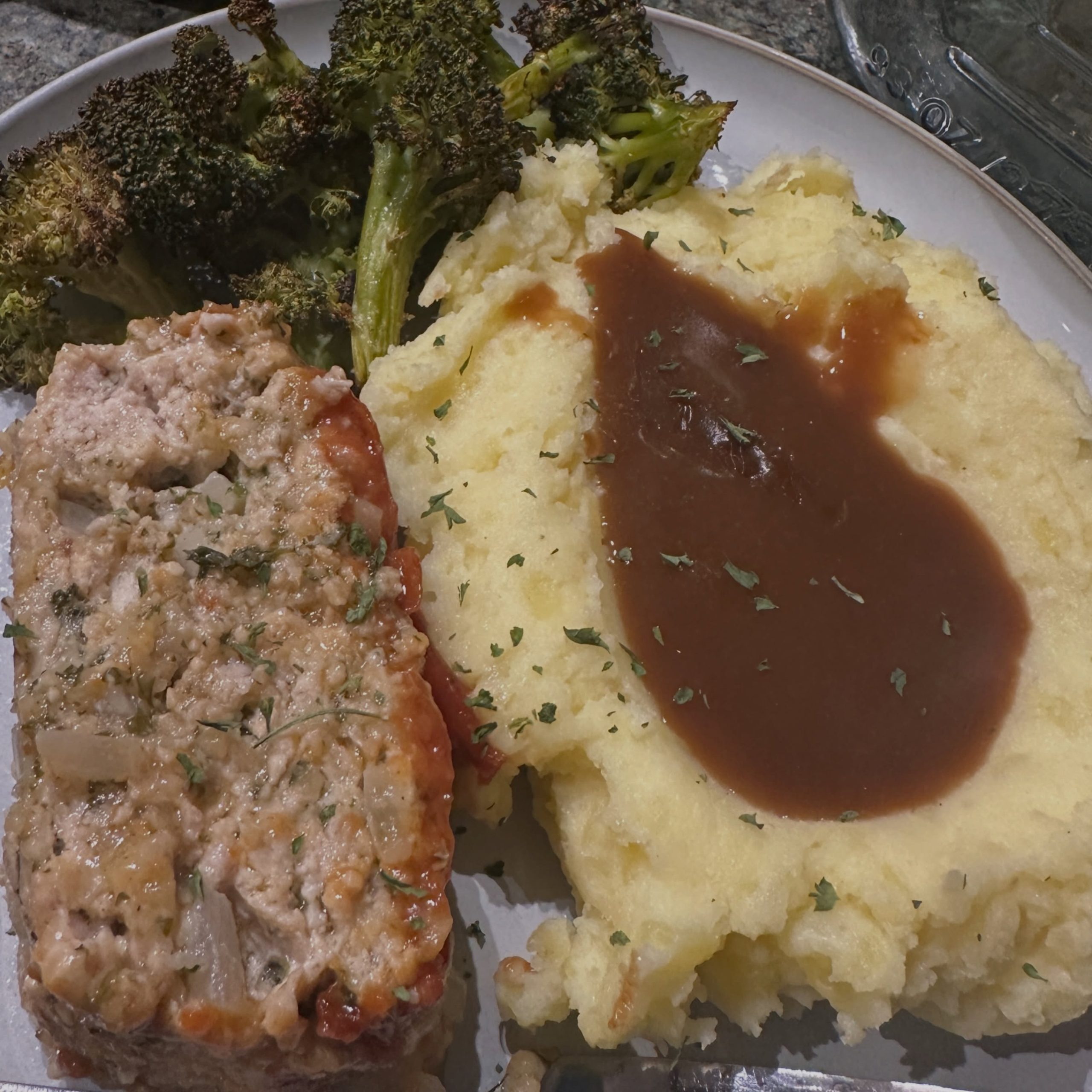
Bring the comforting flavors of a classic homemade dinner to your table with this delicious Savory Glazed Meatloaf served alongside creamy mashed potatoes, rich brown gravy, and garlic-herb roasted broccoli. This hearty meal combines tender, flavorful beef, buttery potatoes, savory gravy, and perfectly roasted vegetables for a satisfying family-style dinner.
The centerpiece of this dish is a juicy, herb-flecked meatloaf made with ground beef, finely diced onions, garlic, breadcrumbs, and a carefully balanced blend of seasonings. A sweet and tangy tomato glaze creates a glossy finish that complements the savory richness of the meat.
Unlike traditional large meatloaves that can require more than an hour to bake, this recipe uses individual-sized portions. The smaller loaves cook more quickly, develop attractive caramelized edges, and are easy to serve.
Alongside the meatloaf, fluffy mashed potatoes provide a smooth, buttery contrast. Made with tender Yukon Gold or Russet potatoes, warm milk, and melted butter, they create the perfect foundation for a generous serving of homemade brown gravy.
The gravy is prepared using a simple butter-and-flour roux combined with beef broth and Worcestershire sauce. Its smooth consistency and deep savory flavor bring the meatloaf and mashed potatoes together beautifully.
Completing the plate is a generous serving of garlic-herb roasted broccoli. High-temperature roasting creates lightly crisp, golden edges while preserving the broccoli’s tender interior and fresh vegetable flavor.
Perfect for weeknight dinners, Sunday family meals, or cozy evenings at home, this complete comfort food combination delivers a satisfying balance of flavors, textures, and colors.
Origin and Cultural Significance
Meatloaf is a familiar comfort food in American home cooking, although dishes made from seasoned ground meat have existed in many culinary traditions for centuries.
Early versions of minced-meat preparations appeared in European cooking, where ground or finely chopped meat was often combined with bread, eggs, herbs, and other ingredients before being baked or roasted.
In the United States, meatloaf became especially popular as an economical and practical family meal. Combining ground meat with breadcrumbs, milk, and vegetables allowed cooks to prepare a filling dish using accessible ingredients.
During the twentieth century, meatloaf became strongly associated with American home cooking, particularly as a convenient dinner that could feed an entire family.
Tomato-based toppings, including ketchup glazes, developed into one of the dish’s most recognizable features. Their sweetness and acidity provide a pleasant contrast to the rich, savory meat.
Mashed potatoes are another longstanding comfort food enjoyed across many cultures. Their creamy texture makes them an especially popular accompaniment to roasted meats, meatloaf, and gravy.
Brown gravy, traditionally prepared from meat drippings, broth, and thickening ingredients, contributes richness and moisture to the meal.
Roasted vegetables complete the combination by adding freshness, color, and contrasting texture.
The pairing of glazed meatloaf, mashed potatoes, brown gravy, and vegetables represents a classic American-style comfort food dinner that continues to be enjoyed in homes and casual restaurants.
Ingredients
For the Savory Individual Meatloaves
- 1½ lb (approximately 680 g) ground beef, preferably 85–90% lean
- 1 cup panko breadcrumbs
- 1 small yellow onion, finely diced
- 2 garlic cloves, minced
- 1 large egg
- ½ cup whole milk
- 1 tablespoon Worcestershire sauce
- 1 tablespoon Dijon mustard
- ¼ cup ketchup
- 1 teaspoon fine salt
- ½ teaspoon freshly ground black pepper
- 1 tablespoon finely chopped fresh parsley
- ½ teaspoon dried thyme, optional
- ½ teaspoon smoked paprika, optional
Note: Ground turkey can replace the beef. Turkey meatloaf must reach an internal temperature of 165°F (74°C), while ground beef meatloaf must reach 160°F (71°C).
For the Sweet Tomato Glaze
- ¼ cup ketchup
- 1 tablespoon brown sugar
- 1 teaspoon Worcestershire sauce
- 1 teaspoon apple cider vinegar or Dijon mustard, optional
For the Creamy Mashed Potatoes
- 2 lb (approximately 900 g) Yukon Gold or Russet potatoes
- 4 tablespoons unsalted butter
- ½ cup whole milk or heavy cream
- 2 tablespoons sour cream, optional
- ½–1 teaspoon salt, or to taste
- ¼ teaspoon freshly ground black pepper
- 1 tablespoon finely chopped fresh parsley or chives, optional
For the Garlic-Herb Roasted Broccoli
- 1 large head fresh broccoli, approximately 1–1½ lb (450–680 g)
- 2 tablespoons olive oil
- ½ teaspoon garlic powder
- ¼ teaspoon onion powder
- ½ teaspoon dried Italian herbs or thyme
- ¼ teaspoon salt, or to taste
- ¼ teaspoon freshly ground black pepper
- 1 teaspoon fresh lemon juice, optional
For the Rich Brown Gravy
- 2 tablespoons unsalted butter
- 2 tablespoons all-purpose flour
- 1½ cups low-sodium beef broth
- ½ teaspoon Worcestershire sauce
- ¼ teaspoon freshly ground black pepper
- Salt, to taste
- ½ teaspoon Dijon mustard, optional, for additional depth
For Garnishing and Serving
- Freshly chopped parsley
- Additional freshly ground black pepper
- Extra brown gravy, if desired
- A small amount of melted butter for the mashed potatoes, optional
Optional Additions
- Ground turkey: Substitute ground turkey for beef to create a lighter-tasting meatloaf.
- Ground pork: Replace a portion of the beef with ground pork for a richer, more tender meatloaf.
- Grated carrots: Add ¼ cup of finely grated carrots to the meat mixture for subtle sweetness and moisture.
- Finely chopped mushrooms: Stir in ¼ cup of sautéed mushrooms for additional savory flavor.
- Fresh thyme: Add 1 teaspoon of chopped thyme to the meat mixture for an aromatic herbal note.
- Smoked paprika: Include a small amount in the meatloaf for a deeper, smoky flavor.
- Brown sugar: Increase the glaze’s sweetness slightly for a more caramelized finish.
- Hot sauce: Add a few drops to the tomato glaze for a sweet-and-spicy variation.
- Roasted garlic: Mash roasted garlic cloves into the potatoes for extra flavor.
- Cream cheese: Add 2 tablespoons to the mashed potatoes for additional richness.
- Parmesan cheese: Sprinkle freshly grated Parmesan over the roasted broccoli.
- Lemon zest: Add a little lemon zest to the broccoli after roasting for a bright finish.
- Caramelized onions: Stir a spoonful into the brown gravy for extra depth.
- Sautéed mushrooms: Add sliced mushrooms to the gravy for a hearty mushroom gravy variation.
Tips for Success
- Choose ground beef with moderate fat content: Ground beef that is too lean can produce a dry meatloaf, while excessively fatty beef may release too much grease.
- Use panko breadcrumbs: Panko helps absorb moisture and creates a tender texture without making the meatloaf overly dense.
- Allow the breadcrumbs to absorb the milk: Briefly soaking the breadcrumbs helps keep the meatloaf moist.
- Dice the onion finely: Small pieces distribute evenly throughout the meat mixture and soften more easily during cooking.
- Avoid overmixing: Excessive handling can make the finished meatloaf dense and tough.
- Shape evenly sized portions: Individual meatloaves of similar size cook at approximately the same rate.
- Use a meat thermometer: Ground beef should reach 160°F (71°C), while ground turkey should reach 165°F (74°C).
- Apply the glaze in layers: A light initial coating followed by a second brushing near the end creates a glossy finish.
- Monitor glaze caramelization: Ketchup and brown sugar contain sugars that can darken quickly in a hot oven.
- Cut broccoli into similar-sized florets: Uniform pieces roast more evenly.
- Dry the broccoli thoroughly: Excess moisture encourages steaming rather than browning.
- Avoid overcrowding the baking sheet: Leave enough space around the broccoli for hot air to circulate.
- Use cold water for the potatoes: Starting potatoes in cold water promotes more even cooking.
- Drain potatoes thoroughly: Excess water can make mashed potatoes thin and watery.
- Warm the milk and butter: Warm dairy ingredients incorporate more smoothly into mashed potatoes.
- Do not overwork the potatoes: Excessive mixing can create a sticky or gluey texture.
- Whisk the gravy continuously: Gradually adding broth while whisking helps prevent lumps.
- Use low-sodium broth: This provides better control over the finished gravy’s saltiness.
- Let the meatloaf rest: A short resting period helps the juices settle before slicing.
- Coordinate the cooking: Begin the meatloaf and potatoes first, then prepare the broccoli and gravy while the other components cook.
Instructions
Step 1: Preheat the Oven and Prepare the Baking Sheets
Preheat the oven to 425°F (220°C).
Line a large rimmed baking sheet with aluminum foil or oven-safe parchment paper.
For easier cleanup and better separation, consider using two baking sheets: one for the meatloaves and another for the broccoli.
Using separate trays is especially helpful because the meatloaf releases juices during baking, while the broccoli benefits from a dry surface and good air circulation.
If using one baking sheet, leave enough room between the meatloaves and vegetables, and prevent raw meat juices from contacting broccoli that might be removed earlier.
Set the prepared baking sheets aside.
Step 2: Prepare the Meatloaf Aromatics
Finely dice the yellow onion and mince the garlic cloves.
Chop the fresh parsley.
For a softer onion texture, heat a small skillet over medium heat with a teaspoon of olive oil.
Cook the diced onion for approximately 3–4 minutes until softened.
Add the minced garlic and cook for another 30 seconds.
Remove from the heat and allow the mixture to cool slightly.
This optional sautéing step reduces the sharpness of raw onion and garlic while developing additional flavor.
Step 3: Prepare the Breadcrumb Mixture
In a large mixing bowl, combine the panko breadcrumbs and milk.
Stir gently until the breadcrumbs are evenly moistened.
Allow the mixture to rest for approximately 3–5 minutes.
The breadcrumbs will absorb the milk and soften, creating a mixture that helps retain moisture in the meatloaf.
This technique contributes to a tender finished texture.
Step 4: Combine the Meatloaf Ingredients
Add the ground beef to the bowl containing the moistened breadcrumbs.
Add the diced onion, minced garlic, egg, Worcestershire sauce, Dijon mustard, ketchup, salt, black pepper, and chopped parsley.
Include the optional thyme and smoked paprika if desired.
Using clean hands or a large fork, gently combine the ingredients until evenly distributed.
Avoid squeezing, kneading, or mixing the meat excessively.
The mixture should hold together when shaped but remain soft and slightly moist.
Step 5: Shape the Individual Meatloaves
Divide the meat mixture into four equal portions.
Shape each portion into an oval loaf approximately 4–5 inches long and 1½–2 inches thick.
Place the individual meatloaves on the prepared baking sheet.
Leave approximately 1–2 inches of space between them.
Smooth the tops gently without compacting the meat too firmly.
The individual portions allow the meatloaf to cook more quickly than a traditional large loaf.
Step 6: Prepare the Sweet Tomato Glaze
In a small bowl, combine the ketchup, brown sugar, and Worcestershire sauce.
Add the optional apple cider vinegar or Dijon mustard for a slightly tangier finish.
Stir until the brown sugar is evenly incorporated.
The glaze should have a smooth, spreadable consistency.
Brush a thin layer over the top of each individual meatloaf.
Reserve the remaining glaze for the final stage of baking.
Keep any glaze that has touched raw meat separate from the unused portion.
Step 7: Begin Baking the Meatloaves
Place the meatloaves in the preheated oven.
Bake at 425°F (220°C) for approximately 15 minutes.
During this initial stage, the exterior begins to firm up and the tomato glaze starts developing color.
The exact cooking time will depend on the thickness of the portions and the oven’s performance.
Avoid relying on appearance alone to determine doneness.
Step 8: Prepare the Broccoli for Roasting
While the meatloaves begin baking, wash the broccoli under cool running water.
Cut the head into medium-sized florets, keeping the pieces relatively uniform.
Trim away any tough sections of the stalk.
Dry the florets thoroughly using a clean kitchen towel or paper towels.
Place the broccoli in a large mixing bowl.
Drizzle with olive oil.
Add the garlic powder, onion powder, dried herbs, salt, and black pepper.
Toss until the florets are evenly coated.
Step 9: Roast the Garlic-Herb Broccoli
Spread the seasoned broccoli in a single layer on a separate baking sheet.
Avoid piling the florets on top of one another.
Place the baking sheet in the 425°F (220°C) oven.
Roast for approximately 15–20 minutes, turning once halfway through.
The broccoli should become tender with lightly browned, crisp edges.
Some darker roasted spots are desirable because they contribute a nutty, caramelized flavor.
If the broccoli finishes before the meatloaf, remove it from the oven and keep it loosely covered.
For a brighter finish, drizzle with a small amount of lemon juice just before serving.
Step 10: Finish Glazing and Baking the Meatloaves
After the meatloaves have baked for approximately 15 minutes, remove the tray briefly from the oven.
Brush the tops with the remaining clean tomato glaze.
Return the tray to the oven.
Continue baking for approximately 10–20 minutes, depending on the size and thickness of the meatloaves.
The glaze should become glossy and lightly caramelized.
Check the center of the thickest meatloaf with an instant-read thermometer.
For ground beef, the internal temperature must reach 160°F (71°C).
For ground turkey, the internal temperature must reach 165°F (74°C).
Remove the meatloaves from the oven once fully cooked.
Allow them to rest for approximately 5 minutes before slicing.
Step 11: Prepare the Potatoes
While the meatloaves bake, peel the potatoes if desired.
Cut them into evenly sized cubes, approximately 1–1½ inches thick.
Place the potatoes in a large saucepan.
Cover with cold water by approximately 1 inch.
Add a generous pinch of salt.
Place the saucepan over high heat and bring the water to a boil.
Reduce to medium heat and maintain a steady simmer.
Step 12: Boil the Potatoes Until Tender
Cook the potatoes for approximately 12–20 minutes, depending on the size of the pieces.
Check tenderness by piercing a potato cube with a fork.
The fork should slide through easily without resistance.
Avoid undercooking the potatoes, as firm pieces can create lumps when mashed.
Once tender, drain the potatoes thoroughly in a colander.
Return them to the warm saucepan.
Allow them to sit over very low heat for approximately 30–60 seconds to evaporate excess moisture.
Remove from the heat.
Step 13: Mash the Potatoes
Using a potato masher or potato ricer, mash the cooked potatoes until smooth.
For a rustic texture, leave a few small pieces intact.
For exceptionally smooth mashed potatoes, use a potato ricer.
Avoid using a blender or food processor, as excessive mixing can release too much starch and create a gluey consistency.
Step 14: Add the Butter and Milk
In a small saucepan or microwave-safe container, warm the milk or cream together with the butter.
Heat gently until the butter melts.
Gradually pour the warm mixture into the mashed potatoes.
Fold gently with a spoon or spatula until the potatoes become creamy and fluffy.
Add the optional sour cream for a subtle tangy flavor.
Season with salt and freshly ground black pepper.
Taste and adjust the seasoning.
Cover the saucepan and keep the potatoes warm until serving.
Step 15: Prepare the Brown Gravy Roux
Place a small saucepan over medium heat.
Add the butter and allow it to melt.
Sprinkle in the all-purpose flour.
Whisk continuously until the mixture becomes smooth.
Cook for approximately 1–2 minutes, stirring constantly.
The roux should develop a light golden color and lose its raw flour aroma.
Avoid allowing it to become excessively dark or burn.
Step 16: Gradually Add the Beef Broth
Begin pouring the beef broth into the roux a small amount at a time.
Whisk continuously to incorporate the liquid smoothly.
The mixture may initially become thick, but it will loosen as more broth is added.
Continue until all the broth has been incorporated.
Stir in the Worcestershire sauce.
Add the optional Dijon mustard for additional depth.
Whisk until the gravy becomes smooth and evenly blended.
Step 17: Simmer the Gravy Until Thickened
Bring the gravy to a gentle simmer over medium-low heat.
Cook for approximately 3–5 minutes, stirring frequently.
As the flour cooks and absorbs the liquid, the gravy should thicken into a smooth, pourable sauce.
If the gravy becomes too thick, add a small amount of additional warm broth or water.
If it remains too thin, simmer for another minute or two.
Season with black pepper and salt to taste.
Keep the gravy warm over low heat until serving.
Step 18: Slice the Glazed Meatloaf
Transfer the rested individual meatloaves to a clean cutting board.
Using a sharp knife, slice each loaf into thick pieces if desired.
The interior should appear moist and tender, with small flecks of parsley and finely diced onion distributed throughout.
The tomato glaze should remain glossy and slightly caramelized on top.
Alternatively, serve each mini meatloaf whole for a more rustic presentation.
Step 19: Prepare the Serving Plates
Place a generous scoop of creamy mashed potatoes onto each plate.
Using the back of a spoon, create a small well in the center.
Spoon warm brown gravy into the well, allowing some to flow naturally over the potatoes.
Arrange the sliced or whole glazed meatloaf alongside the potatoes.
Add a generous serving of garlic-herb roasted broccoli.
Keep the broccoli slightly separate from the gravy to preserve its roasted texture.
Step 20: Garnish and Serve
Sprinkle freshly chopped parsley over the meatloaf, potatoes, and broccoli.
Add a small pinch of freshly ground black pepper if desired.
For an extra-rich finish, place a small pat of butter on the mashed potatoes before adding the gravy.
Serve immediately while the meatloaf is warm, the potatoes are fluffy, the gravy is smooth, and the broccoli retains its lightly crisp edges.
Optional Method: Make One Large Meatloaf
If you prefer a traditional family-style meatloaf, shape the entire meat mixture into one large loaf.
Place it on a lined baking sheet or in a suitable loaf pan.
For a large loaf, reduce the oven temperature to approximately 375°F (190°C) and bake for roughly 50–70 minutes, depending on its size and thickness.
Brush with the tomato glaze during the final 15–20 minutes.
Use a meat thermometer to verify that the center reaches 160°F (71°C) for ground beef or 165°F (74°C) for ground turkey.
Allow the meatloaf to rest for approximately 10 minutes before slicing.
Prepare the mashed potatoes, gravy, and roasted broccoli separately using the same methods.
Description
Savory Glazed Meatloaf with Creamy Mashed Potatoes, Rich Brown Gravy, and Garlic-Herb Roasted Broccoli is a hearty American-style comfort food dinner featuring a delicious combination of savory meat, creamy potatoes, flavorful gravy, and roasted vegetables.
The meatloaf is tender and juicy, with finely diced onions, garlic, parsley, and seasonings distributed throughout.
A glossy tomato glaze adds a sweet and tangy finish that complements the rich ground beef.
The mashed potatoes are smooth, buttery, and fluffy, creating a comforting base for the homemade brown gravy.
The gravy has a velvety texture and deep savory flavor from beef broth, butter, and Worcestershire sauce.
Roasted broccoli introduces freshness and a slightly crisp texture, with garlic and herbs adding aromatic flavor.
Each component contributes a different element to the plate, creating a satisfying balance of tender, creamy, savory, and lightly roasted textures.
Nutritional Information
Approximate values per serving, assuming the complete recipe serves 4 and includes one individual meatloaf, mashed potatoes, roasted broccoli, and brown gravy:
- Calories: 750–1,000 kcal
- Protein: 40–52 g
- Carbohydrates: 65–85 g
- Fat: 32–55 g
- Saturated Fat: 13–23 g
- Fiber: 6–9 g
- Sugar: 9–15 g
- Sodium: 900–1,500 mg
These values are estimates and vary depending on the fat content of the ground meat, the amount of glaze, the type of milk or cream, the quantity of butter, and the size of the servings.
Using lean ground turkey instead of beef may reduce the fat content, depending on the product selected.
Choosing low-sodium broth and adjusting the salt can help control the meal’s sodium level.
Recipe Details
- Prep Time: Approximately 20–25 minutes
- Cook Time: Approximately 30–40 minutes
- Total Time: Approximately 50–65 minutes
- Servings: 4
- Cuisine: American comfort food
- Course: Main course
- Cooking Methods: Baking, roasting, boiling, mashing, and simmering
- Difficulty: Easy to moderate
Conclusion
Savory Glazed Meatloaf with Creamy Mashed Potatoes, Rich Brown Gravy, and Garlic-Herb Roasted Broccoli is a satisfying homemade meal that combines several familiar comfort food favorites.
The tender, herb-flecked meatloaf delivers savory richness, while its sweet tomato glaze adds an appealing contrast.
Creamy mashed potatoes provide a buttery foundation for the smooth brown gravy, creating one of the most comforting combinations on the plate.
Garlic-herb roasted broccoli completes the meal with its fresh flavor, vibrant color, and lightly crisp edges.
Using individual-sized meatloaves makes the recipe practical for weeknight cooking while preserving the familiar flavors of traditional meatloaf.
Although the meal includes several components, the preparation is straightforward when the cooking steps are organized efficiently.
The result is a colorful, generous dinner that feels homemade, comforting, and suitable for sharing with family or guests.
Recommendation
For the best results, serve the meatloaf shortly after its resting period while the tomato glaze remains glossy and flavorful.
Prepare the mashed potatoes with warm milk and butter for the smoothest texture.
Keep the brown gravy warm over low heat, stirring occasionally to prevent a skin from forming.
If the gravy thickens before serving, add a small amount of warm beef broth and whisk until smooth.
For the broccoli, avoid overcrowding the baking sheet and roast until the edges develop a light golden color.
If preparing the meal ahead of time, the meatloaf mixture can be shaped and refrigerated in a covered container for up to 24 hours before cooking.
Keep raw meat refrigerated at 40°F (4°C) or below, and bake thoroughly before serving.
Store cooked leftovers in separate airtight containers in the refrigerator within 2 hours of cooking, or within 1 hour if the surrounding temperature exceeds 90°F (32°C).
Use refrigerated leftovers within 3–4 days.
Reheat meatloaf and other leftovers thoroughly to 165°F (74°C).
Mashed potatoes can be reheated gently with a splash of milk to restore their creamy consistency.
Warm the gravy in a small saucepan, whisking occasionally and adding broth if needed.
Reheat roasted broccoli in a hot oven or air fryer to restore some of its lightly crisp texture.
For longer storage, cooked meatloaf can be frozen in airtight containers for approximately 2–3 months for best quality.
For an attractive presentation, place the mashed potatoes on one side of the plate, arrange the glazed meatloaf beside them, and add the roasted broccoli in a separate section.
Finish with warm brown gravy and a sprinkle of fresh parsley.
Embracing Healthful Indulgence
This classic comfort food meal demonstrates how protein-rich meat, satisfying potatoes, and colorful vegetables can come together in a flavorful homemade dinner.
Ground beef provides protein, iron, zinc, and vitamin B12, nutrients that contribute to normal body functions.
Potatoes provide carbohydrates for energy, along with potassium and vitamin C.
Broccoli contributes dietary fiber, vitamin C, vitamin K, and other nutrients, making it a valuable vegetable component of the meal.
Garlic, onions, and herbs add flavor and aroma without requiring large quantities of additional fat or salt.
For a lighter version, choose lean ground beef or ground turkey and reduce the amount of added butter in the mashed potatoes.
Whole milk can be used instead of heavy cream to create a creamy texture with less fat.
The brown gravy can be prepared with low-sodium broth, and its portion size can be adjusted according to personal preference.
Increasing the amount of roasted broccoli or adding another vegetable side can provide additional fiber and variety.
For those seeking more vegetables in the meatloaf itself, finely grated carrots, zucchini, or sautéed mushrooms can be incorporated into the mixture.
The tomato glaze can also be made with a reduced amount of brown sugar if a less-sweet finish is preferred.
Ultimately, this comforting meatloaf dinner offers an enjoyable balance of familiar flavors and textures while allowing flexibility in ingredients and portion sizes.
With thoughtful preparation and a generous serving of vegetables, it can be enjoyed as part of a varied and satisfying eating pattern.