
Introduction
There is something special about the smell of freshly baked banana bread filling the kitchen. This Moist Banana Walnut Bread with Cinnamon and Caramelized Banana Topping combines the natural sweetness of ripe bananas, the rich flavor of butter, the warmth of cinnamon, and the satisfying crunch of chopped walnuts in one delicious homemade loaf.
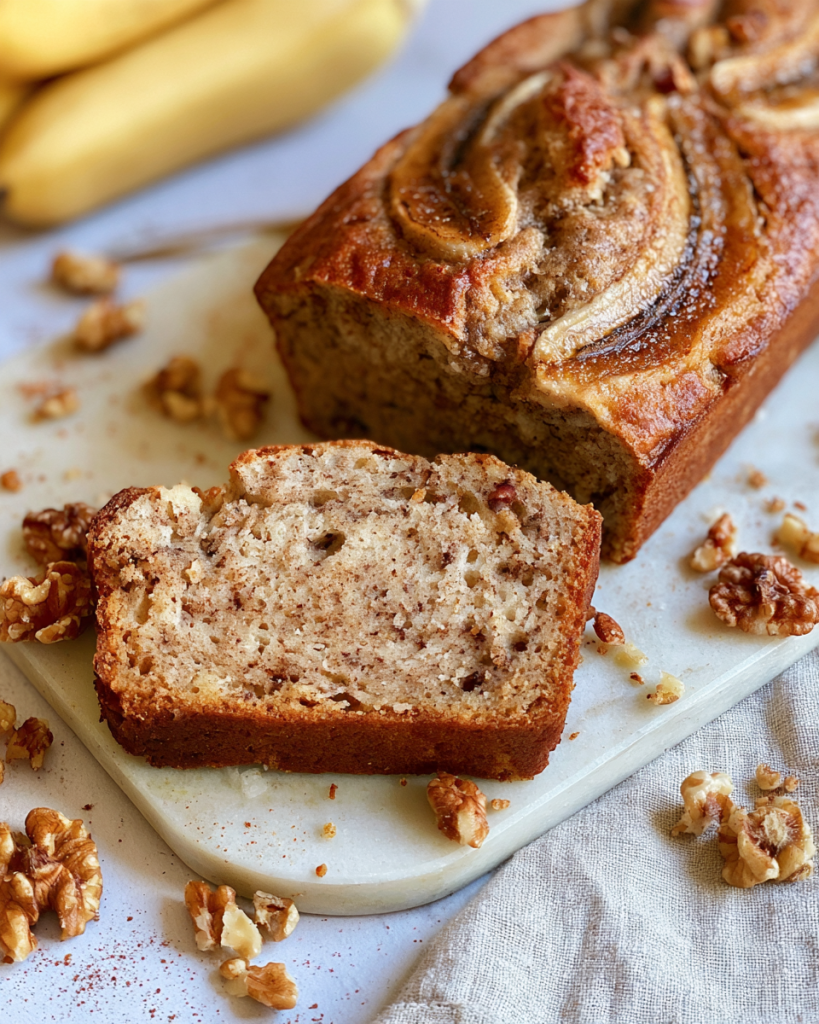
The interior is soft, tender, and wonderfully moist, while the golden-brown crust provides a delicate contrast. On top, a lengthwise-sliced banana sprinkled with brown sugar and cinnamon develops a sweet, caramelized finish that gives the loaf a beautiful bakery-style appearance.
This recipe is ideal for breakfast, an afternoon snack, or a comforting dessert served with coffee or tea. It is also an excellent way to use ripe bananas that might otherwise go uneaten. Whether you are baking for your family, preparing something special for guests, or simply craving a homemade treat, this banana walnut bread is a satisfying choice.
With straightforward ingredients, simple preparation, and no need for a mixer, this recipe is approachable for beginner bakers and experienced home cooks alike.
Origin
Banana bread is a popular baked good in American home cooking, particularly known for its use of overripe bananas. Although bananas have a much longer history as a cultivated fruit in tropical regions, the familiar quick-bread version became especially popular in the United States during the twentieth century.
The development of chemical leavening agents, including baking soda and baking powder, made it easier for home bakers to prepare soft loaves without yeast or lengthy rising times. As household baking ingredients became more accessible, banana bread emerged as a practical and economical way to turn very ripe fruit into something delicious.
Over time, home cooks developed countless variations, incorporating ingredients such as walnuts, pecans, chocolate chips, spices, yogurt, and different sweeteners. Cinnamon adds a warm aroma, while the caramelized banana topping in this version provides an extra layer of sweetness and visual appeal.
This particular recipe is a homemade variation inspired by classic American banana bread rather than a claim to one specific traditional formula.
Cultural Significance
Banana bread has earned a special place in many households because it represents comfort, practicality, and the pleasure of homemade baking. It is often associated with family breakfasts, weekend baking, afternoon coffee breaks, and recipes passed between generations.
One of its most appealing qualities is its ability to transform overripe bananas into a flavorful treat. Instead of discarding fruit that has become too soft to enjoy on its own, bakers can use it to create a tender loaf with a naturally sweet banana flavor.
Adding walnuts introduces a familiar nutty crunch, while cinnamon gives the bread a cozy aroma that works especially well during cooler weather. The caramelized banana topping makes this variation feel a little more special without requiring complicated decorating techniques.
It is equally suitable for a relaxed family breakfast, a homemade gift, or a simple dessert shared with friends.
Ingredients and Quantities
The following quantities make one loaf using a standard 9 × 5-inch loaf pan, serving approximately 10 people.
For the Banana Bread
- 3 large ripe bananas, mashed, approximately 1 to 1¼ cups
- 2 cups all-purpose flour, approximately 250 g
- ¾ cup granulated sugar, approximately 150 g
- ¼ cup light brown sugar, approximately 50 g
- ½ cup unsalted butter, melted, approximately 113 g
- 2 large eggs, preferably at room temperature
- ¼ cup whole milk or plain Greek yogurt, approximately 60 g
- 1 teaspoon vanilla extract
- 1 teaspoon baking soda
- ½ teaspoon baking powder
- 1 teaspoon ground cinnamon
- ½ teaspoon salt
- ¾ cup chopped walnuts, approximately 85 g
For the Caramelized Banana Topping
- 1 ripe but reasonably firm banana, sliced lengthwise
- 1 tablespoon brown sugar, approximately 12 g
- ½ teaspoon ground cinnamon
- 1 teaspoon melted butter, approximately 5 g
Ingredient Notes
Ripe bananas: Choose bananas with plenty of brown spots. They are generally sweeter, softer, and easier to mash than yellow-green bananas. Avoid fruit that has visible mold or an unusual fermented smell.
All-purpose flour: Measure the flour accurately by weighing it or spooning it into a measuring cup and leveling the top. Scooping directly from the flour bag can pack in too much flour and produce a dry loaf.
Butter: Unsalted butter gives the bread a rich flavor and allows you to control the salt level. Let the melted butter cool slightly before mixing it with the eggs.
Milk or Greek yogurt: Milk produces a familiar, tender crumb. Plain Greek yogurt adds a slightly tangy flavor and can help create a rich texture. Use one or the other, not both, unless you adjust the recipe.
Walnuts: Chopped walnuts provide crunch and a pleasant earthy flavor. Toasting them briefly before adding them to the batter can make their flavor more pronounced. Let toasted walnuts cool before mixing them in.
Baking soda and baking powder: These leavening agents help the loaf rise. Measure them carefully for a balanced texture.
Optional Additions
This banana walnut bread is delicious as written, but a few simple additions can make it suit different tastes.
Chocolate Chips
Add ½ cup of semisweet or dark chocolate chips for a sweeter, dessert-style loaf. Chocolate pairs naturally with banana and cinnamon.
Pecans
Replace some or all of the walnuts with chopped pecans. They offer a slightly buttery flavor and work beautifully with the brown sugar topping.
Extra Cinnamon
For a more pronounced spice flavor, increase the cinnamon in the batter to 1¼ teaspoons. Keep the topping seasoning balanced so the cinnamon does not overwhelm the banana.
A Touch of Nutmeg
Add a small pinch of ground nutmeg for additional warmth. Nutmeg is potent, so a little goes a long way.
Rolled Oats
Sprinkle 1 to 2 tablespoons of rolled oats over the top before baking for a rustic finish. Oats are best used as a light garnish rather than a large addition to the batter.
A Light Honey Drizzle
After the loaf has cooled, drizzle a small amount of honey over individual slices. This is optional because the ripe bananas and caramelized topping already provide plenty of sweetness.
Tips for Success
1. Use Very Ripe Bananas
The bananas are the main source of flavor and moisture. Bananas with brown spots are usually ideal because their starches have converted into more sugars as they ripen.
If your bananas are still firm and mostly green, allow them to ripen before baking for the best flavor and texture.
2. Avoid Overmixing the Batter
Once the flour is added, mix gently with a spatula until the dry ingredients are just incorporated. Excessive mixing develops gluten, which can make the finished loaf tough or rubbery instead of tender.
A few small lumps in banana bread batter are perfectly acceptable.
3. Measure the Flour Carefully
Too much flour is a common reason banana bread turns out dry or heavy. A kitchen scale is the most reliable option. If using measuring cups, spoon the flour into the cup and level it rather than pressing it down.
4. Choose the Right Pan
A 9 × 5-inch loaf pan provides enough space for the bread to rise. Line it with parchment paper, leaving some overhang on the sides, to make removing the loaf easier.
If using a smaller or deeper pan, the baking time may change.
5. Arrange the Topping Carefully
Place the banana slices lengthwise on the batter and press them very gently into the surface. Brush them lightly with melted butter before adding the brown sugar and cinnamon.
The topping will become golden and sweet as it bakes, although its final appearance can vary depending on the ripeness of the banana and your oven.
6. Watch the Top During Baking
Banana bread contains natural sugars that can cause the surface to brown before the center has finished baking. If the top becomes dark too quickly, loosely cover the loaf with aluminum foil for the final 15–20 minutes.
Avoid pressing the foil against the banana topping.
7. Check the Center, Not Just the Crust
A golden crust does not necessarily mean the middle is fully baked. Insert a toothpick into the center of the loaf, avoiding a banana slice if possible. It should come out clean or with a few moist crumbs rather than wet batter.
For an additional check, the center should reach approximately 200–205°F (93–96°C), a common doneness range for quick breads.
8. Let the Bread Cool
Allow the loaf to rest in its pan for 10–15 minutes before transferring it to a wire rack. Give it at least another 30 minutes to cool before slicing.
Cutting too early can cause the soft center to crumble or appear gummy because the crumb has not finished setting.
Instructions
Step 1: Prepare the Oven and Loaf Pan
Preheat the oven to 350°F (175°C).
Grease a 9 × 5-inch loaf pan with butter or a little neutral oil. Line it with parchment paper, leaving enough paper over the long sides to lift the finished loaf out easily.
Set the pan aside while you prepare the batter.
Step 2: Mash the Bananas
Peel the three large ripe bananas and place them in a large mixing bowl.
Mash them with a fork until mostly smooth. A few small banana pieces are fine and can add texture to the finished bread.
If the bananas release a little liquid as you mash them, include it in the mixture. That moisture contributes to the loaf’s soft texture.
Step 3: Mix the Wet Ingredients
Add the melted butter, granulated sugar, brown sugar, eggs, milk or Greek yogurt, and vanilla extract to the mashed bananas.
Whisk until the ingredients are well combined and the mixture looks relatively smooth.
Make sure the melted butter is not excessively hot before adding the eggs. Very hot butter can partially cook them and affect the texture of the batter.
Step 4: Combine the Dry Ingredients
In a separate medium-sized bowl, whisk together the all-purpose flour, baking soda, baking powder, ground cinnamon, and salt.
Whisking these ingredients separately helps distribute the leavening agents and cinnamon evenly throughout the flour.
Gradually add the dry mixture to the wet ingredients.
Step 5: Fold the Batter Together
Using a rubber spatula or wooden spoon, fold the dry ingredients into the banana mixture.
Stop mixing as soon as most of the flour has disappeared. Avoid beating the batter or trying to make it completely smooth.
The mixture should be thick and spoonable, with the moisture coming from the bananas, butter, eggs, and milk or yogurt.
Step 6: Add the Walnuts
Add the chopped walnuts to the batter and fold gently until they are evenly distributed.
If you want a more decorative finish, reserve a small handful of walnuts to sprinkle over the batter before baking.
Spread the batter into the prepared loaf pan and smooth the surface with a spatula.
Step 7: Prepare the Caramelized Banana Topping
Peel the remaining banana and slice it lengthwise into two long pieces.
Arrange the slices along the top of the batter. Brush them gently with the melted butter.
In a small bowl, mix the brown sugar and cinnamon. Sprinkle the mixture evenly over the banana slices.
The sugar will melt during baking, creating a sweet, golden finish. Do not add an excessive amount of topping sugar, as it can darken quickly in the oven.
Step 8: Bake the Banana Walnut Bread
Place the loaf pan on the center rack of the preheated oven.
Bake for approximately 50–65 minutes. Begin checking around the 50-minute mark because ovens and loaf pans can vary.
The bread is ready when the surface is golden brown, the center is set, and a toothpick inserted into the middle comes out clean or with a few moist crumbs.
If the top becomes too dark before the center is done, loosely cover it with aluminum foil and continue baking.
If the toothpick comes out with wet batter, return the loaf to the oven and check again after another 5–10 minutes.
Step 9: Cool the Loaf
Remove the pan from the oven and place it on a heat-safe surface.
Let the bread rest in the pan for 10–15 minutes. Use the parchment overhang to lift it carefully onto a wire rack.
Allow it to cool for at least 30 minutes before slicing. For cleaner slices and the best texture, let it cool more completely if you have time.
The caramelized topping may be delicate, so handle the loaf gently when moving it.
Step 10: Slice and Serve
Use a serrated bread knife to cut the loaf into approximately 10 slices.
Serve the bread plain or with a small amount of butter. It also pairs nicely with coffee, tea, or a glass of milk.
For a warm serving, heat an individual slice briefly in the microwave. A small drizzle of honey is optional, but the loaf is already sweet enough for most tastes.
Description
This Moist Banana Walnut Bread features a soft, tender crumb filled with the rich sweetness of ripe bananas and the gentle warmth of cinnamon. Chopped walnuts add a satisfying crunch, balancing the softness of the bread with a pleasant nutty texture.
The top is especially inviting. Sliced banana, brown sugar, cinnamon, and butter come together during baking to create a sweet, golden topping that makes the loaf look homemade and bakery-inspired.
The flavor is comforting without being overly complicated. Banana remains the main ingredient, while the cinnamon enhances its natural sweetness and the walnuts provide depth.
Each slice works well as a breakfast treat, a midday snack, or a simple dessert. The bread can be enjoyed at room temperature or slightly warmed, making it a versatile addition to your collection of homemade baking recipes.
Nutritional Information
The following values are estimates for one of 10 slices, calculated using the listed ingredients, including the banana topping and walnuts. Actual nutrition will vary depending on banana size, ingredient brands, and the choice of milk or Greek yogurt.
Approximate nutrition per serving:
- Calories: 320–350
- Protein: 5–6 g
- Carbohydrates: 43–48 g
- Fat: 14–17 g
- Fiber: 2–3 g
- Sugars: 22–27 g
The walnuts contribute unsaturated fats, while the bananas provide potassium and some dietary fiber. Eggs contribute protein, and the flour supplies carbohydrates for energy.
This remains a sweet baked good, so the nutritional values should be considered estimates rather than a guarantee. For more precise results, calculate the nutrition using the exact products and quantities you use.
Storage and Food Safety
At Room Temperature
Once the loaf has cooled completely, place it in an airtight container. Because the banana topping adds moisture, it is best to refrigerate the bread if you need to keep it beyond a short period at room temperature.
For food safety, do not leave the bread at room temperature for more than two hours in warm conditions, particularly when the kitchen temperature is above 90°F (32°C).
In the Refrigerator
Store the cooled loaf in an airtight container in the refrigerator for approximately 4–5 days.
Refrigeration can make the crumb feel slightly firmer. Allow an individual slice to come closer to room temperature or warm it briefly before serving.
In the Freezer
For longer storage, freeze the fully cooled bread for up to about 3 months for best quality.
You can freeze the whole loaf or cut it into individual slices. Wrap the portions tightly, place them in a freezer-safe bag or container, and label them with the date.
Thaw slices in the refrigerator or at room temperature in accordance with safe handling practices. Warm a thawed slice briefly if you prefer a softer texture.
Reheating
Warm individual slices in the microwave for approximately 10–15 seconds, adjusting as needed. Alternatively, place a slice in a toaster oven at a low temperature until warmed through.
Avoid overheating, which can dry out the crumb and make the caramelized topping overly sticky.
Conclusion
Moist Banana Walnut Bread with Cinnamon and Caramelized Banana Topping is a comforting homemade recipe that brings together ripe bananas, crunchy walnuts, warm cinnamon, and a beautiful golden finish.
The preparation is straightforward, the ingredients are familiar, and the result is suitable for breakfast, coffee breaks, family gatherings, or a simple homemade dessert. The caramelized banana topping adds a special touch without requiring complicated baking techniques.
For the best results, use very ripe bananas, measure the flour carefully, mix the batter gently, and allow the loaf to cool before slicing. These small details help create a tender, flavorful bread that is worth making again.
Recommendation
Serve this banana walnut bread with freshly brewed coffee or tea for a relaxed breakfast or afternoon snack. For a more filling breakfast, pair a slice with plain Greek yogurt and fresh fruit.
If you are preparing the loaf for guests, let it cool completely before slicing and arrange the pieces on a serving plate so the banana topping remains visible. A light dusting of cinnamon immediately before serving can add an attractive finishing touch.
You can also prepare the loaf the day before serving. Once cooled and stored properly, the flavors have time to settle, making it convenient for a busy morning or a planned gathering.
Embracing Healthful Indulgence
Enjoying homemade baking can be part of a balanced eating pattern. This banana walnut bread combines the sweetness of ripe fruit with the satisfying flavor of nuts, making it a flavorful alternative to some packaged sweet snacks.
If you would like to adjust the recipe, consider reducing the granulated sugar slightly, using whole-wheat flour for part of the all-purpose flour, or serving smaller slices alongside fruit or yogurt. Keep in mind that changing the flour or sugar can affect the loaf’s moisture, sweetness, and texture.
The original recipe is designed to deliver a tender crumb and a caramelized topping, so any substitutions should be made thoughtfully.
Ultimately, the best approach is to enjoy a slice, appreciate the flavors and textures, and share the loaf with people who appreciate a comforting homemade treat.