
Introduction
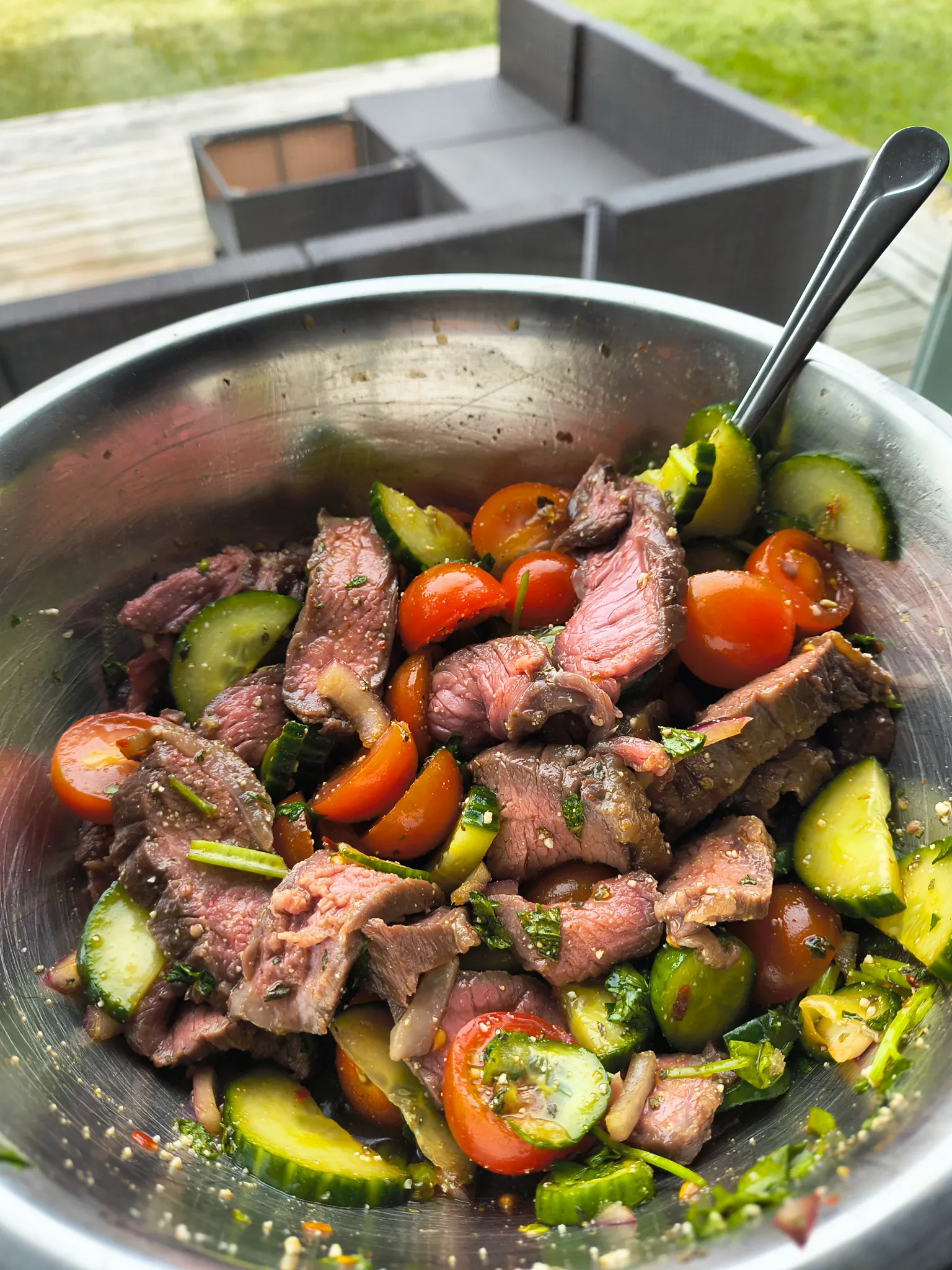
If you are looking for a fresh, satisfying meal that combines tender beef with crisp vegetables and a bright homemade dressing, this Juicy Steak Salad with Cucumber, Cherry Tomatoes, and Garlic Herb Dressing is an excellent choice. It brings together beautifully seared steak, refreshing cucumber, sweet cherry tomatoes, thinly sliced red onion, and fragrant fresh herbs for a colorful dish packed with flavor.
The steak is seasoned with garlic, smoked paprika, oregano, and black pepper before being seared until golden brown on the outside and juicy inside. Once rested and sliced against the grain, it becomes the savory centerpiece of a refreshing vegetable salad. A homemade dressing made with extra-virgin olive oil, lemon juice, red wine vinegar, Dijon mustard, and garlic ties everything together with a zesty Mediterranean-inspired flavor.
This steak salad is ideal for lunch, dinner, meal preparation, or a relaxed weekend meal. It feels fresh and light because of the vegetables, yet the beef provides satisfying protein. Best of all, the entire dish can be prepared in approximately 35 minutes, making it practical for busy days when you want something homemade without spending hours in the kitchen.
Origin
Steak salads combine two familiar elements of modern cooking: grilled or pan-seared beef and fresh vegetable salads. Although the exact combination in this recipe does not belong to one specific traditional cuisine, it draws inspiration from Mediterranean-style ingredients and contemporary American steak salads.
Across Mediterranean cooking, olive oil, lemon juice, garlic, fresh herbs, tomatoes, and cucumbers are widely used to create bright, flavorful dishes. These ingredients complement beef particularly well because their freshness balances the richness of the meat.
Steak salads have also become popular in American restaurants and home kitchens as a convenient way to combine vegetables and protein in one meal. Cooks often experiment with different cuts of beef, seasonal vegetables, vinaigrettes, and herbs to create their own variations.
This recipe brings those ideas together with a simple garlic-herb dressing, smoky steak seasoning, and crisp vegetables. The result is a versatile homemade dish inspired by Mediterranean flavors rather than a claim to an exact traditional regional recipe.
Cultural Significance
Fresh salads topped with cooked meat reflect a practical approach to everyday cooking: combining satisfying protein with vegetables in a single dish. They are popular with people who want meals that feel substantial without relying entirely on heavy sauces or complicated side dishes.
Steak salad is also highly adaptable. It can be served as a casual family dinner, prepared for a weekend lunch, or arranged on a large platter for guests. Its contrasting textures make it especially appealing: tender beef, crisp cucumber, juicy tomatoes, and a tangy dressing create a balanced eating experience.
Fresh herbs play an important role in this recipe. Parsley adds a clean, green flavor, while optional cilantro and chives provide extra freshness. Garlic, lemon, and olive oil give the dressing a familiar Mediterranean-inspired character that works well with many other grilled dishes.
Because the ingredients are easy to find and the preparation is straightforward, this salad is suitable for beginner cooks as well as experienced home chefs.
Ingredients and Quantities
This recipe serves approximately four people as a main course.
For the Steak
- 1½ pounds sirloin steak or flank steak, approximately 680 g
- 1 tablespoon olive oil
- 3 cloves garlic, minced
- 1 teaspoon smoked paprika
- ½ teaspoon onion powder
- ½ teaspoon dried oregano
- ½ teaspoon ground black pepper
- 1 teaspoon salt, or to taste
- 1 tablespoon unsalted butter, optional
- 1 teaspoon fresh rosemary or thyme, finely chopped
For the Salad
- 2 cups cherry tomatoes, approximately 300 g, halved
- 2 medium cucumbers, approximately 400–500 g, sliced into half-moons
- ¼ small red onion, thinly sliced
- ¼ cup fresh parsley, chopped
- 2 tablespoons fresh cilantro, chopped, optional
- 2 tablespoons fresh chives, chopped, optional
For the Garlic Herb Dressing
- 3 tablespoons extra-virgin olive oil
- 2 tablespoons freshly squeezed lemon juice
- 1 tablespoon red wine vinegar
- 2 cloves garlic, finely minced
- 1 teaspoon Dijon mustard
- ½ teaspoon dried oregano
- 1 tablespoon fresh parsley, finely chopped
- Salt, to taste
- Ground black pepper, to taste
- A pinch of red pepper flakes, optional
Ingredient Notes
Steak: Sirloin is a convenient option because it is flavorful, tender, and generally easy to slice. Flank steak is another excellent choice, especially when sliced thinly against the grain. Cooking time will depend on the thickness of the cut.
Cucumbers: English cucumbers or regular cucumbers both work well. If using regular cucumbers with thick skins or large seeds, peel them partially or remove the seeds if preferred.
Cherry tomatoes: Choose firm, ripe tomatoes with a naturally sweet flavor. Halving them helps release their juices into the dressing.
Olive oil: Extra-virgin olive oil gives the dressing a fruity, peppery flavor. Use a good-quality oil that you enjoy tasting in uncooked dishes.
Lemon juice and vinegar: Lemon adds freshness, while red wine vinegar provides a deeper tang. Together, they balance the richness of the beef and olive oil.
Dijon mustard: A small amount helps the dressing emulsify, creating a more cohesive mixture that coats the vegetables and steak evenly.
Fresh herbs: Parsley works particularly well with beef and garlic. Rosemary or thyme adds an aromatic note during cooking, while optional cilantro and chives bring additional freshness to the finished salad.
Optional Additions
This steak salad is delicious as written, but it is easy to adapt based on your preferences and the ingredients you have available.
Avocado
Add one sliced avocado just before serving for a creamy texture that contrasts with the crisp cucumber and juicy tomatoes. Because avocado softens quickly, avoid mixing it too vigorously.
Crumbled Feta Cheese
Add approximately ¼ cup of crumbled feta for a salty, tangy flavor. Feta pairs naturally with tomatoes, cucumber, olive oil, and fresh herbs.
Mixed Salad Greens
Serve the steak and vegetables over 4–5 cups of arugula, baby spinach, or mixed greens. Arugula provides a pleasantly peppery taste, while spinach offers a milder flavor.
Roasted Red Peppers
Add sliced roasted red peppers for sweetness and extra color. They complement the smoky paprika used to season the steak.
Kalamata Olives
A small handful of sliced olives can add a briny Mediterranean-inspired touch. Reduce the added salt slightly if the olives are particularly salty.
Chickpeas
Add ½ to 1 cup of drained, rinsed chickpeas for extra fiber and plant-based protein. This is a useful option when you want the salad to stretch to more servings.
A Little Heat
Increase the red pepper flakes in the dressing or add a pinch of cayenne pepper to the steak seasoning. Keep the amount moderate so the heat does not overpower the fresh herbs and lemon.
A Different Dressing
For a creamier version, replace part of the olive oil dressing with a small amount of plain Greek yogurt mixed with lemon juice, garlic, parsley, and black pepper. The flavor will be different from the original vinaigrette, but it pairs well with the steak.
Tips for Success
1. Choose a Suitable Cut of Beef
Sirloin is a good all-purpose choice for this recipe because it offers a balance of flavor, tenderness, and convenience. Flank steak works well too, provided it is cooked appropriately and sliced against the grain.
If using a particularly thick steak, allow additional cooking time and check its internal temperature rather than relying only on the clock.
2. Pat the Steak Dry
Before seasoning, use paper towels to remove excess surface moisture. A dry surface helps the beef brown more effectively in a hot skillet.
If the steak is wet, it may release moisture and steam instead of developing the flavorful browned crust that makes seared beef so appealing.
3. Season Evenly
Mix the olive oil, garlic, smoked paprika, onion powder, oregano, salt, and pepper before rubbing the mixture over the steak.
Coat both sides evenly and allow the seasoning to sit briefly while you prepare the other ingredients. Keep the marinating time controlled and refrigerate the steak if you need to hold it longer.
4. Preheat the Pan Properly
A heavy skillet or grill pan helps maintain consistent heat. Allow it to become hot before adding the steak, and avoid overcrowding the cooking surface.
If preparing multiple steaks, cook them in batches when necessary. Too many pieces in one pan can lower the temperature and prevent proper browning.
5. Use a Thermometer for Doneness
Cooking time varies with steak thickness, pan temperature, and the cut of beef. An instant-read thermometer is more reliable than estimating doneness by appearance.
For food safety, whole beef steaks should reach an internal temperature of at least 145°F (63°C), followed by a three-minute rest. Insert the thermometer into the thickest part of the steak.
6. Rest Before Slicing
Allow the cooked steak to rest for approximately 5–10 minutes. Resting helps the juices redistribute and makes the meat easier to slice.
For flank steak, look for the direction of the muscle fibers and cut across them. Thin slices against the grain generally feel more tender than thick slices cut in the same direction as the fibers.
7. Keep the Vegetables Crisp
Prepare the vegetables shortly before serving whenever possible. If you wash them ahead of time, dry them thoroughly before adding the dressing.
Excess water can dilute the vinaigrette and make the salad less flavorful.
8. Balance the Dressing
Taste the dressing before adding it to the salad. If it seems too sharp, whisk in a little more olive oil. If it tastes too rich, add a small amount of lemon juice.
The goal is a balanced combination of acidity, garlic, herbs, and olive oil rather than an overly sour or oily dressing.
9. Dress Just Before Serving
For the freshest texture, add most of the dressing immediately before serving. Cucumbers and tomatoes naturally release liquid, and the salt and acidity in the dressing can soften them over time.
If preparing the components in advance, keep the vegetables, steak, and dressing separate until mealtime.
Instructions
Step 1: Prepare and Season the Steak
Remove the steak from its packaging and pat it dry with paper towels.
In a small bowl, combine the olive oil, minced garlic, smoked paprika, onion powder, dried oregano, salt, and black pepper. Mix until the seasoning forms a loose paste.
Rub the mixture over both sides of the steak, distributing it evenly across the surface.
Allow the steak to rest briefly while you prepare the vegetables and dressing. If you are not cooking it promptly, refrigerate it rather than leaving raw meat at room temperature for an extended period.
Step 2: Heat the Skillet
Place a heavy skillet or grill pan over medium-high to high heat. Allow it to heat thoroughly before adding the steak.
If your pan is small, cook the steak in batches rather than crowding the surface.
Carefully place the seasoned steak into the hot pan. You should hear a distinct sizzling sound as the surface begins to brown.
Step 3: Sear the Steak
Cook the steak for approximately 3–5 minutes per side as a starting guide, adjusting the timing according to thickness and the temperature of your pan.
Avoid moving the steak repeatedly during the initial searing stage. Letting the surface remain in contact with the pan helps develop a flavorful crust.
During the final minute of cooking, add the optional butter and chopped rosemary or thyme. Once the butter melts, spoon it over the steak.
Check the thickest part of the meat with an instant-read thermometer. Whole beef steaks should reach at least 145°F (63°C), followed by a three-minute rest for food safety.
Step 4: Rest and Slice the Steak
Transfer the cooked steak to a clean cutting board. Let it rest for approximately 5–10 minutes.
Identify the direction of the muscle fibers, particularly if you are using flank steak. Slice the meat thinly across the grain to help keep each piece tender.
Set the sliced steak aside while you prepare the salad. If the steak is still warm, it can be added to the salad shortly before serving, but avoid leaving it at room temperature for an extended period.
Step 5: Prepare the Vegetables
Wash the cherry tomatoes, cucumbers, and fresh herbs under clean running water, then dry them.
Cut the cherry tomatoes in half. Slice the cucumbers into thick half-moons, and thinly slice the red onion.
Chop the parsley, cilantro, and chives if using them. Place the tomatoes, cucumber, onion, parsley, and optional cilantro in a large salad bowl.
Reserve a little parsley or chives for garnish.
Step 6: Make the Garlic Herb Dressing
In a small bowl, combine the extra-virgin olive oil, fresh lemon juice, red wine vinegar, minced garlic, Dijon mustard, dried oregano, chopped parsley, salt, and black pepper.
Add a pinch of red pepper flakes if you enjoy a little heat.
Whisk vigorously until the ingredients are well combined. The mustard helps the oil and acidic ingredients form a more cohesive dressing.
Taste and adjust the seasoning. Add a little more lemon juice for brightness or a small amount of olive oil if the dressing is too sharp.
Step 7: Combine the Salad
Add the sliced steak to the bowl of vegetables.
Pour most of the dressing over the ingredients, reserving a little for the final garnish if desired.
Use salad tongs or two large spoons to toss everything gently. Make sure the steak and vegetables receive an even coating without crushing the tomatoes.
Taste a small portion and adjust with additional dressing, salt, pepper, or lemon juice as needed.
Step 8: Allow the Flavors to Blend
Let the salad stand for approximately five minutes before serving, provided the ingredients are being kept within safe temperature limits.
This short resting period allows the dressing to coat the steak and vegetables. Avoid letting the salad sit for a long time, as the cucumbers and tomatoes will gradually release moisture and lose some of their crispness.
Sprinkle the reserved chives, parsley, or freshly cracked black pepper over the top.
Step 9: Serve Fresh
Transfer the salad to a serving platter or divide it among four plates.
Spoon any remaining dressing over the ingredients. Add the reserved herbs for a fresh, colorful finish.
Serve immediately on its own or alongside warm crusty bread, roasted potatoes, or another favorite side dish.
For the best contrast of textures, enjoy the salad soon after dressing it.
Description
Juicy Steak Salad with Cucumber, Cherry Tomatoes, and Garlic Herb Dressing is a colorful, savory dish that combines the richness of seared beef with the refreshing qualities of fresh vegetables.
The steak develops a flavorful crust from the garlic, smoked paprika, and herbs, while its tender interior provides a satisfying contrast to the crisp cucumber and juicy cherry tomatoes. Thinly sliced red onion contributes a mild sharpness, and fresh parsley brings a clean herbal note.
The garlic-herb vinaigrette is the finishing touch. Extra-virgin olive oil adds richness, lemon juice and red wine vinegar provide acidity, and Dijon mustard helps the dressing coat the ingredients evenly. Fresh garlic gives it a distinctive savory flavor without requiring a heavy sauce.
Each serving offers a combination of textures and flavors: tender beef, crunchy vegetables, sweet tomatoes, aromatic herbs, and a bright dressing. It is an appealing option when you want a homemade meal that feels fresh but still substantial.
The salad is best enjoyed freshly assembled, when the vegetables remain crisp and the steak is at its most tender.
Nutritional Information
The following values are approximate estimates per serving, based on four servings and the listed ingredients, including the full dressing and optional butter. Actual nutrition will vary according to the steak cut, trimming, ingredient brands, and portion sizes.
Estimated nutrition per serving:
- Calories: approximately 450–550
- Protein: approximately 38–45 g
- Carbohydrates: approximately 12–18 g
- Fat: approximately 28–38 g
- Fiber: approximately 3–5 g
- Sugars: approximately 6–9 g
Beef is a source of protein, iron, zinc, and vitamin B12. Tomatoes provide vitamin C and lycopene, while cucumbers contribute water and a refreshing crunch. Olive oil supplies predominantly unsaturated fats, and fresh herbs add flavor without requiring large amounts of extra salt.
These estimates are not laboratory measurements. If precise nutritional information is important, calculate it using the exact ingredients and quantities you use.
Storage and Food Safety
Refrigerating Leftovers
Transfer leftover salad to a clean, airtight container and refrigerate promptly. For best quality, store the steak, vegetables, and dressing separately whenever possible.
Refrigerate perishable food within two hours of preparation, or within one hour when the ambient temperature exceeds 90°F (32°C).
Cooked steak leftovers should generally be consumed within 3–4 days when refrigerated at 40°F (4°C) or below. Freshly cut vegetables may soften sooner, particularly after being mixed with dressing.
Storing the Dressing
If you prepare the dressing ahead of time, place it in a sealed container and refrigerate it. Because it contains fresh garlic, keep it refrigerated and use it within a few days for best quality.
Olive oil may become cloudy or solidify when chilled. This is normal; let the dressing stand briefly in the refrigerator-safe serving preparation process, then shake or whisk it before use. Do not leave garlic-in-oil mixtures at room temperature for extended periods.
Freezing
Freezing the assembled salad is not recommended. Cucumbers and tomatoes contain substantial water, so their texture becomes soft after thawing.
If you want to freeze part of the meal, freeze cooked steak separately in an airtight freezer-safe container. Use it within approximately 2–3 months for best quality, then thaw it in the refrigerator and reheat it safely if desired.
Reheating Steak
If you prefer warm steak, remove the steak from the salad before reheating. Warm it gently in a skillet or microwave until heated through, then combine it with freshly prepared vegetables.
For food safety, reheat leftovers to 165°F (74°C). Avoid repeatedly warming and cooling the same portion.
Preventing Cross-Contamination
Use separate clean plates and utensils for raw and cooked steak. Wash hands, cutting boards, knives, and work surfaces after contact with raw meat before handling ready-to-eat vegetables.
Never return cooked steak to a plate that previously held raw steak unless the plate has been thoroughly washed.
Conclusion
Juicy Steak Salad with Cucumber, Cherry Tomatoes, and Garlic Herb Dressing is an easy, flavorful meal that brings together tender beef, fresh vegetables, and a bright homemade vinaigrette.
The smoky, garlic-seasoned steak provides a savory foundation, while the cucumbers and cherry tomatoes add freshness and contrasting textures. Lemon juice, olive oil, Dijon mustard, and herbs create a dressing that brings every ingredient together without overwhelming its natural flavor.
With approximately 35 minutes of preparation and cooking time, this recipe is practical enough for a weeknight dinner yet attractive enough to serve to guests. It can also be customized with avocado, feta, mixed greens, chickpeas, or other favorite ingredients.
For the best results, sear the steak in a hot pan, check its internal temperature, allow it to rest, slice against the grain, and dress the salad shortly before serving.
Recommendation
Serve this steak salad as a complete main course for lunch or dinner. If you want a heartier meal, pair it with roasted potatoes, whole-grain bread, or a small serving of rice.
For a Mediterranean-inspired variation, add crumbled feta cheese, Kalamata olives, and a handful of arugula. If you prefer a simpler version, keep the original cucumber, tomato, steak, and garlic-herb dressing combination so the main ingredients remain the focus.
When preparing the salad for guests, arrange the sliced steak over the vegetables instead of mixing everything together immediately. Drizzle the dressing over the top and finish with fresh herbs. This presentation highlights the seared beef and creates an inviting serving platter.
For meal preparation, cook the steak and prepare the dressing ahead of time, then store them separately from the vegetables. Assemble each serving shortly before eating to preserve the salad’s freshness.
Embracing Healthful Indulgence
A satisfying meal does not have to rely on heavy sauces or complicated preparation. This steak salad brings together protein-rich beef, fresh vegetables, herbs, and olive oil to create a flavorful combination with a variety of textures.
To make the recipe fit your preferences, choose a leaner steak cut, trim visible excess fat, and measure the olive oil according to your needs. You can also increase the cucumber, tomatoes, and leafy greens to add more volume and variety to each serving.
If you are watching your sodium intake, reduce the added salt and rely more on lemon juice, garlic, pepper, and fresh herbs for flavor. For a meal with additional fiber, serve the salad with chickpeas or a small portion of whole grains.
The goal is not to remove everything that makes the dish enjoyable, but to prepare a balanced meal that suits your appetite and routine. With fresh ingredients, a carefully cooked steak, and a homemade dressing, this salad offers a delicious way to enjoy a comforting and refreshing homemade dinner.