
1. Introduction
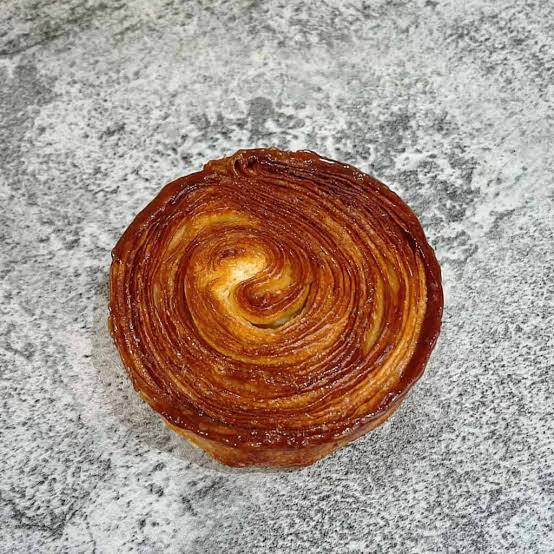
Kouign-Amann is an irresistible French pastry known for its deeply caramelized exterior, delicate buttery layers, and soft, flaky center.
Made from a simple yeasted dough folded repeatedly with butter and sugar, this traditional Breton specialty transforms a handful of basic ingredients into a wonderfully rich pastry.
As the pastries bake, the butter helps create delicate layers while the sugar melts and caramelizes, forming a golden, crisp coating with a delightful crunch.
This homemade version produces individual Kouign-Amann pastries using a muffin tin, making them easier to shape and serve.
Although the recipe requires patience for folding, chilling, and resting the dough, the delicious combination of crisp caramel and buttery pastry makes the effort worthwhile.
2. Origin and Cultural Significance
Kouign-Amann originates from Brittany, a region in northwestern France celebrated for its rich culinary traditions and exceptional butter.
Its name comes from the Breton language: kouign means cake, while amann means butter.
According to a widely told local account, the pastry was created around 1860 in the coastal town of Douarnenez by a baker named Yves-René Scordia.
The story suggests that the baker combined bread dough with generous amounts of butter and sugar, creating a pastry that became famous for its caramelized exterior and tender, layered interior.
Traditional Kouign-Amann is often baked as a large round cake, while smaller individual versions, sometimes called kouignettes, are popular in modern pastry shops.
Today, Kouign-Amann remains an important symbol of Breton baking, appreciated for its simplicity, craftsmanship, and distinctive buttery flavor.
3. Ingredients
Makes approximately 8 individual pastries.
For the Dough (Détrempe)
- 250 g (approximately 2 cups) bread flour
- 1 teaspoon instant yeast
- ½ teaspoon salt
- 160 ml (⅔ cup) lukewarm water
- 1 tablespoon (14 g) unsalted butter, melted and cooled slightly
For the Butter Block
- 200 g (approximately 14 tablespoons) unsalted butter, cold but pliable
For the Sugar Layers
- 150 g (¾ cup) granulated sugar
- 1 generous pinch flaky sea salt
For Preparing the Baking Tin
- A small amount of butter for greasing
- A little additional granulated sugar for coating the muffin cups, optional
4. Optional Additions
Kouign-Amann is traditionally made with butter and sugar, but small additions can create interesting flavor variations.
- Vanilla: Add ½ teaspoon vanilla extract to the dough for a subtle aroma.
- Cinnamon: Mix ½ teaspoon ground cinnamon with the sugar for a warm, fragrant variation.
- Orange Zest: Add finely grated orange zest to the sugar for a delicate citrus flavor.
- Lemon Zest: Incorporate a small amount of lemon zest for a refreshing contrast to the richness.
- Sea Salt: Sprinkle a few flakes over the finished pastries to emphasize the buttery caramel flavor.
- Chocolate: Serve with a little melted dark chocolate for a richer dessert.
- Caramel Sauce: Add a light drizzle of caramel sauce just before serving for an especially indulgent treat.
5. Tips for Success
- Use a kitchen scale: Accurate measurements are especially important when preparing laminated pastries.
- Choose good-quality butter: European-style butter with a higher fat content is particularly helpful for creating distinct layers.
- Keep the butter pliable: It should bend without cracking but remain cool enough that it does not melt into the dough.
- Maintain a cool workspace: Warm temperatures can soften the butter and make lamination difficult.
- Roll gently: Apply even pressure to prevent tearing the dough or forcing butter through its surface.
- Chill when necessary: If the dough becomes sticky or the butter starts softening, refrigerate it briefly before continuing.
- Measure the sugar: Distribute the measured sugar across the final folds rather than adding excessive amounts.
- Avoid long delays after sugaring: Sugar gradually draws moisture from the dough, so complete the final shaping and proofing without unnecessary waiting.
- Grease the muffin tin thoroughly: Caramelized sugar can make the pastries difficult to remove.
- Watch the caramelization: The pastries should become deeply golden to amber, but not burnt.
- Unmold while hot: Remove them carefully before the caramel hardens inside the tin.
6. Instructions
Step 1: Prepare the Yeasted Dough
In a large mixing bowl, combine the bread flour, instant yeast, and salt.
Add the lukewarm water and melted butter.
Mix until the ingredients come together into a rough dough.
Transfer the dough to a lightly floured surface and knead for approximately 5–8 minutes, until it becomes relatively smooth and elastic.
Shape the dough into a ball and place it in a lightly covered bowl.
Step 2: Allow the Dough to Rise and Chill
Leave the dough at room temperature for approximately 60–90 minutes, or until noticeably puffy and about one-and-a-half times its original size.
Gently flatten it into a rectangle.
Wrap it securely and refrigerate for approximately 45–60 minutes.
The chilled dough should feel firm enough to roll without becoming excessively sticky.
Step 3: Prepare the Butter Block
Place the 200 g of cold butter between two sheets of parchment paper.
Using a rolling pin, gently tap and roll the butter into a neat rectangle approximately ½ inch (1–1.5 cm) thick.
Aim for a butter block that will cover roughly half the surface of the rolled-out dough.
Refrigerate briefly if necessary.
The butter should remain cool but flexible enough to bend slightly without breaking.
Step 4: Enclose the Butter
Transfer the chilled dough to a lightly floured work surface.
Roll it into a rectangle approximately twice the size of the butter block.
Position the butter in the center.
Fold the exposed sections of dough over the butter until it is completely enclosed.
Press the edges gently to seal.
Make sure the butter is evenly covered before beginning the folding process.
Step 5: Perform the First Fold
Turn the dough so one of its shorter sides faces you.
Using gentle, even pressure, roll the butter-filled dough into a long rectangle.
Brush away excess flour.
Fold the upper third of the rectangle toward the center.
Fold the lower third over it, creating three layers, similar to folding a business letter.
This completes the first turn.
Step 6: Perform the Second Fold
Rotate the folded dough 90 degrees.
Roll it out into another long rectangle, taking care not to tear the surface.
Repeat the same three-part folding technique.
Wrap the dough and refrigerate for approximately 30 minutes.
This resting period helps the dough relax and keeps the butter layers distinct.
Step 7: Incorporate the Sugar
Measure the 150 g of granulated sugar and divide it into two portions.
Lightly sprinkle some of the first portion over the work surface.
Place the chilled dough on top and roll it gently into a rectangle.
Sprinkle the remaining sugar from the first portion evenly across the surface of the dough.
Add the pinch of flaky sea salt.
Fold the dough into thirds, enclosing the sugar within the layers.
This completes the third turn.
Step 8: Complete the Final Sugar Fold
Rotate the dough 90 degrees.
Use the remaining measured sugar to lightly coat the work surface and the dough as you roll it into another rectangle.
Perform one final three-part fold.
Work carefully but efficiently because the sugar will begin drawing moisture from the dough.
If the butter becomes too soft, chill the folded dough briefly for approximately 10–15 minutes.
Avoid extended refrigeration after incorporating the sugar.
Step 9: Shape the Pastries
Lightly butter 8 cups of a standard muffin tin.
For additional caramelization, sprinkle a little sugar inside each cup.
Roll the laminated dough into a rectangle approximately ¼ inch (6 mm) thick.
Cut it into 8 approximately equal squares. Depending on the final dimensions of the dough, each square should measure roughly 3½–4 inches across.
Gather the four corners of each square toward the center.
Press them together gently to form a small, flower-like pastry.
Place each shaped pastry into a prepared muffin cup with the folded corners facing upward.
Step 10: Allow the Pastries to Proof
Loosely cover the muffin tin.
Leave the pastries at a moderate room temperature for approximately 30–45 minutes, or until they become slightly puffy.
They do not need to double in size.
Avoid placing them in an excessively warm environment, as the butter can melt and the sugar can begin dissolving.
Near the end of the resting period, preheat the oven to 375°F (190°C).
Step 11: Bake Until Deeply Caramelized
Place the muffin tin on a rimmed baking sheet to catch any escaping butter or caramel.
Transfer it to the preheated oven.
Bake for approximately 25–30 minutes, checking toward the end of the baking period.
The pastries should develop a deep golden-amber exterior, with visibly crisp edges and a properly baked center.
If necessary, extend the baking time by a few minutes, watching closely to prevent the caramel from burning.
Step 12: Unmold Carefully
Remove the muffin tin from the oven and place it on a heat-resistant surface.
Allow the pastries to settle briefly for approximately 1–2 minutes.
While wearing oven mitts, carefully loosen the edges with a heat-resistant utensil.
Transfer the pastries to a wire rack before the caramel hardens against the muffin cups.
Take particular care because melted caramel can cause serious burns.
Step 13: Cool and Serve
Allow the Kouign-Amann to cool for approximately 10–15 minutes so the caramel begins setting.
The exterior should become crisp as it cools, while the center remains tender and buttery.
Serve slightly warm, either plain or with a cup of coffee or tea.
7. Description
Homemade Kouign-Amann is a rich, layered pastry with a distinctive combination of textures.
The exterior features a deep amber caramel coating that becomes crisp and slightly crackly as it cools.
Inside, delicate layers of buttery dough create a tender, flaky texture with a gentle chew.
The sweetness of the caramel balances beautifully with the salt in the dough, while the generous butter content gives the pastry its signature richness.
Each individual pastry has an attractive folded shape, making it suitable for bakery-style presentation at home.
8. Nutritional Information
The following values are approximate estimates per pastry, based on 8 servings without optional additions.
| Nutrient | Estimated Amount |
|---|---|
| Calories | 380–420 kcal |
| Protein | 3–5 g |
| Carbohydrates | 40–46 g |
| Total Fat | 21–25 g |
| Saturated Fat | 13–16 g |
| Fiber | 1–2 g |
| Sugars | 18–21 g |
| Sodium | 150–220 mg |
Actual values will vary depending on the butter used, pastry size, additional sugar, and the amount of butter or caramel lost during baking.
9. Recipe Details
- Prep Time: Approximately 45–60 minutes of active preparation
- Initial Rising Time: 60–90 minutes
- Chilling Time: Approximately 75–105 minutes, plus any additional brief chilling
- Final Proofing: 30–45 minutes
- Baking Time: 25–30 minutes
- Cooling Time: 10–15 minutes
- Total Time: Approximately 4–5 hours
- Servings: 8
- Yield: 8 individual pastries
- Cuisine: French, Breton
- Course: Dessert, pastry, breakfast, brunch
- Difficulty: Intermediate
- Cooking Method: Yeast fermentation, lamination, and oven baking
- Equipment: Mixing bowl, kitchen scale, rolling pin, parchment paper, knife or pastry cutter, standard muffin tin, rimmed baking sheet, and wire cooling rack
10. Conclusion
Homemade Kouign-Amann brings the flavors and textures of a traditional Breton bakery into your kitchen.
The combination of yeasted dough, carefully folded butter, and granulated sugar produces a pastry with a deeply caramelized exterior and beautifully layered interior.
Although the preparation requires several resting and folding stages, each step contributes to the pastry’s distinctive texture.
These individual Kouign-Amann pastries are ideal for special breakfasts, weekend baking projects, and elegant homemade desserts.
Served slightly warm, they offer a delicious balance of rich butter, crisp caramel, and tender pastry.
11. Recommendation
Serving: Enjoy Kouign-Amann slightly warm, when the exterior is crisp and the buttery interior remains tender.
Make-Ahead: Prepare and chill the initial dough in advance. For the best results, complete the sugar-folding and shaping stages on the day of baking.
Storage: Store completely cooled pastries in an airtight container at room temperature for up to 24 hours. Their crisp texture is best on the day they are baked.
Freezing: Freeze completely cooled pastries individually wrapped in airtight packaging for up to 1 month for best quality.
Reheating: Warm pastries in a 300°F (150°C) oven for approximately 8–10 minutes, or until heated through. Allow the caramel to cool slightly before eating.
Variation: Add cinnamon or citrus zest to the sugar layers for a different flavor.
Traditional Flavor: For a more traditional Breton-style taste, use quality salted butter for lamination and reduce or omit the additional flaky salt.
Serving Idea: Pair with strong coffee, espresso, unsweetened tea, or fresh fruit to balance the richness.
12. Embracing Healthful Indulgence
Kouign-Amann is a traditional pastry designed to celebrate the rich flavors of butter, sugar, and carefully prepared dough.
Its generous butter content creates the delicate layers and caramelized texture that make it distinctive, while also contributing significant amounts of saturated fat and calories.
The flour provides carbohydrates, and the yeast helps develop the pastry’s texture during fermentation.
Because Kouign-Amann is naturally rich, it is best enjoyed as an occasional treat in a satisfying portion.
Serving it alongside fresh fruit or a simple unsweetened beverage can provide contrast to its buttery sweetness.
Whether prepared for a special gathering or enjoyed as part of a relaxed weekend breakfast, homemade Kouign-Amann offers a memorable baking experience rooted in the culinary traditions of Brittany.