
Prep Time: 10 minutes Cook Time: 20 minutes Total Time: 30 minutes Servings: 4 Difficulty: Easy to Intermediate Category: Main Course, Italian-Inspired Cuisine, Seafood Pasta, Comfort Food
1. Introduction
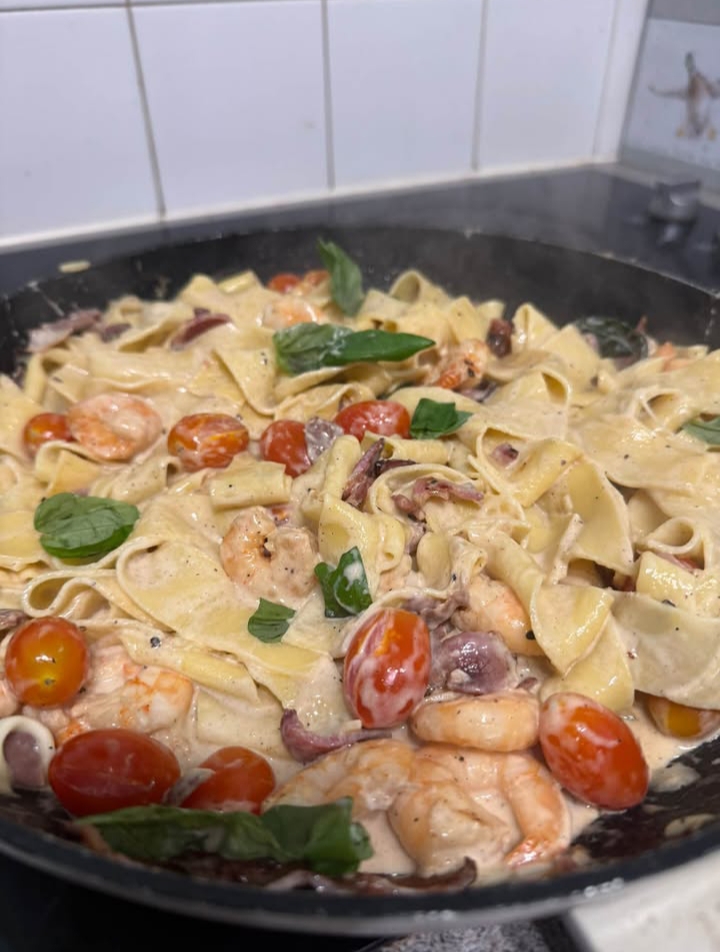
Creamy Shrimp Pappardelle with Cherry Tomatoes and Fresh Basil is an elegant, restaurant-inspired pasta dish that combines wide ribbons of tender pappardelle, succulent shrimp, juicy cherry tomatoes, and a luxurious garlic cream sauce.
This delicious recipe brings together the comforting richness of Italian-inspired pasta with the delicate sweetness of freshly cooked seafood. The shrimp are lightly seasoned and sautéed until golden and tender, while garlic and shallots create an aromatic foundation for the sauce.
Cherry tomatoes add bursts of natural sweetness and refreshing acidity, balancing the richness of the heavy cream or mascarpone. A splash of dry white wine introduces additional depth, while fresh basil provides a fragrant herbal finish.
The wide, flat pappardelle ribbons are particularly suitable for creamy sauces because their generous surface area allows them to capture the flavorful sauce in every bite.
Finished with butter and freshly cracked black pepper, this dish offers a beautiful combination of creamy, savory, slightly tangy, and fresh flavors.
Inspired by the style of Italian restaurant pasta preparations, this homemade version can be prepared in approximately 30 minutes, making it an excellent choice for weeknight dinners, romantic meals, family gatherings, or special occasions.
2. Origin and Cultural Significance
Pappardelle is a traditional Italian pasta variety particularly associated with Tuscany, a region celebrated for its rich culinary heritage and emphasis on fresh, seasonal ingredients.
The name pappardelle comes from the Italian verb pappare, meaning to eat enthusiastically or with great enjoyment.
These wide, flat pasta ribbons are traditionally made using flour and eggs, producing a substantial texture that works especially well with rich sauces.
In traditional Tuscan cooking, pappardelle is frequently served with hearty preparations such as wild boar ragù, slow-cooked meat sauces, mushrooms, and other regional ingredients.
Unlike narrower pasta varieties, pappardelle provides a generous surface that holds thick sauces beautifully.
Seafood pasta has a particularly important place in Italian coastal cooking. Regions such as Liguria, Campania, and Sicily are known for combining freshly caught seafood with pasta, garlic, olive oil, tomatoes, and aromatic herbs.
Shrimp, prawns, mussels, clams, and other seafood ingredients are commonly incorporated into pasta dishes that celebrate the natural flavors of the Mediterranean.
The combination of shrimp, cherry tomatoes, garlic, and basil reflects these Mediterranean culinary influences.
However, creamy shrimp pappardelle is better understood as a modern Italian-inspired preparation rather than one traditional regional recipe.
The addition of heavy cream or mascarpone creates a richer, contemporary sauce, while fresh basil and cherry tomatoes maintain the dish’s connection to Mediterranean ingredients.
Today, creamy seafood pasta is popular in restaurants and home kitchens because it combines accessible ingredients, elegant presentation, and relatively quick preparation.
3. Ingredients and Quantities
A. For the Creamy Shrimp Pappardelle
| Ingredient | Quantity |
|---|---|
| Pappardelle pasta | 12 oz (340 g) |
| Large shrimp or prawns, peeled and deveined | 1 lb (450 g) |
| Garlic cloves, minced | 3 |
| Large shallot, finely chopped | 1 |
| Cherry or grape tomatoes | 1–1½ cups (150–225 g) |
| Fresh basil leaves | 1 generous handful |
| Olive oil | 2 tablespoons |
| Unsalted butter | 1 tablespoon |
| Salt | To taste |
| Freshly cracked black pepper | To taste |
Why Use Pappardelle?
Pappardelle consists of wide pasta ribbons that provide an excellent surface for holding creamy sauces. Its substantial texture complements the tender shrimp and juicy tomatoes.
Why Use Large Shrimp?
Large shrimp provide a satisfying seafood component and remain visually attractive when served with wide pasta ribbons.
Peeled and deveined shrimp also reduce preparation time.
Why Use Garlic and Shallots?
Garlic contributes a distinctive savory aroma, while shallots provide a delicate sweetness that creates a flavorful foundation for the sauce.
Why Use Cherry Tomatoes?
Cherry tomatoes become soft and slightly blistered during cooking, releasing their natural juices and adding a pleasant balance of sweetness and acidity.
Why Use Fresh Basil?
Fresh basil introduces a fragrant, slightly peppery herbal flavor that complements both shrimp and tomatoes.
B. For the Creamy White Wine Sauce
| Ingredient | Quantity |
|---|---|
| Dry white wine (Pinot Grigio or Sauvignon Blanc) | ½ cup (120 ml) |
| Heavy cream or mascarpone cheese | ½ cup (120 ml or approximately 120 g) |
| Unsalted butter | 1 tablespoon |
| Reserved pasta cooking water | ¼–½ cup, as needed |
Why Use Dry White Wine?
Dry white wine adds acidity and complexity, helping balance the richness of the cream and butter.
Why Use Heavy Cream?
Heavy cream produces a smooth, pourable sauce that coats the pappardelle evenly.
Why Use Mascarpone?
Mascarpone creates a thicker, richer sauce with a delicate dairy sweetness.
Why Reserve Pasta Water?
Pasta water contains starch released during cooking. Adding a small quantity helps emulsify the sauce, improving its consistency and allowing it to cling to the pasta.
Note: The wine is optional. For an alcohol-free preparation, replace it with ½ cup of low-sodium chicken or vegetable broth and a small squeeze of lemon juice.
C. Recommended Equipment
- Large pot for boiling pasta
- Large skillet or sauté pan
- Colander
- Sharp chef’s knife
- Cutting board
- Wooden spoon or silicone spatula
- Kitchen tongs
- Measuring cups and spoons
- Serving plates or shallow pasta bowls
4. Optional Additions
This creamy shrimp pappardelle can be customized with additional ingredients to create different flavor combinations.
Fresh Parmesan: Add ¼ cup of freshly grated Parmesan cheese for additional savory depth and a slightly richer sauce.
Red Pepper Flakes: Add ¼ teaspoon for a gentle spicy kick that complements the sweetness of shrimp.
Fresh Lemon Zest: Incorporate ½ teaspoon of lemon zest for a refreshing citrus aroma.
Fresh Lemon Juice: Add 1–2 teaspoons at the end of cooking to brighten the creamy sauce.
Baby Spinach: Fold in 1 cup of fresh baby spinach during the final minutes of cooking for additional color and nutrients.
Mushrooms: Add ½ cup of sliced cremini or button mushrooms for an earthy flavor.
Sun-Dried Tomatoes: Incorporate 2 tablespoons of chopped sun-dried tomatoes for concentrated sweetness and Mediterranean-inspired flavor.
Zucchini: Add ½ cup of thinly sliced zucchini for extra vegetables and a delicate texture.
Scallops: Replace part of the shrimp with seared scallops for a more luxurious seafood combination.
Crushed Garlic: Add an additional garlic clove if you prefer a stronger garlic flavor.
Fresh Parsley: Combine chopped parsley with basil for a brighter herbal finish.
Toasted Pine Nuts: Sprinkle 2 tablespoons of toasted pine nuts over the finished pasta for a delicate crunch.
5. Tips for Success
Use high-quality shrimp. Fresh or properly thawed frozen shrimp provide the best flavor and texture.
Dry the shrimp thoroughly. Pat them with paper towels before cooking to encourage proper searing rather than steaming.
Avoid overcooking the seafood. Shrimp cook quickly and become rubbery if left in the pan for too long.
Cook the pasta al dente. Pappardelle should remain slightly firm because it will finish cooking in the creamy sauce.
Salt the pasta water properly. Seasoning the cooking water helps develop flavor throughout the pasta.
Reserve pasta water before draining. The starchy liquid is essential for adjusting and emulsifying the sauce.
Do not burn the garlic. Garlic cooks quickly, so use moderate heat and stir frequently.
Blister the tomatoes gently. Allow the tomatoes to soften and release some of their juices without completely losing their shape.
Reduce the wine before adding cream. This concentrates its flavor and prevents the finished sauce from tasting overly alcoholic or watery.
Use gentle heat for the cream. Avoid vigorous boiling after adding dairy to maintain a smooth consistency.
Add basil at the end. Fresh basil loses its delicate aroma when exposed to prolonged heat.
Finish with butter. Incorporating butter near the end adds gloss and improves the sauce’s overall texture.
Serve immediately. Creamy pasta thickens as it cools, so it is best enjoyed freshly prepared.
6. Step-by-Step Instructions
Step 1: Prepare the Shrimp
If using frozen shrimp, thaw them completely in the refrigerator or under cold running water.
Remove the shells and tails if they have not already been removed.
Using a small knife, make a shallow incision along the back of each shrimp and remove the dark digestive vein.
Rinse briefly if necessary and pat the shrimp thoroughly dry with paper towels.
Season lightly with salt and freshly cracked black pepper.
Set aside while preparing the remaining ingredients.
Step 2: Prepare the Aromatics
Peel and finely mince the three garlic cloves.
Remove the outer skin of the shallot and chop it into small, even pieces.
Wash the cherry tomatoes and pat them dry.
If the tomatoes are particularly large, cut them in half. Smaller tomatoes can remain whole.
Wash the fresh basil leaves and gently pat them dry.
Keep a few attractive basil leaves aside for the final garnish.
Step 3: Bring the Pasta Water to a Boil
Fill a large pot with approximately 4–5 liters of water.
Place over high heat and bring to a rolling boil.
Add a generous amount of salt.
Once the water is boiling, add the 12 oz (340 g) of pappardelle pasta.
Stir gently during the first minute to prevent the wide ribbons from sticking together.
Step 4: Cook the Pappardelle
Cook the pasta according to the package instructions, usually approximately 7–10 minutes for dried pappardelle.
If using fresh pappardelle, cooking time will generally be considerably shorter.
Taste a ribbon near the end of cooking.
The pasta should be tender but retain a slight firmness in the center.
Before draining, carefully reserve approximately 1 cup of pasta cooking water.
Drain the pasta without rinsing it.
Set aside.
Step 5: Sear the Shrimp
Place a large skillet over medium-high heat.
Add approximately 1 tablespoon of olive oil.
Once the oil is hot, arrange the seasoned shrimp in a single layer.
Avoid overcrowding the pan.
Cook for approximately 1–2 minutes on the first side.
Turn each shrimp and cook for another 1–2 minutes, depending on its size.
The shrimp should become pink, opaque, and lightly golden.
Remove them from the skillet and transfer to a clean plate.
Avoid overcooking because the shrimp will briefly return to the sauce later.
Step 6: Sauté the Shallots
Reduce the skillet heat to medium.
Add the remaining tablespoon of olive oil.
Add the finely chopped shallot.
Cook for approximately 2–3 minutes, stirring frequently, until softened and translucent.
The shallot should become fragrant without developing excessive browning.
Step 7: Add the Garlic
Add the minced garlic to the skillet.
Stir continuously for approximately 30–45 seconds.
Allow the garlic to release its aroma.
Avoid cooking it for too long because burnt garlic can introduce bitterness into the sauce.
Step 8: Cook the Cherry Tomatoes
Add the cherry tomatoes to the skillet.
Stir gently to coat them with the aromatic olive oil.
Cook for approximately 4–5 minutes.
Allow the tomatoes to blister slightly and soften.
Some tomatoes should begin releasing their natural juices, creating a flavorful base for the sauce.
Season lightly with salt and black pepper.
Step 9: Deglaze with White Wine
Pour the ½ cup of dry white wine into the skillet.
Using a wooden spoon, gently scrape the bottom of the pan to release any flavorful browned residue.
Bring the liquid to a gentle simmer.
Allow it to reduce for approximately 2–3 minutes.
The wine should become slightly concentrated, with its sharp raw aroma diminishing.
If using the alcohol-free alternative, add the chicken or vegetable broth instead, then finish with lemon juice later.
Step 10: Add the Heavy Cream or Mascarpone
Reduce the heat to medium-low.
Pour the ½ cup of heavy cream into the skillet while stirring gently.
If using mascarpone, add it in small spoonfuls and stir until it melts into the warm liquid.
Continue stirring until the sauce becomes smooth and creamy.
Allow it to simmer gently for approximately 2–3 minutes.
Avoid boiling vigorously.
The sauce should become slightly thicker while retaining a smooth, pourable consistency.
Step 11: Adjust the Sauce Consistency
Add approximately 2 tablespoons of reserved pasta water.
Stir gently to combine.
If the sauce appears too thick, add another tablespoon or two of pasta water.
If it seems too thin, allow it to simmer briefly over low heat.
The finished sauce should coat the back of a spoon without becoming excessively heavy.
Taste and adjust the salt and black pepper as needed.
Step 12: Add the Cooked Pappardelle
Transfer the drained pappardelle directly into the skillet.
Using kitchen tongs, gently lift and turn the pasta through the sauce.
Continue tossing for approximately 1–2 minutes.
The pasta should become evenly coated with the creamy tomato sauce.
Add a little more reserved pasta water if necessary.
Be gentle when mixing to prevent the wide pasta ribbons from breaking.
Step 13: Return the Shrimp to the Pan
Add the previously cooked shrimp back into the skillet.
Distribute them evenly throughout the pappardelle.
Toss gently for approximately 30–60 seconds, just long enough to warm the shrimp and combine the flavors.
Ensure the shrimp are thoroughly cooked before serving.
Avoid prolonged cooking, as this can make them tough.
Step 14: Add the Butter
Add the tablespoon of unsalted butter to the skillet.
Stir gently until it melts completely into the sauce.
The butter creates a beautiful glossy finish and adds richness to the creamy pasta.
Taste again and adjust the seasoning if necessary.
Step 15: Incorporate the Fresh Basil
Tear most of the fresh basil leaves into smaller pieces by hand.
Add them to the skillet.
Fold gently into the pasta immediately before removing the pan from the heat.
The residual warmth releases the basil’s aroma without destroying its fresh flavor.
Reserve a few whole leaves for decoration.
Step 16: Prepare the Serving Plates
Choose shallow pasta bowls or wide serving plates.
If desired, warm the plates slightly before serving to help maintain the temperature of the pasta.
Use kitchen tongs to create small bundles of pappardelle.
Twist the pasta gently and place it in the center of each plate.
Arrange the shrimp visibly on top and around the pasta.
Step 17: Add the Finishing Touches
Spoon the remaining cherry tomatoes and creamy sauce over the pasta.
Add the reserved fresh basil leaves.
Finish with freshly cracked black pepper.
If desired, add a light sprinkle of freshly grated Parmesan or a few drops of olive oil.
For a brighter flavor, add a small squeeze of fresh lemon juice.
Step 18: Serve Immediately
Serve the Creamy Shrimp Pappardelle while hot.
Each portion should feature wide pasta ribbons coated in silky cream sauce, tender shrimp, juicy cherry tomatoes, and fragrant fresh basil.
For a complete restaurant-style meal, accompany it with garlic bread or a simple green salad.
7. Description
Creamy Shrimp Pappardelle with Cherry Tomatoes and Fresh Basil is an elegant seafood pasta dish featuring wide, silky ribbons of pappardelle coated in a rich garlic cream sauce.
The shrimp are lightly seared until tender and succulent, providing a delicate seafood flavor that complements the buttery cream sauce.
Cherry tomatoes introduce natural sweetness and a pleasant acidity, creating a refreshing contrast to the richness of the heavy cream or mascarpone.
Garlic and shallots form the aromatic foundation, while dry white wine adds subtle complexity and depth.
Fresh basil brings a fragrant herbal finish, enhancing the Mediterranean-inspired character of the dish.
The pappardelle ribbons capture the creamy sauce beautifully, ensuring that each bite contains a balanced combination of pasta, seafood, tomatoes, and aromatic herbs.
A final addition of butter gives the sauce a luxurious glossy appearance, making the finished dish particularly attractive when served in shallow pasta bowls.
With its vibrant colors, delicate seafood, and creamy texture, this recipe delivers an inviting restaurant-style presentation that is suitable for both casual dinners and special occasions.
8. Nutritional Information
Estimated Nutritional Values per Serving (Based on 4 Servings):
| Nutrient | Approximate Amount |
|---|---|
| Calories | 650–750 kcal |
| Protein | 35–45 g |
| Carbohydrates | 65–80 g |
| Total Fat | 25–35 g |
| Saturated Fat | 10–16 g |
| Sugar | 4–7 g |
| Fiber | 3–5 g |
| Sodium | 450–750 mg |
Note: Nutritional values are estimates and depend on the type of pappardelle, size of the shrimp, choice of heavy cream or mascarpone, amount of olive oil, and final serving size. Values may vary if Parmesan or additional toppings are used.
Healthier Preparation Alternatives
Use Whole-Wheat Pappardelle: Replace conventional pasta with whole-wheat pappardelle for additional dietary fiber.
Choose Light Cream: Use a lighter cooking cream to reduce the total fat content, although the sauce may be less rich.
Increase the Vegetables: Add spinach, zucchini, mushrooms, or additional cherry tomatoes for more fiber and micronutrients.
Control the Butter: Reduce the butter slightly while maintaining enough to create a smooth finish.
Use Olive Oil Moderately: Measure the olive oil rather than adding it freely during cooking.
Choose Smaller Portions: Serve moderate pasta portions alongside a generous amount of shrimp and vegetables.
Add Fresh Lemon: Use lemon juice and zest to brighten the sauce without requiring additional butter or salt.
Select Lower-Sodium Ingredients: Choose low-sodium broth if preparing the alcohol-free variation and season carefully.
9. Conclusion
The Ultimate Creamy Shrimp Pappardelle with Cherry Tomatoes and Fresh Basil is a delicious, restaurant-inspired pasta dish that combines tender seafood, silky pasta, aromatic herbs, and a luxurious cream sauce.
Its appeal comes from the balance between rich dairy ingredients, sweet cherry tomatoes, fragrant garlic, and fresh basil.
The wide pappardelle ribbons provide the perfect foundation for capturing the creamy sauce, while the shrimp add satisfying protein and delicate seafood flavor.
Despite its elegant appearance, this dish can be prepared in approximately 30 minutes using accessible ingredients and straightforward cooking techniques.
The most important steps include avoiding overcooked shrimp, preparing the pasta al dente, reducing the wine properly, and adjusting the sauce with reserved pasta water.
Adding fresh basil at the end preserves its delicate fragrance, while finishing with butter gives the sauce its signature glossy texture.
Whether prepared for a romantic dinner, family gathering, or special weekend meal, this creamy shrimp pasta offers a wonderful combination of convenience, flavor, and sophisticated presentation.
10. Recommendation
For the best results, use large, good-quality shrimp and freshly prepared garlic and shallots.
Fresh pappardelle is particularly recommended for its delicate texture, although dried pappardelle works very well when cooked correctly.
Choose ripe cherry tomatoes with a naturally sweet flavor, as they provide an important contrast to the richness of the cream sauce.
Dry white wine such as Pinot Grigio or Sauvignon Blanc can add complexity, but low-sodium chicken or vegetable broth with lemon juice is an excellent alcohol-free alternative.
Use heavy cream for a smooth, pourable sauce or mascarpone for a richer, thicker consistency.
Avoid overcooking the shrimp and always reserve pasta water before draining.
Fresh basil should be incorporated at the very end to preserve its aromatic qualities.
Serving Recommendation: Serve the pasta in shallow white bowls with shrimp arranged visibly on top, blistered cherry tomatoes, fresh basil leaves, and a light sprinkle of Parmesan if desired.
Pair with garlic bread, a crisp green salad, or roasted vegetables.
Refrigerator Storage: Transfer leftovers to an airtight container and refrigerate promptly. Consume within 1–2 days for best quality, particularly because the dish contains seafood and cream.
Reheating: Warm gently in a skillet over low heat with 1–2 tablespoons of milk, cream, or water to loosen the sauce. Heat until thoroughly hot, avoiding prolonged cooking of the shrimp.
Freezing: Freezing is not recommended because cream-based sauces can separate and shrimp may become rubbery after thawing. Fresh preparation provides the best texture and flavor.
Allergen Information: This recipe contains shellfish, dairy, and wheat when conventional pappardelle is used. Check packaged pasta and other ingredients for additional allergens.
11. Embracing Healthful Indulgence
Creamy Shrimp Pappardelle with Cherry Tomatoes and Fresh Basil demonstrates how a comforting, restaurant-inspired pasta dish can combine indulgent flavors with nutrient-rich ingredients.
Shrimp provides high-quality protein, containing all nine essential amino acids. It also contributes important nutrients such as vitamin B12, selenium, and iodine.
Cherry tomatoes supply vitamin C, potassium, and naturally occurring carotenoids, including lycopene.
Fresh basil contributes aromatic plant compounds and small amounts of vitamins and minerals, while garlic and shallots provide additional flavor without requiring excessive seasoning.
Pappardelle supplies carbohydrates that serve as an important source of energy, while olive oil provides predominantly monounsaturated fats.
However, heavy cream, mascarpone, and butter contribute saturated fat and increase the overall calorie content of the dish.
A balanced approach involves enjoying appropriate portions while incorporating additional vegetables and adjusting the quantity of rich dairy ingredients when desired.
Using a lighter cooking cream, adding spinach or zucchini, and controlling the amount of butter can create a lighter variation without completely changing the character of the recipe.
Shrimp also provides a relatively lean source of protein, making it a useful component of a satisfying meal.
Preparing this dish at home offers greater control over the ingredients, cooking oils, seasoning, sauce consistency, and serving quantities.
Serving a moderate portion alongside a fresh green salad can introduce additional dietary fiber and create a more balanced meal.
Ultimately, healthful indulgence is about appreciating delicious foods while maintaining variety, moderation, and thoughtful nutritional choices.
Final Thought: 🍤🍝🌿 With its succulent golden shrimp, silky pappardelle ribbons, sweet blistered cherry tomatoes, aromatic fresh basil, and luxurious garlic cream sauce, the Ultimate Creamy Shrimp Pappardelle delivers an exceptional restaurant-style dining experience at home. Elegant, comforting, and ready in approximately 30 minutes, this Mediterranean-inspired pasta is perfect for special dinners, relaxed weekends, and memorable meals shared with family and friends.