
1. Introduction
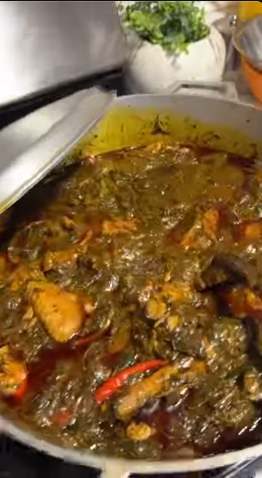
Efo Riro is a rich, flavorful Nigerian vegetable stew made with fresh leafy greens, aromatic peppers, palm oil, and a delicious combination of meats and fish.
This traditional Yoruba dish is known for its vibrant green vegetables coated in a deeply seasoned red pepper sauce.
The combination of spinach, fermented locust beans, ground crayfish, smoked fish, and assorted meats creates a wonderfully savory stew with layers of flavor.
Unlike watery vegetable soups, a well-prepared Efo Riro has a concentrated pepper base that clings beautifully to the greens.
Whether served with pounded yam, eba, fufu, or steamed rice, Efo Riro is a satisfying meal enjoyed in many Nigerian households.
2. Origin and Cultural Significance
Efo Riro originates from the Yoruba culinary tradition of southwestern Nigeria.
The dish is particularly associated with Yoruba communities, where richly seasoned vegetable stews are an important part of everyday cooking and family meals.
The name Efo Riro refers to a prepared or stirred vegetable dish.
Traditional versions use local leafy vegetables such as efo shoko or efo tete, although spinach is a common substitute.
The stew’s distinctive flavor comes from ingredients such as palm oil, fermented locust beans, ground crayfish, peppers, and smoked or dried fish.
Nigerian cooking sources, including All Nigerian Recipes, My Active Kitchen, and Chef Lola’s Kitchen, describe Efo Riro as a traditional Yoruba vegetable stew built around these ingredients. All Nigerian Recipes+2
Today, Efo Riro is enjoyed across Nigeria and among Nigerian communities worldwide.
3. Ingredients
Preparation Time: 20 minutes | Cooking Time: 30–35 minutes | Servings: 6
Cooking time assumes that the meat and fish have already been prepared.
For the Vegetables and Stew Base
- 1 kg fresh spinach, efo shoko, or efo tete
- ¾ cup red palm oil
- 2 tablespoons iru (fermented locust beans), rinsed
- 3 tablespoons ground crayfish
For the Pepper Mixture
- 3 large red bell peppers (tatashe)
- 2–3 Scotch bonnet peppers (ata rodo), adjusted to taste
- 2 medium onions, divided
For the Proteins
- Approximately 500–700 g assorted cooked meats, such as beef, shaki (tripe), ponmo (cow skin), or chicken
- 1–2 pieces dried smoked fish or stockfish, cleaned, deboned, and prepared
For Seasoning
- 2 bouillon cubes
- Salt to taste
- A small amount of meat stock, if needed
For Serving
- Pounded yam
- Eba
- Fufu
- Amala
- Steamed white rice
4. Optional Additions and Variations
Efo Riro is a versatile dish that can be prepared with different combinations of protein and vegetables.
Beef Efo Riro
Use tender, seasoned beef as the main protein.
The beef absorbs the rich pepper sauce and adds satisfying flavor.
Chicken Efo Riro
Replace the beef with cooked chicken pieces.
Chicken thighs are especially suitable because they remain tender during simmering.
Seafood Efo Riro
Add cooked shrimp, smoked fish, or stockfish for a seafood-focused variation.
Assorted Meat Efo Riro
Combine beef, tripe, and ponmo for a hearty traditional-style stew.
Extra-Spicy Efo Riro
Increase the quantity of Scotch bonnet peppers.
Adjust carefully because these peppers can be extremely hot.
Lighter Efo Riro
Reduce the palm oil to approximately ⅓–½ cup.
The stew will be less rich, but it can still develop excellent flavor.
5. Tips for Making Perfect Efo Riro
Choose fresh leafy vegetables
Fresh spinach or traditional Nigerian greens give the stew its characteristic color and texture.
Discard damaged leaves and wash thoroughly to remove dirt.
Drain the greens properly
Excess water can dilute the pepper sauce.
After blanching, squeeze the vegetables gently to remove unnecessary moisture.
Blend the peppers coarsely
Avoid turning the peppers into an extremely smooth puree.
A slightly coarse mixture gives Efo Riro a more textured sauce.
Nigerian recipe developer My Active Kitchen recommends using a blender’s pulse setting to achieve this consistency. My Active Kitchen
Cook the pepper sauce thoroughly
Allow the pepper mixture to reduce before adding the greens.
This helps concentrate the flavor and prevents the finished stew from becoming watery.
Avoid overheating the palm oil
Warm the palm oil gently.
There is no need to bleach it or heat it until it smokes.
Add the spinach near the end
Spinach cooks quickly.
Adding it during the final minutes helps preserve its color and prevents excessive softening.
Taste before adding salt
Bouillon cubes, crayfish, smoked fish, and stockfish can already contribute considerable saltiness.
Adjust the final seasoning carefully.
6. Step-by-Step Instructions
Step 1: Prepare the Leafy Vegetables
Remove any damaged leaves and tough stems from the spinach or other greens.
Wash thoroughly in several changes of clean water to remove sand and dirt.
Chop the leaves into manageable pieces.
Bring a pot of water to a boil.
Blanch the spinach for approximately 1 minute.
Immediately transfer it into cold water to stop the cooking process.
Drain thoroughly and gently squeeze out excess moisture.
Set aside.
Step 2: Prepare the Pepper Mixture
Wash the red bell peppers and Scotch bonnet peppers.
Remove the bell pepper seeds and stems.
Peel one medium onion and cut it into chunks.
Place the peppers and onion into a blender.
Pulse until you obtain a coarse mixture.
Avoid adding too much water.
Set the pepper mixture aside.
Step 3: Prepare the Proteins
Make sure the assorted meats are thoroughly cooked and tender before adding them to the stew.
Beef and tripe may need a longer cooking period, so prepare them in advance.
Clean and debone the smoked fish or stockfish.
If using dried stockfish, soak and cook it as necessary until tender.
Reserve a small amount of the meat stock for the stew.
Step 4: Heat the Palm Oil
Place a large, heavy-bottomed pot over medium heat.
Add ¾ cup red palm oil.
Allow the oil to warm for approximately 2 minutes.
It should become hot but should not begin smoking.
Step 5: Sauté the Onions and Locust Beans
Thinly slice the remaining onion.
Add it to the warm palm oil.
Sauté for approximately 2–3 minutes until softened.
Stir in the rinsed iru (fermented locust beans).
Continue cooking for another minute until fragrant.
The locust beans contribute the distinctive savory aroma associated with traditional Efo Riro.
Step 6: Fry the Pepper Mixture
Carefully pour the coarsely blended pepper mixture into the pot.
Stir thoroughly to combine it with the palm oil, onions, and locust beans.
Allow the mixture to cook over medium heat for approximately 15–20 minutes.
Stir occasionally to prevent sticking.
As the peppers cook, excess moisture will evaporate and the sauce will become thicker.
You may notice some oil rising to the surface.
This indicates that the pepper mixture has reduced considerably.
Step 7: Add the Assorted Meats
Add the cooked beef, tripe, ponmo, or chicken to the pepper sauce.
Stir gently until the pieces are coated.
Allow the meat to simmer in the sauce for approximately 3–4 minutes.
This helps the proteins absorb the aromatic flavors.
Step 8: Add the Fish and Crayfish
Stir in the prepared smoked fish or stockfish.
Add 3 tablespoons of ground crayfish.
Mix gently to distribute the ingredients without breaking the fish into excessively small pieces.
Add the bouillon cubes.
If the sauce appears too thick, pour in a small amount of reserved meat stock.
Avoid adding too much liquid.
Step 9: Simmer the Stew
Reduce the heat to medium-low.
Allow the sauce and proteins to simmer together for approximately 5–7 minutes.
Stir occasionally.
The finished pepper mixture should be thick, aromatic, and rich.
Taste the sauce and adjust the seasoning if necessary.
Step 10: Add the Spinach
Add the blanched, well-drained spinach to the pot.
Gently fold the greens into the pepper sauce.
Continue stirring until the vegetables are evenly coated.
The stew should now have a vibrant combination of green vegetables and reddish palm oil sauce.
Step 11: Finish Cooking
Reduce the heat to low.
Allow the stew to simmer for another 3–5 minutes.
Avoid overcooking the spinach.
Taste again and add salt only if needed.
Turn off the heat once the vegetables are tender and the flavors are well combined.
Step 12: Serve
Allow the Efo Riro to rest briefly before serving.
Transfer it to a serving bowl.
Serve warm with pounded yam, eba, amala, fufu, or steamed rice.
For a traditional-style presentation, arrange the meat and fish pieces prominently among the vegetables.
7. Description: What Does Efo Riro Taste Like?
Efo Riro is known for its rich, savory, and deeply aromatic flavor.
The spinach provides a tender vegetable base that absorbs the pepper sauce.
Red bell peppers contribute mild sweetness, while Scotch bonnet peppers add warmth and heat.
Palm oil introduces a distinctive richness and vibrant color.
Fermented locust beans provide an earthy, intensely savory flavor.
Ground crayfish and smoked fish contribute additional depth, while the assorted meats make the dish hearty and satisfying.
Unlike a thin vegetable soup, Efo Riro has a relatively concentrated consistency.
The pepper mixture coats the vegetables and proteins, creating a flavorful combination in every spoonful.
When paired with a Nigerian swallow such as pounded yam or eba, the result is a comforting and substantial meal.
8. Nutritional Information
Efo Riro contains leafy vegetables, proteins, and palm oil.
The nutritional profile varies significantly depending on the amount of oil and the selection of meats and fish.
The following estimates are for one serving, assuming six portions.
| Nutrient | Estimated Amount |
|---|---|
| Calories | 400–650 kcal |
| Protein | 25–40 g |
| Carbohydrates | 10–20 g |
| Total Fat | 30–50 g |
| Dietary Fiber | 3–6 g |
| Sodium | Varies considerably with seasoning and proteins |
These estimates exclude pounded yam, eba, fufu, rice, and other accompaniments.
Leafy vegetables contribute vitamins and minerals, while the assorted meats and fish provide protein.
Palm oil contains substantial fat and contributes significantly to the dish’s calorie content.
9. Recipe Details
| Category | Details |
|---|---|
| Recipe Name | Authentic Nigerian Efo Riro |
| Cuisine | Nigerian, Yoruba |
| Course | Main Dish |
| Preparation Time | 20 Minutes |
| Cooking Time | 30–35 Minutes |
| Total Time | 50–55 Minutes |
| Servings | 6 |
| Cooking Method | Sautéing and Simmering |
| Difficulty | Moderate |
| Main Vegetable | Spinach or Traditional Nigerian Greens |
| Main Seasonings | Iru, Crayfish, Peppers, Bouillon |
| Main Oil | Red Palm Oil |
| Protein Options | Beef, Shaki, Ponmo, Chicken, Smoked Fish |
| Best Served With | Pounded Yam, Eba, Fufu, Amala, or Rice |
Total time assumes the meats and fish are already cooked and prepared.
10. Conclusion
Efo Riro is a wonderful example of the rich flavors and cooking traditions of Yoruba cuisine.
The combination of fresh leafy vegetables, aromatic pepper sauce, palm oil, locust beans, crayfish, and assorted proteins creates a deeply satisfying dish.
Although it contains several ingredients, the cooking process is straightforward when the vegetables, pepper mixture, and meats are prepared in advance.
The secret to a delicious Efo Riro lies in allowing the pepper sauce to reduce properly, balancing the seasonings, and adding the greens during the final minutes.
Whether served with pounded yam, eba, fufu, or rice, this comforting Nigerian stew makes a memorable family meal.
11. Recommendations for Serving and Storage
Best Serving Suggestions
Efo Riro pairs beautifully with traditional Nigerian accompaniments.
- Pounded yam: Soft and smooth, ideal for scooping up the stew.
- Eba: A popular garri-based accompaniment.
- Amala: Offers a distinctive flavor and texture.
- Fufu: Complements the thick, savory sauce.
- Steamed white rice: A convenient alternative.
- Boiled plantains: Add a naturally sweet contrast.
Storage Instructions
To store leftover Efo Riro:
- Divide the stew into shallow, airtight containers.
- Refrigerate within 2 hours of cooking.
- Keep the refrigerator at 40°F (4°C) or below.
- Consume within 3–4 days.
- Reheat thoroughly to 165°F (74°C) before serving.
These recommendations follow general food-safety guidance for cooked foods containing meat and seafood. FoodSafety.gov+1
Freezing Instructions
Efo Riro can be frozen in portion-sized containers for approximately 2–3 months for best quality.
Allow it to cool safely before freezing.
Thaw overnight in the refrigerator before reheating.
The leafy vegetables may soften further after freezing, but the stew should retain much of its savory flavor.
12. Embracing Healthful Indulgence
Efo Riro combines nutrient-rich leafy vegetables with deeply flavorful traditional seasonings.
Spinach and other greens provide fiber, vitamins, and minerals, while meats and fish contribute protein.
The mixture of peppers, onions, crayfish, and fermented locust beans creates a savory flavor that makes the dish particularly satisfying.
Although traditional Efo Riro can be rich in oil, you can adjust the amount of palm oil and select leaner proteins to suit your preferences.
For a more vegetable-focused serving, increase the proportion of leafy greens and choose moderate portions of meat.
Pair the stew with a suitable portion of rice, pounded yam, or another preferred accompaniment.
With its vibrant colors, bold aromas, and comforting texture, homemade Efo Riro is a delicious celebration of Nigerian culinary heritage and a flavorful addition to any home-cooked meal.