
1. Introduction
Baked Purple Sweet Potato with Hard-Boiled Eggs is a simple, colorful, and nutritious meal that combines the natural sweetness of a tender purple sweet potato with the satisfying protein of perfectly cooked eggs.
This wholesome combination requires only two main ingredients and minimal preparation, making it an excellent option for breakfast, lunch, a light dinner, or a filling snack.
The purple sweet potato is the centerpiece of the dish.
Known for its beautiful deep-purple flesh, naturally sweet flavor, and dense texture, this root vegetable becomes soft and tender when baked or steamed.
Baking develops a slightly concentrated sweetness, while steaming creates a moist, delicate texture.
Both methods preserve the potato’s vibrant appearance and make it easy to enjoy without complicated seasonings.
Hard-boiled eggs provide a savory contrast to the sweet potato.
Their firm whites and creamy yellow yolks complement the naturally sweet, earthy flavor of the potato.
The eggs are cooked in gently boiling water for approximately 9–12 minutes, depending on the preferred yolk texture.
After cooking, they are transferred to ice water to stop the cooking process and make peeling easier.
The finished meal can be served simply with a pinch of salt and black pepper.
For additional richness, a small amount of butter may be spread over the warm sweet potato.
This recipe is particularly appealing for people who enjoy meals made with familiar, minimally processed ingredients.
It requires very little active cooking time and can be prepared in advance for convenient meals throughout the week.
2. Origin and Cultural Significance
Purple sweet potatoes have been cultivated and enjoyed in different parts of the world for generations.
They are especially associated with food traditions in Asia and the Pacific, although varieties of purple-fleshed sweet potatoes are now grown and consumed internationally.
Purple Sweet Potatoes
Purple sweet potatoes belong to the species Ipomoea batatas.
Their distinctive purple color comes primarily from anthocyanin pigments, naturally occurring plant compounds also found in foods such as blueberries and purple cabbage.
Different varieties have different textures and flavor characteristics.
Some purple sweet potatoes are relatively dry and dense, while others become softer and moister after cooking.
Purple sweet potatoes are commonly roasted, steamed, boiled, or incorporated into desserts and baked goods.
In Japanese cuisine, purple sweet potatoes are associated with Okinawan food traditions, while other purple-fleshed varieties are used throughout East and Southeast Asia.
Hard-Boiled Eggs
Hard-boiled eggs are prepared in many cultures around the world.
They are valued for their convenience, versatility, and protein content.
Boiled eggs are frequently served at breakfast, included in lunchboxes, added to salads, or eaten as a simple snack.
A Modern, Minimal-Ingredient Meal
Pairing a cooked sweet potato with boiled eggs is a practical combination rather than a dish associated with one specific culinary tradition.
The sweet potato provides carbohydrates and fiber, while the eggs contribute protein and fat.
Together, they create a convenient meal with contrasting flavors and textures.
This type of preparation has become popular among people seeking straightforward breakfasts and meal-prep options.
3. Ingredients
This recipe makes one generous serving.
A. Purple Sweet Potato
| Ingredient | Quantity |
|---|---|
| Medium purple sweet potato, washed | 1 |
| Water, if steaming | As needed |
B. Hard-Boiled Eggs
| Ingredient | Quantity |
|---|---|
| Large eggs | 2 |
| Water for boiling | Enough to cover the eggs |
| Ice water | Enough to cool the eggs |
C. Optional Seasonings
| Ingredient | Quantity |
|---|---|
| Butter | A small amount, optional |
| Flaky sea salt | A pinch, optional |
| Freshly ground black pepper | To taste, optional |
D. Equipment
- Baking sheet
- Aluminum foil or parchment paper
- Oven
- Fork
- Small saucepan
- Slotted spoon
- Mixing bowl
- Ice cubes
- Sharp knife
- Cutting board
- Steamer basket, optional
- Serving plate
4. Optional Additions
This simple breakfast can be customized with additional toppings and accompaniments.
Butter: Spread a small amount over the warm sweet potato for a richer texture.
Flaky Sea Salt: Sprinkle lightly over the potato or eggs to enhance their natural flavors.
Black Pepper: Add freshly cracked black pepper to the eggs.
Smoked Paprika: Sprinkle over the eggs for a subtle smoky flavor.
Chili Flakes: Add a pinch for mild heat.
Fresh Parsley: Garnish with finely chopped parsley.
Green Onions: Add sliced green onions for freshness.
Avocado: Serve with a few avocado slices for additional richness.
Plain Yogurt: Add a small spoonful alongside the sweet potato.
Cinnamon: Sprinkle a little over the sweet potato for a naturally sweet variation.
Lemon Juice: Add a few drops to the eggs for a bright finish.
Cucumber Slices: Serve with fresh cucumber for a refreshing side.
Cherry Tomatoes: Add a few tomatoes for color and freshness.
Fresh Spinach: Serve with lightly sautéed spinach.
The original combination is already satisfying, so these additions are entirely optional.
5. Tips for Success
Choose a Medium-Sized Sweet Potato
A medium sweet potato generally cooks more evenly than a very large one.
Scrub the Skin Thoroughly
Wash the sweet potato under running water to remove dirt.
Dry Before Baking
Patting the potato dry helps prevent excess surface moisture.
Pierce the Skin
Use a fork to create several small holes before baking.
Preheat the Oven Fully
An oven temperature of 425°F (220°C) helps cook the potato thoroughly.
Adjust Cooking Time to Size
Smaller sweet potatoes may cook faster, while larger potatoes may need additional time.
Check Tenderness with a Fork
The potato is ready when a fork slides easily into the center.
Steam for a Moist Texture
Steaming is an excellent alternative when a softer, moister texture is preferred.
Keep Water Below the Steamer Basket
The potato should cook from steam rather than sit directly in boiling water.
Use a Timer for the Eggs
Timing helps achieve the desired yolk consistency.
Lower Eggs Gently
Use a spoon to lower the eggs into boiling water to reduce cracking.
Avoid Excessively Vigorous Boiling
A gentle boil reduces the likelihood of the eggs knocking against the pot.
Cool Eggs Immediately
An ice bath stops residual cooking and can make peeling easier.
Peel Carefully
Gently crack the shell and peel under cool running water if needed.
Serve Warm
The contrast between warm sweet potato and freshly cooked eggs makes the dish especially enjoyable.
6. Step-by-Step Instructions
Part A: Preparing the Ingredients
Step 1: Gather all ingredients and equipment.
Step 2: Select one medium purple sweet potato.
Step 3: Inspect the potato and remove any loose dirt.
Step 4: Place the sweet potato under cool running water.
Step 5: Scrub the skin thoroughly.
Step 6: Rinse until clean.
Step 7: Pat the potato dry with a clean towel.
Step 8: Set the potato on a cutting board.
Step 9: Gather two large eggs.
Step 10: Prepare a small saucepan and a bowl for the ice bath.
Part B: Preparing the Oven
Step 11: Preheat the oven to 425°F (220°C).
Step 12: Position an oven rack near the center.
Step 13: Line a baking sheet with aluminum foil or parchment paper rated for the oven temperature.
Step 14: Place the cleaned sweet potato on the baking sheet.
Step 15: Use a fork to pierce the skin several times.
Step 16: Turn the potato and pierce the opposite side.
Step 17: Check that the holes are distributed around the potato.
Part C: Baking the Purple Sweet Potato
Step 18: Place the baking sheet into the preheated oven.
Step 19: Position it on the center rack.
Step 20: Close the oven door.
Step 21: Bake for approximately 45–60 minutes.
Step 22: Allow the sweet potato to cook undisturbed during the first part of baking.
Step 23: Check the potato after approximately 45 minutes.
Step 24: Carefully insert a fork into the thickest section.
Step 25: Check whether the fork slides easily into the center.
Step 26: If the potato is still firm, continue baking.
Step 27: Check again after another 5–10 minutes.
Step 28: Continue until the center is completely tender.
Step 29: Remove the baking sheet from the oven.
Step 30: Allow the potato to cool briefly until safe to handle.
Part D: Alternative Steaming Method
For a moister texture, use this method instead of baking.
Step 31: Fill a saucepan with a small amount of water.
Step 32: Place a steamer basket inside the saucepan.
Step 33: Make sure the water remains below the bottom of the basket.
Step 34: Bring the water to a boil.
Step 35: Place the cleaned purple sweet potato into the basket.
Step 36: Cover the saucepan with a lid.
Step 37: Reduce the heat to maintain steady steaming.
Step 38: Steam for approximately 35–45 minutes.
Step 39: Check the water level occasionally.
Step 40: Add more hot water if necessary.
Step 41: Insert a fork into the thickest part of the potato.
Step 42: Continue steaming if the center is still firm.
Step 43: Remove the potato when completely tender.
Step 44: Allow it to cool briefly.
Part E: Preparing the Eggs
Step 45: Place a small saucepan on the stove.
Step 46: Add enough water to cover the eggs once they are added.
Step 47: Turn the heat to high.
Step 48: Bring the water to a rolling boil.
Step 49: Reduce the heat slightly.
Step 50: Place one egg on a large spoon.
Step 51: Gently lower it into the hot water.
Step 52: Repeat with the second egg.
Step 53: Adjust the heat to maintain a gentle boil.
Part F: Cooking the Eggs
Step 54: Start a timer.
Step 55: For slightly creamy yolks, cook the eggs for approximately 9 minutes.
Step 56: For fully firm hard-boiled yolks, cook for approximately 12 minutes.
Step 57: Keep the eggs submerged during cooking.
Step 58: Avoid stirring the eggs aggressively.
Step 59: Allow the eggs to cook until the timer finishes.
Step 60: Turn off the heat.
Part G: Cooling the Eggs
Step 61: Fill a medium bowl with cold water.
Step 62: Add several ice cubes.
Step 63: Use a slotted spoon to remove the cooked eggs.
Step 64: Immediately transfer them into the ice bath.
Step 65: Allow the eggs to cool for approximately 5 minutes.
Step 66: Check that they are comfortable to handle.
Step 67: Remove the eggs from the water.
Part H: Peeling the Eggs
Step 68: Gently tap the first egg against a hard surface.
Step 69: Rotate the egg to crack the shell.
Step 70: Begin peeling from the wider end if possible.
Step 71: Carefully remove the shell.
Step 72: Rinse briefly if small shell fragments remain.
Step 73: Repeat with the second egg.
Step 74: Place the peeled eggs on a clean plate.
Part I: Preparing the Sweet Potato for Serving
Step 75: Transfer the cooked purple sweet potato to a cutting board.
Step 76: Allow it to cool slightly if still very hot.
Step 77: Use a sharp knife to slice it lengthwise.
Step 78: Gently open the two halves.
Step 79: Observe the tender purple flesh.
Step 80: Lightly fluff the inside with a fork if desired.
Step 81: Add a small amount of butter if preferred.
Part J: Assembling the Plate
Step 82: Prepare a clean serving plate.
Step 83: Place the warm purple sweet potato on one side.
Step 84: Arrange the two peeled hard-boiled eggs beside it.
Step 85: Slice the eggs in half if desired.
Step 86: Sprinkle the eggs with a small pinch of flaky sea salt.
Step 87: Add freshly ground black pepper.
Step 88: Add any optional toppings.
Step 89: Serve immediately.
7. Description
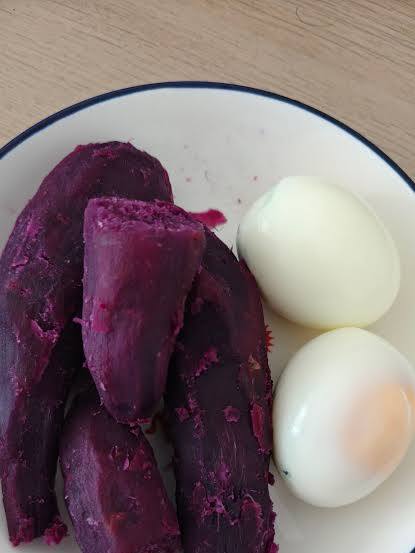
Baked Purple Sweet Potato with Hard-Boiled Eggs is a colorful, naturally sweet, and savory meal featuring two simple ingredients.
The purple sweet potato has a vibrant interior and a soft, tender texture when fully cooked.
Its flavor is mildly earthy and naturally sweet.
Baking produces a slightly concentrated sweetness, while steaming creates a moister texture.
The hard-boiled eggs provide a contrasting savory element.
Their smooth whites surround rich yellow yolks that can be slightly creamy or fully firm depending on cooking time.
A small amount of salt and black pepper enhances the eggs without overpowering their natural flavor.
When arranged together on a plate, the deep purple potato and bright yellow egg yolks create an attractive visual contrast.
The meal is simple, filling, and easy to prepare.
It can be served as a breakfast, light lunch, or nutritious snack.
8. Nutritional Information
Approximate nutritional values for one serving containing one medium purple sweet potato and two large eggs:
| Nutrient | Estimated Amount |
|---|---|
| Calories | 280–350 kcal |
| Protein | 15–17 g |
| Carbohydrates | 30–45 g |
| Total Fat | 10–11 g |
| Saturated Fat | 3–4 g |
| Fiber | 4–6 g |
| Sugar | 6–10 g |
| Cholesterol | Approximately 370 mg |
| Sodium | Variable |
| Potassium | Variable |
| Vitamin B12 | Present in eggs |
| Choline | Present in eggs |
These estimates depend on the size and variety of sweet potato. Optional butter and toppings are not included.
9. Recipe Details
| Category | Details |
|---|---|
| Recipe Name | Baked Purple Sweet Potato with Hard-Boiled Eggs |
| Cuisine | Simple International Home Cooking |
| Preparation Time | Approximately 5 Minutes |
| Baking Time | 45–60 Minutes |
| Alternative Steaming Time | 35–45 Minutes |
| Egg Cooking Time | 9–12 Minutes |
| Total Time | Approximately 50–65 Minutes Using Oven |
| Servings | 1 |
| Difficulty | Very Easy |
| Main Ingredients | Purple Sweet Potato and Eggs |
| Cooking Methods | Baking or Steaming, Boiling |
| Course | Breakfast, Snack, Light Lunch |
| Flavor Profile | Naturally Sweet, Mildly Savory, Earthy |
| Texture | Tender Sweet Potato, Firm Egg Whites, Creamy or Firm Yolks |
| Dietary Style | Vegetarian, Naturally Gluten-Free |
| Best For | Simple Breakfasts, Meal Prep, Nutritious Snacks |
| Optional Seasonings | Butter, Salt, Black Pepper |
10. Conclusion
Baked Purple Sweet Potato with Hard-Boiled Eggs is a simple and satisfying meal that demonstrates how a few familiar ingredients can create a nutritious breakfast or snack.
The purple sweet potato provides natural sweetness, fiber, and a vibrant color.
Baking creates a tender interior with concentrated flavor, while steaming offers a softer, moister alternative.
Hard-boiled eggs contribute protein and a savory contrast.
Their smooth texture complements the soft sweet potato, creating a balanced combination of flavors.
The preparation requires very little active work.
The sweet potato can be placed in the oven or steamer while the eggs are prepared separately.
Once both components are cooked, they can be arranged together and seasoned lightly with salt, pepper, or a small amount of butter.
This meal is especially convenient for people who prefer simple cooking methods and minimal ingredients.
It can be enjoyed fresh or prepared in advance for busy mornings.
With its colorful presentation, naturally sweet flavor, and protein-rich eggs, this combination makes a practical addition to everyday home cooking.
11. Serving and Storage Recommendations
Serving Suggestions: Serve the sweet potato warm with freshly peeled hard-boiled eggs.
Egg Presentation: Leave the eggs whole or slice them in half to display the yolks.
Sweet Potato Presentation: Slice the potato lengthwise and gently open it before serving.
Butter: Add a small amount of butter to the warm potato if desired.
Salt and Pepper: Season the eggs lightly.
Fresh Vegetables: Serve with cucumber slices or cherry tomatoes.
Breakfast Pairing: Add fresh fruit or plain yogurt if a larger meal is desired.
Refrigeration: Store cooked sweet potatoes and hard-boiled eggs in separate airtight containers.
Sweet Potato Storage: Refrigerate cooked sweet potatoes for approximately 3–4 days.
Hard-Boiled Egg Storage: Refrigerate hard-boiled eggs and consume within one week.
Egg Storage Tip: Keep hard-boiled eggs in their shells until ready to eat when possible.
Freezing: Cooked sweet potato can be frozen, although its texture may change.
Egg Freezing: Freezing whole hard-boiled eggs is not recommended because the whites become rubbery.
Reheating Sweet Potato: Warm gently in the oven or microwave until thoroughly heated.
Serving Eggs: Hard-boiled eggs can be served cold or allowed to warm slightly before eating.
Make-Ahead: Bake several sweet potatoes and boil multiple eggs for convenient meals.
Food Safety: Refrigerate cooked food within 2 hours. Do not leave boiled eggs or cooked sweet potatoes at room temperature for extended periods.
Allergen Information: This recipe contains eggs. The plain sweet potato itself does not contain common major allergens.
12. Embracing Healthful Indulgence
Baked Purple Sweet Potato with Hard-Boiled Eggs is a nutrient-rich meal that combines complex carbohydrates, dietary fiber, protein, and essential vitamins and minerals.
Purple sweet potatoes contain carbohydrates that provide energy.
They also contribute dietary fiber, which supports digestive health.
Their distinctive purple color comes from anthocyanins, naturally occurring plant pigments with antioxidant properties.
Purple sweet potatoes also provide potassium and other nutrients, although exact amounts vary by variety.
Eggs are a source of complete protein, containing all nine essential amino acids.
They also provide choline, vitamin B12, selenium, and other nutrients.
The combination of sweet potato and eggs can help create a satisfying meal because it includes carbohydrates, protein, and fat.
Baking and steaming are cooking methods that do not require added oil.
Boiling eggs also avoids the need for frying fat.
This makes the original recipe relatively simple in terms of added ingredients.
For a more varied meal, fresh vegetables or fruit can be served alongside it.
People who need a larger breakfast may add another protein source or an additional side dish.
Those who prefer smaller portions can use a smaller sweet potato or serve one egg instead of two.
The recipe is naturally gluten-free and suitable for many vegetarian eating patterns.
With its tender purple sweet potato, perfectly cooked eggs, and simple preparation, this meal offers a colorful, nourishing, and convenient option for breakfast or any time of day.