
1. Introduction
Classic Deviled Eggs are a timeless appetizer featuring tender hard-boiled egg whites filled with a rich, smooth, and flavorful egg yolk mixture.
Made with simple ingredients such as mayonnaise, mustard, vinegar, salt, black pepper, and paprika, these bite-sized appetizers are easy to prepare and perfect for almost any occasion.
The beauty of deviled eggs lies in their simplicity.
The eggs are boiled until the yolks are fully cooked, then chilled, peeled, and sliced lengthwise.
The yolks are carefully removed and mashed with mayonnaise, mustard, and a splash of acidity to create a creamy filling.
The filling is then spooned or piped back into the egg white halves and finished with a light dusting of paprika.
The result is a beautiful appetizer with a delicate balance of creamy, tangy, savory, and slightly smoky flavors.
The firm egg whites provide structure, while the smooth yolk filling adds richness.
Paprika gives the finished eggs their characteristic reddish-orange garnish and a subtle flavor.
Classic Deviled Eggs are especially popular because they require only a few inexpensive ingredients and can be prepared ahead of time.
They are commonly served at family gatherings, holiday celebrations, picnics, brunches, parties, and potluck dinners.
This recipe makes 12 deviled egg halves, enough for approximately six servings when allowing two halves per person.
The preparation is straightforward, making it suitable for beginner cooks.
Although the basic recipe is delicious on its own, deviled eggs are also easy to customize with fresh herbs, pickle relish, hot sauce, or other savory additions.
Whether served as a party appetizer or a quick homemade snack, Classic Deviled Eggs offer a satisfying combination of familiar ingredients and delicious flavor.
2. Origin and Cultural Significance
Deviled eggs have a long culinary history, with variations appearing in several cultures over many centuries.
Although the modern mayonnaise-based version is strongly associated with American cooking, the concept of stuffed eggs is much older.
Early Stuffed Egg Traditions
Recipes involving boiled eggs filled with seasoned yolks appeared in European cooking long before the modern deviled egg became popular.
Historical preparations sometimes included herbs, spices, vinegar, and other flavorful ingredients.
The Meaning of “Deviled”
In culinary terminology, the word deviled has historically referred to foods prepared with strong or piquant seasonings.
Mustard, pepper, and other spices contributed to this description.
Development of Modern Deviled Eggs
The familiar version made with mayonnaise, mustard, and vinegar became especially popular in American home cooking.
Mayonnaise creates a smooth, creamy texture that distinguishes many modern recipes from older stuffed egg preparations.
Deviled Eggs in Southern American Cuisine
Deviled eggs are a familiar appetizer in Southern American food traditions.
They are commonly served at family meals, church gatherings, holiday celebrations, and community events.
Holiday and Celebration Traditions
Deviled eggs frequently appear on Easter tables, Thanksgiving menus, and Christmas appetizer platters.
Their attractive appearance and convenient serving size make them suitable for gatherings.
Modern Variations
Today, deviled eggs are prepared with many different ingredients.
Some versions include herbs, pickles, cheese, hot sauce, or seafood.
Despite these variations, the traditional mayonnaise-and-mustard filling remains one of the most recognizable styles.
3. Ingredients
Yield: 12 deviled egg halves (approximately 6 servings)
A. Hard-Boiled Eggs
| Ingredient | Quantity |
|---|---|
| Large eggs | 6 |
| Cold water | Enough to cover eggs by approximately 1 inch |
| Ice water | Enough to chill cooked eggs |
B. Creamy Egg Yolk Filling
| Ingredient | Quantity |
|---|---|
| Full-fat mayonnaise | 3 tablespoons |
| Yellow mustard or Dijon mustard | 1 teaspoon |
| White vinegar or dill pickle juice | 1 teaspoon |
| Kosher salt | ¼ teaspoon |
| Freshly ground black pepper | ⅛ teaspoon |
C. Garnish
| Ingredient | Quantity |
|---|---|
| Sweet or smoked paprika | As needed for a light dusting |
D. Optional Ingredients
| Ingredient | Suggested Quantity |
|---|---|
| Sweet pickle relish | 1 tablespoon |
| Finely diced celery | 1 tablespoon |
| Fresh chives | Small amount |
| Halal beef or turkey bacon, cooked and crumbled | Small amount |
| Hot sauce | A few drops |
These additions are optional and should not be included unless a variation is desired.
E. Equipment
- Medium saucepan with lid
- Large bowl for ice water
- Slotted spoon
- Sharp knife
- Cutting board
- Medium mixing bowl
- Fork
- Small whisk or spoon
- Measuring spoons
- Paper towels
- Serving platter
- Piping bag or zip-top bag, optional
4. Optional Additions
The traditional filling is creamy and flavorful without extra ingredients.
However, several optional additions can create interesting variations.
Sweet Pickle Relish
Fold 1 tablespoon of finely minced sweet pickle relish into the filling.
This adds sweetness, tanginess, and texture.
Finely Diced Celery
Add 1 tablespoon finely diced celery for a refreshing crunch.
Fresh Chives
Sprinkle chopped chives over the finished eggs for a mild onion flavor.
Halal Beef or Turkey Bacon
Add a small amount of cooked, crumbled halal beef or turkey bacon for a smoky, savory topping.
Hot Sauce
Mix a few drops of hot sauce into the filling for extra heat.
Smoked Paprika
Use smoked paprika instead of sweet paprika for a deeper smoky flavor.
Dijon Mustard
Choose Dijon mustard for a sharper, more complex flavor.
Dill Pickle Juice
Replace white vinegar with dill pickle juice for a slightly different tangy flavor.
Fresh Dill
Add finely chopped dill for an herbal note.
Garlic Powder
Mix a small pinch of garlic powder into the filling.
Cayenne Pepper
Sprinkle a very small amount over the finished eggs for additional spice.
Lemon Juice
Use a little fresh lemon juice as an alternative acidic ingredient.
Extra Mayonnaise
Add a small amount if a softer, creamier filling is desired.
Black Pepper
Finish with freshly cracked black pepper.
Parsley
Garnish with finely chopped parsley for color.
These additions are optional and may change the flavor or texture of the original recipe.
5. Tips for Success
Choose Suitable Eggs
Eggs that are several days old may peel more easily than very fresh eggs.
Use a Single Layer
Arrange the eggs in one layer in the saucepan so they cook evenly.
Start with Cold Water
Covering the eggs with cold water allows them to heat gradually.
Use Enough Water
The water should cover the eggs by approximately one inch.
Bring to a Rolling Boil
Allow the water to reach a full boil before removing the saucepan from the heat.
Cover and Rest
The recipe uses a covered resting period of 12 minutes to cook the eggs.
Adjust for Egg Size
Very large eggs may require slightly different cooking times.
Use an Ice Bath
Cooling the eggs immediately helps stop further cooking.
Chill for at Least 10 Minutes
This makes the eggs easier to handle and peel.
Peel Carefully
Gently crack the shell and remove it without damaging the egg whites.
Slice Lengthwise
Cutting the eggs lengthwise creates attractive halves.
Remove Yolks Gently
Use a small spoon or your fingers to remove the yolks without tearing the whites.
Mash Thoroughly
Finely mashed yolks create a smoother filling.
Use Full-Fat Mayonnaise
Full-fat mayonnaise provides a rich, creamy texture.
Add Acidity
Vinegar or pickle juice balances the richness of the yolks and mayonnaise.
Adjust Seasoning Carefully
Taste the filling before adding extra salt.
Pipe for a Neat Finish
A piping bag or zip-top bag makes the filling look attractive.
Garnish Lightly
A small dusting of paprika adds color without overpowering the filling.
Serve Chilled
Deviled eggs are especially enjoyable when served cool.
6. Step-by-Step Instructions
Part A: Preparing the Ingredients
Step 1: Gather all ingredients and equipment.
Step 2: Prepare six large eggs.
Step 3: Measure 3 tablespoons full-fat mayonnaise.
Step 4: Measure 1 teaspoon yellow or Dijon mustard.
Step 5: Measure 1 teaspoon white vinegar or dill pickle juice.
Step 6: Prepare ¼ teaspoon kosher salt.
Step 7: Measure ⅛ teaspoon black pepper.
Step 8: Prepare sweet or smoked paprika for garnish.
Step 9: Set out a saucepan, mixing bowl, and serving platter.
Part B: Preparing the Saucepan
Step 10: Select a medium saucepan.
Step 11: Place the six eggs inside.
Step 12: Arrange them in a single layer.
Step 13: Avoid stacking the eggs.
Step 14: Add cold water.
Step 15: Make sure the water covers the eggs by approximately one inch.
Part C: Heating the Eggs
Step 16: Place the saucepan on the stovetop.
Step 17: Turn the heat to medium-high.
Step 18: Allow the water to warm gradually.
Step 19: Watch for small bubbles forming.
Step 20: Continue heating until the water reaches a rolling boil.
Part D: Cooking the Eggs
Step 21: Once the water boils, cover the saucepan with a lid.
Step 22: Remove the saucepan from the heat.
Step 23: Leave the eggs in the hot water.
Step 24: Set a timer for 12 minutes.
Step 25: Keep the lid closed.
Step 26: Allow the residual heat to cook the eggs.
Step 27: Wait until the timer finishes.
Part E: Preparing the Ice Bath
Step 28: Select a large bowl.
Step 29: Add several ice cubes.
Step 30: Pour in cold water.
Step 31: Make sure the bowl contains enough water to cover the eggs.
Step 32: Place the bowl near the stove.
Part F: Chilling the Eggs
Step 33: Remove the saucepan lid carefully.
Step 34: Use a slotted spoon to lift the eggs from the hot water.
Step 35: Transfer them immediately into the ice bath.
Step 36: Submerge all six eggs.
Step 37: Allow them to cool for at least 10 minutes.
Step 38: Check that the shells feel cool.
Part G: Peeling the Eggs
Step 39: Remove one egg from the ice bath.
Step 40: Gently tap it against a firm surface.
Step 41: Crack the shell in several places.
Step 42: Begin peeling carefully.
Step 43: Remove the shell without tearing the egg white.
Step 44: Peel under cool running water if necessary.
Step 45: Rinse away any shell fragments.
Step 46: Repeat with the remaining eggs.
Step 47: Pat the peeled eggs dry.
Part H: Slicing the Eggs
Step 48: Place the peeled eggs on a cutting board.
Step 49: Prepare a sharp knife.
Step 50: Slice the first egg in half lengthwise.
Step 51: Check that the yolk is fully cooked.
Step 52: Repeat with the remaining eggs.
Step 53: Arrange the 12 egg white halves on a clean surface.
Part I: Removing the Yolks
Step 54: Select a medium mixing bowl.
Step 55: Take the first egg half.
Step 56: Carefully remove the yolk.
Step 57: Transfer the yolk to the bowl.
Step 58: Place the empty egg white half on a plate.
Step 59: Repeat with the remaining halves.
Step 60: Check that all yolks have been collected.
Step 61: Arrange the egg whites neatly.
Part J: Mashing the Yolks
Step 62: Use a fork to break apart the yolks.
Step 63: Press the yolks against the bottom of the bowl.
Step 64: Continue mashing.
Step 65: Break apart any large pieces.
Step 66: Mash until fine crumbs form.
Step 67: Check that the texture is even.
Part K: Adding the Mayonnaise
Step 68: Add 3 tablespoons mayonnaise.
Step 69: Stir gently into the mashed yolks.
Step 70: Continue mixing.
Step 71: Scrape the sides of the bowl.
Step 72: Begin forming a creamy mixture.
Part L: Adding the Mustard
Step 73: Add 1 teaspoon yellow or Dijon mustard.
Step 74: Stir until incorporated.
Step 75: Distribute the mustard evenly.
Part M: Adding the Acidity
Step 76: Measure 1 teaspoon white vinegar or dill pickle juice.
Step 77: Pour it into the yolk mixture.
Step 78: Stir thoroughly.
Step 79: Check that the mixture is smooth.
Part N: Adding Salt and Pepper
Step 80: Add ¼ teaspoon kosher salt.
Step 81: Add ⅛ teaspoon freshly ground black pepper.
Step 82: Stir to combine.
Step 83: Scrape the bottom of the bowl.
Step 84: Continue mixing until evenly seasoned.
Part O: Creating a Smooth Filling
Step 85: Use a fork or small whisk to mix the filling vigorously.
Step 86: Press any remaining yolk lumps against the bowl.
Step 87: Continue until the filling is creamy.
Step 88: Check that the mayonnaise is fully incorporated.
Step 89: Taste the filling.
Step 90: Adjust seasoning if necessary.
Part P: Preparing the Egg Whites
Step 91: Arrange the empty egg white halves on a serving platter.
Step 92: Place them cut-side up.
Step 93: Check that the cavities are clean.
Step 94: Space them evenly.
Step 95: Make sure they remain stable.
Part Q: Filling with a Spoon
Step 96: Take a small spoon.
Step 97: Scoop a portion of the yolk mixture.
Step 98: Place it into the cavity of the first egg white.
Step 99: Form a small mound.
Step 100: Repeat with the remaining egg whites.
Step 101: Divide the filling evenly among all 12 halves.
Part R: Optional Piping Method
Step 102: Alternatively, prepare a piping bag or zip-top bag.
Step 103: Spoon the filling into the bag.
Step 104: Push the filling toward one corner.
Step 105: Snip a small opening in the corner if using a zip-top bag.
Step 106: Hold the bag above the first egg white.
Step 107: Gently squeeze the filling into the cavity.
Step 108: Create a decorative swirl or mound.
Step 109: Repeat with the remaining egg halves.
Part S: Garnishing with Paprika
Step 110: Prepare the sweet or smoked paprika.
Step 111: Hold the paprika above the filled eggs.
Step 112: Sprinkle lightly.
Step 113: Distribute the seasoning evenly.
Step 114: Avoid adding too much.
Step 115: Check that each egg has a small amount of paprika.
Part T: Final Presentation
Step 116: Arrange the filled eggs neatly on the platter.
Step 117: Check that the yolk filling is centered.
Step 118: Wipe away any excess filling from the plate.
Step 119: Add optional chopped chives if desired.
Step 120: Keep the eggs refrigerated until serving.
Part U: Chilling Before Serving
Step 121: Cover the serving platter carefully.
Step 122: Place it in the refrigerator.
Step 123: Chill until ready to serve.
Step 124: Remove from the refrigerator shortly before serving.
Step 125: Serve cool.
Part V: Serving the Deviled Eggs
Step 126: Place the platter on the table.
Step 127: Arrange the eggs so they are easy to pick up.
Step 128: Provide small appetizer plates if desired.
Step 129: Serve two halves per person for six servings.
Step 130: Enjoy the creamy, tangy filling and tender egg whites.
7. Description
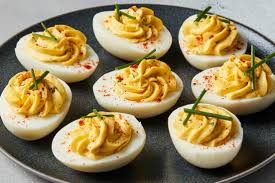
Classic Deviled Eggs are small, elegant appetizers with a smooth, creamy filling nestled inside tender egg white halves.
Appearance
The egg whites are bright white and neatly sliced.
The filling is pale yellow with a soft, creamy texture.
A light dusting of paprika adds reddish-orange color.
Texture
The egg whites are firm but tender.
The yolk filling is smooth, rich, and creamy.
When properly prepared, the filling has no large lumps.
Flavor
The eggs provide a mild, savory base.
Mayonnaise adds richness.
Mustard contributes a slightly sharp flavor.
Vinegar or pickle juice adds acidity.
Salt and black pepper enhance the overall taste.
Aroma
The finished eggs have a mild savory aroma with subtle notes of mustard and paprika.
Overall Experience
Each bite combines tender egg white with creamy, tangy yolk filling.
The contrast creates a satisfying appetizer that is both simple and flavorful.
8. Nutritional Information
Approximate nutritional values per serving, assuming two deviled egg halves:
| Nutrient | Estimated Amount |
|---|---|
| Calories | 130–160 kcal |
| Protein | 6–7 g |
| Carbohydrates | 1–2 g |
| Total Fat | 11–13 g |
| Saturated Fat | 2–3 g |
| Sugar | Less than 1 g |
| Fiber | 0 g |
| Sodium | Variable |
| Cholesterol | Present |
| Vitamin B12 | Present |
| Choline | Present |
| Selenium | Present |
These are approximate estimates based on six eggs and the specified filling ingredients. Actual values depend on egg size, mayonnaise brand, and serving size.
9. Recipe Details
| Category | Details |
|---|---|
| Recipe Name | Classic Deviled Eggs |
| Cuisine | American |
| Course | Appetizer, Snack |
| Preparation Time | Approximately 15 Minutes |
| Cooking Time | Approximately 12 Minutes After Boiling |
| Cooling Time | At Least 10 Minutes |
| Total Time | Approximately 35–45 Minutes, Including Heating and Cooling |
| Yield | 12 Deviled Egg Halves |
| Servings | 6 |
| Difficulty | Easy |
| Main Ingredient | Hard-Boiled Eggs |
| Filling | Egg Yolks, Mayonnaise, Mustard |
| Acidity | White Vinegar or Pickle Juice |
| Garnish | Sweet or Smoked Paprika |
| Cooking Method | Boiling and Assembly |
| Texture | Creamy, Tender |
| Flavor Profile | Savory, Tangy, Mildly Spiced |
| Best Served | Chilled |
| Best For | Parties, Holidays, Picnics, Brunch |
| Storage | Refrigerated |
| Potential Allergens | Eggs, Mustard; Others Depending on Mayonnaise |
10. Conclusion
Classic Deviled Eggs are a simple and delicious appetizer made with hard-boiled eggs, mayonnaise, mustard, vinegar, salt, black pepper, and paprika.
The eggs are cooked, chilled, peeled, and sliced in half.
The yolks are removed and mashed until fine, then mixed with the remaining ingredients to create a smooth, creamy filling.
The filling is spooned or piped into the egg white halves and finished with a light dusting of paprika.
The result is an attractive appetizer with a delicate balance of creamy, savory, and tangy flavors.
This recipe requires only a few pantry staples and is suitable for beginner cooks.
It can also be prepared ahead of time, making it convenient for gatherings and celebrations.
Whether served at a family dinner, holiday meal, brunch, or party, Classic Deviled Eggs remain a popular choice because of their familiar flavor and appealing presentation.
11. Serving and Storage Recommendations
Serve Chilled: Deviled eggs are best served cool.
Use a Serving Platter: Arrange the eggs in neat rows or circles.
Paprika Garnish: Add paprika shortly before serving for an attractive finish.
Fresh Chives: Sprinkle with chopped chives if desired.
Fresh Parsley: Add a small amount for color.
Party Appetizer: Serve on an appetizer platter with vegetables and other finger foods.
Brunch: Pair with fresh fruit, toast, or a salad.
Picnics: Transport in a well-chilled cooler and keep cold until serving.
Make Ahead: Cook the eggs in advance.
Separate Storage: Store the prepared filling and egg whites separately if making ahead for the neatest presentation.
Refrigeration: Store assembled deviled eggs in an airtight container in the refrigerator.
Storage Duration: Consume within approximately 3–4 days of preparation, provided the eggs have been handled and refrigerated safely.
Hard-Boiled Egg Storage: Plain hard-boiled eggs can generally be refrigerated for up to one week after cooking.
Freezing: Freezing assembled deviled eggs is not recommended because the egg whites become rubbery and watery.
Food Safety: Refrigerate promptly and avoid leaving deviled eggs at room temperature for more than two hours, or one hour in temperatures above 90°F (32°C).
12. Embracing Healthful Indulgence
Classic Deviled Eggs combine protein-rich eggs with a creamy mayonnaise-based filling.
They can be enjoyed as part of a balanced eating pattern.
Eggs
Eggs provide high-quality protein and nutrients such as choline, vitamin B12, and selenium.
Protein supports muscle maintenance and normal tissue repair.
Egg Yolks
Egg yolks contain fat-soluble nutrients and contribute richness to the filling.
Egg Whites
Egg whites provide protein with very little fat.
Mayonnaise
Mayonnaise creates the creamy texture that defines traditional deviled eggs.
It also contributes most of the added fat and calories.
Mustard
Mustard adds flavor and acidity.
Its strong taste helps balance the richness of the filling.
Vinegar
Vinegar adds tanginess without significantly increasing the calorie content.
Pickle Juice
Dill pickle juice can be used instead of vinegar for a slightly different flavor.
It may contain substantial sodium.
Paprika
Paprika provides color and a mild spice flavor.
Smoked paprika adds a deeper smoky note.
Portion Awareness
Two deviled egg halves make a convenient appetizer serving.
Portions can be adjusted depending on the rest of the meal.
Protein Content
Eggs provide protein that contributes to normal muscle maintenance and satiety.
Homemade Preparation
Preparing deviled eggs at home allows control over the amount of mayonnaise, mustard, salt, and optional additions.
Balanced Serving Ideas
Deviled eggs can be served with fresh vegetables, fruit, whole-grain crackers, or salad.
Enjoying Traditional Appetizers
Simple appetizers can be part of enjoyable meals and celebrations.
Classic Deviled Eggs demonstrate how a few familiar ingredients can create a flavorful, attractive dish.
With their tender egg whites, creamy yolk filling, tangy mustard, and paprika garnish, they remain a timeless appetizer for gatherings, holidays, and everyday snacking.