
Introduction
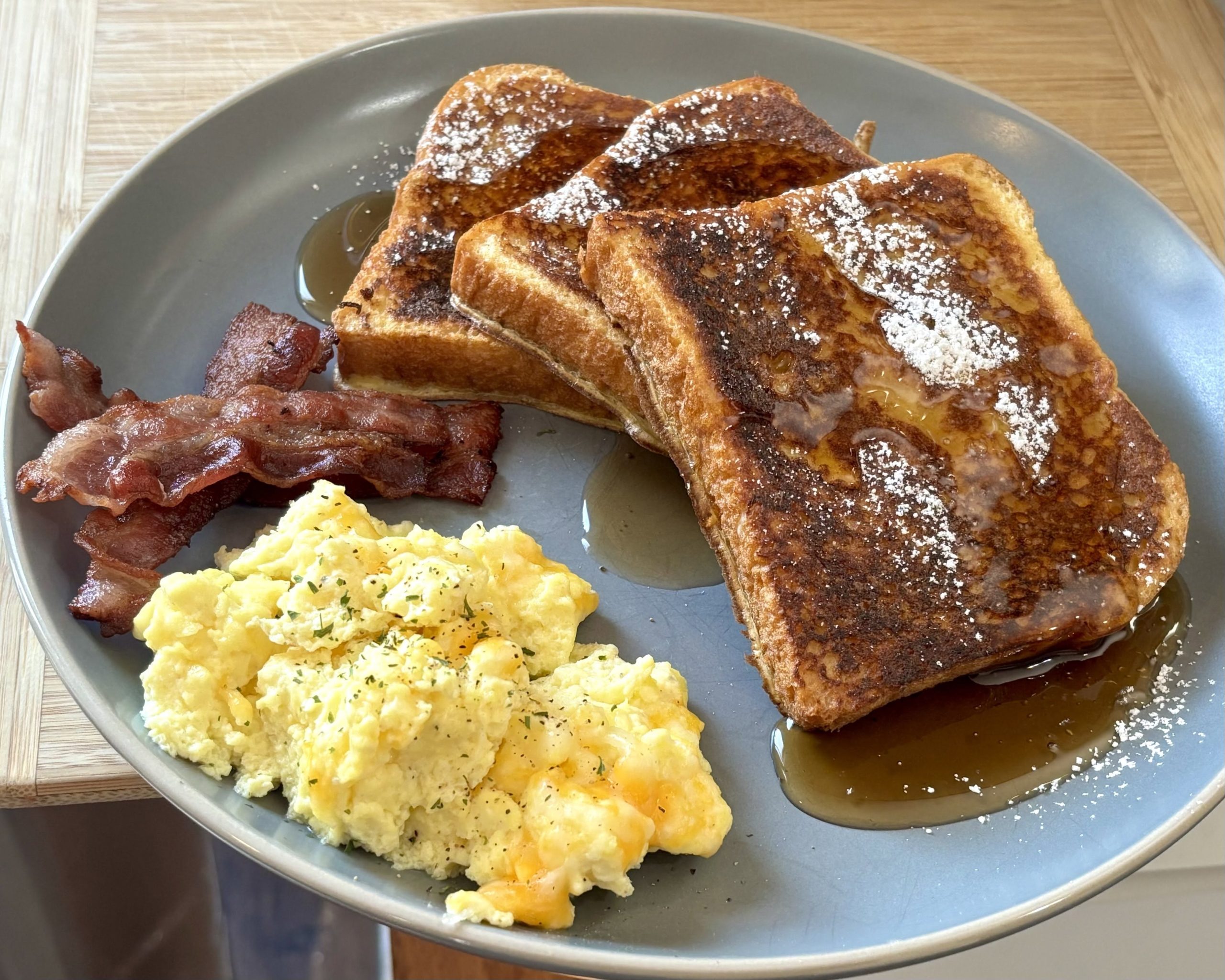
Classic French Toast Breakfast with Bacon and Scrambled Eggs is a hearty breakfast platter that brings together sweet, savory, and buttery flavors in one satisfying meal. Golden slices of cinnamon French toast are served with crispy bacon and soft scrambled eggs, creating a delicious combination that works beautifully for weekend breakfasts, brunch gatherings, or special mornings at home.
The French toast is made by dipping thick slices of bread into a mixture of eggs, milk, vanilla, and cinnamon before cooking them in butter until golden brown. A drizzle of maple syrup adds sweetness, while optional powdered sugar gives the toast a classic breakfast presentation. Crispy bacon provides a smoky, savory contrast, and creamy scrambled eggs complete the plate with a soft texture and mild flavor.
Although the platter looks impressive, it is straightforward to prepare with familiar ingredients. With a little organization, you can cook all three components in approximately 30 minutes and serve everything warm.
Whether you are preparing a relaxed family breakfast or a weekend brunch, this classic combination offers a comforting way to start the day.
Origin
French toast has a long history, and similar dishes have appeared in different cultures for centuries. The basic technique involves soaking bread in a mixture of eggs and milk before cooking it, making it a practical way to transform bread into a flavorful meal.
Despite its name, French toast is not exclusively French. Historical recipes for bread soaked in liquid and cooked appear in several culinary traditions. In France, a related preparation is known as pain perdu, meaning “lost bread.” Traditionally, this dish provided a way to use stale bread rather than letting it go to waste.
Over time, French toast developed into a popular breakfast and brunch dish, particularly in North America, where it is often seasoned with cinnamon and vanilla and served with maple syrup, butter, or fruit.
Bacon and scrambled eggs also became familiar components of many American-style breakfasts. Combining them with French toast creates a platter that brings together a sweet bread dish and two savory breakfast favorites.
Cultural Significance
French toast, bacon, and scrambled eggs are strongly associated with relaxed weekend breakfasts, family meals, and American-style diners. The combination offers contrasting textures and flavors that appeal to a wide range of tastes.
French toast brings sweetness and warm spice, bacon adds a crisp, smoky element, and scrambled eggs provide a soft, savory component. Together, they create a breakfast that feels generous and comforting.
This type of breakfast platter is also popular for brunch because the individual components can be prepared using simple cooking techniques and arranged attractively on a plate. Maple syrup, fresh fruit, powdered sugar, and chopped herbs allow the presentation to be customized for different occasions.
Although this combination is especially familiar in North American breakfast culture, its ingredients are enjoyed around the world. French toast has many regional variations, and eggs and bread remain common breakfast staples in numerous culinary traditions.
Ingredients and Quantities
This recipe makes approximately 2 to 3 servings and takes about 10 minutes to prepare and 20 minutes to cook.
For the French Toast
- 6 thick slices brioche or sandwich bread
- 3 large eggs
- 1/2 cup milk
- 1 teaspoon vanilla extract
- 1 teaspoon ground cinnamon
- 1 tablespoon granulated sugar, optional
- A pinch of salt
- 1 tablespoon butter, for cooking
- Maple syrup, for serving
- Powdered sugar, for dusting, optional
For the Scrambled Eggs
- 4 large eggs
- 2 tablespoons milk or cream
- 1 tablespoon butter
- Salt, to taste
- Black pepper, to taste
- Chopped parsley or chives, for garnish
For Serving
- 6 to 8 bacon strips
- Extra maple syrup, as desired
Choosing the Best Ingredients
Bread: Brioche creates a rich, soft French toast with a slightly sweet flavor. Thick-cut sandwich bread is a practical alternative. Bread that is slightly dry often absorbs the egg mixture well without becoming overly soggy.
Eggs: Fresh eggs form the base of both the French toast coating and the scrambled eggs. Use separate portions for each component, as listed in the recipe.
Milk: Whole milk creates a creamy custard mixture. Lower-fat milk can also be used, although the finished toast may be slightly less rich.
Vanilla and cinnamon: These ingredients give the French toast its familiar sweet aroma. Adjust the cinnamon to suit your preference.
Butter: Butter helps the toast develop a golden surface and adds flavor to the scrambled eggs. Cook over moderate heat to prevent the butter from browning too quickly.
Bacon: Choose regular or thick-cut bacon according to your preferred texture. Cooking time will vary depending on thickness.
Maple syrup: Pure maple syrup offers a distinctive flavor that complements the cinnamon and vanilla. Use as much or as little as you like.
Optional Additions
This breakfast platter is easy to customize with a few extra ingredients or substitutions.
- Fresh berries: Strawberries, blueberries, or raspberries add freshness and a pleasant contrast to the rich French toast.
- Sliced bananas: Bananas pair naturally with cinnamon, maple syrup, and brioche.
- Caramelized apples: Cook thin apple slices in a little butter with cinnamon for a warm, fruit-based topping.
- Extra spices: A small pinch of nutmeg can complement the cinnamon in the French toast mixture.
- Cheese for the eggs: A little shredded cheddar or grated Parmesan can add savory flavor to the scrambled eggs.
- Fresh herbs: Chives and parsley provide a fresh finish for the eggs.
- Whole-grain bread: Substitute whole-grain bread for a different flavor and texture.
- Turkey bacon: Use turkey bacon if you prefer an alternative to traditional pork bacon, checking the product ingredients to suit your dietary requirements.
- Yogurt: Serve plain or lightly sweetened yogurt alongside the platter for a cool, creamy contrast.
For a more balanced breakfast, consider adding fresh fruit and adjusting the amount of syrup or bacon to suit your appetite.
Tips for Success
Choose the Right Bread
Thick slices of brioche or sandwich bread are ideal because they can absorb the egg mixture while maintaining their shape. Very thin slices may become fragile or soggy, particularly if left in the custard for too long.
If your bread is especially fresh and soft, allow it to sit uncovered for a short time before cooking so the surface dries slightly.
Whisk the Custard Thoroughly
Combine the eggs, milk, vanilla, cinnamon, sugar, and salt until the mixture is smooth. Breaking up the egg whites and distributing the cinnamon evenly helps create consistent flavor across each slice.
Use a shallow bowl so the bread can be dipped easily.
Avoid Oversoaking the Bread
Dip each slice for a few seconds per side, adjusting the time according to the thickness and dryness of the bread. The bread should absorb enough custard to become flavorful without falling apart.
Brioche is particularly absorbent, so handle it gently.
Cook Over Moderate Heat
Medium heat helps the French toast develop a golden-brown exterior while cooking the egg mixture inside. If the pan is too hot, the outside may brown before the center is fully cooked.
Add a little more butter between batches if necessary, but avoid allowing it to burn.
Cook the Bacon According to Its Thickness
Thin bacon may cook quickly, while thick-cut bacon needs more time. Turn the strips as needed and cook until they reach your preferred crispness.
Transfer the cooked bacon to a paper towel-lined plate to absorb excess grease.
Keep the Scrambled Eggs Soft
Cook scrambled eggs over low to medium-low heat, stirring gently with a spatula. Remove them from the heat when they are just set and still look moist, as residual heat will continue cooking them.
Avoid cooking them for too long, which can make the texture dry and rubbery.
Coordinate the Cooking Times
For an efficient breakfast, cook the bacon first, prepare the French toast next, and make the scrambled eggs just before serving. If necessary, keep the cooked toast warm in a low oven while finishing the remaining components.
For food safety, cook the French toast until the egg mixture is fully set and the center is cooked through. Cook scrambled eggs until firm enough to be safely consumed, and cook bacon thoroughly.
Instructions
Step 1: Cook the Bacon
Place the bacon strips in a skillet over medium heat. Cook for approximately 6 to 8 minutes, turning occasionally, until browned and crisp or cooked to your preferred texture.
The exact time will depend on the thickness of the bacon and the type of skillet. Transfer the cooked strips to a paper towel-lined plate and set aside.
If the skillet contains a large amount of rendered fat, carefully remove it before preparing the other components.
Step 2: Prepare the French Toast Mixture
In a shallow bowl, whisk together the 3 eggs, milk, vanilla extract, ground cinnamon, optional sugar, and a pinch of salt.
Continue whisking until the ingredients are evenly combined and the cinnamon is distributed throughout the mixture.
Step 3: Soak the Bread
Place one slice of bread into the egg mixture. Let it absorb the custard for a few seconds, then turn it over to coat the other side.
Lift the slice gently and allow any excess mixture to drip back into the bowl. Repeat with the remaining slices.
Avoid soaking the bread for too long, particularly if you are using soft brioche.
Step 4: Cook the French Toast
Heat a nonstick skillet or griddle over medium heat and melt the tablespoon of butter.
Place the soaked bread slices in the pan without overcrowding them. Cook for approximately 2 to 3 minutes per side, until golden brown and cooked through.
Adjust the heat as necessary to prevent excessive browning. Work in batches if your skillet is not large enough to hold all the slices comfortably.
Transfer the cooked French toast to a warm plate while you finish the remaining slices.
Step 5: Prepare the Scrambled Egg Mixture
Crack the 4 eggs into a bowl. Add the milk or cream, a little salt, and black pepper to taste.
Whisk until the yolks and whites are thoroughly combined. This helps produce an even color and a consistent texture.
Step 6: Cook the Scrambled Eggs
Melt the tablespoon of butter in a clean nonstick skillet over low to medium-low heat.
Pour in the egg mixture. Allow it to begin setting around the edges, then gently move the eggs with a spatula, sweeping from the edges toward the center.
Continue stirring slowly for approximately 3 to 4 minutes, or until the eggs are just set and no longer runny. Cooking time will vary depending on the pan and heat level.
Remove the skillet from the heat and allow the eggs to finish setting with the residual heat. Sprinkle with chopped parsley or chives if desired.
Step 7: Arrange the Breakfast Platter
Divide the French toast among 2 to 3 plates. Add portions of scrambled eggs and arrange the bacon strips alongside them.
Keep the sweet and savory components separate if you prefer to enjoy their flavors individually.
Step 8: Add the Finishing Touches
Drizzle maple syrup over the French toast. Dust lightly with powdered sugar if desired.
Finish the scrambled eggs with fresh herbs and serve the bacon while it is still warm and crisp.
Step 9: Serve Immediately
Bring the platter to the table while the French toast, bacon, and scrambled eggs are warm. Add fresh berries or sliced fruit if you would like a refreshing side.
For the best texture, serve the eggs immediately after cooking rather than allowing them to sit for an extended period.
Description
Classic French Toast Breakfast with Bacon and Scrambled Eggs is a satisfying breakfast combination that balances sweet, savory, crisp, and creamy elements.
The French toast features a golden exterior, a soft center, and the warm flavors of cinnamon and vanilla. Maple syrup adds sweetness, while powdered sugar provides a traditional finishing touch. Bacon contributes a smoky, salty crunch, and scrambled eggs offer a tender, buttery contrast.
The meal is particularly appealing because each component can be adjusted to individual preferences. You can make the French toast sweeter, cook the bacon until lightly crisp or extra crisp, and prepare the eggs with milk for a lighter texture or cream for additional richness.
Although the platter is hearty enough for a weekend brunch, its ingredients are simple and readily available. With a little planning, the entire meal can be ready in approximately 30 minutes.
Nutritional Information
The following values are approximate estimates per serving, based on the complete recipe divided into 3 servings. Actual values depend on the bread, bacon, butter, milk, portion sizes, and amount of maple syrup used.
- Calories: approximately 690
- Protein: approximately 29 grams
- Carbohydrates: approximately 55–65 grams
- Fat: approximately 35–40 grams
- Saturated fat: approximately 12–16 grams
- Sugar: approximately 20–30 grams
The nutritional totals may be higher if you use large brioche slices, extra butter, generous amounts of maple syrup, or additional bacon. Dividing the recipe into two portions rather than three will also increase the calories and nutrients per serving.
Eggs provide protein, while bread contributes carbohydrates. Bacon and butter contribute fat and flavor. Adding fruit can provide additional fiber and micronutrients, depending on the type and portion.
For a lighter variation, use whole-grain bread, reduce the amount of syrup, choose a smaller bacon portion, and serve fresh fruit alongside the platter. These changes allow you to retain the main flavors while adjusting the overall meal to your needs.
Conclusion
Classic French Toast Breakfast with Bacon and Scrambled Eggs is a comforting meal that combines familiar breakfast favorites in one delicious platter. Cinnamon French toast provides a sweet, aromatic base, crispy bacon adds savory depth, and soft scrambled eggs bring everything together.
The recipe is straightforward enough for a beginner yet attractive enough for a weekend brunch or special breakfast. The key is to cook each component carefully: use moderate heat for the toast, cook the bacon according to its thickness, and remove the eggs from the heat as soon as they are set.
With approximately 30 minutes of preparation and cooking, you can create a warm, satisfying breakfast using everyday ingredients. Fresh fruit, maple syrup, and chopped herbs provide simple finishing touches that make the platter feel complete.
Recommendation
For the best results, prepare all your ingredients before you begin cooking. Whisk the French toast custard, slice any fruit you plan to serve, and have the bacon, eggs, and toppings ready.
Cook the bacon first, followed by the French toast, and finish with the scrambled eggs just before serving. This order makes it easier to keep the meal warm without overcooking the eggs.
Choose brioche if you want a richer, softer French toast, or use thick-cut sandwich bread for a practical everyday option. Add maple syrup gradually so the toast remains golden rather than becoming overly wet.
For a weekend brunch, serve the platter with fresh strawberries, blueberries, or orange slices and a cup of coffee, tea, or milk. For a more balanced meal, include fruit and adjust the portions of syrup and bacon to suit your preferences.
Embracing Healthful Indulgence
A satisfying breakfast can include both sweet and savory foods while leaving room for personal preferences. This French toast platter offers a familiar combination of bread, eggs, and bacon, and small changes can help you adapt it to your usual eating pattern.
Whole-grain bread can provide more fiber than many refined breads. Fresh fruit adds color, flavor, and useful nutrients, while reducing the syrup or using less butter can lower the amount of added sugar or fat. You can also adjust the bacon portion without giving up the contrast between sweet French toast and savory eggs.
Pay attention to cooking and serving temperatures, especially when preparing eggs and bacon. Cook the eggs until set, ensure the French toast is cooked through, and serve the platter promptly.
Enjoyed occasionally or prepared as a special weekend breakfast, Classic French Toast Breakfast with Bacon and Scrambled Eggs is a versatile homemade meal that brings comfort, flavor, and a little variety to the breakfast table.