
Introduction
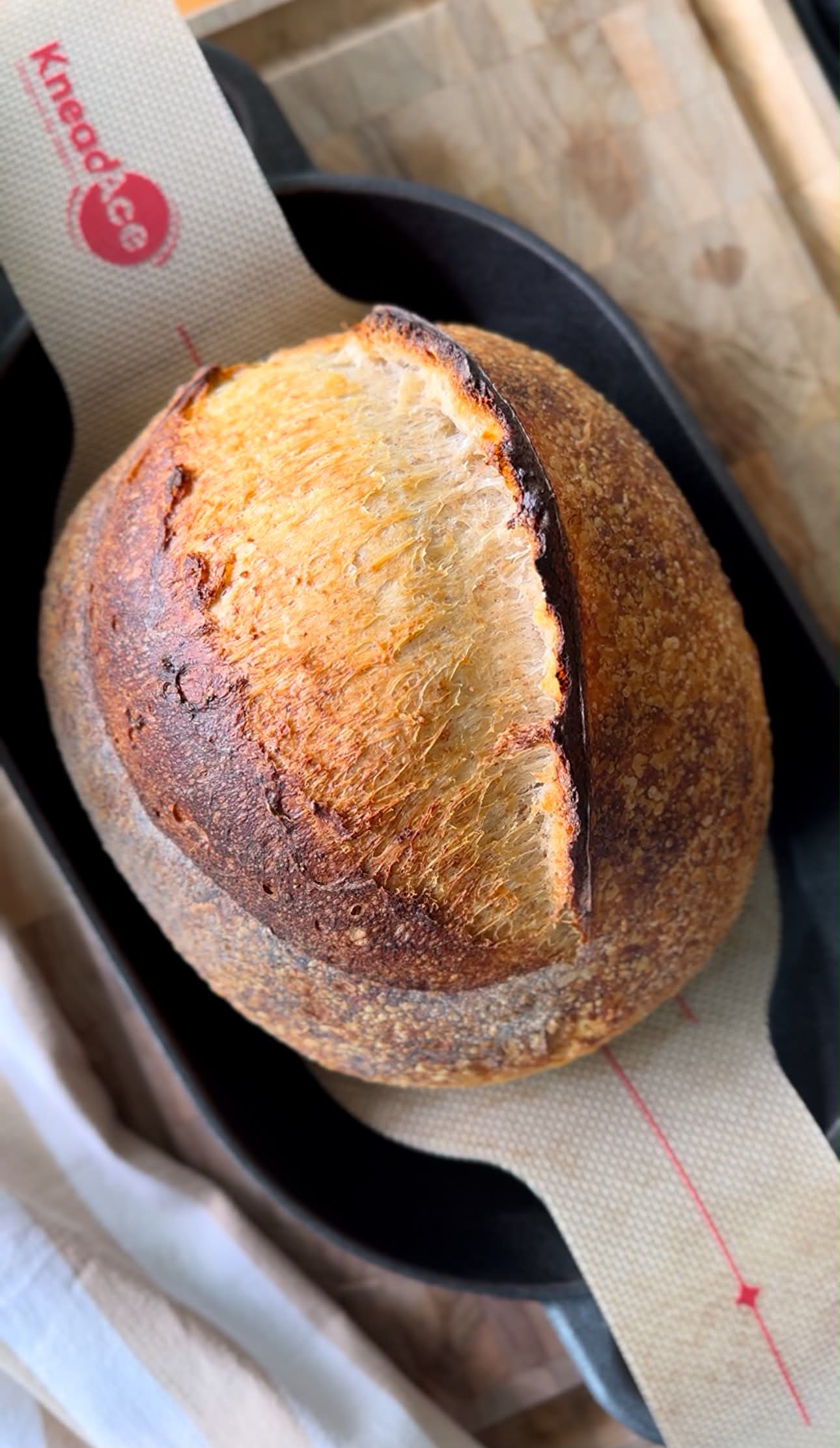
Classic Sourdough Artisan Bread is a rustic, naturally leavened loaf with a crisp golden crust and a soft, chewy interior. Made with just flour, water, sourdough starter, and salt, this bread relies on natural fermentation to develop its distinctive flavor, aroma, and texture.
The process takes more time than conventional yeast bread, but the result is a beautifully rustic loaf with a complex flavor and satisfying crust.
Origin
Sourdough bread has ancient roots and is one of the oldest forms of naturally leavened bread. Before commercial baker’s yeast became widely available, bakers relied on naturally occurring wild yeasts and beneficial bacteria present in flour and sourdough starters to ferment bread dough.
Traditional sourdough techniques have been practiced across many regions for centuries. Modern artisan baking has renewed interest in these traditional methods, making naturally fermented bread popular among home bakers and professional bakeries.
Cultural Significance
Bread has played an important role in food traditions around the world for thousands of years. Sourdough represents a particularly traditional approach to breadmaking because it depends on fermentation rather than commercial yeast alone.
Today, artisan sourdough has become associated with slow food, traditional baking techniques, homemade cooking, and small-batch bakery culture. The process of feeding a starter, fermenting dough, shaping a loaf, and baking it in a hot oven has become a rewarding ritual for many home bakers.
Ingredients and Quantities
- 500 g bread flour
- 350 g water
- 100 g active sourdough starter
- 10 g salt
- Rice flour or cornmeal, for dusting
Optional Additions
- Add sunflower seeds, pumpkin seeds, or sesame seeds for extra texture.
- Mix in chopped walnuts for a rustic variation.
- Add fresh or dried herbs such as rosemary or thyme.
- Add roasted garlic for a savory loaf.
- Replace a small portion of the bread flour with whole-wheat flour.
- Add a small amount of honey for a slightly sweeter flavor.
Tips for Success
Use an active starter. Your sourdough starter should be recently fed, bubbly, and capable of rising significantly after feeding.
Pay attention to dough temperature. Fermentation speed depends heavily on temperature. A warmer environment generally speeds fermentation, while a cooler environment slows it down.
Avoid adding too much flour during shaping. The dough may feel sticky, but adding excessive flour can make the finished bread dense.
Develop the gluten gradually. Stretch-and-fold techniques help strengthen the dough without requiring intensive kneading.
Give the dough enough time to ferment. Sourdough requires patience, and rushing fermentation can result in a dense loaf with less-developed flavor.
Score the loaf before baking. A controlled cut gives the expanding bread a place to open during baking.
Use steam or a covered Dutch oven. Trapping steam during the early part of baking helps create a crisp, well-developed crust.
Allow the bread to cool completely. Cutting into sourdough while it is still very hot can make the interior appear gummy.
Instructions
1. Mix the Dough
Combine the bread flour and water in a large bowl.
Mix until all the flour is hydrated and no dry patches remain. Cover the bowl and let the mixture rest for approximately 30 minutes.
2. Add the Starter and Salt
Add the active sourdough starter and salt.
Mix thoroughly until the ingredients are evenly distributed and the dough becomes cohesive.
3. Perform Stretch and Folds
Over the next several hours, perform a series of stretch-and-folds.
To do this, gently pull one side of the dough upward and fold it over the center. Rotate the bowl and repeat on the remaining sides.
Repeat this process several times during the first few hours of fermentation. The dough should gradually become smoother and stronger.
4. Bulk Fermentation
Cover the dough and allow it to ferment at room temperature until it becomes noticeably expanded, airy, and elastic.
The exact fermentation time depends on the strength of the starter and the temperature of the room. Instead of relying only on the clock, look for visible signs that fermentation has progressed.
5. Shape the Dough
Turn the dough onto a lightly floured work surface.
Gently shape it into a round or oval loaf, creating enough surface tension to help the dough maintain its shape.
6. Final Proof
Place the shaped dough into a floured proofing basket or bowl.
Cover and allow it to proof until it becomes slightly puffy. For additional flavor, the dough can also be refrigerated for a longer, slower final fermentation.
7. Preheat the Oven
Place a Dutch oven or suitable heavy baking vessel in the oven and preheat to approximately 450°F (230°C).
Allow the oven and baking vessel to become thoroughly heated.
8. Score the Loaf
Carefully transfer the dough onto parchment paper.
Dust lightly with flour if desired and make one or more controlled cuts across the surface using a bread lame or very sharp knife.
9. Bake
Carefully place the dough into the preheated Dutch oven.
Cover and bake for approximately 20 minutes.
Remove the lid and continue baking for another 20–25 minutes, or until the crust becomes deeply golden brown.
10. Cool
Transfer the finished loaf to a wire rack.
Allow it to cool completely before slicing. This gives the crumb time to finish setting and helps produce a better texture.
Description
Classic Sourdough Artisan Bread has a beautifully crisp crust and a soft, chewy interior with an open, irregular crumb. Natural fermentation gives the loaf a mildly tangy and complex flavor that develops with time.
Its rustic appearance and satisfying texture make it excellent for sandwiches, toast, breakfast, or serving alongside soups and hearty meals.
Nutritional Information
Approximate values will vary depending on the exact flour, starter, slice size, and final loaf weight.
Per slice, assuming approximately 12 slices:
- Calories: approximately