
1. Introduction
French Bistro Pan-Seared Steak with Classic Béarnaise Sauce is an elegant, restaurant-style dish that combines beautifully seared beef with a rich, creamy, herb-infused butter sauce.
Inspired by traditional French bistro cooking, this recipe highlights the natural flavor of a high-quality steak while complementing it with the distinctive tanginess of Béarnaise sauce.
The centerpiece is a thick-cut ribeye, New York strip, or hanger steak, carefully seasoned with kosher salt and freshly cracked black pepper.
The steak is seared in a hot skillet to develop a deep golden-brown crust, then basted with melted butter, smashed garlic, and fresh thyme or rosemary.
This butter-basting technique creates an aromatic finish and helps the steak cook evenly.
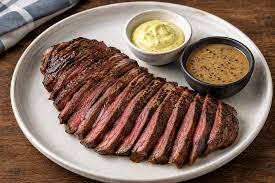
After resting, the steak is sliced into thin, uniform strips across the grain and arranged in an elegant crescent-shaped presentation.
The accompanying Béarnaise sauce adds another layer of sophistication.
Made with egg yolks, melted butter, shallots, white wine vinegar, fresh tarragon, and lemon juice, Béarnaise is a classic French emulsified sauce known for its velvety texture and bright herbal flavor.
The sauce is prepared by reducing vinegar with shallots and tarragon, then whisking the flavorful liquid with egg yolks before gradually incorporating warm melted butter.
The result is a glossy, luxurious sauce that pairs beautifully with rich beef.
This dish is ideal for romantic dinners, special occasions, celebrations, or a homemade French steakhouse experience.
Although it requires attention to temperature and technique, the recipe uses relatively few ingredients and can be prepared successfully with careful timing.
2. Origin and Cultural Significance
Steak served with Béarnaise sauce is closely associated with French bistro and restaurant cuisine.
French Bistro Steak
French bistros are known for serving classic dishes prepared with carefully selected ingredients and traditional cooking methods.
Steak is a familiar feature of French restaurant menus, often served with sauces, potatoes, or vegetables.
Cuts such as entrecôte, ribeye, and strip steak are popular because of their tenderness and rich flavor.
Pan-searing is a traditional technique used to create a flavorful browned exterior.
Butter-basting with garlic and herbs is another technique frequently associated with French-inspired steak preparation.
Béarnaise Sauce
Béarnaise is a classic French sauce related to Hollandaise.
Both sauces use egg yolks and butter to create a rich emulsion.
Béarnaise is distinguished by its characteristic flavorings, especially tarragon, shallots, vinegar, and black pepper.
The sauce is generally associated with nineteenth-century French cuisine and is traditionally credited to chef Jean-Louis-François Collinet.
Its name refers to Béarn, a historical region in southwestern France.
Béarnaise became a celebrated accompaniment to grilled and pan-seared meats.
Café de Paris and Entrecôte Sauces
Café de Paris butter and entrecôte-style sauces are other well-known accompaniments for steak.
Café de Paris butter is typically a seasoned compound butter containing herbs, spices, and other aromatic ingredients.
Entrecôte sauces vary by restaurant and recipe, but many are rich, butter-based preparations designed to complement beef.
Although these sauces share the goal of enhancing steak, they are not identical to Béarnaise.
The recipe below focuses specifically on the classic Béarnaise variation.
3. Ingredients
This recipe makes approximately two generous servings.
A. Pan-Seared Steak
| Ingredient | Quantity |
|---|---|
| Thick-cut ribeye, New York strip, or hanger steak | 1 large steak, approximately 16–20 oz (450–570 g) |
| Neutral high-smoke-point oil, such as avocado or canola | 1 tablespoon |
| Unsalted butter | 2 tablespoons |
| Garlic cloves, smashed | 2 |
| Fresh thyme or rosemary | 2 sprigs |
| Kosher salt | To taste |
| Freshly cracked black pepper | To taste |
B. Béarnaise Vinegar Reduction
| Ingredient | Quantity |
|---|---|
| White wine vinegar or tarragon vinegar | ¼ cup |
| Shallot, finely chopped | 1 |
| Fresh tarragon leaves, chopped | 2 tablespoons |
| Black peppercorns | ½ teaspoon |
C. Béarnaise Sauce Base
| Ingredient | Quantity |
|---|---|
| Large egg yolks | 2 |
| Water | 1 tablespoon |
| Unsalted butter, melted and kept warm | ½ cup (1 stick / approximately 113 g) |
D. Béarnaise Finishing Ingredients
| Ingredient | Quantity |
|---|---|
| Fresh tarragon or chives, finely minced | 1 tablespoon |
| Fresh lemon juice | A small splash |
| Salt | To taste |
E. Equipment
- Heavy cast-iron skillet or carbon steel pan
- Small saucepan
- Heatproof mixing bowl
- Fine-mesh strainer
- Whisk
- Kitchen tongs
- Large spoon for butter-basting
- Sharp carving knife
- Cutting board
- Meat thermometer
- Measuring cups and spoons
- Small serving ramekin
- Serving plates
4. Optional Additions
This French bistro-style steak dinner can be customized with additional flavors and accompaniments.
Fresh Parsley: Sprinkle chopped parsley over the sliced steak for a fresh finish.
Extra Tarragon: Add a little more fresh tarragon to the Béarnaise sauce for a stronger herbal flavor.
Chives: Use finely minced chives as an additional garnish.
Lemon Zest: Add a small amount to the sauce for extra citrus aroma.
Dijon Mustard: Incorporate a small amount into a modern Béarnaise variation for additional sharpness.
Clarified Butter: Use clarified butter instead of regular melted butter for a more traditional, smooth emulsion.
Café de Paris Butter: Serve seasoned compound butter instead of Béarnaise for an alternative steak preparation.
Entrecôte-Style Butter Sauce: Prepare a separate butter-based sauce for a different French steakhouse variation.
French Fries: Serve with crispy pommes frites for a classic steak-frites presentation.
Roasted Potatoes: Add golden roasted potatoes as a hearty side.
Mashed Potatoes: Pair with creamy mashed potatoes for a comforting meal.
Green Beans: Serve with lightly sautéed or steamed green beans.
Asparagus: Add roasted asparagus for an elegant presentation.
Mixed Green Salad: Serve a fresh salad with a light vinaigrette to balance the richness.
Sautéed Mushrooms: Add mushrooms cooked in butter and garlic.
The original recipe focuses on the steak and Béarnaise sauce, allowing the beef and herb-infused butter emulsion to remain the main flavors.
5. Tips for Success
Choose a Thick-Cut Steak
A steak approximately 1½–2 inches thick provides enough depth to develop a crust while maintaining a tender center.
Look for Good Marbling
Marbling contributes flavor and juiciness during cooking.
Dry the Steak Thoroughly
Surface moisture interferes with browning.
Pat the steak dry before seasoning.
Season Generously but Carefully
Kosher salt and cracked black pepper enhance the beef’s natural flavor.
Use a Heavy Skillet
Cast iron and carbon steel retain heat well and encourage even browning.
Preheat the Pan
Allow the skillet to become hot before adding the steak.
Avoid prolonged smoking or overheating of the oil.
Add Butter After the Initial Sear
Butter can burn at very high temperatures.
Reduce the heat before adding butter, garlic, and herbs.
Baste Continuously
Spoon hot melted butter over the steak to add flavor and encourage even cooking.
Use a Thermometer
Cooking time varies according to steak thickness, starting temperature, and skillet heat.
A thermometer provides a more reliable indication of doneness.
Rest Before Slicing
Allow the steak to rest for approximately 8–10 minutes.
Slice Against the Grain
Cutting across the muscle fibers helps create tender slices.
Reduce the Vinegar Properly
The Béarnaise reduction should become concentrated, leaving approximately 1–2 tablespoons of liquid.
Use Gentle Heat for Egg Yolks
Excessive heat can scramble the yolks.
A double boiler provides more controlled heating.
Add Butter Slowly
Gradually incorporating melted butter helps create a stable emulsion.
Avoid Overheating Béarnaise
The finished sauce can separate if heated excessively.
Serve the Sauce Warm
Béarnaise is best served warm rather than very hot.
Consider Pasteurized Egg Yolks
Using pasteurized eggs is a useful food-safety precaution for sauces that may not reach a fully cooked temperature.
6. Step-by-Step Instructions
Part A: Preparing the Steak
Step 1: Gather all ingredients and equipment.
Step 2: Remove the steak from the refrigerator approximately 30–45 minutes before cooking.
Step 3: Place the steak on a clean plate or tray.
Step 4: Pat both sides thoroughly dry with paper towels.
Step 5: Check that the surface is free from excess moisture.
Step 6: Sprinkle kosher salt over one side.
Step 7: Add freshly cracked black pepper.
Step 8: Turn the steak over.
Step 9: Season the second side with salt and pepper.
Step 10: Season the edges as well.
Step 11: Set the steak aside while preparing the Béarnaise ingredients.
Part B: Preparing the Béarnaise Reduction
Step 12: Peel the shallot.
Step 13: Finely chop the shallot.
Step 14: Wash and dry the fresh tarragon.
Step 15: Remove the tarragon leaves from the stems.
Step 16: Finely chop the leaves.
Step 17: Measure ¼ cup white wine vinegar.
Step 18: Measure ½ teaspoon black peppercorns.
Step 19: Place a small saucepan over medium heat.
Step 20: Pour the vinegar into the saucepan.
Step 21: Add the finely chopped shallot.
Step 22: Add approximately half of the chopped tarragon.
Step 23: Add the black peppercorns.
Step 24: Stir gently.
Step 25: Bring the mixture to a simmer.
Step 26: Allow the liquid to reduce gradually.
Step 27: Continue simmering until approximately 1–2 tablespoons of liquid remain.
Step 28: Remove the saucepan from the heat.
Step 29: Place a fine-mesh strainer over a small bowl.
Step 30: Strain the reduction.
Step 31: Discard the strained solids.
Step 32: Allow the reduction to cool slightly.
Part C: Preparing the Butter
Step 33: Place ½ cup unsalted butter into a small saucepan.
Step 34: Heat gently over low heat.
Step 35: Allow the butter to melt completely.
Step 36: Remove from the heat.
Step 37: Keep the melted butter warm but not excessively hot.
Step 38: Set aside for emulsifying the sauce.
Part D: Preparing the Double Boiler
Step 39: Fill a saucepan with a small amount of water.
Step 40: Place the saucepan over low to medium-low heat.
Step 41: Bring the water to a gentle simmer.
Step 42: Position a heatproof bowl over the saucepan.
Step 43: Make sure the bottom of the bowl does not touch the water.
Step 44: Check that the bowl sits securely.
Part E: Whisking the Egg Yolks
Step 45: Separate 2 large egg yolks from their whites.
Step 46: Place the yolks into the heatproof bowl.
Step 47: Add 1 tablespoon water.
Step 48: Pour in the cooled vinegar reduction.
Step 49: Begin whisking the mixture.
Step 50: Continue whisking over the gently simmering water.
Step 51: Keep the mixture moving continuously.
Step 52: Watch as the yolks become lighter in color.
Step 53: Continue whisking until the mixture thickens.
Step 54: Look for a pale, airy texture.
Step 55: Remove the bowl from the heat if the mixture becomes too hot.
Step 56: Continue whisking until the yolks are thick and approximately doubled in volume.
For food safety, use pasteurized egg yolks or a thermometer-controlled method that heats the egg mixture to a safe temperature without scrambling it. Unpasteurized, lightly cooked egg sauces carry a risk of foodborne illness.
Part F: Emulsifying the Béarnaise Sauce
Step 57: Remove the bowl from the double boiler.
Step 58: Place it on a stable work surface.
Step 59: Begin whisking the thickened egg mixture.
Step 60: Add a few drops of warm melted butter.
Step 61: Whisk until incorporated.
Step 62: Add another small amount of butter.
Step 63: Continue whisking continuously.
Step 64: Gradually increase to a thin, steady stream of butter.
Step 65: Continue until all the butter is incorporated.
Step 66: Watch as the sauce becomes thicker.
Step 67: Check that the texture is smooth and glossy.
Step 68: If the sauce becomes too thick, whisk in a few drops of warm water.
Part G: Finishing the Béarnaise
Step 69: Add the remaining fresh tarragon or the finishing herbs.
Step 70: Stir gently.
Step 71: Add a small splash of fresh lemon juice.
Step 72: Season with salt to taste.
Step 73: Whisk briefly to combine.
Step 74: Taste the sauce.
Step 75: Adjust the lemon juice or salt if necessary.
Step 76: Transfer the sauce to a warm serving bowl.
Step 77: Keep warm without exposing it to direct high heat.
Part H: Heating the Steak Skillet
Step 78: Place a heavy cast-iron or carbon steel skillet over high heat.
Step 79: Allow the skillet to become very hot.
Step 80: Add 1 tablespoon neutral high-smoke-point oil.
Step 81: Swirl the oil to coat the cooking surface.
Step 82: Carefully place the seasoned steak into the skillet, laying it away from you.
Part I: Searing the Steak
Step 83: Allow the steak to sear without moving it.
Step 84: Cook the first side for approximately 2 minutes.
Step 85: Check for a deep brown crust.
Step 86: Carefully flip the steak using tongs.
Step 87: Allow the second side to sear.
Step 88: Reduce the heat to medium.
Part J: Garlic-Herb Butter Basting
Step 89: Add 2 tablespoons unsalted butter to the skillet.
Step 90: Add 2 smashed garlic cloves.
Step 91: Add 2 sprigs fresh thyme or rosemary.
Step 92: Allow the butter to melt and foam gently.
Step 93: Tilt the skillet slightly.
Step 94: Allow the melted butter to pool along one side.
Step 95: Use a large spoon to scoop the hot butter.
Step 96: Spoon the butter repeatedly over the steak.
Step 97: Continue basting for approximately 1–2 minutes.
Step 98: Flip the steak again if necessary.
Step 99: Check the internal temperature with a meat thermometer.
Step 100: Continue cooking as needed according to steak thickness and preferred doneness.
Step 101: Remove the steak from the skillet when it reaches the intended temperature.
Medium-rare steak is commonly associated with a finished temperature around 130–135°F (54–57°C). The USDA recommends cooking whole beef steaks to at least 145°F (63°C), followed by a minimum 3-minute rest. Cooking below this temperature carries additional food-safety risk.
Part K: Resting the Steak
Step 102: Transfer the steak to a clean cutting board.
Step 103: Allow it to rest for approximately 8–10 minutes.
Step 104: Avoid slicing immediately.
Step 105: Allow the meat juices to settle.
Step 106: Keep the steak loosely covered if desired.
Part L: Slicing the Steak
Step 107: Place the rested steak securely on the cutting board.
Step 108: Identify the direction of the muscle fibers.
Step 109: Use a sharp carving knife.
Step 110: Slice the steak across the grain.
Step 111: Cut into thin, uniform strips.
Step 112: Continue slicing until the steak is fully portioned.
Step 113: Keep the slices arranged neatly.
Part M: Plating the French Bistro Steak
Step 114: Prepare two warm serving plates.
Step 115: Divide the sliced steak between the plates.
Step 116: Arrange the slices in a slightly overlapping pattern.
Step 117: Fan the steak into a crescent shape.
Step 118: Spoon a little garlic-herb butter over the meat if desired.
Step 119: Transfer the warm Béarnaise sauce into small ramekins.
Step 120: Place a ramekin beside each portion of steak.
Step 121: Add optional fresh herbs.
Step 122: Serve immediately while the steak is warm and the sauce remains smooth.
7. Description
French Bistro Pan-Seared Steak with Classic Béarnaise Sauce is a rich, elegant dish featuring tender sliced beef and a creamy herb-infused butter sauce.
The steak develops a deeply browned crust during pan-searing.
Inside, the meat remains juicy and tender when cooked carefully.
Butter-basting with garlic and fresh herbs adds a fragrant, savory finish.
The steak is sliced thinly across the grain, creating tender pieces that are easy to serve.
Béarnaise sauce provides a luxurious contrast.
Its texture is smooth, thick, and glossy.
The egg yolks and melted butter create a creamy base, while the vinegar reduction adds acidity.
Fresh tarragon contributes the sauce’s distinctive herbal aroma.
Shallots and black pepper provide additional depth.
A small amount of lemon juice brightens the finished sauce.
When paired together, the steak and Béarnaise create a combination of rich beef flavor, buttery texture, herbal freshness, and tangy acidity.
The dish is especially appealing when presented with neatly fanned steak slices and a small ramekin of warm sauce.
8. Nutritional Information
Approximate nutritional values per serving, assuming two portions:
| Nutrient | Estimated Amount |
|---|---|
| Calories | 850–1,250 kcal |
| Protein | 50–75 g |
| Carbohydrates | 2–5 g |
| Total Fat | 70–105 g |
| Saturated Fat | 30–45 g |
| Sugar | 0–2 g |
| Fiber | 0–1 g |
| Sodium | Highly variable |
| Iron | Variable |
| Vitamin B12 | Variable |
These are broad estimates based on the steak and Béarnaise sauce alone. Actual values depend on steak cut, fat content, trimming, portion size, and the amount of sauce consumed. Side dishes are not included.
9. Recipe Details
| Category | Details |
|---|---|
| Recipe Name | French Bistro Pan-Seared Steak with Classic Béarnaise Sauce |
| Cuisine | French-Inspired |
| Preparation Time | Approximately 15–20 Minutes |
| Steak Tempering Time | 30–45 Minutes |
| Cooking Time | Approximately 20–25 Minutes |
| Total Elapsed Time | Approximately 55–75 Minutes |
| Servings | 2 |
| Difficulty | Intermediate to Advanced |
| Main Protein | Ribeye, New York Strip, or Hanger Steak |
| Main Sauce | Classic Béarnaise |
| Cooking Methods | Pan-Searing, Butter-Basting, Reduction, Emulsification |
| Course | Main Course / Dinner |
| Flavor Profile | Rich, Buttery, Savory, Herbal, Tangy |
| Texture | Tender Steak, Smooth Creamy Sauce |
| Best For | Romantic Dinners, Special Occasions, French Bistro Meals |
| Steak Resting Time | 8–10 Minutes |
| Recommended Pairings | French Fries, Roasted Potatoes, Green Beans, Asparagus |
10. Conclusion
French Bistro Pan-Seared Steak with Classic Béarnaise Sauce is a sophisticated dish that combines carefully cooked beef with one of the most celebrated sauces in French cuisine.
The steak is seasoned simply with salt and pepper, allowing its natural flavor to remain the focus.
High-heat searing develops a rich brown crust, while butter-basting with garlic and herbs adds aroma and depth.
Resting the steak before slicing helps preserve its juiciness.
The Béarnaise sauce provides a luxurious finishing touch.
Made from a reduction of vinegar, shallots, tarragon, and black pepper, the sauce is combined with egg yolks and warm melted butter to create a smooth emulsion.
Its tangy, herbal flavor balances the richness of the beef.
Although the recipe requires attention to temperature and timing, the techniques are achievable with practice.
The finished dish is ideal for a restaurant-style dinner at home.
Served with potatoes, vegetables, or a fresh salad, this steak and Béarnaise combination offers a memorable French-inspired dining experience.
11. Serving and Storage Recommendations
Serving Suggestions: Serve the sliced steak immediately after resting.
Béarnaise Presentation: Place the sauce in a small warm ramekin beside the steak.
Classic Pairing: Serve with crispy French fries for a steak-frites-style meal.
Potato Options: Roasted potatoes or creamy mashed potatoes also pair well.
Vegetable Sides: Add green beans, asparagus, or sautéed mushrooms.
Fresh Salad: Serve with a lightly dressed green salad to balance the richness.
Steak Garnish: Add fresh parsley or thyme.
Sauce Temperature: Keep Béarnaise warm but never boiling.
Refrigeration: Refrigerate leftover cooked steak promptly in an airtight container.
Steak Storage: Consume refrigerated cooked steak within 3–4 days.
Steak Reheating: Reheat gently to avoid excessive drying.
Béarnaise Storage: Béarnaise is best prepared fresh and served immediately. Because it contains eggs and a delicate butter emulsion, avoid holding it at room temperature.
Sauce Reheating: Reheating Béarnaise is difficult because the emulsion can separate. If reheating, use very gentle heat and whisk carefully.
Freezing: Cooked steak can be frozen, although texture may change. Freezing Béarnaise is not recommended.
Make-Ahead: The vinegar reduction can be prepared in advance and refrigerated.
Food Safety: Refrigerate perishable leftovers within 2 hours. Use pasteurized eggs for Béarnaise when the yolks will not be fully cooked.
Allergen Information: This recipe contains eggs and milk.
12. Embracing Healthful Indulgence
French Bistro Pan-Seared Steak with Classic Béarnaise Sauce is a rich, protein-focused meal that offers several important nutrients.
Beef provides high-quality protein, iron, zinc, and vitamin B12.
These nutrients support normal body functions, including muscle maintenance and red blood cell formation.
Egg yolks contribute nutrients such as choline and vitamin B12.
Fresh herbs and shallots provide aromatic flavor, allowing the sauce to develop complexity without relying entirely on salt.
However, the combination of a marbled steak, butter-basting, and Béarnaise sauce makes this dish relatively high in calories and saturated fat.
For a lighter variation, choose a leaner cut of beef or serve a smaller steak portion.
The Béarnaise sauce can be served in a modest quantity rather than poured generously over the entire plate.
Adding vegetables such as asparagus, green beans, or a fresh salad helps create a more varied meal.
Roasted potatoes or a moderate serving of French fries can provide a carbohydrate accompaniment.
Using fresh herbs, garlic, lemon juice, and black pepper enhances flavor without requiring excessive salt.
This recipe is best enjoyed as an occasional special-occasion meal.
The combination of tender sliced steak, aromatic garlic-herb butter, and silky Béarnaise sauce creates an elegant French bistro experience that celebrates classic cooking techniques and carefully balanced flavors.