
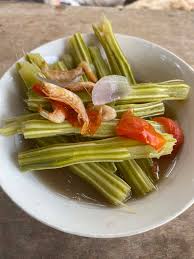
Ginisang Bunga ng Malunggay is a traditional Filipino vegetable dish featuring tender moringa pods cooked with fresh tomatoes, garlic, onions, and savory seasonings.
This version includes small shrimp, adding a delicate seafood flavor that complements the unique taste of moringa pods.
Simmered in a light, flavorful broth and served alongside steamed white rice, this comforting dish celebrates the simplicity of Filipino home cooking.
Best of all, it requires only a handful of ingredients and can be prepared in approximately 35 minutes.
1. Introduction
Filipino cuisine is known for transforming simple, affordable ingredients into flavorful homemade meals.
Ginisang Bunga ng Malunggay is a wonderful example.
The dish features the long green seed pods of the moringa tree, commonly called bunga ng malunggay in the Philippines.
While moringa leaves are widely used in Filipino soups and vegetable dishes, the pods are also enjoyed for their tender inner flesh and distinctive flavor.
In this recipe, moringa pods are simmered with tomatoes, garlic, onions, and shrimp in a savory broth seasoned with fish sauce.
The result is a light, satisfying vegetable dish that’s delicious with freshly steamed rice.
2. Origin and Cultural Significance
Malunggay, also known as moringa, is a familiar ingredient in Filipino home cooking.
Both its leaves and young seed pods are used in various regional dishes.
The word ginisa refers to the Filipino cooking technique of sautéing ingredients, usually beginning with garlic, onions, and sometimes tomatoes.
Ginisang Bunga ng Malunggay follows this familiar cooking method.
Recipes vary between households. Some versions include pork, sweet potatoes, or beans, while others use seafood or are prepared primarily with vegetables.
For example, the Filipino food blog Ang Sarap documents a version with moringa pods, tomatoes, sweet potatoes, and lima beans. This shrimp-based recipe is a lighter, pork-free variation. Ang Sarap
The dish reflects the Filipino tradition of making flavorful meals from fresh, locally available produce.
3. Ingredients
Servings: 3 | Preparation: 15 minutes | Cooking: 20 minutes
Main Ingredients
- 10–15 tender moringa pods (bunga ng malunggay)
- ½ cup small shrimp, peeled and cleaned
- 2 medium ripe tomatoes, diced or sliced into wedges
- 1 small onion, thinly sliced
- 4 cloves garlic, finely minced
- 1 tablespoon vegetable or canola oil
- 1–1½ cups water or shrimp stock
- 1 tablespoon fish sauce (patis), plus more to taste
- ¼ teaspoon freshly ground black pepper
- Salt, if needed
Optional Garnishes
- Fresh chopped green onions
- Sliced green chili peppers
- Additional black pepper
- Calamansi or lime wedges
For Serving
- Steamed white rice
- Warm shrimp broth, if desired
Ingredient note: Choose young, tender green moringa pods. Older pods become increasingly woody and fibrous, making them difficult to prepare and eat. library.buplant.da.gov.ph
4. Optional Additions
There are several ways to customize this Filipino vegetable dish.
- Dried shrimp: Replace fresh shrimp with a small amount of dried shrimp (hibi) for a more concentrated seafood flavor.
- Sweet potatoes: Add 1 small sweet potato, cut into thin strips, for natural sweetness.
- Lima beans: Include ½ cup cooked lima beans for a heartier meal.
- Green chili: Add sliced green chili peppers for gentle heat.
- Malunggay leaves: Stir in a handful of fresh moringa leaves near the end of cooking.
- Squash: Add small cubes of squash for additional sweetness and texture.
- Fish: Replace shrimp with pieces of cooked fish for a different seafood variation.
For a vegetarian version, omit the shrimp and fish sauce. Use vegetable broth and season with salt or a suitable plant-based savory seasoning.
5. Tips for Success
Choose tender moringa pods. Younger pods have softer inner flesh and seeds.
Prepare the pods correctly. Remove tough outer ridges when necessary, or scrape the edible interior away from the fibrous shell before cooking.
Don’t overcook the shrimp. Small shrimp cook quickly and can become rubbery if simmered too long.
Allow the tomatoes to soften. Their juices help build the flavorful broth.
Start with less fish sauce. Fish sauce varies in saltiness, so taste before adding more.
Adjust the broth. Use less liquid for a thicker vegetable sauté or more for a soupier consistency.
Serve with rice. Steamed white rice balances the savory flavors of the dish.
6. Step-by-Step Instructions
Step 1: Prepare the Moringa Pods
Wash the moringa pods thoroughly under running water.
Trim off the tough ends.
Cut the pods into sections approximately 2–3 inches long.
If the pods are very young and tender, you can cook the sections with their outer casing intact.
For larger or more fibrous pods, split them lengthwise and scrape out the soft inner pulp and immature seeds. Discard the tough outer covering.
The original Ang Sarap preparation separates the edible pulp from the shell before cooking. Ang Sarap
Set the prepared moringa aside.
Step 2: Prepare the Shrimp and Vegetables
Peel and devein the shrimp if necessary.
Pat the shrimp dry with paper towels.
Dice the tomatoes, slice the onion, and mince the garlic.
Arrange all the ingredients near the stove before cooking.
Step 3: Sauté the Garlic and Onion
Heat 1 tablespoon of cooking oil in a deep skillet or medium saucepan over medium heat.
Add the minced garlic and sauté for approximately 30 seconds until fragrant.
Add the sliced onion.
Continue cooking for 2–3 minutes, stirring occasionally, until the onion becomes soft and translucent.
Avoid burning the garlic.
Step 4: Cook the Tomatoes
Add the diced tomatoes to the skillet.
Stir them into the garlic and onion mixture.
Cook for approximately 3 minutes, gently pressing the tomatoes with a spoon.
As they soften, they will release their juices and create a light tomato base.
Step 5: Briefly Cook the Shrimp
Add the cleaned shrimp to the skillet.
Stir-fry for approximately 1 minute, just until the shrimp begin changing color.
Transfer them to a clean plate.
They will finish cooking later in the broth.
This helps prevent the shrimp from becoming tough while the moringa pods simmer.
Step 6: Add the Broth and Seasonings
Pour 1 cup of water or shrimp stock into the skillet.
Add 1 tablespoon of fish sauce and a pinch of black pepper.
Stir well to combine the seasonings with the tomato mixture.
Bring the liquid to a gentle boil.
Step 7: Simmer the Moringa Pods
Add the prepared moringa pods to the broth.
Reduce the heat to medium-low and cover the skillet.
For tender whole-pod sections, simmer for approximately 8–12 minutes, or until the inner flesh is soft.
If you removed the soft inner pulp before cooking, begin checking for tenderness after approximately 5 minutes.
Add a little extra water if the broth reduces too quickly.
Cooking time depends on the age and thickness of the pods.
Step 8: Return the Shrimp
Once the moringa is tender, return the shrimp to the skillet.
Stir gently and simmer for approximately 1–2 minutes, until the shrimp are fully cooked.
The shrimp should be firm and opaque.
Step 9: Adjust the Seasoning
Taste the broth.
Add more fish sauce if necessary, or a little extra water if the mixture tastes too salty.
Sprinkle with freshly ground black pepper.
For a stronger flavor, add a few slices of green chili.
Step 10: Serve Warm
Remove the skillet from the heat.
Transfer the cooked moringa pods, shrimp, tomatoes, and broth to a serving bowl.
Garnish with chopped green onions if desired.
Serve immediately alongside steamed white rice.
Important: How to Eat Moringa Pods
The outer casing of larger moringa pods is fibrous and should not be swallowed.
If the pods were cooked with their shells intact:
- Pick up a cooked pod section.
- Gently bite down and scrape out the soft inner flesh and seeds.
- Enjoy the tender interior.
- Discard the tough fibrous shell.
Alternatively, split the cooked pod with a spoon and scrape out the edible portion.
This distinction is important because the outer covering may remain tough even after cooking. library.buplant.da.gov.ph
7. Description
Ginisang Bunga ng Malunggay is a comforting Filipino vegetable dish with a light, savory broth and a distinctive earthy flavor.
The moringa pods provide tender inner flesh with a mildly vegetal taste.
The tomatoes introduce gentle sweetness and acidity, while garlic and onions form the aromatic base.
Small shrimp contribute a delicate seafood flavor that blends beautifully with the fish sauce and broth.
The dish is light enough to enjoy as a vegetable side but satisfying enough to serve as part of a complete meal.
Paired with steamed rice, it offers a delicious example of traditional Filipino home cooking.
8. Nutritional Information
The following values are broad estimates for one serving, assuming the recipe makes three servings without rice.
| Nutrient | Approximate Amount |
|---|---|
| Calories | 120–160 kcal |
| Protein | 8–11 g |
| Carbohydrates | 10–15 g |
| Total Fat | 5–6 g |
| Fiber | 2–4 g |
| Sugars | 3–5 g |
| Sodium | Varies with fish sauce |
Values depend heavily on the size of the moringa pods, the amount of edible pulp, the shrimp portion, and the fish sauce used.
Nutritional Benefits
Moringa pods: Provide fiber and contain nutrients such as vitamin C and minerals.
Shrimp: Supplies protein and important nutrients, including vitamin B12 and selenium.
Tomatoes: Contain vitamin C, potassium, and lycopene.
Garlic and onions: Add flavor and small amounts of beneficial plant compounds.
Light broth: Creates a flavorful dish without requiring a large quantity of cooking oil.
9. Recipe Details
| Detail | Information |
|---|---|
| Recipe Name | Ginisang Bunga ng Malunggay |
| English Name | Filipino Sautéed Moringa Pods |
| Cuisine | Filipino |
| Course | Main Dish, Vegetable Side |
| Preparation Time | 15 minutes |
| Cooking Time | 20 minutes |
| Total Time | 35 minutes |
| Servings | 3 |
| Difficulty | Easy to Intermediate |
| Cooking Method | Sautéing and Simmering |
| Main Ingredients | Moringa Pods, Shrimp, Tomatoes |
| Flavor Profile | Savory, Earthy, Lightly Sweet |
| Best Served | Warm with Rice |
10. Conclusion
Ginisang Bunga ng Malunggay is a flavorful Filipino dish that highlights the versatility of moringa pods.
With its combination of tender vegetables, juicy tomatoes, aromatic garlic, and savory shrimp, it offers a comforting meal made from simple ingredients.
Although preparing moringa pods requires a little care, the process becomes easier once you understand which parts are edible.
Whether you’re familiar with traditional Filipino cooking or trying moringa pods for the first time, this recipe is an enjoyable way to explore a distinctive vegetable.
11. Serving and Storage Recommendations
Serving Suggestions
Enjoy Ginisang Bunga ng Malunggay with:
- Steamed jasmine rice
- Garlic fried rice (sinangag)
- Grilled fish
- Fried tilapia
- Grilled halal chicken
- Fresh cucumber and tomato salad
For a simple Filipino-inspired meal, serve the moringa and shrimp with hot rice and a small bowl of the savory broth.
Storage Instructions
Refrigeration: Allow the dish to cool briefly, transfer it to an airtight container, and refrigerate within two hours of cooking.
Storage duration: Consume refrigerated leftovers within 2–3 days for best quality.
Reheating: Warm gently in a covered saucepan with a splash of water until thoroughly heated. Avoid prolonged boiling, which can toughen the shrimp.
Freezing: Freezing is possible, but the texture of the shrimp and moringa may change after thawing. Freshly prepared is best.
Meal preparation: Trim and prepare the moringa pods in advance, then refrigerate them in a sealed container until cooking.
12. Embracing Healthful Indulgence
Traditional Filipino vegetable dishes demonstrate how everyday ingredients can create nourishing, flavorful meals.
Ginisang Bunga ng Malunggay combines fresh produce, seafood, and aromatic seasonings in a preparation that’s satisfying without being overly heavy.
The moringa pods contribute distinctive texture and flavor, while the shrimp adds protein.
Fresh tomatoes, onions, and garlic create a comforting broth that pairs beautifully with rice.
Whether enjoyed as a light main course or part of a larger family meal, this dish celebrates the simplicity and richness of Filipino home cooking.
Tender moringa pods, savory shrimp, juicy tomatoes, and aromatic garlic—all simmered together for a delicious Filipino favorite! 🇵🇭🍤🌿
#FilipinoRecipes #GinisangMalunggay #MoringaRecipes #FilipinoFood #HealthyVegetableRecipes